Riding New York on a Pennsylvania Registration
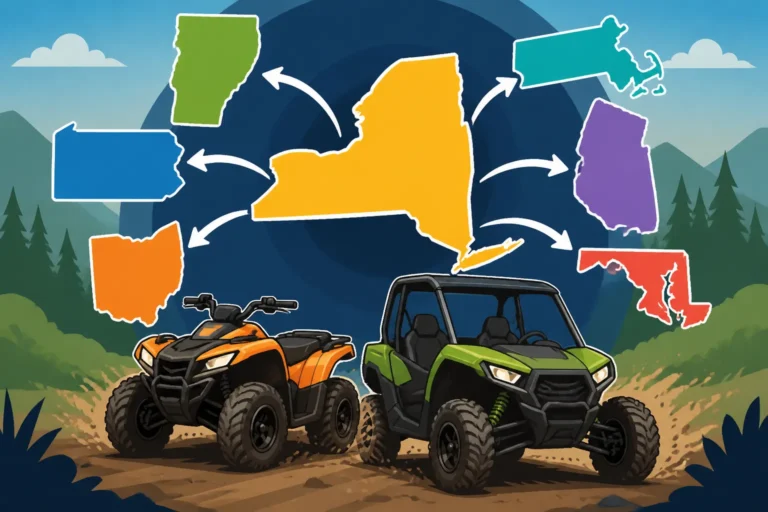
A Pennsylvania registration may let you bring an ATV into New York without registering it again, but it does not grant access to every trail or waive New York’s riding rules. The key is confirming that your registration is valid for the kind of riding you plan to do, then checking local trail permits, insurance, and operating requirements before you unload.
What a Pennsylvania Registration Does and Does Not Do
New York generally allows a nonresident to operate an ATV that is properly registered in another state, subject to reciprocity and other requirements. That can save a visiting rider from obtaining a New York registration solely for a trip. But the exemption depends on having a valid, qualifying out-of-state registration—not simply proof that the machine is yours or paperwork from Pennsylvania.
Start by confirming that the registration is current and applies to the machine you are bringing. Check that the vehicle identification number, or VIN, on the machine matches the registration documents. If your Pennsylvania paperwork limits the ATV to private-property use, do not assume it will count as a registration for riding in New York. A document or sticker can have restrictions that affect whether it qualifies for out-of-state operation.
New York’s acceptance of an out-of-state registration does not make your ATV “New York registered.” It means your valid home-state registration may be recognized for operation here under the applicable reciprocity rules. The distinction matters because registration and trail access are separate questions. A registration may satisfy one requirement while a county, club, or private trail system requires an additional permit.
| What you have or need | What it generally addresses | What it does not establish |
|---|---|---|
| Current Pennsylvania registration | Whether the ATV may qualify to operate in New York as an out-of-state machine | Access to every trail or road |
| Pennsylvania registration plate or required identifying display | Whether the machine is properly identified under applicable rules | That the registration is current or unrestricted |
| New York trail permit, when required | Access to a particular participating trail system | Permission to ride elsewhere |
| Proof of insurance that meets New York requirements | Financial responsibility for covered liability | Registration or trail permission |
| Helmet and other required safety equipment | Compliance with New York operating rules | A right to use a closed or private trail |
For a broader explanation of how New York treats nonresident machines, see New York Reciprocity for Out-of-State Registrations and New York ATV Reciprocity With Other States. The practical starting point is simple: confirm that your Pennsylvania registration is valid and acceptable, then check every other requirement for the places you intend to ride.
Do not assume that Pennsylvania and New York have identical rules. Your Pennsylvania registration does not make Pennsylvania’s operating rules apply after you cross the state line. Once you ride in New York, New York’s requirements for helmets, insurance, equipment, road crossings, minors, and access apply. For the overall distinction, see Why an Out-of-State Rider Must Register in New York. A valid out-of-state registration may qualify for an exemption, but an unregistered machine may need New York registration before it can be operated here.
Confirm That Your Pennsylvania Registration Qualifies
Before the trip, check the registration itself rather than relying on what the seller, a friend, or an old online post says. States can issue different forms of registration or documents with different limits. A registration intended only for use on private property may not meet the conditions for riding in another state.
If the machine was recently bought, inherited, or transferred, confirm that the Pennsylvania registration is in the correct owner’s name and remains valid for that machine. A bill of sale can help show how you acquired the ATV, but it is not automatically a substitute for an active registration when New York requires one. If the registration is expired, missing, or tied to a previous owner, resolve that with the appropriate state agency before you travel.
A careful pre-trip check can prevent an avoidable stop or a wasted trip:
- Read the registration documents. Look for the expiration date, the registered owner, the VIN, and any restrictions on how the ATV may be used.
- Match the VIN. Compare the number on the registration with the number stamped on the frame. If it is hard to read, address that before travel rather than guessing.
- Check the plate or decal. Make sure the required Pennsylvania identifier is present, securely attached, and legible. Do not assume a receipt in your glove box replaces a plate or display requirement.
- Confirm the registration status. If you are unsure whether a registration is current or what type it is, contact the Pennsylvania agency responsible for ATV registration.
- Confirm New York recognition. If your registration has a limitation or unusual status, check with the New York DMV before riding. Do not infer eligibility from the fact that Pennsylvania issued a document.
- Keep the paperwork with the machine. Bring the registration document and any other required proof so you can show it if asked.
The VIN is especially important on an older machine, a used purchase, or an ATV that has changed hands without clear paperwork. If the number does not match, is unreadable, or appears altered, pause before riding. A registration that belongs to a different machine will not solve the problem. For related ownership questions, see New York ATV Proof of Ownership Requirements.
If the Pennsylvania registration is not valid for the planned use, the safer option is not to ride and hope that a trail operator or officer treats it as sufficient. Ask whether the ATV needs Pennsylvania registration corrected or whether New York registration is required. New York registration can involve its own application and proof-of-ownership rules; it is not necessarily something a visitor can fix quickly at a trailhead. Details on the process are covered in Registering an Out-of-State Machine in New York.
A useful rule of thumb is to treat “registered at home” as something to verify, not as a complete answer. The registration must be current, apply to your ATV, and qualify under New York’s rules. If any of those points is unclear, settle it before the machine is on a New York trail.
Check Trail Permits Separately
A Pennsylvania registration is not a New York trail permit. New York does not use one statewide ATV trail pass that automatically opens all riding areas. Trail access can depend on the county, trail operator, landowner agreement, club membership, season, or local rules.
That means the right question is not only “Can I operate this ATV in New York?” Ask, “May I ride this specific trail system with this machine, and what permit or membership does that system require?” A trail may require a permit even when your Pennsylvania registration is otherwise accepted. Another location may be closed to ATVs or open only to machines meeting particular conditions.
Before setting out:
- Identify the trail system, county, or park where you plan to ride.
- Check the current operator’s rules for nonresident riders and out-of-state registrations.
- Find out whether you need a local permit, club membership, day pass, or other authorization.
- Confirm whether the permit is tied to the rider, the ATV, or both.
- Check the permitted dates, trail closures, and machine restrictions.
- Keep the permit evidence available in the form required by the operator.
Local rules are not interchangeable. A permit for one trail system does not automatically authorize riding on another, and a pass for a machine does not necessarily cover an additional ATV in your group. A machine can also meet the registration requirement and still be too wide or otherwise ineligible for a particular trail. Do not assume that a trail system will make an exception because you have traveled from Pennsylvania.
The county or trail operator is the best source for permit details. Start with Do You Need a Trail Permit in New York? and County Permits Instead of a State Sticker for the difference between state registration and local trail access. If your plans include the Tug Hill area, check the specific system rather than treating the region as one continuous open trail. Riding Tug Hill on a Pennsylvania Plate addresses that situation in more detail.
Some riding areas include private land under agreements with landowners. Those agreements can set restrictions, and a trail can close if access permission changes, if the season ends, or if conditions make riding unsafe. A permit does not override a closure, a gate, a posted restriction, or a landowner’s limits. Follow signs and current notices even if an older map shows the route as open.
If you are joining a group, ask the organizer which permits are needed and whether each rider must obtain one individually. Do not rely only on the group leader’s pass or a friend’s club membership. A quick confirmation before departure is easier than discovering at the staging area that your ATV or rider is not covered.
Follow New York’s Riding and Insurance Rules
Once you ride in New York, follow New York law, even if your Pennsylvania rules are different. Registration reciprocity is not a general exemption from local operating requirements. It does not give you permission to ride on a road, state land, private property, or closed trail where ATVs are not allowed.
Insurance and proof
New York has insurance requirements for ATV operation. Before traveling, ask your insurer whether your policy covers the ATV while it is being operated in New York and whether the insurer and coverage meet the state’s requirements. Do not assume that an active Pennsylvania policy automatically satisfies every New York condition.
Keep proof of insurance with the registration documents. Confirm that the paperwork identifies the correct machine and that the policy is active for the trip. A phone image may be useful as a backup, but do not rely on it if the law, insurer, or trail operator requires a particular form of proof. For details, see New York ATV Insurance Requirement and Does an Out-of-State Policy Satisfy New York’s ATV Rule?.
Insurance, registration, and permits answer different questions:
- Registration relates to whether the ATV is properly registered for operation.
- Insurance relates to financial responsibility for covered claims.
- A trail permit or membership relates to access to a specific riding area.
Having one does not replace the others. If any item is missing, the others do not make riding lawful.
Helmets, equipment, and passengers
New York’s safety and equipment rules apply to visitors. Check the helmet requirement before riding, including when an adult or passenger believes a helmet is optional under Pennsylvania rules. The machine must also meet applicable equipment standards, which can include requirements for items such as lights, tires, and mufflers.
Do not add a passenger simply because the ATV has room on the seat or a rack. Passenger rules depend on the machine and its design. A passenger needs a proper seating position intended for carrying a passenger; a cargo area or improvised seat is not a substitute. Review New York Helmet Law for ATV Riders, New York Equipment Requirements for ATVs, and New York Passenger Rules on an ATV if your group includes passengers.
Rules for children also need separate attention. A Pennsylvania youth’s age, training, or riding privileges do not automatically carry over to New York. New York has requirements concerning younger riders, including supervision and age-related restrictions. Check those rules before allowing a child to ride, even on a private trail or as part of a family outing. See New York Rules for Riders Under 16 for the age-specific details.
Roads and property
Do not treat every road that appears on a map as open to ATVs. Road use may depend on whether the road has been designated and posted for ATV travel, and local restrictions may apply. Even where an ATV may cross a road, that does not mean it may travel along the road. Follow signs, stop where required, and cross only where allowed. New York’s Designated and Posted Roads explains the distinction.
Private land is not automatically open because it is wooded, remote, or adjacent to a trail. Get the landowner’s permission before riding on property that is not yours. A trail map, a neighbor’s invitation, or a hunting permission does not necessarily grant ATV access. On public land, use only routes and areas where ATV riding is specifically allowed. Many state lands and parks have restrictions or bans.
Likewise, do not assume the rules are relaxed because you are riding on a farm, at a camp, or on your own property. The details can depend on the location and the type of riding. Follow local requirements and do not use private-property status as a reason to enter a nearby road or public trail without permission.
A Practical Checklist Before You Cross the Border
A short review before departure can catch most problems while there is still time to fix them. Keep the registration, insurance, and trail-access checks separate, and make sure the entire riding group understands the route and its restrictions.
Documents and machine
- Confirm that the Pennsylvania registration is current and applies to the ATV.
- Check that the VIN on the machine matches the registration.
- Confirm the registration type is not restricted to a use that excludes your New York plans.
- Make sure the required Pennsylvania plate or identifying display is installed and readable.
- Bring the registration document and proof of insurance.
- Confirm your policy applies in New York and meets New York requirements.
- Check that required equipment is present and working.
- If the machine is borrowed, make sure the owner has authorized the trip and that the registration and insurance remain valid.
If you are borrowing a machine, do not assume that permission from the owner settles every legal issue. Confirm that the ATV is registered, insured, and eligible for the intended trail. The person who owns it may also have conditions about who may ride it and where. A borrowed ATV with expired paperwork is still a problem, even if the owner is in the group.
Route and access
- Name the specific trail system rather than planning around a broad region.
- Check the system’s current permit and membership requirements.
- Confirm whether the permit is needed for each ATV, each rider, or both.
- Check opening dates, seasonal closures, weather notices, and temporary restrictions.
- Verify that the ATV fits the trail’s size and other equipment limits.
- Identify where fuel, staging, and permitted crossings are available.
- Keep the group on marked, open routes and follow posted signs.
For groups crossing county lines, check access requirements in each system. A permit that works in one county may not carry over into another. This is particularly important on a long ride, where a route can look connected on a map but pass through several independently managed areas.
If your machine’s registration is uncertain, do not use a trail permit as a workaround. A county pass is not registration and cannot cure an invalid or restricted Pennsylvania document. Similarly, if your registration is valid but the trail system requires a separate permit, the registration does not replace that permit.
If something is unclear
Contact the relevant agency or trail operator and describe the situation precisely. Give the ATV’s state of registration, registration type, model, and intended riding area. Ask whether that registration qualifies for operation in New York and whether the trail operator requires any additional permit. If a representative gives you an answer, keep a note of the date and the office contacted; it may help you follow up, though it does not replace required documents or official rules.
Do not rely on an old forum post or a rule someone remembers from a previous season. Registration status can change, and trail access can change with landowner agreements or operating conditions. Check again close to your trip, especially if you are traveling to a county trail system or riding during a short seasonal window.
If the answer is that your Pennsylvania registration does not qualify, ask what steps are required before riding. If the answer is that the ATV can operate but needs a local permit, obtain that permit before entering the system. When the status cannot be confirmed, the safe choice is to keep the machine off New York trails until the issue is settled.
Frequently Asked Questions
Can I ride in New York with a current Pennsylvania ATV registration?
A current Pennsylvania registration may qualify under New York’s reciprocity rules, but confirm that it is valid for the ATV and the kind of riding planned. Also meet New York’s insurance, safety, and access requirements.
Does my Pennsylvania registration include a New York trail permit?
No. Registration and trail access are separate. The particular county, club, or trail operator may require a separate permit or membership.
Does my Pennsylvania insurance automatically meet New York requirements?
Not necessarily. Ask your insurer whether the policy covers your ATV in New York and satisfies New York’s requirements. Carry proof of coverage while riding.
Can I ride any New York road if my ATV is registered in Pennsylvania?
No. Registration does not make roads open to ATVs. Road use depends on New York rules and local designation or restrictions. Follow posted signs and use only routes where ATV travel is permitted.
Disclaimer
This article is for general informational purposes only and does not constitute professional advice. Laws, prices and regulations vary by location and change over time. Consult a qualified professional for guidance on your specific situation.