New York Equipment Requirements for ATVs
It can be incredibly frustrating to just want to head out for a ride on your ATV, only to be bogged down by what feels like a mountain of rules and regulations. You've got your machine, you're ready to hit the trails or tackle some work on your property, but there's that nagging doubt: "Do I have all the right stuff? Am I missing a key piece of equipment that could land me in hot water?" It's a valid concern, and navigating the nuances of New York's ATV equipment requirements can feel like trying to find your way through a dense forest without a map. This guide is here to clear the path, helping you understand exactly what your ATV needs to be legally compliant and ready for safe operation across the Empire State.
The Basics: What Every New York ATV Needs
Before you even think about hitting a trail or crossing a public road, there are some fundamental pieces of equipment that every ATV operating in New York must have. These aren't just suggestions; they're mandated by law, designed to ensure both your safety and the safety of others you might encounter. Ignoring these can lead to fines, frustrating encounters with law enforcement, and ultimately, a less enjoyable experience.
Registration Plate and Validation Decal
Think of your ATV's registration plate and validation decal as its official ID card in New York. Just like a car, your ATV needs to be properly identified. The law is quite specific here: you need a plate, and that plate needs to be affixed to the rear of your machine in a clearly visible location. It can't be tucked away under a fender where mud might obscure it, and it certainly can't be missing. This plate ensures that if there's ever an incident, or if you're just being checked by a game warden on a trail, your machine can be quickly identified. [New York ATV Plates and Where They Mount] goes into more detail about the proper placement.
Along with the plate, you'll also receive a validation decal each year when you renew your registration. This little sticker is crucial. It acts as a visual confirmation that your registration is current and valid. It needs to be affixed to the plate itself, typically in the corner, so it's easy for officials to spot. If your plate gets damaged, perhaps from a stray branch on a tight trail or a mishap in the mud, you'll want to address that quickly, as an unreadable plate is just as problematic as no plate at all.
Mandatory Insurance Proof
This is a big one, and it often catches riders by surprise, especially those who primarily ride on private land. New York State law is unambiguous: if you're operating an ATV anywhere off your own property, you absolutely must carry proof of liability insurance. This isn't just a suggestion; it's a mandatory requirement, and riding without it can lead to significant fines and penalties. The state wants to ensure that if an accident occurs and someone is injured or property is damaged, there's a mechanism in place to cover the costs.
The proof you carry needs to show the required minimum coverages. While your homeowner's policy might cover some aspects of ATV use on your own land, it almost certainly won't satisfy the state's requirements for public or club trails. This means a dedicated ATV insurance policy is a non-negotiable part of your riding gear. You don't need to carry the physical policy booklet, but a current insurance card or declaration page with the effective dates is essential. [New York's Mandatory ATV Insurance] dives deeper into the specific coverage minimums you'll need.
The Ever-Present Helmet Rule
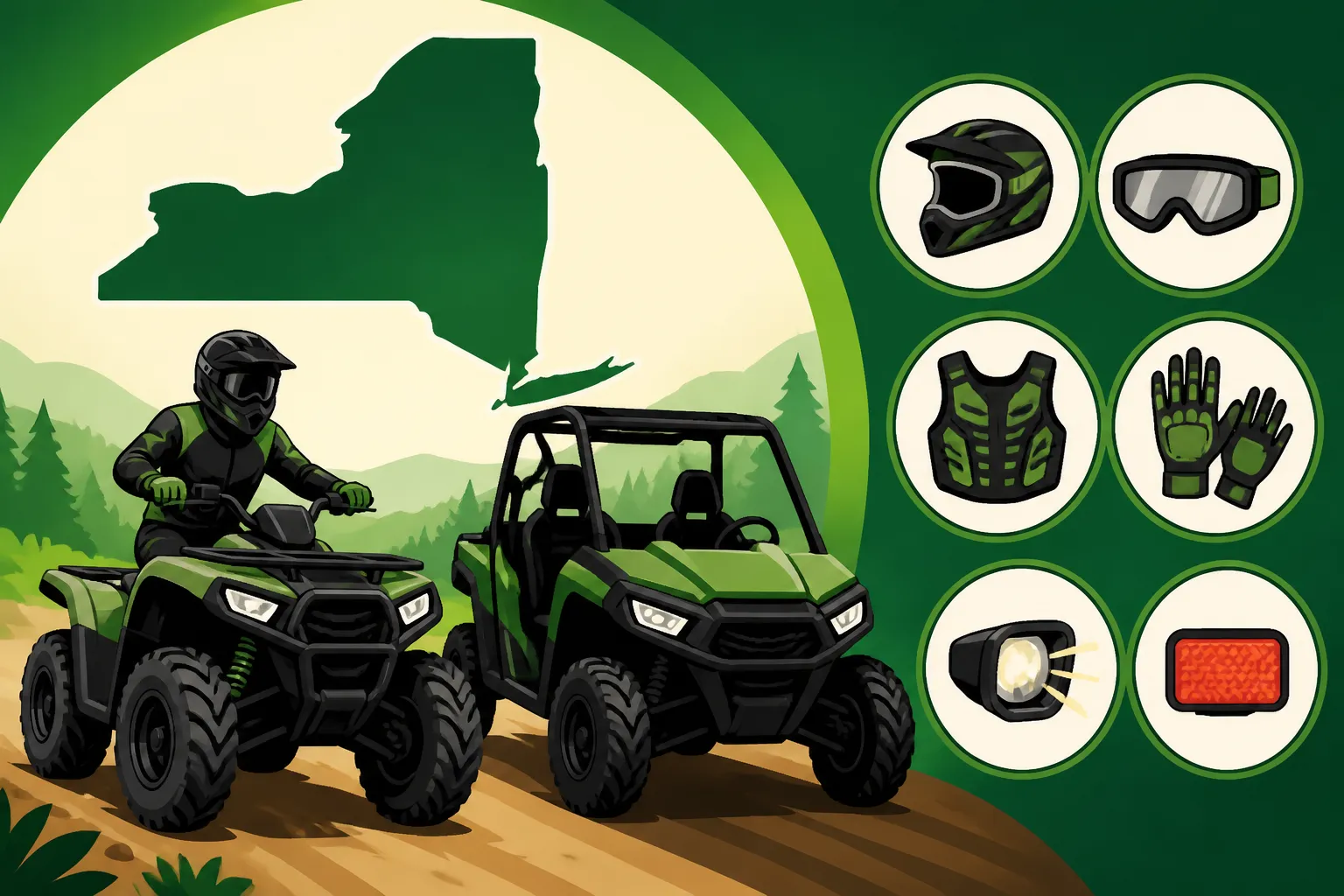
New York has some of the strictest helmet laws in the country when it comes to ATVs, and for good reason: safety. Regardless of your age or experience level, if you're riding an ATV in New York, you must wear an approved helmet. There are no exceptions for adults, unlike some states where helmets might only be required for younger riders. This rule applies whether you're cruising down a designated trail in Lewis County or just moving your machine across a friend's farm field.
This requirement extends to any passengers you might have on your ATV as well. It's not enough for just the operator to be protected; everyone on the machine needs to have their head covered. The helmet must be properly fitted, securely fastened, and meet the standards set by the Department of Transportation (DOT). Trying to save a few bucks on a non-DOT approved helmet or simply wearing a bicycle helmet won't cut it. This is one area where cutting corners simply isn't worth the risk. [New York Helmet Rules for ATV Riders] outlines these requirements in full.
Lights, Sound, and Safety: Equipment for Varying Conditions
Beyond the foundational requirements, New York's laws also address specific equipment designed to enhance safety, especially when riding in low-light conditions or in areas where noise can be a concern. These elements are crucial for ensuring your visibility to others and for maintaining good relations with landowners and communities that host ATV trails.
Headlights and Taillights for Dusk and Dark
If your riding plans extend beyond daylight hours, or if you find yourself out later than expected, working on a utility line after the sun starts to dip, your ATV needs to be equipped with proper lighting. Specifically, New York law mandates that every ATV operated between one-half hour after sunset and one-half hour before sunrise, or at any other time when visibility is limited, must have at least one headlight and one taillight. These aren't just for looking cool; they're vital safety features.
The headlight needs to be powerful enough to illuminate the path ahead, making sure you can see obstacles, other riders, or potential hazards. The taillight is equally important, ensuring that anyone approaching you from the rear can see your machine clearly, preventing potential collisions. If you're riding with a group, visibility becomes even more critical. Make it a habit to check your lights before any evening ride, as a burned-out bulb could quickly turn a fun outing into a dangerous situation.
Spark Arresters and Mufflers: Keeping it Quiet and Safe
This might sound like a technicality, but it's incredibly important, especially for maintaining access to trails and riding areas. Every ATV operated in New York must be equipped with a muffler system that is in good working order and effectively prevents excessive or unusual noise. Beyond just noise, the muffler system also needs to incorporate a spark arrester that meets specific federal Forest Service standards. This is not just about being a good neighbor; it's about preventing wildfires.
A spark arrester is a device that prevents hot carbon particles (sparks) from exiting the exhaust system and potentially igniting dry leaves, grass, or other flammable materials along the trail. This is a critical safety feature, particularly when riding in wooded or grassy areas, which describes much of New York's beautiful riding country. Without a functional, Forest Service-rated spark arrester, you could inadvertently start a fire, which has devastating consequences and can lead to trails being shut down. Always ensure your exhaust system is intact, not modified to be excessively loud, and has that essential spark arrester in place. [The Spark Arrester Section 2406 Requires] details the legal specifics.
Tire Tread Depth and Why It Matters
While you might focus on the big, knobby tires that give you traction in mud and over rocks, there's a specific legal requirement in New York regarding their condition: ATV tires must have at least two thirty-seconds of an inch of tread depth. This might seem like a minor detail, but worn-out tires significantly compromise your machine's handling, braking, and ability to navigate challenging terrain. It's a safety issue as much as a legal one.
Think about riding on a slick, muddy trail or trying to stop quickly on a gravel road. Tires with insufficient tread depth can hydroplane, spin out, or simply fail to grip, leading to a loss of control. Regularly inspecting your tires for wear and tear is a crucial part of pre-ride maintenance. If you notice your treads are getting low, don't wait until they're bald. Investing in new tires isn't just about complying with the law; it's about maintaining your machine's performance and, more importantly, your safety and the safety of those around you.
Passenger Rules and Equipment Considerations
Many ATVs are designed for a single rider, but some manufacturers offer machines designed for two. New York law has very clear guidelines about carrying passengers, focusing heavily on safety and the design of the machine itself. This is an area where mistakes can be particularly dangerous and lead to serious accidents.
Factory-Fitted Seats for Passengers
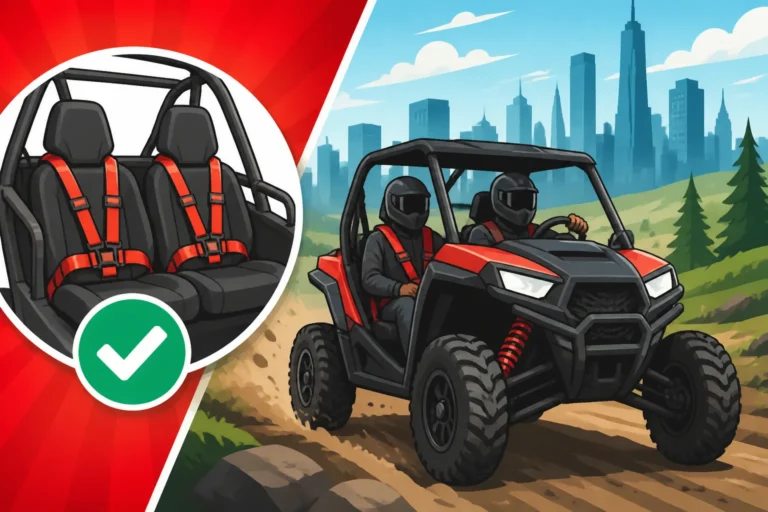
Here’s a crucial point that often gets overlooked: if you plan to carry a passenger on your ATV, your machine must be specifically designed by the manufacturer to carry more than one person. This means it needs to have a factory-fitted seat and footrests for the passenger. You can't just strap an extra cushion onto your single-rider quad, or have your buddy stand on the rear rack. That's a huge no-no.
Many single-rider ATVs might look like they have enough space for a small passenger, but they are not balanced or designed for the additional weight and shifting center of gravity that comes with a second person. Trying to carry a passenger on a machine not built for it is incredibly dangerous and a direct violation of New York law. Always check your ATV's specifications and user manual to confirm if it's a single-rider or a designated two-up machine before even considering bringing a friend along. [Why a Passenger Needs a Factory-Fitted Seat in New York] elaborates on the importance of this design feature.
Age Restrictions for Passengers
Just as there are age restrictions for ATV operators, there are also rules about who can ride as a passenger. Generally, no one under the age of ten is permitted to be a passenger on an ATV. This rule is in place because younger children typically lack the physical size, strength, and cognitive ability to properly brace themselves, hold on, and react to the dynamics of ATV riding. They simply aren't developed enough to safely be a passenger, even on a two-up machine.
For passengers between the ages of ten and sixteen, the helmet rule (as discussed earlier) is absolutely paramount. They must wear an approved helmet, and the operator of the ATV is responsible for ensuring this. It's important to remember that New York's laws prioritize the safety of all riders, especially the most vulnerable. So, if you're thinking of bringing a child along, make sure they meet the age requirements and are properly equipped for the ride.
Additional Equipment for Specific Situations
While many items are legally mandated, there's also a category of equipment that, while not strictly required by law for all riding, can significantly enhance your safety, comfort, and capability on the trails. These are the tools and accessories that seasoned riders often carry, having learned from experience what it takes to navigate New York's diverse terrain successfully.
Mirrors and Turn Signals: When Are They Necessary?
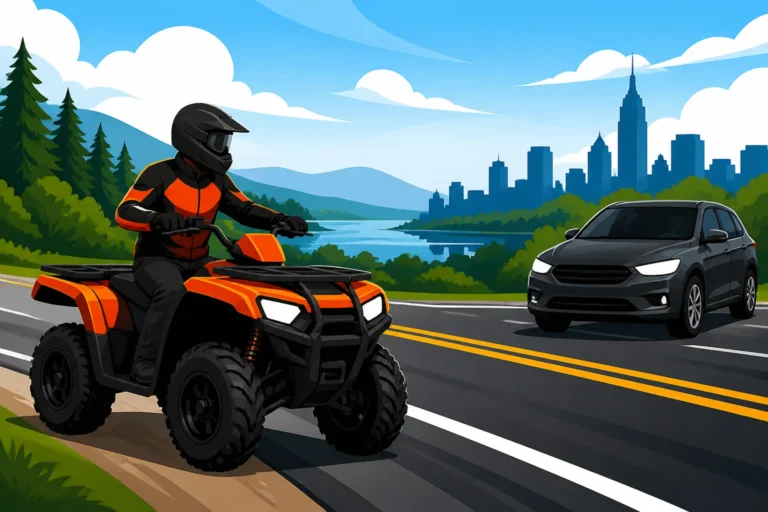
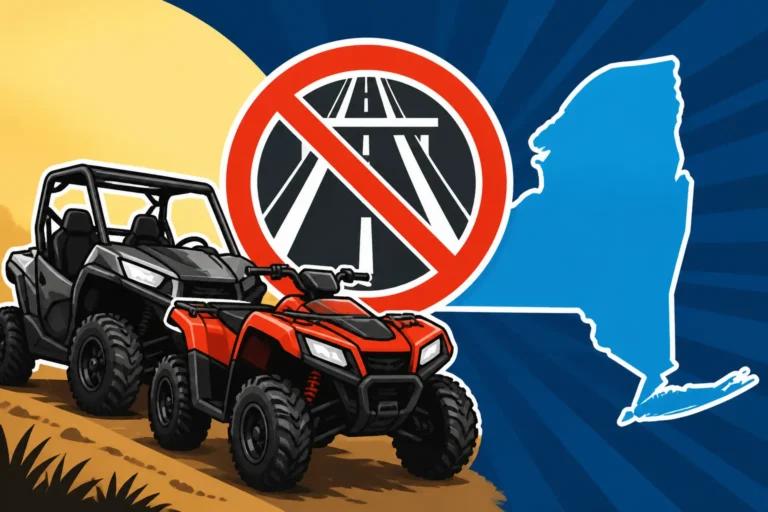
For most ATV riding in New York, particularly on designated trails or private land, mirrors and turn signals are generally not legally required. The vast majority of ATVs are not "street legal" in New York, meaning they cannot be operated on public roads and highways except for very specific, brief crossings at a ninety-degree angle. Therefore, the equipment typically associated with road vehicles isn't part of the standard ATV requirement. [Are ATVs Street Legal in New York?] covers this topic comprehensively.
However, there can be exceptions. If a specific local ordinance in a town or county allows limited road access (which is rare and usually only for very short distances), or if you are considering equipment for greater situational awareness, accessories like mirrors can still be beneficial. While you won't be using turn signals for lane changes, having a small, sturdy mirror might help you keep track of other riders in your group or see if you're clear when backing up. This falls more into the "highly recommended for convenience and awareness" category rather than legal necessity for most.
Winches and Recovery Gear: Prepared for New York Trails
While not a legal requirement, if you plan on exploring some of New York's more challenging trails, especially in areas known for mud, rocks, or tricky climbs, a winch and other recovery gear are virtually indispensable. Imagine being miles from the nearest road, your machine sunk to the frame in a mud pit, or stuck high-centered on a boulder. That's when you'll truly appreciate having the right tools to get yourself unstuck. Products from companies like SuperATV offer a wide range of robust winches and recovery kits designed for just these kinds of situations.
Beyond the winch itself, consider items like recovery straps, shackles, and a small folding shovel. These tools can be lifesavers when you're far from help. They allow you to safely extract your machine or even assist a fellow rider who's in a bind. Even if you consider yourself an expert rider, getting stuck is an inevitable part of off-road adventure. Being prepared with recovery gear means you can often resolve the situation yourself, avoid costly recovery services, and keep your ride enjoyable.
Essential ATV Equipment for New York Riders
| Equipment Type | Legal Requirement | Why It's Important | Notes |
|---|---|---|---|
| Registration Plate | Required | Official identification, allows tracking. | Must be clearly visible on the rear of the machine. |
| Validation Decal | Required | Proves current registration. | Affixed to the registration plate. |
| Insurance Proof | Required | Covers liability for accidents off private property. | Must meet New York minimums; carry proof (card/declaration). |
| Helmet (DOT-approved) | Required | Protects against head injuries for all riders. | Mandatory for operators AND passengers, regardless of age. |
| Headlight(s) | Required | Essential for visibility in low light/darkness. | Needed 1/2 hour after sunset to 1/2 hour before sunrise, or anytime visibility is poor. |
| Taillight(s) | Required | Ensures rear visibility to other riders. | Same operational hours as headlights. |
| Muffler | Required | Reduces noise pollution. | Must be in good working order, preventing excessive noise. |
| Spark Arrester | Required | Prevents wildfires from exhaust sparks. | Must meet federal Forest Service standards. |
| Tire Tread Depth | Required | Maintains traction, braking, and handling. | Minimum of two thirty-seconds of an inch of tread depth. |
| Passenger Seat/Footrests | Required (if carrying passenger) | Ensures machine is designed and balanced for multiple riders. | Must be factory-fitted; no aftermarket additions for passengers. |
| Winch/Recovery Gear | Recommended | Essential for self-recovery from stuck situations. | Not legally required, but highly advised for challenging trails. SuperATV offers great options. |
| Mirrors | Not Generally Required | Enhances situational awareness, especially in groups. | Useful for seeing trailing riders, not usually for road compliance in NY. |
| Turn Signals | Not Generally Required | For road use; ATVs are not typically street legal. | Almost never required as ATVs are generally not permitted on public roads. |
| First-Aid Kit | Recommended | Addresses minor injuries on the trail. | Essential for preparedness; always carry one. |
| Navigation Device/Map | Recommended | Prevents getting lost, especially in remote areas. | GPS, phone app, or paper map can be invaluable. Cell service is spotty on many trails. |
Disclaimer
This article is for general informational purposes only and does not constitute professional advice. Laws, prices and regulations vary by location and change over time. Consult a qualified professional for guidance on your specific situation.