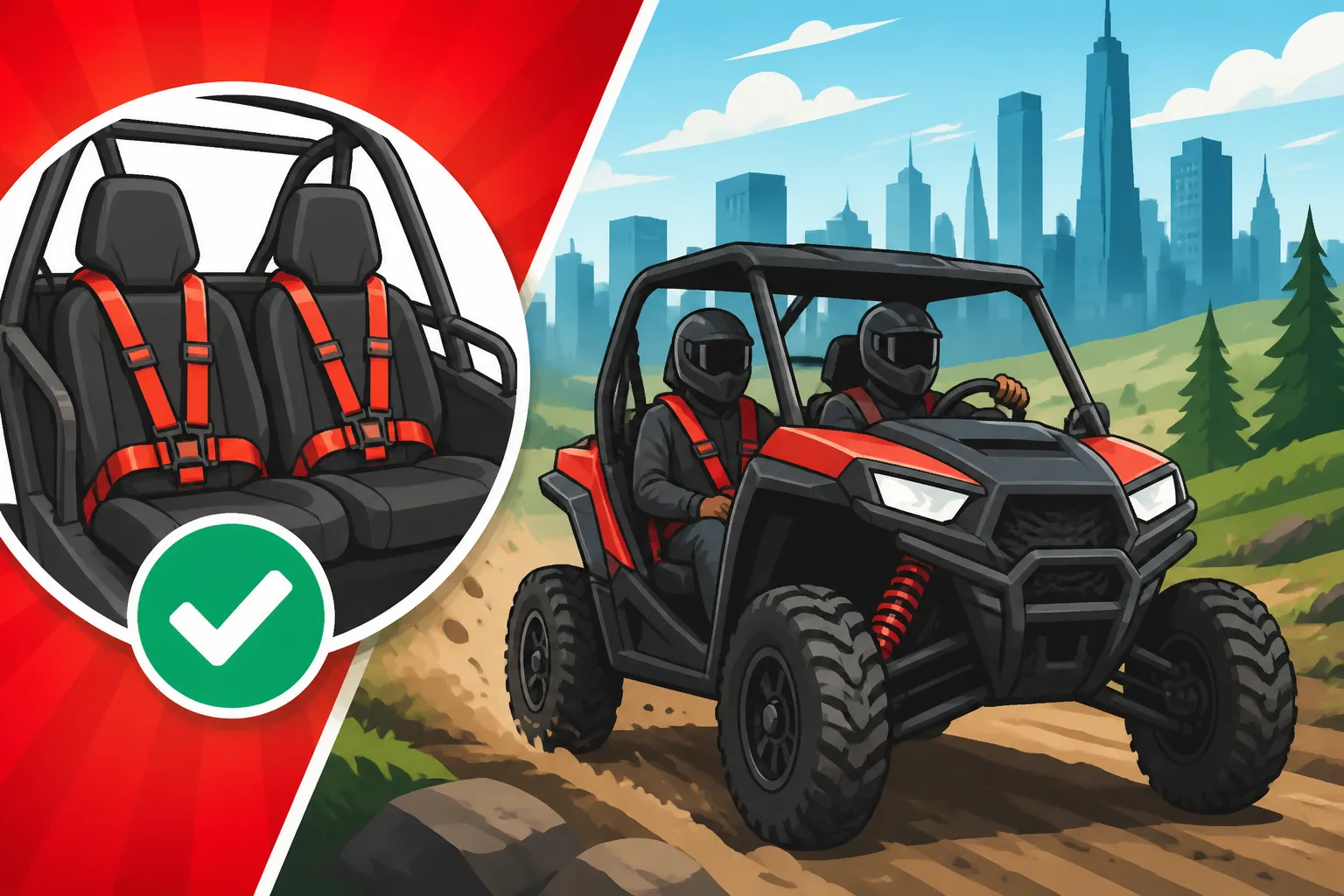
Why a Passenger Needs a Factory-Fitted Seat in New York
Riding ATVs can be an incredible way to explore New York's diverse landscapes, but when it comes to bringing a friend or family member along, the rules around passengers can be surprisingly strict and often misunderstood. Many riders assume any added seat will do, but New York law is very clear that if you're carrying a passenger, your ATV must be specifically designed for two people with a proper factory-fitted seat. Ignoring this isn't just a minor infraction; it can lead to serious safety risks, hefty fines, and major headaches with insurance, which this guide will help you navigate.
Understanding New York's ATV Passenger Rules
It's tempting to think of an ATV as a rugged, go-anywhere machine that can handle an extra rider in a pinch, especially if you're just cruising a private trail or a wide-open field. But New York State sees things differently, particularly when it comes to the safety of passengers. The state's Vehicle and Traffic Law has very specific provisions that dictate who can ride where, and perhaps most importantly, how they can ride as a passenger. This isn't just about common sense; it's about legislative intent driven by years of accident data and safety recommendations.
The Letter of the Law: What the Statute Says
When you dig into the New York Vehicle and Traffic Law, you'll find clear language regarding ATV passengers. The core of the rule is that an ATV is designed and equipped for operation by a single rider unless it's specifically manufactured to carry a passenger. What does "specifically manufactured" mean in the eyes of the law? It translates directly to a "factory-fitted" or "manufacturer-designed" passenger seat. This isn't a suggestion; it's a hard-and-fast requirement. If your ATV originally came from the factory as a single-rider machine, adding a passenger is generally prohibited on public lands and designated trails, regardless of how sturdy your aftermarket solution might seem. The law prioritizes the inherent design and safety engineering built into the machine from the ground up. You'll often hear discussions about [New York Passenger Rules on an ATV] and this distinction is at the very heart of it.
For a child passenger, the rules become even more stringent, requiring not only a factory-fitted seat but also considering the child's age, size, and ability to hold on properly. This is why discussions around [New York Rules for a Child Passenger] frequently emphasize the manufacturer's design. The intent is to ensure that every aspect of the ride, from the machine's stability to the passenger's ability to maintain a secure position, is optimized for safety, rather than relying on an improvised setup.
Why New York Has Such Specific Rules for Passengers
New York's strict approach to ATV passengers isn't arbitrary; it stems from a deep concern for rider safety. ATVs are dynamic vehicles, capable of rapid acceleration, sharp turns, and traversing challenging terrain. Their center of gravity shifts constantly, especially when navigating bumps, hills, or tight corners. When you introduce a second person, especially one not positioned correctly or securely, this balance is fundamentally altered.
Consider a sudden swerve to avoid a fallen branch. On a single-rider ATV, your body instinctively moves with the machine, keeping you centered. Add a passenger who might not anticipate the movement or is perched on a makeshift seat, and the risk of overturning or losing control skyrockets. The manufacturer-designed passenger seats on two-up ATVs are engineered to place the passenger in a position that minimally interferes with the rider's ability to control the machine and to provide proper handholds and footrests for the passenger to maintain their own stability. This integrated design is a stark contrast to a bolt-on seat that might not distribute weight correctly or provide adequate support during aggressive riding. The state wants to avoid situations where riders and passengers are injured because the machine wasn't built for the task at hand.
Deciphering "Factory-Fitted": Beyond Aftermarket Add-ons
The term "factory-fitted" is crucial in New York's ATV regulations. It’s not just about having a seat for a passenger; it’s about having the right seat, one that was part of the original design and manufacturing process of the ATV. This distinction is often a point of confusion for riders, especially when they see a myriad of aftermarket options available. While many aftermarket accessories are fantastic for enhancing performance or utility, very few, if any, meet the legal definition of a factory-fitted passenger seat for New York's purposes.
The Design Intent of a True Two-Up ATV
When an ATV manufacturer designs a machine for two riders, often referred to as a "two-up" model, they don't simply bolt on an extra seat. The entire ATV chassis, suspension, braking system, and even the engine's power output are engineered with the additional weight and dynamic shifts of a second person in mind. These machines typically feature a longer wheelbase for improved stability, a more robust suspension system to handle the increased load, and strategically placed handholds and footrests that allow the passenger to brace themselves and move with the machine, rather than against it.
Think about the difference between a sport quad and a utility ATV. A sport quad is built for aggressive, nimble riding by a single person. A two-up utility ATV, on the other hand, prioritizes stability, comfort, and load-carrying capacity, making it far more suitable for shared adventures. The ergonomic design ensures that both rider and passenger have sufficient space and a secure riding posture, reducing fatigue and improving safety over varied terrain. This comprehensive design approach is what New York's "factory-fitted" requirement aims to capture, ensuring that the entire vehicle is harmonious with its intended dual-rider purpose.
The Dangers of Unauthorized Passenger Seats
While an aftermarket seat might look comfortable and appear to solve the problem of carrying a passenger, it rarely addresses the underlying engineering limitations of a single-rider ATV. Imagine you've bolted a seemingly sturdy passenger seat onto the rear rack of your quad. It might feel secure when parked, but what happens when you hit a series of bumps or need to lean hard into a turn?
- Altered Center of Gravity: A single-rider ATV has a center of gravity optimized for one person. Adding weight high up and behind the rider drastically changes this, making the machine much more prone to rollovers, especially on inclines or during turns.
- Reduced Rider Control: The rider's ability to shift their weight and control the ATV is critical. A passenger perched on an aftermarket seat can impede this movement, making it harder for the rider to react to changing terrain or unexpected obstacles.
- Inadequate Support for the Passenger: Aftermarket seats often lack proper handholds and footrests designed for passenger safety during dynamic movements. A passenger might instinctively grab the rider or parts of the machine not intended for support, leading to instability or injury.
- Structural Strain: ATV racks are primarily designed for cargo, not the dynamic weight of a human being. Over time, or with sudden impacts, an aftermarket seat can stress the rack, potentially leading to structural failure.
Even a reputable company like SuperATV, known for its robust aftermarket parts like lift kits and heavy-duty axles, designs products that enhance specific aspects of a machine. While they might offer accessory seating solutions for certain vehicles, these are generally not what New York defines as a "factory-fitted" passenger seat for an ATV. They don't magically transform a single-rider ATV into a manufacturer-approved two-up machine in the eyes of the law or, more importantly, in terms of inherent safety engineering. This is a critical distinction that can prevent severe accidents and legal repercussions.
The Critical Safety Advantages of a Factory Passenger Seat
The regulations around factory-fitted passenger seats are deeply rooted in safety science and engineering. It’s not just about having a place for someone to sit; it’s about providing a secure, stable, and ergonomic environment for a second person on a machine designed for dynamic off-road use. A factory two-up ATV undergoes rigorous testing and design considerations that simply cannot be replicated by adding an aftermarket accessory to a single-rider model.
Ergonomics and Rider Control for Two
A single-rider ATV positions the rider for optimal control and weight distribution. Their body movements are integral to steering and balancing the machine, especially when navigating challenging terrain. When a manufacturer designs a two-up ATV, they extend the frame and re-engineer the seating to accommodate both individuals without compromising the rider's ability to operate the machine safely. The passenger seat is usually elongated, providing adequate cushioning and a slightly elevated position that allows them to see over the rider, anticipating movements. Crucially, dedicated handholds are integrated into the chassis or rack system, allowing the passenger to maintain their own balance and stability without interfering with the rider's steering or body positioning. Footrests are also strategically placed, often slightly wider or further back, to give the passenger a secure base.
This thoughtful ergonomic layout ensures that the rider can still lean, shift, and maneuver the ATV effectively. A passenger on an improperly fitted aftermarket seat, however, often has limited room, may be forced into an awkward posture, and might instinctively cling to the rider, inadvertently restricting the rider's movements and compromising their control. This can be especially dangerous on an incline or during a quick turn, where rider input is paramount.
Stability and Balance Considerations
ATVs, by their nature, are high-center-of-gravity vehicles. Their stability is a delicate balance of rider input, suspension, tire grip, and the machine's overall design. When you add a passenger to a single-rider ATV, you're not just adding weight; you're fundamentally altering the vehicle's mass distribution and raising its center of gravity. This makes the machine inherently less stable and significantly more prone to rollovers, especially when traversing uneven ground, climbing hills, or cornering at speed. The increased mass also puts additional strain on the suspension and tires, which were not originally designed for such loads.
Factory two-up ATVs, in contrast, are designed from the ground up to handle the additional weight and its dynamic effects. They typically feature a longer wheelbase, which inherently improves longitudinal stability, making them less likely to pitch forward or backward under heavy braking or acceleration. The suspension components are usually heavier-duty, capable of absorbing impacts and maintaining proper ride height with two occupants. Furthermore, the overall weight distribution is carefully calculated to keep the center of gravity as low and centralized as possible, even with a passenger, to mitigate rollover risks. This comprehensive engineering approach is why a two-up machine offers a vastly safer and more stable platform for shared riding.
Crash Protection and Integrated Safety Features
In the unfortunate event of a collision or rollover, the design of the ATV plays a significant role in protecting its occupants. Single-rider ATVs offer minimal protection beyond the rider's own gear and the machine's roll cage (if equipped on certain models, though less common on typical ATVs). For a passenger on a single-rider machine with an aftermarket seat, there is often no integrated crash protection. They are highly exposed, and in a rollover, could be easily ejected or crushed.
Factory-fitted passenger seats, on the other hand, are often integrated into a more robust frame structure that considers impact absorption. The handholds are not just for balance; they provide a secure point of contact during sudden stops or impacts, reducing the chance of ejection. Furthermore, many two-up machines might have slightly larger or more robust rear racks that, while not explicitly crash protection, can offer a minimal barrier or point of contact in certain low-speed incidents. When considering [New York Equipment Requirements for ATVs], ensuring proper seating is a fundamental safety feature, not just a luxury. The requirement for a specific seat is a direct effort to minimize injuries in the event of an accident.
Legal and Financial Consequences of Ignoring the Rule
Ignoring New York's factory-fitted passenger seat rule isn't just about safety; it carries significant legal and financial risks that every ATV owner should be aware of. What might seem like a minor oversight can quickly escalate into a costly situation involving fines, legal liability, and insurance complications. It's a prime example of how seemingly small regulations exist to prevent much larger problems down the line.
Potential Fines and Citations
If you're caught riding an ATV in New York with a passenger on a machine not specifically designed for two riders with a factory-fitted seat, you can expect to receive a citation. This isn't just a warning; it's a traffic infraction that comes with a monetary fine. The exact amount can vary depending on the specific statute cited, the discretion of the officer, and whether there are other accompanying violations. These fines can quickly add up, especially if you're cited multiple times. Furthermore, such violations can be recorded on your driving record, even though you're operating an off-road vehicle, potentially impacting your automobile insurance rates or future interactions with law enforcement. It's important to remember that these rules generally apply whenever you're operating an ATV off your own private property, even on seemingly harmless dirt roads or designated trails. Getting pulled over at a trailhead by a New York State Trooper can quickly ruin your day and lighten your wallet, emphasizing why it's crucial to understand [New York Fines for an ATV Violation].
Insurance Implications and Liability
Perhaps even more concerning than the direct fines are the potential insurance implications. ATV insurance, which is mandatory in New York for operating off your own land, is designed to protect you from financial ruin in case of an accident. However, insurance policies often have clauses that can invalidate coverage if the vehicle is being operated illegally or outside of its intended design. If you're involved in an accident while carrying a passenger on a single-rider ATV, your insurance company could deny your claim, arguing that the machine was being operated in a manner not covered by the policy or in direct violation of state law.
This means you could be personally liable for significant damages, including medical expenses for your injured passenger, damage to other property, or even your own ATV repair costs. Imagine the scenario: you're riding a club trail, and your passenger, on an aftermarket seat, is injured in a minor rollover. If your insurance company denies coverage due to the illegal passenger setup, you could be on the hook for tens of thousands of dollars in medical bills. This potential for financial devastation far outweighs the convenience of carrying an extra person on an unsuitable machine. This is a critical point when considering your [New York ATV Insurance Requirement].
What an Officer Checks Roadside
When a law enforcement officer encounters ATVs on a trail or road in New York, they're trained to look for several key compliance points. Beyond checking for registration, a visible plate, and proof of insurance, one of the first things they'll likely scrutinize is the number of occupants and the setup of the machine. An officer performing [What an Officer Checks Roadside] will quickly spot a single-rider ATV being used for two.
They'll specifically look for:
- A dedicated, integrated passenger seat: Is there a clearly defined, elongated seat with separate cushioning and support for a second rider?
- Proper handholds: Are there factory-installed handgrips for the passenger to hold onto, separate from the rider?
- Separate footrests: Does the passenger have their own footrests, positioned to maintain balance and avoid interfering with the rider?
- Machine type: They can usually tell by the model and make if the ATV is a dedicated two-up design or a single-rider model with an add-on.
If any of these elements are missing, indicating an unauthorized passenger setup, you're very likely to face a citation. Officers prioritize safety, and an improperly carried passenger is a clear safety hazard in their eyes.
Navigating Your Options: Finding a Legal Two-Up Machine in New York
Understanding the strict rules about factory-fitted passenger seats in New York might leave you wondering how to legally enjoy ATV riding with a companion. The good news is that manufacturers do produce ATVs specifically designed for two riders. The key is knowing what to look for and where to draw the line with aftermarket modifications.
Identifying ATVs Designed for Passengers
To legally carry a passenger in New York, you need an ATV that was built from the factory as a two-up model. These machines are easily distinguishable from single-rider quads. They are typically longer, often referred to as "MAX" or "Touring" editions by manufacturers. Here are some common characteristics:
- Extended Wheelbase: Two-up ATVs have a noticeably longer frame compared to their single-rider counterparts. This added length provides the necessary space for two distinct seating positions and contributes significantly to overall stability with two occupants.
- Dedicated Passenger Seating: The most obvious feature is the second, often slightly elevated, passenger seat located directly behind the rider. This isn't just a padded extension; it's a sculpted seat designed for comfort and security.
- Integrated Handholds: Manufacturers include sturdy, ergonomic handholds for the passenger, typically integrated into the rear rack or the side of the passenger seat. These allow the passenger to brace themselves independently of the rider.
- Separate Footrests: Passengers will have their own dedicated footrests, usually slightly raised and positioned to keep their feet clear of the ground and the rider's movements.
- Heavy-Duty Suspension: Since these machines are designed for more weight, they often feature more robust shocks, springs, and suspension components to maintain optimal performance and ride quality under load.
When you're [Buying a Used ATV in New York], always verify the machine's original configuration. Don't just take a seller's word for it if it looks like an add-on. Check the manufacturer's specifications for that specific model year to ensure it was indeed a factory two-up.
What to Look For When Buying a Two-Up
If you're in the market for a two-up ATV, there are a few considerations to ensure you're getting a machine that's both legal in New York and safe for you and your passenger:
- Manufacturer's Designation: Look for models explicitly advertised as "2-Up," "MAX," "Touring," or "Passenger" versions. Reputable brands like Can-Am, Polaris, Arctic Cat, and others offer excellent options in this category.
- Engine Size and Power: Carrying a second person adds significant weight. Ensure the ATV has an engine with sufficient power to comfortably and safely accelerate, climb hills, and maintain speed without straining the machine. While a 300cc might be fine for a single rider, a 500cc or larger is generally recommended for two-up riding.
- Comfort and Ergonomics: Test out the passenger seat as well as the rider's. Is there enough room? Are the handholds easy to reach and secure? Are the footrests comfortable for extended rides? Remember, a comfortable passenger is a safer passenger.
- Suspension Adjustment: Many two-up ATVs offer adjustable suspension. This is a valuable feature that allows you to stiffen the ride when carrying a passenger and soften it for solo riding, optimizing handling and comfort in both scenarios.
- Condition of Used Machines: If buying used, carefully inspect the frame for any signs of welding or modification, especially around the rear section. Check the suspension components for wear, as they will have handled more load. Ensure all factory handholds and footrests are intact and secure.
Remember, the goal is not just to comply with the law, but to provide the safest possible riding experience for both you and your passenger. Don't compromise on the factory-designed features that make a two-up ATV inherently safer.
The Limited Role of Aftermarket Accessories
While aftermarket companies like SuperATV offer an incredible array of products to enhance your ATV's performance, utility, and appearance – from robust winches to heavy-duty bumpers – their passenger seating solutions generally do not meet New York's definition of "factory-fitted." These add-ons, while potentially well-built and comfortable for certain applications, simply do not transform a single-rider ATV into a legally compliant two-up machine in New York.
For example, a high-quality cargo box with an integrated seat may be perfect for a utility machine on private land for short stints, or for carrying gear. However, it won't fulfill the legal requirement for passenger transport on public trails or roads in New York. This is a crucial distinction. It's not a knock against the quality of these aftermarket parts; it's about adhering to a specific legal definition that prioritizes comprehensive factory design for passenger safety. You can certainly equip your ATV with fantastic accessories for other purposes, but when it comes to a passenger seat, you must start with a factory-designed two-up model to stay compliant and safe. This rule often catches riders by surprise, leading them to believe that simply adding a seat is enough when the reality is far more complex and safety-oriented.
Here's a quick comparison of what makes a factory two-up ATV different from a single-rider machine with an aftermarket seat:
| Feature | Single-Rider ATV (with aftermarket seat) | Factory Two-Up ATV |
|---|---|---|
| Frame & Wheelbase | Standard, shorter frame | Extended, longer frame for stability |
| Passenger Seat | Bolt-on, often on cargo rack, improvised | Integrated, sculpted, dedicated seat behind rider |
| Passenger Handholds | Often absent or improvised | Factory-integrated, sturdy, ergonomic |
| Passenger Footrests | Often absent or shared with rider | Dedicated, separate, strategically placed |
| Suspension | Designed for one rider | Heavier-duty, designed for two occupants |
| Center of Gravity | Raised and shifted, less stable with passenger | Optimized for two, improved stability |
| Legal Compliance (NY) | Generally NOT compliant for passenger transport | Fully compliant for passenger transport |
| Safety in Dynamic Use | Significantly compromised | Engineered for enhanced safety with passenger |
Disclaimer
This article is for general informational purposes only and does not constitute professional advice. Laws, prices and regulations vary by location and change over time. Consult a qualified professional for guidance on your specific situation.