A Road Designated and Posted in New York
Oh, the age-old question that causes so much confusion and, let's be honest, more than a few headaches for ATV riders in our beautiful state: "Can I just ride my quad down the road to the gas station, or over to my buddy's house?" It's a tempting thought, especially when you’re just trying to get from one section of trail to another. But New York State's rules about ATVs on public roads are incredibly specific, and misunderstanding them can land you in a world of trouble. This guide will cut through the noise and explain exactly what a "designated and posted" road means in New York, and why it's the only time your ATV should ever touch a public thoroughfare.
Understanding New York's General Stance on ATVs on Public Roads
Let's just rip off the band-aid right here: ATVs are generally not street legal in New York State. I know, I know, it’s frustrating when you see folks in other states seemingly zipping around town on their quads without a care in the world. But New York has a very different approach, rooted deeply in safety concerns and the distinct nature of these off-highway vehicles. It's a point of contention for many riders, but it's the law, and understanding it is the first step to riding responsibly and avoiding hefty fines.
The "Not Street Legal" Reality
The fundamental truth is that All-Terrain Vehicles (ATVs) were designed for off-road use. They're built with high ground clearance, aggressive tires, and suspension systems meant to conquer challenging terrain—not to cruise smoothly down asphalt. This design makes them inherently different from vehicles registered for street use, like cars, trucks, or even motorcycles. Think about it: they lack many of the safety features, like turn signals, rearview mirrors, and often proper headlights and taillights for consistent road use, that are standard on street-legal vehicles. Their handling characteristics on pavement, especially at higher speeds, can be unpredictable and dangerous, both for the rider and for other motorists.
Because of these inherent design differences and safety considerations, New York State law explicitly prohibits ATVs from being operated on public streets, roads, and highways. This isn't just a suggestion; it's a strict mandate. Driving an ATV on a public road that hasn't been specifically opened for ATV use can result in fines, points on your driver's license (even if you're not operating your car), and even the impoundment of your machine. It’s a harsh reality that many new riders discover the hard way, and it’s why understanding the exceptions is so crucial. If you're looking for the quick answer, check out [Are ATVs Street Legal in New York: The Short Answer].
The Importance of Private Property and Designated Trails
So, if you can't ride on most roads, where can you ride? The simple answer is: private property (with permission, of course!) and specifically designated and marked ATV trails. New York State has made a concerted effort to create and maintain extensive trail systems, like those found in Lewis County and other regions, precisely because riding on public roads is so restricted. These trails are designed for ATVs, often maintained by dedicated clubs and county departments, and offer a much safer and more enjoyable riding experience.
Many seasoned riders will tell you that the real joy of ATV riding comes from exploring rugged terrain, traversing mud, and navigating challenging trails—not from puttering down a paved road. Focusing on where you can ride legally, like private land or sanctioned trails, is not only safer but also helps preserve the sport by demonstrating responsible ridership. Always remember, even on private land, permission is paramount. You can learn more about this in [New York Rules for Riding Private Land]. Respecting property owners and staying on marked trails ensures that these riding opportunities remain available for everyone.
What "Designated and Posted" Really Means
This is where the nuance comes in, and it's absolutely vital to grasp. The terms "designated" and "posted" aren't interchangeable, and both must be true for a public road in New York to be legally open to ATV use. If a road is only designated but not posted, you can't ride it. If it's posted by some well-meaning but misinformed individual but not officially designated by the proper authority, you also can't ride it. It’s a two-part test, and failing either part means you’re on the wrong side of the law.
The Two Key Elements: Designation and Posting
Let's break down these two critical components. First, "designated" means that a town, county, or village legislative body—think of your town board, village council, or county legislature—has passed an official resolution or ordinance specifically opening a particular road or segment of a road for ATV use. This isn't a casual decision; it's a formal, legal act that involves public input, safety assessments, and often consultation with law enforcement and highway departments. It’s a serious commitment by the local government, indicating that they’ve considered the implications and deemed it appropriate.
Second, "posted" means that physical signs must be erected along the designated road, clearly indicating that it is open for ATV use. These signs aren't just a friendly suggestion; they are a legal requirement. They often specify the conditions of use, such as speed limits, hours of operation, and sometimes even the dates of the riding season. Without these physical signs, even if a road has been officially designated, you cannot legally ride your ATV on it. Imagine a situation where a town board passed a resolution last year, but the signs haven't gone up yet because of a supply chain issue or a busy highway crew. That road, even though "designated," is still off-limits because it's not "posted." Both parts have to be in place.
The Process of Designating a Road
So, how does a road actually become designated for ATV use? It’s typically a local affair. An individual, an ATV club, or a concerned group of citizens might approach their town board, village council, or county legislature with a proposal. This isn't a quick process. It usually involves a series of public meetings where residents can voice their opinions, concerns, and support. The local government entity will then review traffic patterns, road conditions, existing infrastructure, and potential impacts on residents and the environment. They'll also consider the safety implications of allowing ATVs on a road that might also be used by cars, bicycles, or pedestrians.
If, after all this deliberation, the legislative body decides to move forward, they will pass a formal resolution or ordinance. This legal document specifically identifies the roads or portions of roads where ATVs will be permitted. It's a critical step because it provides the legal framework for ATV operation. Without this formal designation, any signs put up by an individual or group are meaningless in the eyes of the law. This entire process highlights the local control aspect of ATV access, allowing communities to make decisions that best suit their unique circumstances. For a deeper dive into this, you might find [How a New York Town Designates a Road] helpful.
The "Posting" Requirement in Practice
Once a road has been officially designated by the local authorities, the next crucial step is the physical act of "posting" it. This isn't something to overlook; it's your visual cue as a rider that you are legally allowed to be there. Without clear, official signage, even the most well-intentioned rider could inadvertently trespass or break the law, regardless of any underlying designation. It truly brings the legal framework into a visible reality for all road users.
The Visible Signs of a Designated Road
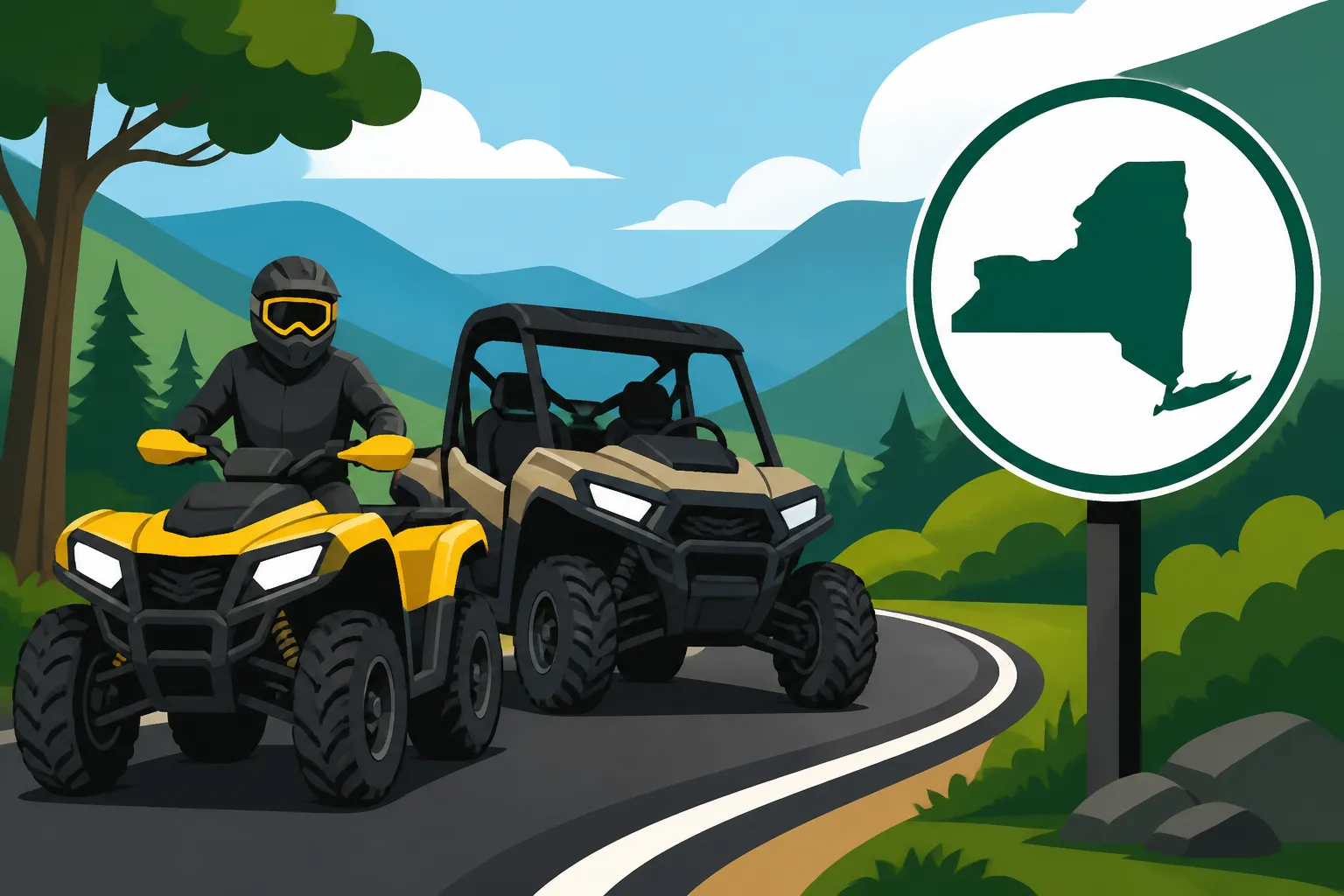
When you’re out riding, or scouting new areas, look for specific signage. These signs are typically official, often blue or green, and clearly state that the road is an "ATV Route" or "Snowmobile/ATV Trail." They might also include supplementary information, such as the period during which ATVs are permitted (e.g., "April 1 – November 1"), specific hours of operation (e.g., "Sunrise to Sunset"), or a maximum speed limit. These aren’t homemade signs stapled to a tree; they are usually Department of Transportation-style signs, installed by the municipality, signaling an official designation.
Sometimes, especially in areas that share multi-use trails, you might see signs indicating shared use with snowmobiles during winter months, then transitioning to ATV use in the warmer seasons. It’s crucial to pay close attention to all the details on these signs. Just seeing the word "ATV" isn't enough; you need to understand the full scope of the permission granted. This physical posting acts as a public notification, informing both ATV riders and other motorists about the specific rules that apply to that stretch of road. Remember, it's not just about what's designated on paper, but what's posted on the roadside. For a more direct explanation, consult [A Road Designated and Posted in New York].
Consequences of Riding an Unposted or Undesignated Road
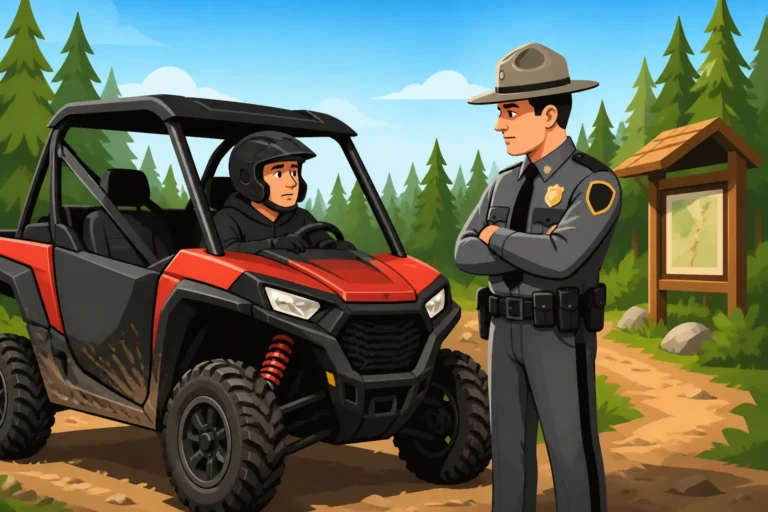
This is where realism really kicks in. The fines for operating an ATV on an undesignated or unposted public road in New York can be significant. We're not just talking about a slap on the wrist. You could be facing hundreds of dollars in fines, points on your driver's license (even if you weren't driving a car at the time!), and potentially having your ATV impounded. Imagine the hassle and expense of trying to get your machine back, not to mention the legal fees if you decide to contest the ticket.
Beyond the legal and financial penalties, there's the much graver risk of an accident. As we discussed earlier, ATVs aren't designed for road use, and the potential for a collision with a car or other vehicle is very real. Such an incident could lead to serious injuries, property damage, and substantial liability claims. Ignorance of the law is never an acceptable defense. Law enforcement officers are vigilant about unauthorized ATV use on public roads, and they operate with the understanding that every rider is responsible for knowing where they can and cannot ride. Always verify designations and look for clear posting before venturing onto any public road with your ATV. To understand the gravity of these penalties, take a look at [New York Fines for an ATV Violation].
Rules and Restrictions on Designated Roads
Just because a road is designated and posted for ATV use doesn't mean it's a free-for-all. Far from it. These roads still have specific rules, often even more stringent than those for regular vehicular traffic, designed to ensure the safety of ATV riders and other road users. Think of it as a privilege, not an inherent right, and with privilege comes responsibility. Disregarding these specific regulations can lead to the same fines and legal troubles as riding on an undesignated road.
The Specifics of Riding on Designated Roads
When riding on a designated and posted road, you must adhere to all traffic laws that apply to other motor vehicles, in addition to any specific ATV regulations. This includes obeying posted speed limits (which might be lower for ATVs than for cars), stopping at stop signs and traffic lights, and yielding the right of way. Furthermore, local ordinances might impose additional restrictions, such as limiting ATV operation to certain hours of the day (e.g., no night riding), or only during specific seasons when trail conditions are suitable and snowmobile trails aren't active.
Crucially, your ATV must be properly registered with the New York State DMV, and you must carry proof of insurance. This isn't optional, even on designated roads. New York has a mandatory ATV insurance law that applies whenever you operate your machine off your own private property, and that absolutely includes any designated public roads. Failure to have valid registration and insurance can result in separate, significant fines, compounding any other violations. Always keep your registration and insurance cards with you while riding. For more details on this, you can read [New York's Mandatory ATV Insurance] and [New York ATV Registration and Insurance Proof].
Equipment and Safety Requirements
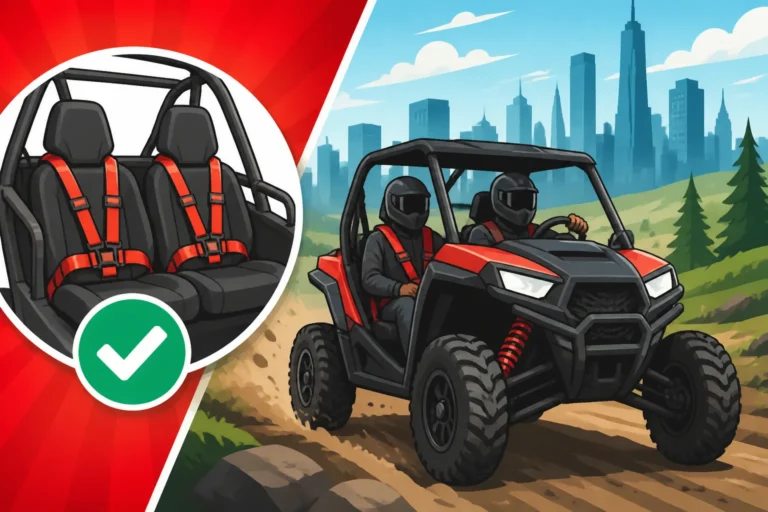
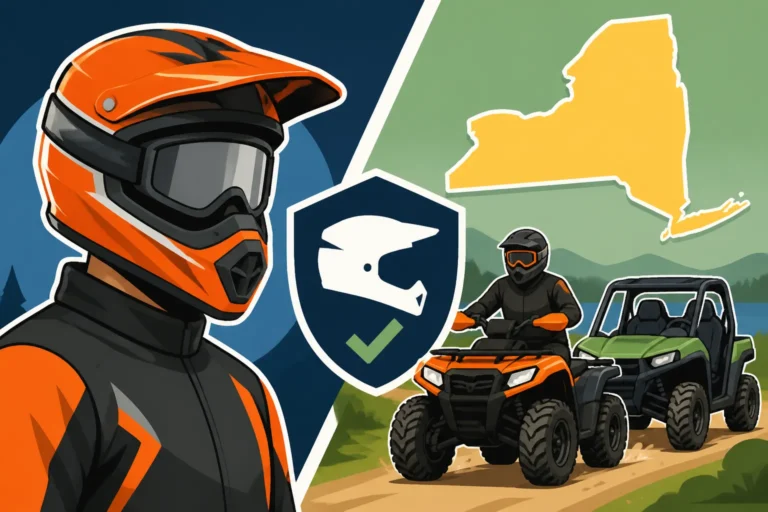
Operating on any public road, even a designated one, means your ATV needs to meet certain equipment standards. A helmet is non-negotiable for all riders in New York, regardless of age, and passengers also need to wear one. Your machine must be equipped with working headlights and taillights if you're riding during hours of reduced visibility or as specified by local ordinance. A spark arrester, certified by the U.S. Forest Service, is also a mandatory piece of equipment to prevent wildfires, especially when you're traversing areas that might have dry vegetation.
Tire tread depth is another often-overlooked requirement; your tires need at least two thirty-seconds of an inch of tread at all points. While not strictly a road-specific item, a muffler that meets federal noise standards is also required to keep noise pollution down. When considering accessories, some riders look to companies like SuperATV for sturdy protective gear like skid plates or heavy-duty bumpers, which are fantastic for trail riding. While these don't directly make your ATV "road legal" on a designated route, they contribute to the overall durability and safety of your machine, which is always a plus. However, ensure any modifications, especially to lighting, meet New York's specific legal requirements for street-legal operation on designated routes. You can delve deeper into equipment specifics with [New York Equipment Requirements for ATVs] and [New York Helmet Rules for ATV Riders].
Crossing Public Roads
Here's another point of frequent misunderstanding: the difference between riding on a public road and crossing a public road. New York law makes a clear distinction, and understanding it is paramount for any ATV rider. While continuous travel on an undesignated road is forbidden, there are specific, highly regulated circumstances under which an ATV may cross a public thoroughfare.
Distinguishing Between Crossing and Riding
Imagine you’re on a designated trail, and it suddenly dead-ends at a county road before picking up again on the other side. This is a common scenario, and New York law provides a pathway for ATVs to legally cross such roads. However, this is not the same as riding down the shoulder for a mile to connect to another trail, or riding to a local store. Crossing is defined as the most direct route across a roadway, done quickly and safely, with minimal presence on the road itself. It's a momentary interruption of traffic, not an integration into it.
The rules for crossing are strict: you must come to a complete stop before entering the roadway, yield to all traffic, and proceed directly across at a right angle (90 degrees) to the road surface. You must also operate your ATV in a way that is least likely to interfere with the flow of traffic. This is a privilege granted for continuity of trail systems, not a loophole for general road use. It requires extreme caution and adherence to all traffic laws, as well as the specific ATV crossing rules. For a detailed look at this, check out [Crossing a Highway on an ATV in New York].
Safe Crossing Practices
Safety is paramount when crossing any public road. Before you even approach the shoulder, slow down, look both ways, and listen for approaching vehicles. Come to a complete stop, preferably well off the paved surface, and ensure you have a clear line of sight in both directions. Never assume oncoming traffic sees you or will slow down. Wait for a significant gap in traffic before you proceed.
When you do cross, do so decisively and directly, maintaining that 90-degree angle. Avoid weaving or hesitating. If you're riding with a group, cross one at a time, ensuring each rider clears the road safely before the next one begins. Your ATV should have working headlights and taillights, even during daylight hours, as they significantly increase your visibility to other drivers. Some riders even add brightly colored flags to their machines for extra visibility. Always be prepared to stop quickly if an unexpected vehicle appears. This isn't just about avoiding a ticket; it's about avoiding a life-altering accident.
Finding Designated Roads and Staying Informed
Navigating New York's ATV laws can feel like a maze, especially when it comes to identifying legal riding areas. But with a little effort, you can easily find the places where you can legally and safely enjoy your ATV. The key is to seek out official, current information and rely on reputable sources.
How to Locate Legal Riding Areas
The best way to find designated and posted ATV roads is to consult the local county or town government websites in the area you plan to ride. Many counties, like Lewis County, have dedicated Parks, Recreation, and Forestry departments that publish maps and lists of their designated ATV trails, which often include connecting roads. These resources will clearly show you which roads are open, what the operational hours are, and any other pertinent regulations. For example, [The Lewis County ATV Trail System in New York] is a fantastic resource for riders in that region.
Another excellent resource is local ATV clubs. These clubs are often instrumental in working with municipalities to get roads designated and trails maintained. They are usually the first to know about changes in regulations, new trail openings, or temporary closures. Membership in a local club not only provides access to valuable information but also supports the continued development and maintenance of riding opportunities. Many clubs also post updated maps on their websites or social media pages. Always make sure any map you use is current, as designations can change over time. Consulting [New York Trail Maps From a County] can also provide a good starting point.
Why Local Knowledge and Verification are Key
The world of ATV riding is dynamic. What was open last year might be closed this year, and conditions can change rapidly due to weather, logging operations, or landowner agreements. Therefore, relying on old information or hearsay is risky. Before every ride, especially if you're exploring a new area, take the time to verify the current status of the trails and designated roads. A quick check of the county website or a call to the local tourism office or ATV club can save you a lot of trouble.
Always be prepared for unexpected closures. Heavy rains can wash out trails, high fire danger can lead to temporary bans, or a landowner might revoke permission for a section of trail crossing their property. These changes can affect connecting designated roads. Checking for [New York Trail Closures to Check First] is a habit every responsible rider should adopt. By staying informed and verifying information, you not only protect yourself legally but also contribute to the positive image of the ATV riding community, ensuring that these precious riding opportunities remain available for years to come.
Here's a quick comparison to help solidify the difference between riding and crossing:
| Feature | Riding on a Designated & Posted Road | Crossing an Undesignated Road |
|---|---|---|
| Legal Basis | Formal municipal designation & physical signs | Statutory allowance for trail continuity |
| Duration of Presence | Permitted for continuous travel (conditions apply) | Brief, direct passage across the roadway |
| Purpose | Accessing trails, connecting routes, limited local travel | Connecting one trail segment to another |
| Speed | Must obey posted speed limits, often lower for ATVs | As quick and safe as possible |
| Maneuver | Standard road operation | Must be at a 90-degree angle, complete stop beforehand |
| Yield | To all traffic | To all traffic, ensure clear path |
| Registration Required | Yes | Yes |
| Insurance Required | Yes | Yes |
| Helmet Required | Yes (all riders) | Yes (all riders) |
| Signage | Explicit "ATV Route" signs required | No ATV-specific road signs; general traffic signs apply |
Disclaimer
This article is for general informational purposes only and does not constitute professional advice. Laws, prices and regulations vary by location and change over time. Consult a qualified professional for guidance on your specific situation.