How New York Designates a Road for ATVs
Oh, the age-old question that plagues every ATV owner in New York: "Can I ride my quad on this road?" It's a question fraught with confusion and frustration, because unlike some other states, New York doesn't offer a blanket "yes" or "no." Instead, we're left navigating a complicated patchwork of local rules and regulations. This guide is here to untangle that knot, explaining exactly how a road in New our state gets the green light for ATV use – and why it's so critical to understand the process before you ever turn the key.
The General Rule: Why Most New York Roads Are Off-Limits to ATVs
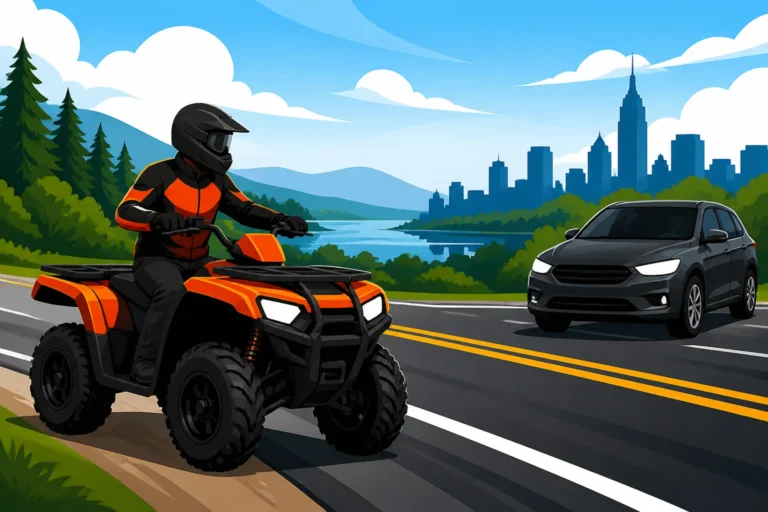
It’s a tough pill to swallow for many riders, but the baseline truth in New York is that your ATV, while an incredible machine for off-road adventures, is generally not welcome on public roads. You can't just hop on your quad and cruise down Main Street or take the scenic route on a state highway like you would in a car. This isn't just a suggestion; it's rooted deeply in the state's Vehicle and Traffic Law.
The Legal Foundation of Restriction
New York's Vehicle and Traffic Law defines ATVs as "all-terrain vehicles" and, quite explicitly, outlines where they can and cannot be operated. The core of this legislation is designed around safety. ATVs are built for rugged, unpaved terrain – trails, fields, and dirt tracks – not for the asphalt jungle shared by cars, trucks, and motorcycles. Their design, which includes high ground clearance, knobby tires, and often a lack of street-legal essentials like turn signals or mirrors (though many riders add these through aftermarket providers like SuperATV for enhanced trail visibility), makes them inherently less safe for typical road conditions. They handle differently at speed on pavement, have different braking characteristics, and simply aren't engineered for the same kind of collision protection or stability. The state's stance, therefore, is to keep these machines where they belong: off the traditional roadways, unless specific exceptions are made. This general prohibition aims to prevent accidents between vehicles designed for very different environments.
The Frustration of Ambiguity for Riders
For those of us who just want to enjoy our machines, this overarching restriction can feel incredibly unfair and confusing. You might see photos or videos of riders elsewhere cruising on quiet backroads, or hear about a friend of a friend who rides their quad to the local convenience store in another state, and wonder why New York has to be so strict. It creates a sense of ambiguity: if the state says no, but then allows for exceptions, how in the world are you supposed to know where those exceptions apply? This lack of clear, statewide "ATV roads" often leaves riders feeling like they're in a legal minefield, unsure if their next turn could lead to a ticket or worse. We've all felt that frustration of trailering our machines for miles, only to find ourselves just a short, tempting road ride away from the gas station or a connecting trail, wishing there was a clear, legal path. It's not just about wanting to break the rules; it's about wanting clear, actionable guidance on where responsible riding is permitted. For a deeper dive into what is and isn't allowed, check out our guide on [Are ATVs Street Legal in New York?].
The Local Power: How Towns and Counties Can Open Roads to ATVs
While the state sets the general "no" rule, it also provides a crucial loophole: local municipalities have the authority to create exceptions. This is where the concept of "designated and posted" roads comes into play, a phrase you'll hear often in New York ATV circles. It's not the state drawing the lines; it's your local town or county government.
The "Designated and Posted" Mandate Explained
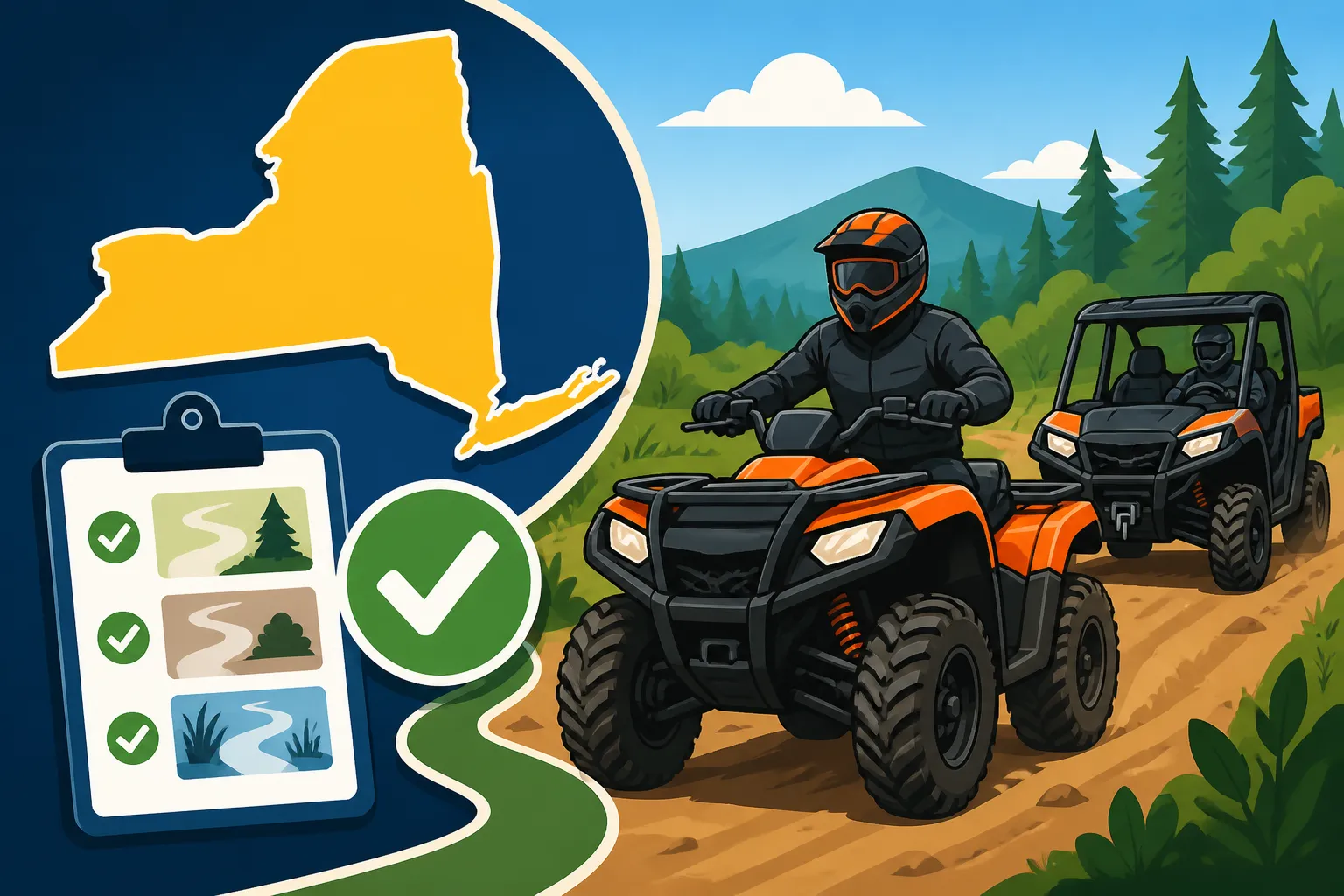
To be legally ridden by an ATV, a road in New York must meet two distinct conditions: it must be designated and it must be posted. Think of them as two sides of the same coin, and you can't have one without the other. "Designated" means that the local governing body – usually a town board, village board, or county legislature – has formally passed a law, resolution, or ordinance explicitly stating that a particular road or segment of road is open for ATV use. This isn't just a casual agreement; it's an official legislative act that puts the decision into the public record. Without this formal designation, even if a road looks like a perfect ATV route, it's off-limits. "Posted" refers to the physical signage that must be erected along these designated roads. These signs are critical. They serve as a clear, visible notice to riders, indicating exactly where ATV operation is permitted. These aren't subtle little placards; they're official signs installed by the municipality. If a road is designated but not posted, or posted without a formal designation, it's still illegal to ride an ATV on it. Both pieces must be in place. For more on this, see [New York's Designated and Posted Roads].
The Mechanics of Local Legislation
So, how does a road get "designated" by a local government? It's a formal process, much like any other local law. Typically, an individual, an ATV club, or even a local official might propose the idea. This proposal then goes before the town or county board. They'll usually hold public hearings, where residents, landowners, and ATV enthusiasts alike can voice their opinions, concerns, and support. This is a crucial step because it allows the community to engage directly with the decision. The board will consider factors like traffic volume, safety implications for both ATV riders and other motorists, potential noise complaints from residents along the road, and how the road might connect to existing trails or points of interest. They might also consult with local law enforcement, highway departments, and even environmental groups. After gathering all this input, the board will vote on a resolution or ordinance. If it passes, the road or roads in question are officially designated for ATV use, paving the way for the "posting" phase. It's a bureaucratic but necessary hurdle that ensures community input and careful consideration.
Criteria for Road Selection: What Makes a Road "Designatable"?
When a town or county considers designating a road for ATV use, they aren't just picking names out of a hat. There are specific criteria that typically guide their decisions, heavily focused on safety and minimizing disruption. Generally, the roads most likely to be designated are those with:
- Low Traffic Volume: This is perhaps the most critical factor. Roads with minimal vehicular traffic reduce the risk of collisions between ATVs and cars or trucks.
- Lower Speed Limits: Slower roads are inherently safer for ATVs, which aren't designed for highway speeds.
- Rural or Remote Locations: Roads that run through less populated areas, often connecting to forests, fields, or existing trail systems, are ideal candidates.
- Connection to Trail Networks: Many designated roads serve as critical links, allowing riders to legally access a network of off-road trails, gas stations, or local businesses. Think of them as short, necessary bridges between trail sections or between your camp and the nearest trail head.
- Lack of Sidewalks or High Pedestrian Traffic: To ensure pedestrian safety, roads with little foot traffic are preferred.
- Physical Characteristics: Roads that are relatively straight, with good sightlines, and not too many steep hills or blind turns are safer bets.
For example, a quiet dirt road that leads from a small hamlet to a popular trailhead, or a rarely used paved backroad connecting two sections of a county trail system, might be designated. Conversely, a busy state route or a road through a residential neighborhood would almost certainly not be considered. While aftermarket accessories from companies like SuperATV can enhance visibility and safety features on your machine, like adding mirrors or turn signals, these modifications alone don't make a road suitable for designation. The road itself must meet the municipality's criteria for safe ATV operation.
From Paper to Pavement: The Posting Requirement in Detail
Once a road has been formally designated by local law, the next crucial step is making that designation visible to everyone. This is where the "posted" part of "designated and posted" comes in, and it's just as important as the legal designation itself. Without clear, official signs, even a legally designated road remains off-limits.
The Look and Placement of Official Signs
When a road is officially "posted" for ATV use, you'll typically see specific signs erected by the municipality. These aren't handwritten notes or unofficial markers; they're official signs, usually similar in style and durability to other road signage. They're often placed at the entry points of the designated road segments, such as at intersections with other roads or where a trail might meet a road. These signs will clearly indicate that ATV use is permitted, and they might also specify any particular restrictions, such as hours of operation (e.g., "ATV use 7 AM to 9 PM"), speed limits, or seasonal allowances. You might see a sign depicting an ATV symbol with an arrow, or simply text stating "ATV ACCESS" or "ATV ROUTE." The key is that they must be unambiguous and clearly visible to approaching riders. Without these physical signs, a rider has no legal way of knowing that the road is open, and therefore, they cannot legally ride on it.
The Importance of Visibility and Clarity
The posting requirement isn't just a bureaucratic formality; it's a critical safety and legal measure. For riders, clear signage means you can confidently know where you are allowed to be, reducing the risk of accidental trespass or illegal operation. It removes the guesswork and the constant nagging doubt about whether you're breaking the law. For municipalities, clear posting helps with enforcement; law enforcement officers can easily identify designated roads and know that any ATV operating off those posted roads is in violation. It also protects the municipality by providing clear notice to the public, mitigating claims of ignorance. Imagine trying to navigate a trail system that requires short road connections without any signs – it would be a nightmare, and incredibly dangerous. These signs ensure that responsible riding can occur safely and legally, benefiting both the riding community and the general public.
The Consequences of Ignoring "Designated and Posted" Rules
Riding an ATV on a public road in New York that has not been both formally designated and visibly posted can lead to some pretty serious consequences. It's not a minor infraction that you can shrug off. You could face significant fines, and your machine could even be impounded. An officer isn't going to care if you "thought" it was okay or if "everyone else rides here." If there's no sign and no local law, you're breaking the rules.
Beyond legal penalties, there are practical risks. If you're involved in an accident while riding illegally on an unposted road, your insurance company might deny coverage, leaving you personally responsible for damages and medical bills that could easily climb into the tens or hundreds of thousands of dollars. Always carry proof of your [New York ATV Registration and Insurance Proof] to avoid further headaches. Riding on undesignated roads also fuels negative perceptions of ATV riders, making it harder for advocacy groups to push for more designated trails and roads in the future. It truly undermines the efforts of responsible riders and organizations working to expand access.
Navigating the Network: Understanding Different Road Types and Their ATV Access
Knowing that roads need to be "designated and posted" is step one, but understanding which types of roads are typically candidates for this designation is equally important. Not all roads are created equal in the eyes of New York's ATV laws.
Town and County Roads: Your Best Bet for Legality
When it comes to legally riding your ATV on public thoroughfares in New York, town and county roads are generally your best bet. These are the roads that local municipalities have the most control over and are therefore the most likely to undergo the designation process. Think of the quieter, rural routes that crisscross areas like Lewis County or Oswego County, where extensive ATV trail systems exist. In these regions, you'll often find specific ordinances that allow ATVs on certain town or county roads to connect trail segments, provide access to amenities like gas stations or restaurants, or simply link different riding areas.
For example, Lewis County, a mecca for ATV enthusiasts, has a well-established system where many of its roads are designated for ATV use during specific seasons and hours. These are typically low-speed, low-traffic roads that integrate seamlessly with their extensive trail networks. Similarly, some parts of Oswego County also have club trails that leverage designated town roads. These roads are usually rural, often unpaved, and are explicitly managed by local authorities to ensure safe, legal access for riders. Always consult local maps and ordinances, often provided by county tourism boards or ATV clubs, to identify these specific routes. You can find more specific rules in our guides like [New York Rules for Riding a Town Road] and [New York Rules for Riding a County Road].
State Highways and Interstates: A Hard No for ATVs
Let's be unequivocally clear: state highways, state routes, and especially interstates in New York are almost universally off-limits to ATVs. This is not a matter of local designation; it's a firm statewide and often federal prohibition. These roads are designed for high-speed vehicular traffic, and an ATV simply cannot safely operate in that environment. The dangers are immense, not only to the ATV rider but also to other motorists.
Imagine trying to navigate a four-lane highway with your quad, dealing with cars traveling at 65+ MPH, semi-trucks creating massive wind currents, and the sheer volume of traffic. It's a recipe for disaster. There are no state laws or local ordinances that override this fundamental safety principle. Attempting to ride an ATV on these types of roads will almost certainly result in immediate law enforcement intervention, significant fines, and potential impoundment of your machine. Even crossing a state highway at an intersection typically has very specific rules that must be followed. For details on how to safely and legally navigate such crossings, see [Crossing a Highway on an ATV in New York].
Connecting Designated Roads to Trail Systems and Private Land
One of the primary purposes of designating town and county roads for ATV use is to create seamless connections within larger riding networks. Many fantastic off-road trails are discontinuous, cut by private property, natural barriers, or inconveniently placed roadways. Designated public roads provide the necessary links, allowing riders to transition from one trail segment to another without illegally riding on private land or unsafe thoroughfares.
These designated road segments might lead directly to a trailhead, a staging area, a local gas station, a small general store, or even provide legal access to private property where a rider has permission. They are often vital capillaries in the larger circulatory system of a riding area. For instance, in areas like Tug Hill, these road connections are essential for multi-day rides, allowing riders to get fuel, food, or simply return to their lodging. When you're outfitting your machine for these varied terrains, you might find SuperATV parts like heavy-duty tires or winches useful for the trails, but remember that the road portions require adherence to traffic laws and safety gear like helmets, as outlined in [New York Helmet Rules for ATV Riders]. The ultimate goal is to connect the dots legally and safely, enhancing the overall riding experience and economic benefit to the local communities that embrace ATV tourism.
What Riders Need to Know About Designated Roads
Finding a designated and posted road in New York can feel like hitting the jackpot, but don't let your excitement override your common sense or legal obligations. Just because a road is open to ATVs doesn't mean it's a free-for-all. There are still crucial rules and requirements you must follow to ensure a safe and legal ride.
Limited Use and Specific Conditions
It's vital to understand that "designated" does not mean "anything goes." Often, municipalities will impose specific conditions on ATV use on these roads. These conditions are usually outlined in the same local law that designates the road and should be reflected in the signage. Common restrictions include:
- Hours of Operation: You might only be allowed to ride between specific hours, such as sunrise to sunset, or from 7 AM to 9 PM. Night riding might be prohibited.
- Seasonal Restrictions: Some roads might only be open during specific seasons, for example, from May 1st to October 31st, aligning with trail season.
- Speed Limits: While ATVs often have different performance characteristics than cars, the designated road will still have a posted speed limit that you must adhere to, and local laws might even impose a lower ATV-specific speed limit.
- Purpose of Travel: Sometimes, the designation is specifically for "accessing trails" or "connecting properties," implying that joyriding back and forth on the road itself might not be the intended use.
- Equipment Requirements: While standard New York ATV equipment rules apply (like mufflers and spark arresters), local ordinances might have additional specific safety requirements.
Always read the signs carefully and familiarize yourself with the local laws of the area you plan to ride in. Ignorance of the law is never an excuse, and these conditions are there for everyone's safety and to minimize impacts on residents.
The "Designated and Posted" Mantra
We can't stress this enough: for a road to be legally ridable by an ATV in New York, it must be both designated by local law and posted with physical signs. One without the other is simply not enough. This isn't a suggestion; it's the law. If you come across a beautiful, quiet backroad that seems perfect for your quad but see no official "ATV Route" signs, assume it's off-limits. Conversely, if you see a makeshift sign but can't find any official municipal documentation supporting the designation, proceed with extreme caution, or better yet, avoid it. Relying on unofficial information or what "everyone else does" is a surefire way to run into trouble. Always confirm both elements for yourself, perhaps by checking the municipality's website or contacting their clerk's office. This diligence is what separates responsible riders from those who unfortunately give the sport a bad name.
Beyond Designation: Other Legal Requirements
Even if you're on a perfectly designated and posted road, your legal obligations don't end there. Operating an ATV in New York comes with several non-negotiable requirements that apply whether you're on a trail, private land with permission, or a designated road.
Firstly, your ATV must be registered with the New York DMV. This isn't optional for any machine operating anywhere other than your own private property. Secondly, you need valid insurance. New York has a mandatory ATV insurance law, requiring minimum liability coverage, even on private land or designated roads. You'll need proof of this, so make sure to carry your insurance card. Thirdly, helmets are mandatory for all riders and passengers, regardless of age, whenever you're operating an ATV off your own property. There are no exceptions for adults. Eye protection is also highly recommended, and often legally required. Beyond these, specific equipment rules regarding mufflers, spark arresters, and lighting (if riding at dusk or dawn) apply. For more information on all these vital requirements, consult our guides like [New York ATV Registration and Insurance Proof], [New York's Mandatory ATV Insurance], and [New York Helmet Rules for ATV Riders]. Remember, these are separate from and in addition to any road designation rules.
Advocating for More ATV-Friendly Roads
It's easy to feel frustrated by the limitations placed on ATV use in New York, but instead of dwelling on the "no," consider becoming part of the solution. Expanding legal riding opportunities, including designated roads, often comes down to community engagement and responsible advocacy.
Getting Involved with Local Government
If you believe there's a particular road in your town or county that would be a perfect candidate for ATV designation, don't just hope for it – advocate for it! This means engaging directly with your local government. Start by researching existing local laws and understanding the current process for new ordinances. Then, approach your town or county board members with a well-reasoned, safety-conscious proposal. Highlight the economic benefits that ATV tourism can bring to local businesses, emphasize the responsible nature of ATV riders, and explain how the proposed designation would safely connect existing trails or provide critical access. Attend public meetings, speak during public comment periods, and gather support from other community members. Present solutions to potential concerns, such as noise mitigation or property access. A polite, organized, and persistent approach is far more effective than just complaining.
Joining ATV Clubs and Organizations
There's immense power in numbers, and ATV clubs and organizations in New York are often at the forefront of advocating for increased access. These groups not only provide camaraderie and organized rides, but they also serve as a collective voice to lobby local governments, maintain trails, and promote responsible riding ethics. They have experience navigating the legislative process, understand the nuances of local politics, and can often present a more professional and unified front than individual riders. Joining a club like the Central Oswego County Riders or others affiliated with networks like the Lewis County ATV Trail System can give you a direct channel to influence policy and support efforts to open more designated roads and trails. Many clubs also rely on volunteer work to clear and maintain trails, demonstrating a commitment that strengthens their case for more access. Check out our guide on [New York ATV Trail Permits Explained] for information on how clubs often factor into trail access.
Understanding the Opposition and Building Consensus
Any effort to expand ATV access, particularly on public roads, will almost certainly encounter opposition. Concerns often stem from noise, environmental impact, safety for other road users, and potential property trespass. To be an effective advocate, you need to understand these concerns and be prepared to address them proactively. This means:
- Emphasizing Responsible Riding: Highlight the vast majority of ATV riders who are law-abiding, respectful of property, and environmentally conscious.
- Promoting Safety Education: Support and participate in ATV safety courses, demonstrating a commitment to safe operation.
- Environmental Stewardship: Show how ATV clubs actively work to maintain trails, prevent erosion, and protect natural habitats.
- Community Integration: Frame ATV access as a benefit to the local economy, bringing in tourism dollars for gas stations, restaurants, and lodging, rather than just a recreational activity for a few.
- Compromise: Be open to conditions, such as specific hours, speed limits, or seasonal closures, that address concerns while still providing meaningful access.
Building consensus requires dialogue, education, and a willingness to find common ground. By demonstrating a commitment to safety, responsibility, and community benefit, riders can gradually shift perceptions and open new doors for legal ATV access in New York.
Here's a quick overview of how different road types generally fare for ATV use in New York:
| Road Type | General ATV Legality Status (NY) | Typical Control | Why It Matters |
|---|---|---|---|
| Town Roads | Generally Illegal; Can be Designated & Posted | Local Town Board | Most likely to be opened for ATV use to connect trails/services if local law allows. |
| County Roads | Generally Illegal; Can be Designated & Posted | County Legislature | Often designated in ATV-friendly counties, similar to town roads, for network access. |
| State Highways | Strictly Illegal | NYS DOT | High speeds, high traffic; fundamentally unsafe and prohibited for ATVs. |
| Interstates | Strictly Illegal | NYS DOT / Federal | Highest speeds, heaviest traffic; absolute prohibition, never an option. |
| Private Roads | Legal with Landowner Permission | Private Owner | Requires explicit consent from the property owner, not a public designation. |
Disclaimer
This article is for general informational purposes only and does not constitute professional advice. Laws, prices and regulations vary by location and change over time. Consult a qualified professional for guidance on your specific situation.