Where New York Bars ATV Riding
Navigating the rules and regulations for ATV riding in New York can feel like trying to find your way through a dense forest without a map. Many riders, especially those new to the Empire State or just getting into the sport, grapple with the fear of unknowingly trespassing or ending up with a hefty fine simply because they weren't sure exactly where they were allowed to ride. This guide is here to shed light on those confusing areas, clearly outlining the places where ATV riding is strictly prohibited in New York so you can hit the trails with confidence, knowing you're staying on the right side of the law.
Understanding New York's Default Position: Where Riding Is Not Allowed
Let's be blunt: in New York, the general rule of thumb for ATVs is that you are not allowed to ride somewhere unless it's explicitly designated and posted as open. This isn't like driving a car where roads are assumed open unless marked otherwise. With ATVs, the burden is on the rider to know where they can ride, not where they can't. This fundamental difference trips up many people, leading to accidental violations.
The "Closed Unless Posted Open" Rule
This core principle is crucial for every ATV rider in New York to understand. Unlike some other states that might have more permissive blanket rules, New York takes a conservative approach. You can't just assume a patch of woods or an unmarked trail is fair game. If there isn't clear signage or official designation indicating that ATVs are permitted, you should proceed with the assumption that they are not. This applies to most state lands, public access roads, and even many seemingly abandoned paths. It's a proactive stance that places responsibility squarely on the rider to verify legality before the wheels turn.
This rule exists to protect sensitive ecosystems, maintain public safety, and respect private property rights. It's designed to prevent indiscriminate riding that could lead to environmental damage, conflicts with other land users like hikers or equestrians, and property disputes. Always do your homework before you head out, checking county maps, local ordinances, and trail club websites. Just because a trail looks well-worn doesn't mean it's legal, and an unposted "no trespassing" sign doesn't give you a free pass if you didn't seek permission first.
The Strictures of Private Property
Beyond public lands, private property is another major area where riding is typically barred without explicit permission. This seems obvious, yet it's astonishing how often riders find themselves in trouble for venturing onto someone else's land without a green light. Landowner consent is not just a polite request; it's a legal requirement. New York law is very clear on this. Even if the land isn't fenced or posted with "No Trespassing" signs, riding on it without the owner's permission is still illegal. [Landowner Consent on New York Private Land] is not just about avoiding confrontation; it's about respecting property rights.
This often becomes a point of contention when trails cross multiple parcels of private land. A landowner who previously allowed access might sell their property, or simply change their mind, thereby closing a section of trail. This is why official trail systems, often maintained by clubs or counties, are so vital – they typically have agreements in place with all the landowners involved to ensure continuous, legal access. Always seek written permission if you plan to ride on private land that isn't part of an officially sanctioned trail system. Even a verbal "yes" can be difficult to prove if a problem arises.
Public Roads and Highways: A Gray Area
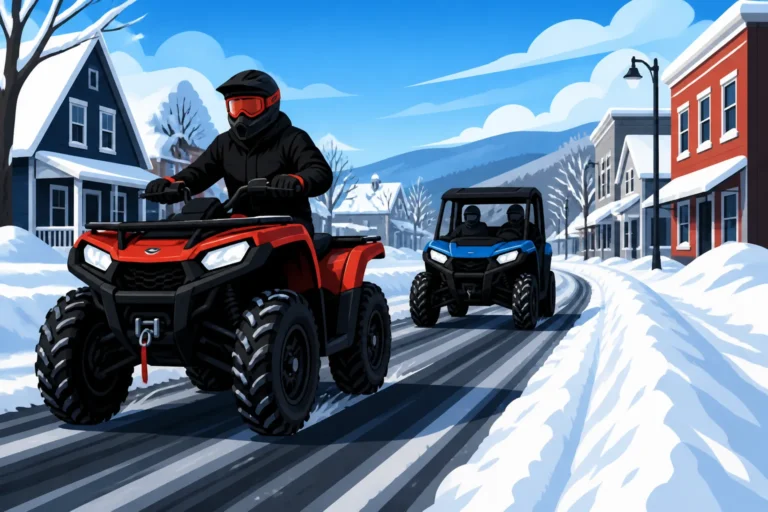
Generally speaking, ATVs are not permitted on public highways, streets, or roads in New York, with very limited exceptions. This is one of the most common misconceptions. People see cars on roads and assume that because an ATV can go fast, it must be allowed. This is absolutely not the case. The vast majority of New York's public road network is off-limits to ATVs. The key here is that ATVs are not "street legal" vehicles in New York State. They lack the necessary equipment (like specific turn signals, mirrors, and safety glass) and are not designed for road use.
Exceptions typically involve designated and posted roads that are part of an approved trail system, or crossing a highway at a ninety-degree angle at a designated spot. [Crossing a Highway on an ATV in New York] needs to be done with extreme caution and only where permitted. Some towns and counties might designate certain low-traffic roads as open for ATV use, but these are rare and always clearly marked. Never assume a road is open just because it looks quiet or unpatrolled. The fines for riding an ATV on an unauthorized public road can be substantial, and you risk serious accidents with motor vehicles. For safety and legality, stick to off-road trails.
The Great Outdoors: State Parks, Preserves, and Wilderness Areas
New York is blessed with an abundance of natural beauty, from sprawling state parks to rugged wilderness. However, many of these pristine areas are precisely where ATV riding is strictly prohibited to preserve their ecological integrity and provide passive recreation opportunities. Don't let the allure of vast, open spaces trick you into thinking they're open to all motorized vehicles.
Why State Parks Are Generally Off-Limits
New York State Parks, managed by the Office of Parks, Recreation and Historic Preservation (OPRHP), are almost universally off-limits to ATVs. The mission of State Parks typically focuses on passive recreation – activities like hiking, picnicking, swimming, and camping – and the preservation of natural and historical resources. ATV use, with its potential for noise, soil erosion, and disruption to wildlife, clashes with these core objectives. [Why New York State Parks Ban ATVs] is a common question, and the answer lies in their mandate to protect and preserve.
While a few specific park properties might have very limited, designated areas or special events that allow motorized access, these are exceedingly rare and always clearly advertised. Your general assumption should always be that if you're in a New York State Park, your ATV needs to stay on the trailer. Attempting to ride in a State Park will not only result in fines but can also lead to your vehicle being impounded and potentially a ban from the park system.
The Forever Wild Clause and the Forest Preserve
Perhaps one of the most fiercely protected areas in New York, the Adirondack and Catskill Forest Preserves are governed by Article XIV of the New York State Constitution, often referred to as the "Forever Wild" clause. This constitutional protection mandates that these lands "shall be forever kept as wild forest lands." This strong language severely restricts motorized access, including ATVs. The intent is to maintain the wilderness character of these vast tracts of land, preserving them in their natural state for future generations. [The Forest Preserve Is Closed to Machines] is a fundamental aspect of this protection.
While there are some exceptions for public highways that pass through the Forest Preserve and a very limited number of designated administrative or logging roads that might be open to licensed motor vehicles (not typically ATVs), the vast majority of the Preserve is closed to any off-road motorized travel. Even if you see a dirt road, it's highly probable it's off-limits to your quad. Respecting the "Forever Wild" designation is paramount, and violations in the Preserve carry significant penalties.
Wilderness, Primitive, and Canoe Areas
Within the broader Forest Preserve, and in other state-managed lands, specific designations like "Wilderness," "Primitive," and "Canoe" areas represent the highest level of protection. These areas are specifically managed to retain an untrammeled, undeveloped character, where human impact is minimized and mechanized travel is almost entirely prohibited. This means absolutely no ATVs, snowmobiles, or other motorized vehicles are allowed. [New York's Wild Forest Versus Wilderness Land] highlights the distinctions, but generally, the more "wild" the designation, the less motorized access you'll find.
These areas are intended for foot travel, canoeing, and other self-propelled forms of recreation. The entire point is to offer an escape from the sounds and intrusions of modern machinery. Violating these rules is taken very seriously, as it undermines the core purpose of these protected lands. Always consult official Department of Environmental Conservation (DEC) maps and regulations before venturing into any remote areas to ensure you are not entering a prohibited zone.
Local Ordinances: When Towns and Villages Go Stricter
Just when you think you have a handle on state laws, New York throws a curveball: local municipalities. Towns, villages, and even some counties have the authority to enact their own ordinances regarding ATV use, and these can be significantly more restrictive than state law. This creates a patchwork of rules that can be incredibly frustrating to navigate, but it's vital to understand them.
Understanding Town and Village Authority
Local governments in New York have the power to regulate various aspects of life within their borders, and ATV operation is certainly one of them. This means a town board can pass a local law that prohibits ATV riding on all town roads, or even within specific areas of the town, regardless of whether state law might technically allow for some limited use. [What a New York Town May Be Stricter] illustrates how this local control works. They can also, conversely, designate specific town roads or trails as open for ATVs, but this requires a formal process and clear signage.
The rationale behind these local ordinances varies. It could be due to noise complaints from residents, concerns about environmental damage, or a desire to maintain public safety in high-traffic areas. This local control means that what's legal in one town might be strictly prohibited just a few miles down the road in the next town over. This variation makes it incumbent upon riders to check local laws for every community they plan to ride through or in.
The Impact of Local Bans on Connectivity
One of the most significant frustrations for ATV riders stemming from local ordinances is the fragmentation of potential trail systems. Imagine a fantastic trail that traverses three towns. If two of those towns are ATV-friendly but the middle town has a complete ban on ATV use on its roads or lands, that entire trail system becomes effectively cut off. This "missing link" problem is a direct result of individual towns exercising their right to prohibit riding. You might find a great trail that ends abruptly at a town line, forcing you to turn around or risk trespassing.
These local bans often prevent the development of longer, more cohesive trail networks, which is a common complaint among ATV enthusiasts. It underscores the importance of researching your route thoroughly and respecting those municipal boundaries. Even if you see an aftermarket accessory on a friend's machine, say a SuperATV winch bumper, it won't help you bridge a legal gap created by a town ordinance; it's designed for recovery on legal trails, not for bypassing legal restrictions.
Navigating a Patchwork of Rules
So, how do you deal with this complex web of local regulations? The best approach is always to check with the local town or village clerk's office, or their official website, for current ATV ordinances. Many counties that support ATV riding, like Lewis County, make a concerted effort to work with their towns to create unified trail systems, but this isn't universal. Always prioritize official information over hearsay or outdated maps.
When planning a ride that might cross municipal lines, it's prudent to carry printouts or digital copies of the relevant ordinances, or at least be familiar with them. This not only keeps you compliant but can also be helpful if you encounter a law enforcement officer who might not be fully up-to-date on every nuance of local ATV laws. Being prepared demonstrates responsibility and a commitment to legal riding.
Sensitive Areas and Environmental Protections
New York's diverse landscape includes numerous sensitive ecological zones and areas designed for specific environmental protection. These locations are almost universally off-limits to ATVs, not just for safety but primarily for conservation.
Wetlands, Waterways, and Riparian Zones
Riding ATVs in or through wetlands, waterways, and the delicate riparian zones (the land bordering rivers, streams, and lakes) is generally prohibited and can lead to severe environmental damage and hefty fines. These areas are critical habitats for a wide array of plant and animal species, and they play a crucial role in water filtration and flood control. ATV tires can churn up sediment, destroy vegetation, disrupt aquatic life, and introduce pollutants into the water system.
New York's Department of Environmental Conservation (DEC) heavily regulates activities in these sensitive areas. Even if a trail appears to cross a shallow stream, unless it's an officially designated and hardened crossing, you should avoid it. Off-trail riding near bodies of water is particularly frowned upon due to the immediate impact on water quality and fragile ecosystems. Staying on marked trails is not just about avoiding fines; it's about being a responsible steward of the natural environment.
Noise and Proximity to Residential Areas
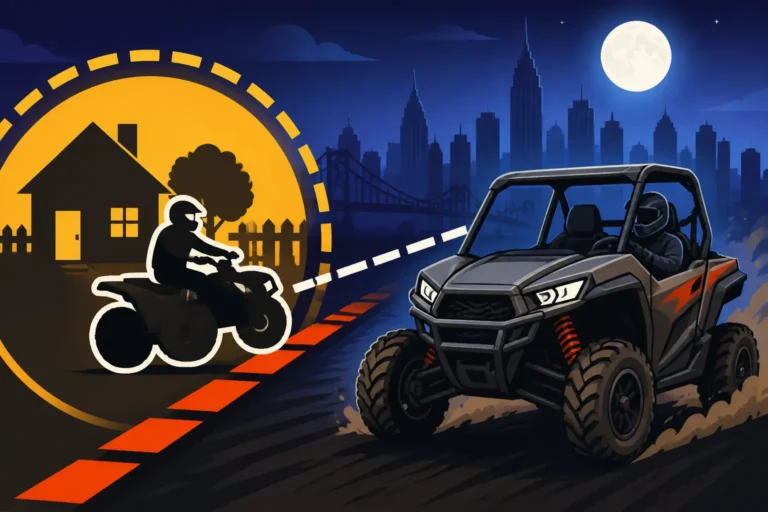
ATVs, by their very nature, can be noisy. New York State law, as well as many local ordinances, addresses noise pollution, especially when it impacts residential areas. A key piece of legislation is the "100-foot rule" found in some sections of the Parks, Recreation and Historic Preservation Law, which generally prohibits the operation of an ATV within 100 feet of a dwelling between sunset and sunrise, or at any time in a manner that unreasonably disturbs residents. [New York's 100-Foot Rule Near Homes at Night] is a critical rule to remember.
This means even if you're riding on private land that you own or have permission for, you can still be in violation if your noise unreasonably disturbs your neighbors, particularly during nighttime hours. Many official trails are designed to route away from residential zones precisely to mitigate this issue. Responsible riding includes being mindful of your sound footprint, especially in areas with nearby homes or camps.
Wildlife Management Areas and Preserves
New York State maintains numerous Wildlife Management Areas (WMAs) and various types of preserves that are specifically dedicated to wildlife habitat and conservation. While some of these areas may allow public access for activities like hunting or birdwatching, ATV use is almost universally prohibited. The goal of these areas is to provide undisturbed habitats for wildlife, and the presence of ATVs can disrupt breeding, feeding, and migratory patterns, as well as damage critical vegetation.
Always check with the DEC or the specific land manager for rules pertaining to WMAs or preserves. Even if a WMA has an access road, it's typically for administrative purposes or specific permitted activities, not for general ATV trail riding. Respecting these boundaries ensures that New York's rich biodiversity can thrive, and you avoid costly penalties.
Specific Road Types and Infrastructure
Beyond general land categories, there are specific types of roads and infrastructure where ATVs are almost always barred from operation in New York. These prohibitions are largely due to safety concerns for both the ATV rider and other motorists or pedestrians.
Interstate Highways and Limited-Access Roads
It should go without saying, but ATVs are absolutely prohibited from operating on interstate highways, state parkways, and any other limited-access roads in New York. These roads are designed for high-speed motor vehicle traffic, and ATVs are simply not built for such environments. The speed differential, lack of appropriate safety features, and inability to keep up with traffic flow make ATV operation on these roads incredibly dangerous and illegal. [Interstates Closed to New York ATVs] is a clear and unambiguous rule.
The penalties for operating an ATV on an interstate or parkway are severe, often involving significant fines, impoundment of the vehicle, and potential criminal charges. If you need to transport your ATV across these types of roads, it must be loaded onto a trailer and towed by a legal motor vehicle. There are no exceptions for these high-speed roadways.
Sidewalks, Bike Paths, and Pedestrian Zones
ATVs are motorized vehicles designed for off-road use, not for sharing space with pedestrians and cyclists. Therefore, operating an ATV on sidewalks, designated bike paths, pedestrian walkways, or within public parks designated solely for foot traffic is strictly prohibited. These areas are for vulnerable road users, and an ATV poses a significant safety hazard due to its weight, speed, and size.
Local ordinances are often very clear on these prohibitions, and enforcement is typically swift due to public safety concerns. A small exception might exist for maintenance or emergency vehicles, but for recreational ATV use, these zones are completely off-limits. Respecting pedestrian and cyclist safety is paramount, and it means keeping your ATV on appropriate trails.
Active Rail Lines and Utility Corridors
Active railroad tracks and their adjacent rights-of-way are extremely dangerous and illegal places to ride ATVs. Trains move much faster than they appear, cannot swerve, and require long distances to stop. Trespassing on railroad property is not only incredibly risky but also a serious offense, often resulting in significant fines and legal consequences. This applies to the tracks themselves, the ties, and the land immediately bordering the tracks.
Similarly, while utility corridors (lands managed for power lines, pipelines, or other infrastructure) might seem like open spaces, they are often privately owned or managed, and riding on them is typically prohibited without specific permission from the utility company. These areas can also contain hidden hazards like unmarked cables, uneven terrain, or access points for heavy equipment. Always assume utility corridors are closed to recreational ATV use unless you have explicit, written permission from the property owner or managing utility.
Here's a table summarizing common areas where ATV riding is typically restricted or prohibited in New York:
| Area Type | General Legality for ATV Riding in New York | Common Reasons for Prohibition |
|---|---|---|
| Undesignated Private Land | Prohibited | Trespassing, Property Rights, Liability |
| Public Roads (Undesignated) | Prohibited | Not Street Legal, Safety, Traffic Flow, Local Ordinances |
| State Parks | Prohibited | Environmental Protection, Passive Recreation Focus |
| Forest Preserve | Prohibited | "Forever Wild" Constitutional Clause, Wilderness Preservation |
| Wilderness/Primitive Areas | Prohibited | Highest Level of Environmental Protection, No Mechanized Travel |
| Wetlands & Waterways | Prohibited | Environmental Damage, Water Quality, Habitat Disruption |
| Residential Areas (Night) | Restricted (100-foot rule) | Noise Pollution, Public Disturbance |
| Wildlife Management Areas | Prohibited | Habitat Protection, Wildlife Disturbance |
| Interstate/Limited Access Roads | Prohibited | Extreme Safety Hazard, High-Speed Traffic |
| Sidewalks & Bike Paths | Prohibited | Pedestrian/Cyclist Safety, Designed for Non-Motorized Use |
| Active Rail Lines | Prohibited | Extreme Danger, Trespassing, Risk of Collision |
| Utility Corridors | Prohibited (unless permitted) | Private Property, Hidden Hazards, Infrastructure Protection |
This table serves as a quick reference, but remember, specifics can vary. Always verify local regulations and check official trail maps for the most accurate and up-to-date information before you ride. When in doubt, it's always safer to assume an area is closed.
Disclaimer
This article is for general informational purposes only and does not constitute professional advice. Laws, prices and regulations vary by location and change over time. Consult a qualified professional for guidance on your specific situation.