Keeping 100 Feet Off an Ice Shanty
Navigating frozen lakes and ponds in New York on an ATV or UTV can be an exhilarating experience, offering a unique perspective on our beautiful winter landscape. However, it also comes with a unique set of responsibilities, especially when sharing these frozen expanses with other winter enthusiasts like ice anglers. Many riders, eager to get out on the ice, don't realize there are specific rules about how close you can get to an ice shanty, which can lead to friction, frustration, and even fines. This guide will walk you through New York's 100-foot rule, explaining why it's in place, how to follow it, and what it means for your winter riding adventures.
The Rationale Behind New York's 100-Foot Rule on Ice
It's easy to think of a vast frozen lake as an open playground, but in reality, it's a shared ecosystem. New York's rule about maintaining a 100-foot distance from ice shanties isn't just an arbitrary number; it's a carefully considered measure designed to protect both people and the peaceful enjoyment of our natural resources. It’s about creating harmony on the ice for everyone, whether you’re casting a line or carving a path.
Safety Concerns on Frozen Water
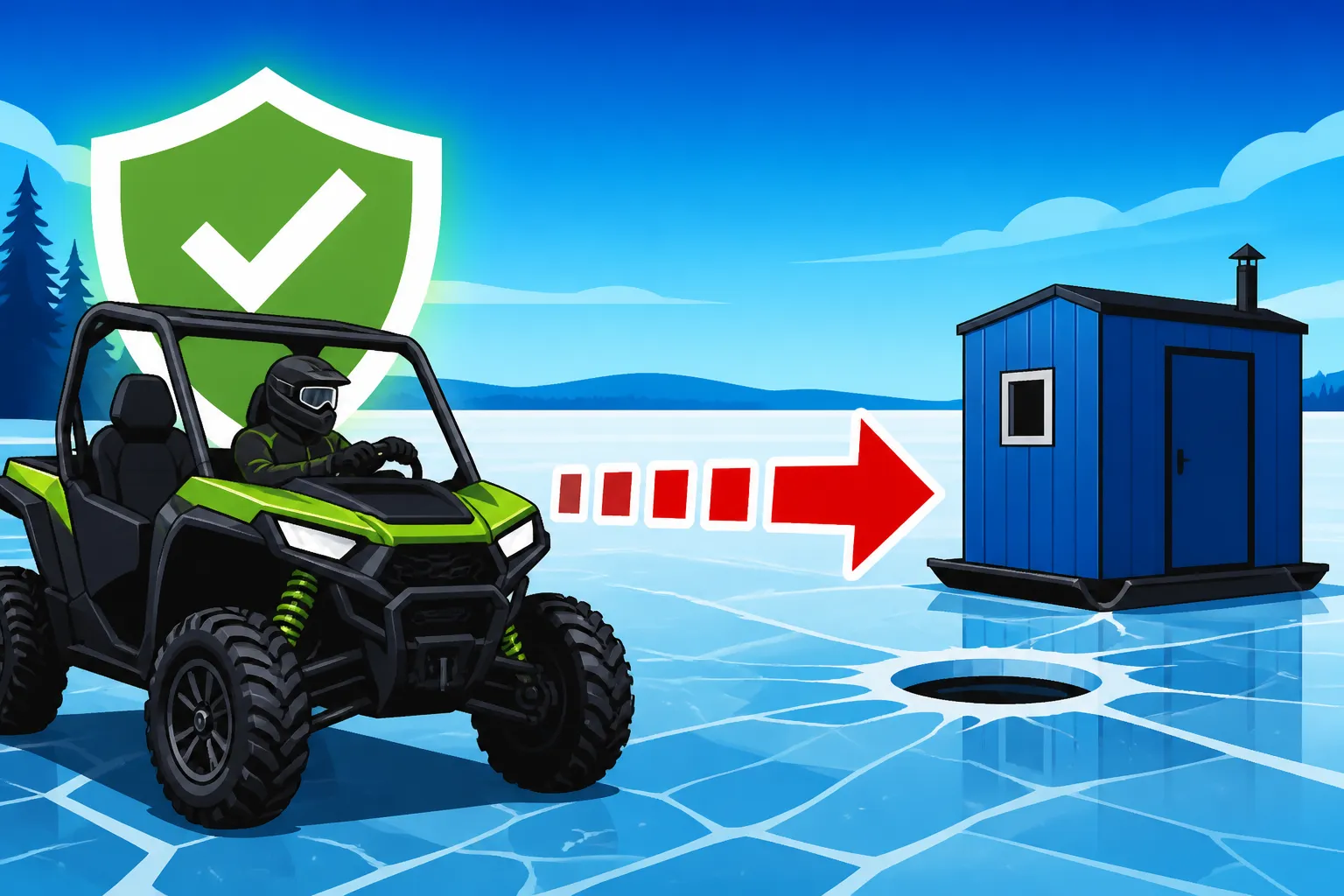
The primary reason for the 100-foot rule boils down to safety, first and foremost. When ATVs and UTVs are zipping around on the ice, they can create vibrations and noise that might feel harmless from the driver's seat, but for someone inside a stationary ice shanty, it's a different story. These machines, particularly heavier side-by-sides, transmit vibrations through the ice, potentially stressing already thin or compromised areas around structures. While modern ATVs are engineered with safety in mind, even a slight increase in stress on the ice could be problematic, especially in areas that have been drilled repeatedly for fishing holes. The rule reduces the risk of accidental collisions, ensuring there's a safe buffer zone between moving vehicles and stationary shelters. No one wants an unexpected encounter on the ice, and a 100-foot distance helps prevent those close calls that can lead to serious injury or property damage. It’s a simple preventative measure to keep everyone secure.
Respecting the Angler's Experience
Beyond physical safety, the 100-foot rule is also deeply rooted in respect for the experience of ice anglers. Imagine spending hours out on the ice, patiently waiting for a bite, only to have an ATV or UTV roar past just feet away from your shanty. The noise from engines, the exhaust fumes, and the spray of snow or ice kicked up by tires can shatter the tranquility that many anglers seek. For many, ice fishing is a quiet, meditative pursuit, a chance to connect with nature away from the hustle and bustle. The presence of a loud machine too close can disrupt fish, scaring them away from the fishing holes, which directly impacts the angler's success and enjoyment. It’s a real frustration when you've bundled up, set up your gear, and committed to a day on the ice, only to have it disturbed by a preventable intrusion. The 100-foot buffer allows anglers their peace and quiet, helping to ensure that everyone can enjoy their chosen winter activity without infringing on others. It's about shared space and mutual consideration, which are the cornerstones of responsible outdoor recreation in New York.
Understanding the "100-Foot" Measurement in Practice
The rule states 100 feet, but what exactly does that mean when you're out on a vast, featureless expanse of frozen water? It’s not like there are painted lines or markers out there. Understanding what counts as an "ice shanty" and how to accurately gauge that distance can prevent a lot of headaches and potential tickets. We all want to be good stewards of the trails and frozen waterways, so let's get clear on the specifics.
Defining "Ice Shanty" and "Motor Vehicle"
First, let's clarify what an "ice shanty" is in the eyes of the law. While you might picture a quaint, rustic wooden shack, the term is generally quite broad. It encompasses any temporary shelter, structure, or device used for ice fishing that's placed on the ice. This can include everything from elaborate insulated shacks with wood stoves to simple pop-up tents or even just a portable windbreak an angler has set up. If someone is using it as a temporary base for ice fishing, consider it an ice shanty. The key is its purpose: providing shelter for an angler. As for "motor vehicle," this typically refers to any machine designed for land travel that's self-propelled, and on the ice, that absolutely includes your ATV (All-Terrain Vehicle) or UTV (Utility Task Vehicle, often called a side-by-side). The rule applies whether you're riding a nimble sport quad or a robust utility side-by-side. So, if you're on a four-wheeler of any kind, you need to be mindful of this distance.
Practical Measurement and Enforcement
So, how do you actually measure 100 feet on a frozen lake? Let’s be realistic: you’re not going to carry a tape measure. The expectation is not perfect scientific accuracy, but a reasonable effort to maintain the distance. Think about the length of a typical basketball court—that's about 94 feet. So, imagine a space a bit longer than a basketball court between your machine and the shanty. If you're riding a machine that's equipped with aftermarket accessories from companies like SuperATV, such as bright LED light bars, it might actually increase your visibility to anglers, which is a good thing for safety, but it doesn't excuse you from maintaining the required distance.
When it comes to enforcement, law enforcement officers—like local sheriffs or DEC officers—are looking for obvious violations. If you're buzzing right by a shanty, creating a lot of noise and a cloud of snow, you're likely to get their attention. They often use visual estimation, and if you're clearly too close, they won't hesitate to pull you over. The best practice is always to err on the side of caution. If you see an ice shanty, give it a very wide berth. Don't hug the shoreline or cut corners around points if there are shanties present. If you're unsure, or if visibility is poor due to snow or whiteout conditions, slow way down and assume there could be a shanty just beyond what you can clearly see. A little extra caution goes a long way in ensuring a smooth day on the ice for everyone involved.
Legal Implications and Penalties for Violations
Ignoring or simply being unaware of the 100-foot rule can lead to more than just disgruntled ice anglers; it can lead to real legal consequences. New York takes the shared use of its natural resources seriously, and the rules are in place to ensure safety and enjoyment for all. Understanding what’s at stake can be a powerful motivator to adhere to the regulations.
Fines and Consequences
If you're caught riding your ATV or UTV within 100 feet of an ice shanty, you're facing a potential citation. The specific amount of the fine can vary, but generally, a first offense for this type of infraction can result in a significant monetary penalty. These aren't just minor slaps on the wrist; they are meant to deter careless behavior. Beyond the initial fine, repeat offenses can lead to even steeper penalties, and in some cases, your privilege to operate an ATV or UTV could even be suspended, particularly if your actions are deemed reckless or if they result in property damage or injury. The cost of a ticket can quickly add up, far exceeding what you might pay for an [New York ATV Trail Permit Cost]. It’s a good reminder that every time you head out, you're expected to know and follow the rules, whether you're on designated trails or a frozen lake. Don't let a moment of inattention turn an enjoyable ride into a costly lesson.
The Importance of Compliance
Compliance with the 100-foot rule isn't just about avoiding a ticket; it's about being a responsible and considerate rider. Our access to these incredible outdoor spaces, especially frozen waterways, depends heavily on how we conduct ourselves. When riders disregard rules like this, it creates negative perceptions of the entire ATV/UTV community. This can lead to increased restrictions, closures of previously accessible areas, or even stricter legislation down the road. Local towns and municipalities already have the power to enact their own ordinances, and a pattern of disrespect from riders could easily prompt them to make those rules even more stringent.
Think about the broader impact: if anglers consistently report problems with ATVs, they might push for outright bans on motorized vehicles on certain lakes or at specific times. This would be a loss for everyone who enjoys winter riding. Being a responsible rider means actively participating in the preservation of our riding opportunities. It means slowing down, looking out for others, and giving respect to get respect. Adhering to the 100-foot rule is a small but crucial part of that larger picture, ensuring that the ice remains a place where everyone can safely and happily pursue their winter passions.
Best Practices for ATV Riders on Frozen Water
Riding on frozen water offers an unparalleled sense of freedom and adventure, but it also demands an elevated level of vigilance and preparation. To truly enjoy the experience and avoid any run-ins with the law or other ice users, adopting some best practices is essential. It's about being proactive and thoughtful before and during your ride.
Pre-Ride Planning and Awareness
Before you even think about putting a wheel on the ice, thorough pre-ride planning is critical. First, always check the local ice conditions. "No ice is safe ice" is a mantra for a reason. Look for official reports, ask local bait shops or seasoned anglers, and pay attention to recent weather patterns. Warm spells, heavy snow, or even strong winds can dramatically affect ice stability. Once you know the ice is safe, familiarize yourself with any specific local regulations beyond the statewide 100-foot rule. Some lakes or areas might have additional restrictions or designated zones. [Checking Your Town's ATV Ordinance Before You Ride] is a smart move.
As you approach the water, visually scan the entire area before committing to your ride. Are there a lot of ice shanties clustered in one spot? Are there open leads or areas of visibly thin ice? Taking a few moments to assess the landscape can help you plan a safe route that keeps you well clear of any occupied areas. This awareness is your first line of defense against potential hazards and conflicts.
Navigating Near Populated Ice Areas
Once you're on the ice, and especially when you see signs of other users, adjust your riding style immediately. When approaching an area with ice shanties, whether they're elaborate structures or just a lone angler with a bucket, slow your speed significantly. This reduces noise, minimizes ice vibration, and gives you more time to react. If possible, choose routes that provide the widest possible berth. Don’t try to weave between shanties or cut through a cluster of them to save a few minutes. Take the long way around; the slight detour is well worth the peace of mind.
If you find yourself in an unavoidable situation where you must pass somewhat closer than you'd prefer (though always aiming for that 100-foot minimum!), keep your speed to an absolute crawl, perhaps idling past. Be mindful of exhaust fumes and noise. A quick nod or wave to anglers as you pass can also go a long way in showing respect and fostering a positive relationship between different user groups. Remember, this shared space works best when everyone is considerate.
Gear and Visibility Considerations
Proper gear and machine setup also play a vital role in safe and respectful ice riding. Beyond your personal safety gear like a helmet (which is mandatory in New York for ATV riders, even adults, as highlighted in [Helmet Rules for New York Riders]), consider how your machine enhances visibility. Brightly colored machines or those with added visibility flags can make you easier to spot, especially in flat light conditions or blowing snow. Many riders invest in aftermarket lighting options, like those offered by SuperATV, which can drastically improve your ability to see and be seen, particularly during early morning or late afternoon rides when light is often low.
For instance, a high-quality LED light bar can illuminate a broader path ahead, making it easier to spot shanties or other obstacles from a distance. Similarly, well-maintained head and taillights, as covered in [New York Equipment Requirements for ATVs], are not just for legal compliance but for crucial visibility. If you're going to be out on the ice, especially for long distances or in potentially challenging conditions, ensuring your machine is equipped for maximum visibility is a smart move. This isn't just about seeing where you're going, but also about ensuring that ice anglers and other users see you coming well in advance, giving everyone ample time to react and maintain safe distances.
How the 100-Foot Rule Intersects with Other Regulations
The 100-foot rule isn't an isolated regulation; it's part of a broader framework of laws designed to keep everyone safe and responsible on New York's frozen waters. Understanding how this specific rule fits into the larger legal tapestry is crucial for any rider venturing out onto the ice.
New York's General Rules for Riding on Frozen Water
Beyond the specific distance from an ice shanty, New York has overarching regulations governing the operation of ATVs and UTVs on frozen water. For instance, while it might seem obvious, you must ensure the ice is actually safe to ride on. There’s no legal minimum thickness stated, as conditions vary wildly, but the expectation is that riders will exercise extreme caution and good judgment. You are also typically required to carry proof of [New York ATV Insurance Requirement], even on frozen lakes, as accidents can and do happen.
Furthermore, general rules about reckless operation, speed limits (where applicable or implied by conditions), and operating while impaired (as detailed in [Riding Impaired on Private Land in New York]) all still apply. The ice might feel like a wide-open space, but it’s still considered a public area for enforcement purposes, and all the usual rules of responsible operation are in effect. Understanding these broader regulations, which are summarized in resources like [New York Rules for Riding on Frozen Water], helps paint a complete picture of what's expected of you when you take your machine onto a frozen lake or river.
The 100-Foot Rule and Night Riding
New York also has specific regulations concerning night riding, and these can certainly intersect with the ice shanty rule. Generally, ATVs operated after sunset and before sunrise must be equipped with proper lighting, including headlights and taillights. But there's another crucial aspect: New York law often stipulates a 100-foot distance rule for operating motor vehicles near homes or dwellings at night. This rule, known as [New York's 100-Foot Rule Near Homes at Night], is primarily about noise and disturbance.
While an ice shanty isn't a permanent dwelling, the spirit of the law—preventing noise disturbance—extends directly to the 100-foot rule around shanties, especially after dark. An ATV's engine noise can carry much further over a calm, frozen lake at night, making any close pass even more disruptive. Therefore, if you're riding after dark, the 100-foot rule becomes even more critical. Not only are you dealing with reduced visibility, but you're also expected to be extra mindful of disturbing others who might be trying to enjoy a peaceful night of ice fishing. Always assume that the requirements for distance and reduced disturbance are heightened after the sun goes down.
Community and Responsible Recreation on Ice
Ultimately, successfully navigating New York's frozen waterways on your ATV or UTV is about more than just understanding individual rules; it’s about embracing a broader philosophy of community and responsible recreation. When we share these beautiful natural spaces, our actions impact everyone around us.
Fostering Respect Between Users
The foundation of enjoyable shared outdoor spaces is mutual respect. When you're out on the ice, you're likely sharing it with ice anglers, snowmobilers, cross-country skiers, ice skaters, and even wildlife. Each group has its own way of enjoying the winter landscape, and sometimes these activities can conflict. The 100-foot rule around ice shanties is a perfect example of a regulation designed to minimize such conflicts and foster respect. By consciously adhering to this rule, you're sending a clear message: "I see you, I respect your activity, and I'm doing my part to ensure we can all enjoy this space."
This kind of proactive consideration helps build bridges between different user groups. Instead of viewing ATVs as noisy intrusions, anglers might see responsible riders who understand and follow the rules. This positive perception is invaluable for maintaining access and promoting a harmonious outdoor community. It’s about being an ambassador for the sport, demonstrating that ATV riders are just as committed to respectful outdoor recreation as anyone else.
The Role of Local Ordinances
While New York State sets many of the overarching rules for ATV operation, it’s critical to remember that local towns, villages, and counties often have the authority to enact their own, sometimes stricter, ordinances. This is especially true for specific lakes or bodies of water within their jurisdiction. For example, a town might decide that on certain smaller, heavily fished ponds, motorized vehicles are not allowed at all, or that the 100-foot rule is extended to 200 feet, or that ATVs are only allowed during specific hours.
This is why it's always imperative to not just know the state law, but to also check for any local rules that might apply to the specific body of water you plan to ride on. [Checking Your Town's ATV Ordinance Before You Ride] can save you a lot of trouble. You might find information posted at public access points, on town websites, or by contacting the local clerk's office or sheriff's department. These local variations exist because communities have unique needs and concerns, and respecting them is a key part of responsible riding. Ignoring local rules can quickly lead to bans and frustration for everyone, so stay informed and always err on the side of caution.
Quick Guide to Distances and Respect on Ice
| Item/Activity | Recommended Action/Distance | Reason |
|---|---|---|
| Ice Shanty / Angler | Maintain at least 100 feet distance | Legal requirement, reduce noise/fumes, prevent disturbance |
| Speed in Populated Areas | Reduce speed significantly (crawl if passing close) | Safety, reduce vibrations, show respect |
| Visibility | Use proper lighting (especially at night/low light) | See and be seen by others, avoid collisions |
| Ice Conditions | Check local reports & conditions before riding | Safety first, prevent breaking through |
| Local Ordinances | Research specific rules for the body of water you're on | Avoid fines, respect community specific regulations |
| General Etiquette | Give wide berth, minimize noise, be friendly and courteous | Foster positive relationships, ensure shared enjoyment of space |
Disclaimer
This article is for general informational purposes only and does not constitute professional advice. Laws, prices and regulations vary by location and change over time. Consult a qualified professional for guidance on your specific situation.