Riding Impaired on Private Land in New York
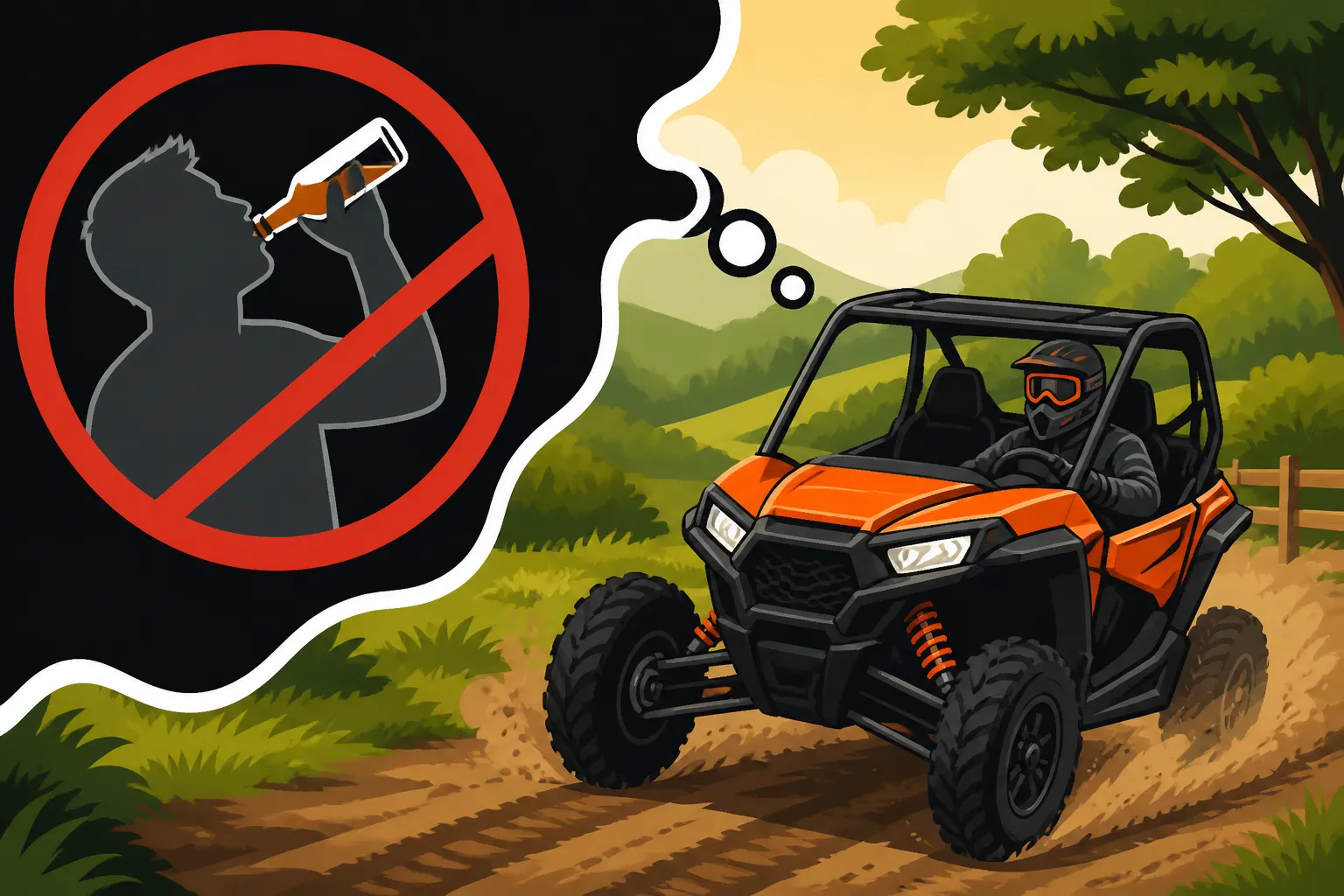
It’s a scenario many of us have seen, perhaps even been a part of: a beautiful day out on the back forty, riding quads, a bonfire going, and maybe a few adult beverages being passed around. You're on your own land, or a friend's private property, far from public roads, and the thought crosses your mind: "What's the harm in riding a little after a few beers?" It feels like a safe, controlled environment, but the truth about riding impaired on private land in New York is far more complex and risky than it might seem, both legally and for your safety. This guide will cut through the misconceptions and lay out the very real dangers and consequences.
The Misconception of "Private Land, Private Rules"
There's a deeply ingrained belief that if you're on private property, you're exempt from many of the laws that apply on public roads. While it's true that certain specific regulations, like those concerning registration or plate display, might not be as strictly enforced in your own backyard, the idea that private land is a legal free-for-all, especially when it comes to impairment, is a dangerous myth that can lead to severe consequences.
Why Private Property Isn't a Legal Free-for-All
It’s easy to think of your own sprawling property, or a friend’s remote acreage, as a personal kingdom where only your rules apply. You might imagine that since you're not on a town road or state trail, the law simply can't touch you. This mindset is particularly prevalent when it comes to having a few drinks or consuming other substances. "Who's going to know?" or "It's just us out here" are common refrains. However, this perspective overlooks the fundamental principle that many general laws, particularly those related to public safety and impaired operation of vehicles, transcend property lines. Just because you own the land doesn't mean you own the law. The state of New York still has a vested interest in preventing serious accidents and ensuring the safety of its citizens, even on private property.
Consider a scenario where you're riding your ATV on your family's hunting land up in the Southern Tier. You've been out with friends, enjoying a barbecue, and yes, some adult beverages. You decide to take your machine for a quick spin around the property, just to check a trail camera or grab something from the camp. You might feel perfectly capable, but your judgment, reaction time, and coordination are subtly, but significantly, impaired. If an accident occurs, or if law enforcement becomes involved for any reason – perhaps due to a noise complaint, a concerned neighbor, or even an unrelated incident – the fact that you were on private land won't shield you from charges related to impaired driving. The key is understanding that operating a motorized vehicle, regardless of location, comes with responsibilities that don't magically disappear at your property line.
New York's DWI Rules for ATV Riders
This is where the rubber meets the road, quite literally. Many people are genuinely surprised to learn that New York's laws against driving while intoxicated (DWI) and driving while ability impaired (DWAI) extend to ATVs, and crucially, apply even when you're not on a public highway. The relevant statutes are broad enough to cover the operation of any motor vehicle, and an ATV falls squarely within that definition. This means that if you're found to be operating an ATV while impaired by alcohol or drugs, whether you're cruising down Main Street or doing laps in your own back field, you could face the same charges and penalties as someone driving a car on a public road.
The state isn't just concerned about public roads; it's concerned about the safe operation of these machines. An ATV, even a smaller one, is a powerful piece of equipment that can cause serious injury or death when mishandled, especially under the influence. The dangers of impaired driving don't diminish just because you're on a dirt path in the woods rather than a paved road. In fact, off-road conditions—uneven terrain, hidden obstacles, sudden changes in elevation—can be even more challenging for an impaired rider than predictable pavement. New York law enforcement agencies, including local sheriffs and State Troopers, are fully aware of these laws and have the authority to enforce them. They understand the potential for serious accidents, and they won't hesitate to act if they have probable cause to believe someone is riding impaired, regardless of whether it's on public or private land. For a deeper dive into these specific regulations, you might want to read [New York's DWI Rules for ATV Riders].
The Legal Ramifications of Impaired Riding Off-Road
Beyond the general understanding that laws exist, many ATV enthusiasts aren't fully aware of the precise legal definitions of impairment in New York or the specific charges and penalties they could face. It's not just about a simple ticket; the consequences can be life-altering, affecting your freedom, your finances, and even your ability to drive a regular car.
Understanding Impairment Under New York Law
In New York, impairment isn't just about being "drunk." The law distinguishes between Driving While Intoxicated (DWI) and Driving While Ability Impaired (DWAI), and it also covers impairment by drugs. For alcohol, a Blood Alcohol Content (BAC) of 0.08% or higher typically constitutes DWI. However, you can still be charged with DWAI with a lower BAC (between 0.05% and 0.07%) if your ability to operate the vehicle is observably impaired. The crucial point here is that "operating" an ATV while impaired, whether on a road, a trail, or a private field, is illegal.
Furthermore, New York's Vehicle and Traffic Law broadly defines a "motor vehicle," and an ATV fits this description. This means that the intent of these laws is to prevent any form of impaired operation of any motorized vehicle. It's not just about the type of substance, either. Impairment can come from prescription medications that cause drowsiness, illegal drugs, or even over-the-counter remedies that affect your judgment. It’s about your physical and mental capacity to safely control the machine. Imagine trying to navigate a tricky mud bog or a rocky incline while your perception is dulled. Even a slight impairment can turn a fun ride into a catastrophic event. It's a level of risk that no one should take, especially when you consider the intricate terrain many ATVs are designed to conquer, often with specialized components like those offered by SuperATV that enhance performance but cannot compensate for impaired human judgment.
Potential Charges and Penalties
The potential charges for riding an ATV while impaired on private land are serious. You could face a DWI or DWAI charge, which are criminal offenses, not just traffic infractions. A first-offense DWI, for example, can lead to fines, surcharges, a suspended or revoked driver's license (yes, your car license!), potential jail time, and mandatory participation in an intoxicated driver program. The costs associated with a DWI conviction, including legal fees, court fines, increased insurance premiums, and program fees, can quickly spiral into the tens of thousands of dollars. It's a financial burden that can cripple a family, completely dwarfing the [New York ATV Registration Cost] and other usual expenses of riding.
Moreover, the impact goes beyond your wallet and your freedom. A criminal record can affect future employment opportunities, housing applications, and even your ability to travel internationally. Many people don't realize that a DWI on an ATV, even on private land, carries these same heavy penalties. It’s not a "lesser" offense simply because it happened off-road. Law enforcement takes these incidents seriously because of the inherent danger posed by operating heavy machinery while impaired. While you might be concerned about something like [New York Fines for an Unregistered ATV] on public land, the penalties for impaired riding are in an entirely different league of severity.
The Very Real Dangers Beyond the Law
While the legal and financial repercussions of impaired ATV riding are significant, they often pale in comparison to the immediate and devastating physical dangers. When your senses are dulled and your reaction time is slowed, even the most familiar terrain can become treacherous. This isn't just about avoiding a ticket; it's about avoiding serious injury or worse, for yourself and for anyone around you.
Increased Risk of Accidents and Injuries
Operating an ATV demands a high level of concentration, quick reflexes, and sound judgment. You're constantly assessing terrain, anticipating obstacles, and adjusting your speed and steering. When you're impaired by alcohol or drugs, every one of these critical abilities is compromised. Your depth perception might be off, making it harder to judge inclines or the size of a puddle. Your reaction time slows, meaning you might not be able to swerve around a fallen log or react to a sudden change in trail conditions. Your judgment becomes clouded, leading you to take risks you wouldn't normally consider, like attempting a steep climb or riding at excessive speeds.
The consequences are stark: rollovers, collisions with trees or other riders, and catastrophic falls. Even a seemingly minor spill can result in broken bones, head injuries, or internal damage, especially if you're not wearing proper protective gear. The rugged nature of off-road riding, which makes it so exhilarating when sober, amplifies the risks exponentially when impaired. Imagine hitting a rock unexpectedly or misjudging a turn. The force and weight of an ATV mean that these accidents rarely result in just a fender bender; they often lead to severe, life-altering injuries or fatalities. It’s a tragic reality that emergency rooms across New York are all too familiar with. Even the best gear, from a high-quality helmet to sturdy tires, can only do so much when the operator's judgment is impaired. You might be concerned about meeting all the [New York Equipment Requirements for ATVs], but none of that equipment can make up for a compromised mind.
Liability and Insurance Nightmares
Beyond the physical danger to yourself, there's the terrifying prospect of injuring others or damaging property. If you're riding impaired on your own land and a friend or family member is injured, you could face immense civil liability. Even if they gave permission to ride on your property, their injury while you were impaired shifts the blame squarely onto you. Medical bills, lost wages, and pain and suffering can amount to millions of dollars, and your homeowner's insurance policy, or even your ATV insurance, might not cover the damages if you were operating the vehicle illegally while impaired.
Most insurance policies have clauses that explicitly exclude coverage for accidents that occur while the operator is under the influence of alcohol or drugs. This means that if you cause an accident while impaired, you could be personally responsible for all the costs, including your own medical bills, damages to your ATV, and any claims made by injured parties. This financial burden can be absolutely devastating, potentially leading to bankruptcy and the loss of your assets. It highlights why [New York ATV Insurance Requirement] is so vital, but also how quickly that protection can vanish if you make the wrong choice. Even if your machine is equipped with top-notch protection like SuperATV skid plates or robust A-arms, no aftermarket part can protect you from the financial fallout of an impaired riding accident.
When "Just a Few Beers" Turns into a Problem
The issue often isn't malicious intent; it's a gradual slide into impairment, especially in social settings. What starts as a casual gathering can easily turn into a high-risk situation if the lines between socializing and riding become blurred. Understanding this common progression is key to preventing accidents and legal trouble.
Social Gatherings and ATV Riding
Picture this: it's a warm summer evening, you're at the camp with friends, a campfire is crackling, and the coolers are full. Everyone's having a good time, and the ATVs are parked nearby, perhaps having been ridden earlier in the day. Someone suggests a quick ride to the back of the property, or a spin around the field. "Just a few beers, I'm fine," someone says, or perhaps, "It's only a short distance." This is a classic scenario where the combination of relaxation, camaraderie, and easy access to alcohol and machines creates a dangerous cocktail of poor judgment.
The social pressure, or simply the desire to keep the fun going, can override common sense. What might seem like a harmless joyride can quickly become a serious incident, especially as the evening progresses and more drinks are consumed. It's a common trap, one that many riders fall into without realizing the gravity of their decision until it's too late. When friends gather for a [New York Rules for a Group Ride], it’s imperative that clear boundaries about alcohol and riding are established from the outset to avoid these dangerous situations.
The Slippery Slope: From Buzz to Drunk
One of the most insidious aspects of alcohol consumption is how easily and quickly one can transition from feeling a pleasant "buzz" to being legally impaired, or even outright drunk, without fully realizing it. Your perception of your own sobriety is often the first thing to be affected by alcohol. What you perceive as a slight impairment, or even no impairment at all, can be far different from your actual blood alcohol content and your functional abilities. This "slippery slope" makes it incredibly dangerous to try and self-regulate your riding after consuming alcohol.
It's a gradual process: the first beer might not seem to affect you much, but as you continue to drink, your coordination, reaction time, and decision-making capabilities steadily decline. The terrain you've ridden a hundred times suddenly looks different, or a simple maneuver becomes challenging. By the time you feel truly drunk, you are well past the legal limit for impairment and are a significant danger to yourself and others. This is why any amount of alcohol before riding, even on private land, is a gamble not worth taking. It's far better to err on the side of caution and adhere to a strict "no drinking and riding" policy to ensure you don't unintentionally cross that line.
Protecting Yourself and Your Riding Privileges
The risks associated with riding impaired are too high to ignore. To truly enjoy the sport and protect yourself, your friends, and your future, it’s essential to adopt clear strategies and stick to them. This isn't about stifling fun; it's about ensuring that the fun continues safely, year after year.
The "No-Alcohol" Riding Rule
The simplest, safest, and most responsible rule to adopt is an absolute "no-alcohol, no-drugs" policy when it comes to operating an ATV. Period. If you plan to ride, don't drink. If you plan to drink, don't ride. This clear boundary eliminates any ambiguity or dangerous guesswork about your level of impairment. It removes the temptation to make a poor decision, especially in a social setting where alcohol might be flowing freely. Designate a specific time or day for riding, and a separate time or day for adult beverages.
This isn't just about avoiding legal trouble; it's about maximizing your enjoyment and minimizing risk. When you're sober, you can fully appreciate the thrill of the ride, the challenge of the terrain, and the beauty of the New York landscape. You'll make better decisions, react more quickly, and be able to handle unexpected situations with confidence. Moreover, it sets a positive example for others, especially younger riders who look up to experienced enthusiasts. You might spend a lot of time preparing your machine for optimal performance, ensuring you have the right [New York ATV Plate Fee You Pay Only Once] paid and an appropriate [Winch for Tug Hill Bog Holes] installed, but all that preparation is wasted if your mind isn't clear when you're in the saddle.
Educating Others and Setting Boundaries
As a responsible ATV owner or host, you have a role to play in educating others and setting clear boundaries, especially when friends or family ride on your private property. This can be an uncomfortable conversation, but it's a necessary one. Before a gathering where both ATVs and alcohol might be present, communicate your "no drinking and riding" rule clearly and firmly. Explain why it's important: not just for legal reasons, but for everyone's safety, and to protect yourself from liability.
You might say something like, "Hey everyone, just a heads-up for the party—we're all here to have a good time, but the ATVs are staying parked if anyone's drinking. We want everyone to go home safe, and New York laws about impaired riding apply even on private land." If someone attempts to ride after consuming alcohol, politely but firmly intervene. Offer to drive them, or suggest they wait until they are completely sober. It’s about being a good host and a responsible friend. This proactive approach helps prevent accidents, avoids potential legal nightmares, and ensures that everyone understands the importance of safety. It's part of the broader conversation about responsible riding that starts with basics like acquiring [New York ATV Safety Certificates] for younger riders and extends to every adult on the trail or property.
Understanding Where Impaired Riding Can Lead
The implications of riding an ATV while impaired in New York extend beyond just the immediate legal and physical consequences. They touch upon insurance, property rights, and even how local communities view ATV enthusiasts. Knowing the full spectrum of potential fallout can help reinforce the decision to always ride sober.
How Impairment Affects Insurance Claims
We touched on this briefly, but it bears repeating: your insurance policy is your safety net, but it has limits. If you're involved in an accident while operating an ATV under the influence of alcohol or drugs, on private or public land, your insurance company can—and very likely will—deny your claim. This means that if your ATV is damaged or totaled, you'll be solely responsible for the cost of repairs or replacement. This could be thousands of dollars out of your pocket, potentially making it impossible to replace a machine that you rely on for recreation or work.
Even more critically, if you injure someone else or damage their property while impaired, your liability coverage may also be denied. This leaves you personally exposed to massive lawsuits, which could lead to wage garnishments, liens on your property, and financial ruin. Many people assume their standard auto or home insurance policies will just cover "anything," but policies are very specific about exclusions, and illegal activities like impaired driving are almost always on that list. Always double-check your policy, but understand that the safest bet is to never give them a reason to deny a claim. This is a critical aspect of [New York ATV Insurance Minimum Coverage] that every rider needs to understand fully.
The Risk of Injuries to Yourself and Others
Let's be brutally honest: ATVs are powerful machines, and the physics don't care if you're on your own property or feeling "okay." Alcohol impairs judgment, slows reaction time, and degrades coordination. These are the exact faculties you need to operate an ATV safely. Even a minor bump or unfamiliar rut can become a serious hazard when you're not at 100%. What if you misjudge a creek crossing, or hit a tree branch you didn't see coming? The injuries can range from severe sprains and broken bones to traumatic brain injuries or even death.
And it's not just about you. What if a passenger is with you? What if a friend or family member, walking nearby, gets hit? The emotional and psychological toll of causing serious injury or death to someone else, all because of a preventable choice to ride impaired, is a burden no one should ever have to carry. When you're on a trail, or even just in your backyard, you need to be aware of your surroundings, and that simply isn't possible when you're impaired. It’s why proper [New York Helmet Law for ATV Riders] is so important, but a helmet can’t protect your decision-making.
Community Perception and Landowner Relations
While the immediate focus is often on personal safety and legal consequences, riding impaired can also have broader negative impacts on the ATV community and landowner relations. Many ATV trails in New York, particularly club trails, rely on agreements with private landowners to keep their routes open. These landowners generously allow access, often with strict rules about responsible riding. If an incident involving impaired riding occurs on private land, especially land that is part of a trail system, it can jeopardize these relationships.
A single incident could lead a landowner to revoke permission for trail access, affecting not just the individual but an entire riding club or community. It reinforces negative stereotypes about ATV riders and can make it harder to advocate for new trails or maintain existing ones. The responsible actions of many can be undermined by the careless actions of a few. Maintaining a positive image and demonstrating a commitment to safety, including sober riding, is crucial for the long-term health and growth of ATV riding opportunities in New York. Even if you only ride on your own property, the perception of irresponsible riding can still ripple through local communities and affect potential future riding opportunities, such as the establishment of new public trails, which often depend on local support and good standing. You might be focused on local issues, but remember that New York's [Article XIV and Forever Wild] rules protect vast areas and public perception can impact legislative discussions regarding ATV access.
Table: Risks of Impaired ATV Riding on Private Land
Here's a quick overview of the various risks associated with riding an ATV while impaired, even when you're on private property in New York:
| Category | Specific Risk | Potential Impact |
|---|---|---|
| Legal | DWI/DWAI Charges | Fines, jail time, license suspension (car & ATV), criminal record, increased insurance rates |
| Violation of General Laws | State laws apply regardless of property lines | |
| Physical | Personal Injury/Death | Broken bones, head trauma, internal injuries, fatality |
| Injury/Death to Others | Passenger injury, bystander injury, fatality | |
| Financial | Insurance Claim Denial | Responsible for full cost of ATV repairs/replacement |
| Personal Liability for Damages | Lawsuits, medical bills, property damage, legal fees | |
| Reputational | Negative Public Perception | Damages the image of ATV riders, jeopardizes future trail access |
| Strain on Landowner Relations | Loss of private land access for trails, community backlash |
Disclaimer
This article is for general informational purposes only and does not constitute professional advice. Laws, prices and regulations vary by location and change over time. Consult a qualified professional for guidance on your specific situation.