Crossing a Highway on an ATV in New York
It's a familiar scenario for any ATV enthusiast in New York: you've got your machine loaded up, ready for a day on the trails, but there's just one problem – a busy state highway separates you from your destination or the next section of trail. The question inevitably arises: can you just quickly cross that highway, or are you risking a hefty fine and a major safety hazard? This guide is here to untangle the complexities of New York's laws regarding ATV highway crossings, helping you understand when, where, and how you might legally make that dash to the other side.
The Core Question: Can You Even Cross a Highway in New York?
Riders often get caught between the desire for convenience and the letter of the law when it comes to New York's roads. It's a common misconception that if you just go fast enough, or if no one's around, it's fine. But the reality is far more rigid, and understanding the core distinction between riding on a highway and legally crossing one is paramount for your safety and your wallet.
The General Rule: Why Highways are a No-Go
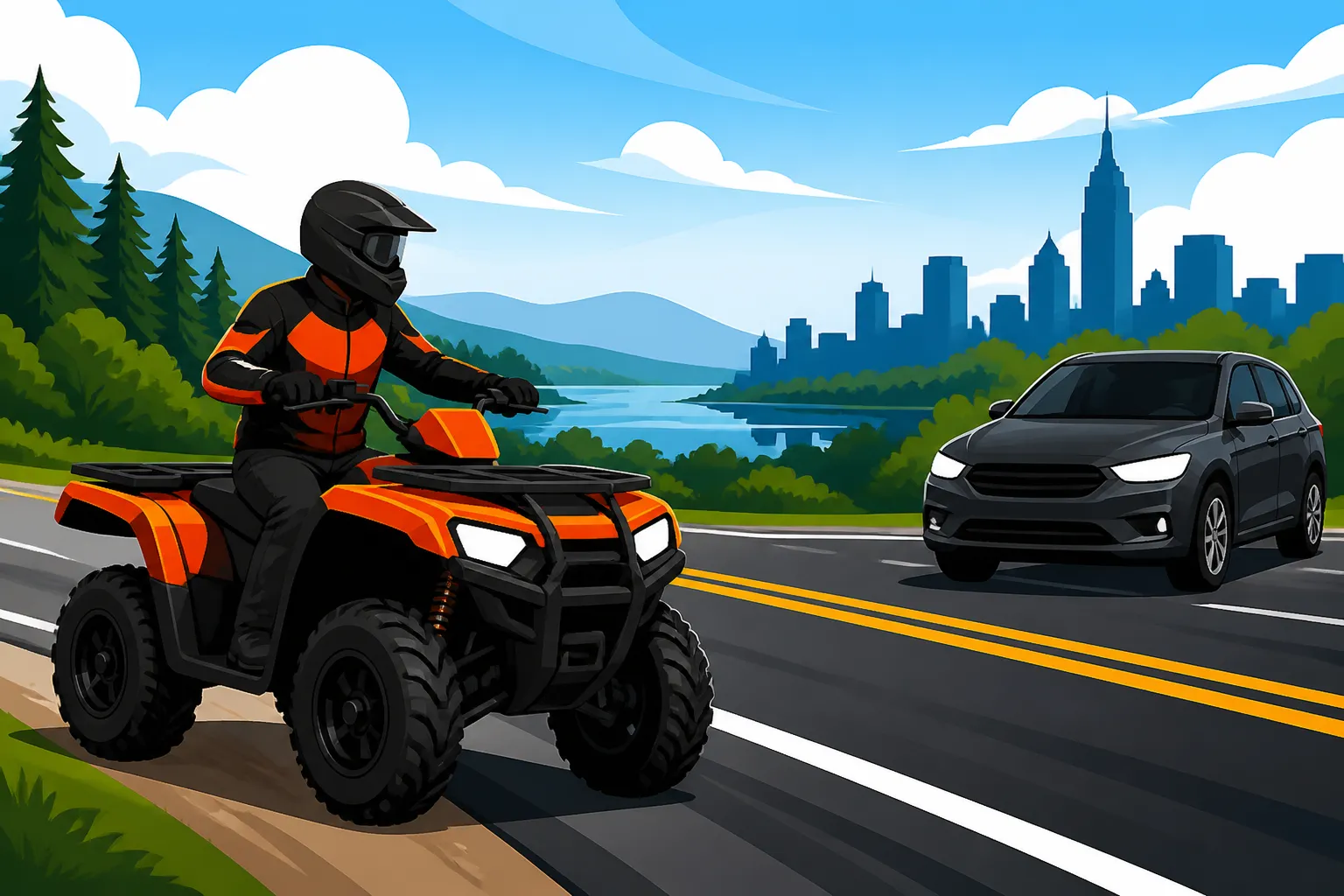
Let's be crystal clear right from the start: New York State law generally prohibits ATVs from operating on public streets and highways. This isn't just a suggestion; it's a hard-and-fast rule with significant implications. The reasons behind this prohibition are rooted deeply in safety. ATVs are designed for off-road use, not for the asphalt jungle of our highways. They lack many of the safety features found on street-legal vehicles, like crush zones, advanced braking systems for high speeds, and often the same level of stability at highway speeds.
Imagine a compact, quick-steering ATV suddenly sharing a lane with a semi-truck doing 60 MPH. The speed differential alone is terrifying. The driver of the truck might not even see you, given the ATV's lower profile and the truck's blind spots. This difference in design and intended use creates an incredibly dangerous situation, which is why the law is so strict. Attempting to ride your ATV on a highway, even for a short stretch, is not only against the law but puts you, other drivers, and passengers at extreme risk. The legal ramifications for being caught riding your ATV on a highway, beyond the immediate safety concerns, can include substantial fines, impoundment of your machine, and even more severe charges depending on the specific circumstances and if an accident occurs.
The Exception: When Crossing is Permitted
Now, here's where it gets interesting, and where many riders find a glimmer of hope: New York law does provide a very narrow exception that allows ATVs to cross public highways. But this isn't an open invitation to treat every road like a dirt path. This exception is highly specific and comes with strict conditions that must be adhered to without deviation. The law recognizes that sometimes, to get from one legal riding area to another, a brief, unavoidable crossing of a public roadway might be necessary. It's not about convenience; it's about necessity under tight control.
The critical distinction is that you are allowed to cross the highway, not ride on it. This means minimizing the time spent on the pavement, following a direct path, and taking every conceivable precaution. Think of it as a momentary interruption of your off-road journey, a quick traverse across an obstacle, rather than an extension of your ride onto the public road system. We'll dive into the specifics of how to make this legal crossing safely and legally in the following sections, because failing to meet even one of these conditions can quickly turn a lawful crossing into an illegal operation.
Understanding New York's Definition of a "Highway"
Before you even think about crossing, you absolutely need to grasp what New York means when it talks about a "highway" in the context of ATV usage. Not all paved surfaces are treated equally under the law, and misunderstanding this can land you in serious trouble.
Not All Roads Are Created Equal
In New York, when the law discusses prohibitions on ATVs, the term "highway" generally encompasses state routes, interstates, and many major county roads. These are the arteries of our transportation system, designed for high-speed, multi-lane vehicular traffic. Your ATV, by its very definition in New York law, is an "all-terrain vehicle" or an "off-highway vehicle," explicitly categorizing it as something not meant for these types of roads. This legal designation is crucial. It underscores the state's intent: ATVs belong off the main thoroughfares.
This is a stark contrast to some smaller, less-traveled town or village roads that might be explicitly designated for ATV use by local ordinance. These designated roads, which we'll discuss more later, are exceptions carved out by local governments, acknowledging specific needs or trail connections. But without such explicit designation and signage, assume a paved road is off-limits. The core principle is that an ATV's primary purpose is recreational off-road activity, agricultural work, or other specific tasks, not road travel between points like a car or motorcycle.
Identifying Prohibited Roadways
It's vital to be able to identify the types of roads you are absolutely prohibited from riding on or even crossing casually. The clearest examples of prohibited roadways are interstate highways. You might have seen these designated with "I-" prefixes (e.g., I-81, I-90, I-88). These are high-speed, controlled-access roads where ATVs are unequivocally banned, even for crossing. There are no exceptions for these types of roads. Any attempt to operate an ATV on an interstate will result in severe penalties, not to mention extreme danger. Remember, [Interstates Closed to New York ATVs] is a hard rule.
Beyond interstates, many state routes (designated with a "NYS Route" shield, like NY-12 or NY-28) and significant county roads also fall under this prohibition for general riding. The signs for these roads are usually clear, but sometimes smaller state or county roads might feel less imposing. The rule remains: if it's not explicitly designated for ATVs by local law, and it's part of the public road system, you cannot ride on it.
The penalties for violating these rules are not trivial. They can include significant fines, points on your driving record (which can impact your car insurance), impoundment of your ATV, and in cases of reckless operation or accidents, potential criminal charges. Law enforcement officers, especially those patrolling highways, are well-versed in ATV regulations and are keen to enforce them for public safety. It’s a lot easier to prevent a problem by knowing the rules than to deal with the aftermath of an infraction.
The "Ninety Degrees" Rule: How to Make a Legal Crossing
So, you've identified a highway you can legally cross, not just ride on. Now comes the critical part: how you perform that crossing. New York State law is incredibly specific about the method, emphasizing safety and minimizing the ATV's presence on the road.
The Straight and Narrow Path
The cornerstone of a legal ATV highway crossing in New York is the "at a right angle" or "ninety degrees" rule. This means your ATV must approach the highway, cross it, and leave it by traveling perpendicular to the flow of traffic. You cannot ride parallel to the highway for any distance, even a few feet, to get a better angle or merge. It's about traversing the highway in the most direct, shortest possible path.
In practice, this means:
- Approach directly: Line your ATV up so you're aiming straight across the highway, not at a diagonal.
- Cross swiftly and directly: Once you have a clear path, move straight across to the other side, minimizing the time your machine spends on the asphalt. Do not veer, turn, or try to gain speed parallel to traffic.
- Exit directly: Once you've crossed, continue off the pavement and onto the legal riding area on the other side. Do not linger on the shoulder or try to "clean" your tires on the road surface.
This strict requirement is designed to limit your exposure to highway traffic. By crossing at a right angle, you're presenting the smallest possible profile to oncoming vehicles, and you're spending the least amount of time in harm's way. Any deviation from this direct, perpendicular path could be interpreted as illegal operation on the highway, rather than a legal crossing, opening you up to citations and danger. It's a precise maneuver that demands your full attention and adherence to the law.
Stopping Before the Shoulder: A Crucial Safety Step
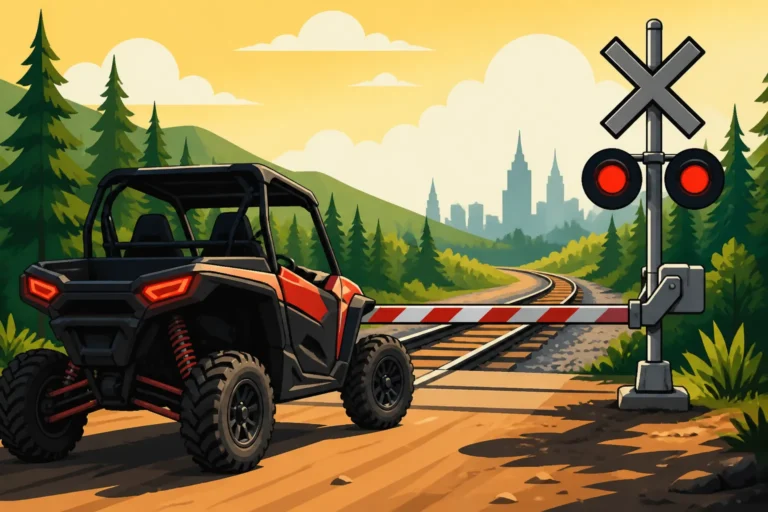
Another absolutely non-negotiable step in making a legal and safe highway crossing is the requirement to stop before entering the traveled portion of the highway. This isn't just a courtesy; it's a legal mandate designed to protect both you and other motorists. When you're on an ATV, especially emerging from a trail or field, your line of sight might be obstructed, and your machine's profile might be harder for fast-moving traffic to spot.
Imagine this scenario: you're approaching a highway crossing.
- Scenario A (Incorrect): You slow down, glance quickly, and then roll straight out onto the pavement, hoping for a gap in traffic. You're already moving when you realize a car is coming faster than you thought. Now you're scrambling, potentially in the path of a vehicle.
- Scenario B (Correct): You bring your ATV to a complete stop before the edge of the paved highway, well clear of any oncoming traffic. You then take the time to look both ways, assessing the speed and distance of all approaching vehicles. You wait patiently for a clear, substantial gap in traffic that allows you to cross safely and without rushing. Once you're certain, you execute your ninety-degree crossing.
The difference is night and day. Stopping before the shoulder allows you to make a full, unobstructed assessment of traffic conditions. It gives you the necessary time to judge speeds and distances, and crucially, it allows you to be seen by oncoming drivers who might not be expecting an ATV. This pause is your last, best chance to ensure the crossing is safe. It also explicitly demonstrates to any observing law enforcement officer that you are adhering to the letter of the law. Always remember the critical step of [Stopping Before a New York Crossing].
Visibility and Safety Requirements for Highway Crossings
Beyond the specific maneuvers, ensuring you are as visible as possible and adequately protected is paramount when making a highway crossing. These aren't just good ideas; they're legal requirements and common sense for anyone serious about safety.
Lights On: Even in Daylight
This might seem obvious for nighttime riding, but for a highway crossing in New York, your ATV's headlights and taillights must be illuminated, even during daylight hours. This isn't a suggestion; it's a critical safety measure designed to make your machine more conspicuous to fast-moving highway traffic. An ATV's smaller size and lower profile can make it hard to spot quickly, especially when emerging from a less visible access point. Having your lights on provides an extra layer of visibility, helping drivers see you sooner and react accordingly.
Before you even approach a highway crossing, make it a habit to check your lights. Are they clean? Are they functioning correctly? A burnt-out bulb or a mud-splattered lens can drastically reduce your visibility, turning a legal precaution into a hazardous oversight. Many ATVs come with basic lighting, but if you're serious about safety, considering aftermarket options, perhaps from a brand like SuperATV, that offer brighter, more robust lighting can be a wise investment for better daytime and nighttime visibility. Remember, while [Headlight and Taillight After Sunset] is a general rule, during a crossing, those lights need to be on regardless of the time of day. This simple act dramatically increases your chances of being seen and avoiding a dangerous encounter.
Helmets and Gear: Protecting Yourself
New York State has a strict mandatory helmet law for all ATV riders, regardless of age, whenever operating on public lands or while making a legal crossing of a public highway. There are no exceptions for adults; if you're on an ATV in a scenario where the public has access or interaction, your head needs to be protected. This law exists for one undeniable reason: to save lives and prevent severe injuries. The forces involved in a collision between an ATV and a car or truck, even at relatively low speeds, are immense. A helmet can be the difference between a minor bump and a life-altering head injury.
But beyond the legal requirement, consider a helmet as just the bare minimum of protective gear. When crossing a highway, you're momentarily entering an environment with vehicles traveling at high speeds. Therefore, it's highly recommended to wear additional protective gear:
- Eye Protection: Goggles or a helmet visor are crucial to protect your eyes from wind, dust, debris, and glare, ensuring clear vision for scanning traffic.
- Long Sleeves and Pants: Heavy-duty riding shirts and pants, or even specialized riding gear, protect your skin from abrasions in the event of a fall.
- Gloves: Provide better grip, protect your hands, and can absorb some impact.
- Sturdy Boots: Offer ankle support and protection for your feet.
While you might wear less gear on a slow-paced trail ride on your own property, the moment you interact with public roadways, even for a crossing, the stakes are elevated. Don't compromise on your safety gear. Make sure your helmet meets DOT standards and fits properly. This is not just about avoiding a ticket; it's about safeguarding your well-being. Knowing the rules, like [New York Helmet Law for ATV Riders] and [New York Helmet Law for Passengers], is essential for any rider in New York.
Designated and Posted Roads: The Preferred Route
While the focus here is on highway crossings, it's important to understand the broader context of ATV use on public roads in New York. The absolute safest and most legally compliant way to connect trail systems or access different riding areas is through roads that have been explicitly designated and posted for ATV use by local municipalities.
The Power of Local Ordinance
New York State law grants towns, cities, and counties the authority to designate certain public roads under their jurisdiction for ATV use. This is a crucial distinction from the general prohibition on highways. These aren't major state or interstate routes, but rather local roads that are often less traveled and can serve as vital links for trail systems. The process typically involves a local board (town, village, or county) passing an ordinance or resolution that formally opens specific roads to ATVs, usually with specific conditions like speed limits or time-of-day restrictions.
When a road is "designated and posted," it means there will be clear signage indicating that ATVs are permitted. These signs are your green light, telling you that you can legally ride on this road for a certain distance, not just cross it. This is a far safer and more integrated way to navigate than the quick, high-risk highway crossing. It's a testament to the efforts of local governments and ATV clubs working together to create a more cohesive riding experience. Understanding [How a Town Posts a Road Open for ATV Season] is invaluable, as is knowing which [New York Roads Designated for ATVs] exist in the areas you plan to ride. Always consult local town or county offices, or reliable ATV club maps, for the most current information on designated roads.
The Difference Between Crossing and Riding On
It's critical to understand the fundamental difference between making a brief, ninety-degree crossing of a highway (which we've discussed extensively) and riding on a designated local road.
- Crossing a Highway: This is a momentary act, strictly perpendicular, performed with extreme caution, and only when absolutely necessary to get from one legal riding area to another. You are not "riding" the highway; you are merely traversing it.
- Riding on a Designated Local Road: This is where you can actually operate your ATV along the road for a specified distance, following all traffic laws, including speed limits, stop signs, and yielding rules. These roads are typically less busy and are explicitly opened for ATV travel by local ordinance, often connecting segments of a larger trail system.
The conditions for each are vastly different. While crossing a highway is about minimizing presence and risk, riding on a designated road is about integrating safely into a limited road-sharing environment. For designated roads, your ATV needs to be in good working order, with all required safety equipment. While New York doesn't typically require street-legal conversion kits for ATVs on designated roads (as they are still considered off-road vehicles with special permission for these specific roads), enhancing your machine's visibility and road-readiness can be a smart move. Aftermarket accessories from companies like SuperATV, such as additional mirrors for better situational awareness, brighter LED lights, or even more road-friendly tire options (if legal for the designated road type and your machine's width), could be considered to improve your safety profile when interacting with other traffic. These types of accessories don't make your machine "street legal" for all roads, but they do enhance its suitability for the specific, limited road interactions allowed on designated routes.
Always check local ordinances, as they can vary significantly from town to town. Some towns may have strict time-of-day restrictions, speed limits, or even require specific permits for riding on their designated roads. Never assume a road is open just because it looks like a dirt road or because you see others riding on it; always confirm its status.
Penalties and Enforcement: What Happens When You Break the Rules
Ignoring New York's ATV laws regarding public roads, especially highways, isn't just a matter of inconvenience; it carries serious legal and financial consequences. Law enforcement in New York takes these violations seriously, understanding the profound safety risks involved.
Fines for Illegal Road Use
The most immediate consequence of illegally riding an ATV on a highway or failing to follow the strict crossing rules is a significant fine. These fines can vary depending on the specific violation, the location, and whether it's a first offense or a repeat infraction. You could be looking at hundreds of dollars in penalties. Beyond the initial fine, there can be other financial burdens. For instance, if you are cited for operating an unregistered ATV on a public road, even if it's typically registered for off-road use, you might face additional penalties related to [New York Fines for an Unregistered ATV]. While your machine might be registered, its use on a prohibited road makes it an illegal operation.
Furthermore, illegal road use can have implications for your standard driver's license. While an ATV infraction might not always result in points on your car license, some serious violations, especially those related to reckless operation or endangering others, could potentially affect your driving privileges or lead to increased insurance premiums for your other vehicles. It's a cascade effect that starts with what might seem like a small shortcut but can quickly become a very expensive mistake. The financial hit alone can be enough to ruin your riding season, let alone the added stress and time spent dealing with court appearances and administrative procedures.
Machine Impoundment and Other Repercussions
One of the most disheartening and costly consequences of violating ATV road rules is the potential for your machine to be impounded. If a law enforcement officer determines you are operating your ATV illegally on a public highway, they have the authority to seize your vehicle. Getting an impounded ATV back is typically a lengthy, frustrating, and expensive process. You'll likely face:
- Towing Fees: Immediate costs for getting your ATV off the road.
- Storage Fees: Daily charges for every day your machine sits in an impound lot. These can quickly add up to hundreds, if not thousands, of dollars.
- Administrative Fees: Additional charges from the impounding agency.
- Proof of Ownership and Registration: You'll need to provide verifiable proof that the ATV belongs to you and that you are authorized to operate it, even if you were operating it illegally at the time of impoundment.
Beyond the impoundment, there could be more severe repercussions. If your illegal operation leads to an accident, even a minor one, you could face civil lawsuits for damages and injuries. Your ATV insurance policy, which is mandatory in New York for public access areas and crossings, might even deny coverage if you were operating the machine outside the bounds of the law, leaving you personally liable for all costs. This could include property damage, medical bills, and lost wages for any injured parties. In the worst-case scenarios, such as collisions resulting in serious injury or death, you could face criminal charges like reckless endangerment or vehicular assault, carrying potential jail time. These are not exaggerated threats; they are real possibilities that arise from misusing an off-road vehicle on roads it was never designed for.
Planning Your Route: Avoiding Highway Crossings Where Possible
Given the risks and strict rules associated with highway crossings, the smartest approach for any ATV rider in New York is to minimize or, ideally, entirely avoid them. Thoughtful route planning and choosing alternative transportation methods can save you a world of trouble.
Utilizing Maps and Local Knowledge
The key to a stress-free ride often lies in preparation. Before you even load your ATV onto your trailer, spend time studying maps of your intended riding area. Many counties in New York, and certainly most organized ATV clubs, provide detailed trail maps that clearly mark designated ATV routes, legal crossing points, and areas where ATVs are strictly prohibited. These maps are invaluable tools. For example, [New York Trail Maps From a County] can show you intricate networks of trails and designated roads that can help you circumvent busy highways entirely.
Beyond official maps, leverage local knowledge. Join a local ATV club! These clubs are often instrumental in maintaining trails, advocating for rider rights, and, crucially, possess an intimate understanding of the local terrain and legal access points. They can advise you on the best routes, potential bottlenecks, or recent changes in regulations that might impact your ride. Sometimes, a slightly longer route on a designated trail or less-traveled road is far preferable to a quick dash across a dangerous highway. Apps and GPS devices specifically designed for off-road use can also be helpful, but always cross-reference them with official maps and local information, as digital data can sometimes be outdated or inaccurate regarding local ordinances.
Trailer Your Machine: The Safest Option
Let's face it: the safest, most legally compliant, and arguably most convenient method for transporting your ATV to and from riding areas is to trailer it. Investing in a suitable trailer and a tow vehicle eliminates the need for any public road crossings, legal or otherwise. When your ATV is securely fastened on a trailer, it's considered cargo, not a vehicle being operated on the road. This immediately removes all the legal complexities and safety hazards associated with riding your ATV on highways or even crossing them.
Consider the peace of mind. You don't have to worry about an unexpected traffic stop, assessing gaps in high-speed traffic, or the "ninety degrees" rule. You simply drive to your trailhead, unload your machine, and start riding where it's legal and safe. This approach also protects your ATV from wear and tear on pavement, which isn't what its tires or suspension are designed for. While there's an upfront cost for a trailer and hitch, and the ongoing expense of fuel for your tow vehicle, many riders find this a small price to pay for the enhanced safety, legality, and convenience it offers. It also opens up more distant riding opportunities that would be impractical to reach without trailering.
| Feature | Legal Highway Crossing (New York) | Illegal Highway Riding (New York) | Designated Local Road Riding (New York) |
|---|---|---|---|
| Method | Must be at a 90-degree angle to traffic | Any travel along the highway | Along the road, following traffic laws |
| Stop Requirement | Must stop completely before entering pavement | No legal requirement (but always dangerous) | Stop at intersections, yield as required |
| Lights On | Mandatory, even in daylight | Required for night/low visibility, but riding is illegal anyway | As per local ordinance, usually dusk/dawn/dark |
| Helmet Law | Mandatory for all riders | Mandatory for all riders | Mandatory for all riders |
| Permitted By | State law (narrow exception) | Not permitted | Local ordinance (town/county) |
| Primary Risk | High collision risk, brief exposure | Extremely high collision risk, prolonged exposure | Lower collision risk, integrated with local traffic |
| Penalties | Minor infractions if rules not followed strictly | Significant fines, impoundment, criminal charges | Fines for traffic violations, non-compliance with local rules |
| Insurance | Mandatory | Mandatory, but likely voided if illegal use | Mandatory |
| Goal | Connect two legal riding areas | Illegal shortcut/misuse | Access trails, connect properties |
Disclaimer
This article is for general informational purposes only and does not constitute professional advice. Laws, prices and regulations vary by location and change over time. Consult a qualified professional for guidance on your specific situation.