New York’s Designated and Posted Roads
One of the most persistent frustrations for ATV and UTV riders in New York State is the often-confusing landscape of where you can actually ride your machine legally. It can feel like every road is off-limits unless specifically stated otherwise, leaving many enthusiasts scratching their heads about how to enjoy their passion without breaking the law. This guide aims to clear up that confusion by diving deep into the concept of "designated and posted roads" in New York, explaining what they are, how they come to be, and how you can find and ride them responsibly.
Understanding New York's Stance on ATVs and Roads
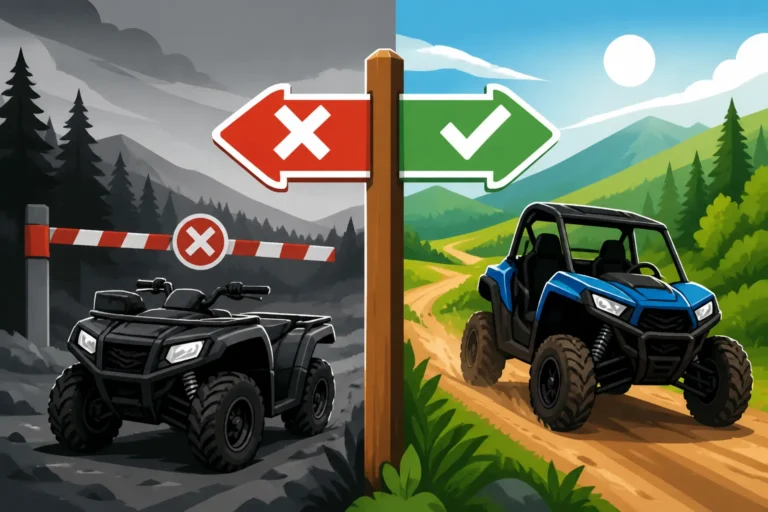
New York State law, unfortunately for many riders, starts with a general prohibition against operating ATVs on public roads. This isn't just a minor rule; it's a fundamental principle that shapes the entire riding experience here. For a newcomer, or even a seasoned rider from another state, this can feel incredibly restrictive and downright unfair. You invest in a machine, only to find out you can barely take it anywhere. However, there's a crucial nuance: the law allows for exceptions when roads are specifically "designated and posted" by the proper authorities.
The General Prohibition and Its Nuance
Imagine you've just picked up a shiny new quad, eager to hit the trails. You might naturally assume you can drive it a few miles down the road to access a public trail system, or even to a friend's house in the next hamlet over. But in New York, that assumption can quickly lead to a ticket. The base rule is clear: you generally cannot operate an ATV on a public street or highway. This includes the shoulders, median, and any associated public right-of-way. The rationale behind this is primarily safety; ATVs are designed for off-road conditions, not for sharing pavement with cars, trucks, and all the inherent traffic hazards that come with them. They lack many of the safety features, like turn signals, mirrors, and specific lighting, required for street vehicles, and their handling characteristics are completely different.
This broad prohibition is precisely why so many New Yorkers find the legal riding landscape so perplexing. It's not like registering a car and being able to drive it anywhere there's pavement. Instead, you're constantly looking for the specific, often rare, exceptions. This is the underlying frustration we all feel, trying to navigate a system that seems to put obstacles in the way of a perfectly legitimate outdoor activity.
How "Designated and Posted" Creates Exceptions
So, if the default is "no," how do we get to "yes"? This is where the phrase "designated and posted" becomes your beacon of hope. A public highway or street can become legal for ATV use if, and only if, it has been "designated" by a local ordinance or law passed by the municipality (like a town or county) and then "posted" with appropriate signage. Think of it like a special permit granted to a specific stretch of road, allowing ATVs to share the space under certain conditions.
The "designated" part means that a local governing body, usually a town board or a county legislature, has gone through a formal legal process. They've discussed it, perhaps held public hearings, and then voted to enact a local law explicitly stating that a particular road or set of roads is open for ATV use. This isn't something that happens casually; it requires a deliberate decision by elected officials. Once designated, the "posted" aspect is equally critical. It means that physical signs must be put up along the road, clearly informing riders and the general public that ATVs are permitted. These signs aren't just a friendly suggestion; they are a legal requirement, without which the designation is essentially meaningless from a practical enforcement standpoint. Without both designation and proper posting, that road remains off-limits, even if local officials intended for it to be open.
Who Has the Authority to Designate Roads?
Understanding who holds the power to designate these roads is key to navigating the system. Generally, this authority rests at the local level: with town boards and county legislatures. They are the ones who control most of the non-state roads within their jurisdictions.
- Town Boards: Many of the designated roads you'll find, especially those connecting trails or providing access to rural areas, are done so by town boards. A town board, like the one in Martinsburg or Watson in Lewis County, might pass a local law opening specific town roads to ATV traffic. This makes sense, as these roads often serve local residents and connect to established trail networks.
- County Legislatures: Counties can also designate county-owned roads for ATV use. This often happens as part of a larger county-wide trail system. For instance, a county might establish a comprehensive network that utilizes various county roads to link different sections of trails. [How a New York Town Designates a Road] illustrates this local control.
- State Highways: Here's where it gets tricky. State highways, which are maintained by the New York State Department of Transportation (NYSDOT), are almost universally closed to ATVs. The state has its own very stringent rules, and local municipalities cannot simply override them. While there might be very specific, limited instances where an ATV could cross a state highway at a ninety-degree angle after coming to a complete stop, the idea of riding along a state highway is generally a non-starter. Trying to push for designation on a major state route is often a fruitless endeavor due to safety concerns and state regulations.
- Private Roads: Of course, if a road is entirely on private property and not open to public use, the landowner's permission is all that matters. However, these aren't "designated and posted roads" in the public sense we're discussing; they are simply private access routes.
This hierarchical structure means that while local control offers some flexibility, it also means a patchwork of rules across the state. A road open in one town might be completely illegal in the neighboring one, even if they look identical. This is why vigilance and checking local ordinances are so important for New York riders.
The Process of Designating an ATV Road in New York
It's easy to wish that more roads were open to ATV use, but the process of actually making that happen is far from simple. It involves a lot of community engagement, careful legal work, and a commitment to ongoing management. Understanding these steps can help riders advocate effectively and appreciate the efforts behind the designated routes we do have.
Local Legislation and Public Hearings
The journey to designating an ATV road always begins with a local legislative body, typically a town board or county legislature. It's not a decision made lightly, and it often involves a fair amount of public discussion and debate.
First, there needs to be an initiative. This might come from local ATV clubs, concerned citizens, a town supervisor, or even a push from the local tourism board looking to boost economic activity. Once a proposal is on the table, the local government unit will need to draft a local law or ordinance. This draft isn't just a quick note; it's a formal legal document that specifies which roads or sections of roads will be open, under what conditions (e.g., specific dates, times, or types of machines), and any other pertinent rules.
Before that law can be passed, there's almost always a public hearing. This is where residents, landowners, businesses, and ATV enthusiasts alike can come forward to voice their opinions – both for and against the proposal. You might hear from landowners concerned about noise and trespass, environmental groups worried about impacts on natural resources, or local businesses eager for the economic boost that ATV tourism can bring. It's a vital part of the democratic process, ensuring that all voices are heard. A well-prepared ATV club, for instance, might present data on economic benefits, safety plans, and how they intend to help maintain the trails. Conversely, opposition might highlight concerns about increased traffic, potential damage to road surfaces, or conflicts with other recreational users. Addressing these concerns thoughtfully and realistically is crucial for the success of any proposal.
Signage Requirements and Specifications
Once a local law is passed to designate a road, the battle is only half won. The road then absolutely must be "posted" with appropriate signage. Without these physical signs, the designation is incomplete and, in a practical sense, unenforceable. An officer pulling you over might not even know a road is designated if there are no signs, and even if they do, you could argue a lack of proper notice.
These aren't just any signs; they have to meet specific requirements. Typically, they will be official signs, often consistent with the Manual on Uniform Traffic Control Devices (MUTCD) or state-specific guidelines, clearly indicating that ATVs are permitted. They'll generally state something like "ATV Trail" or "ATV Permitted on Roadway." Beyond simply indicating permission, these signs often provide crucial information for riders:
- Operating Season: Many designated roads are only open during certain times of the year, often dictated by weather conditions (e.g., closed during mud season or when snowmobiles are active).
- Hours of Operation: Some roads might have specific hours, such as daylight hours only, or perhaps close after a certain time at night.
- Type of Machine: While typically for ATVs, some might specify or exclude UTVs depending on width or weight rules.
- Speed Limits: Often, a reduced speed limit will be posted for ATVs on these roads, lower than the typical vehicular speed limit.
The responsibility for placing and maintaining these signs usually falls to the designating municipality – the town or county. This is an ongoing cost and logistical effort. Signs get damaged, vandalized, or simply wear out, and they need to be replaced to ensure continuous, legal access. Imagine riding in Lewis County, one of New York's premier ATV destinations; you'll see clearly marked signs indicating designated routes, often with specific rules for that section. These signs are a testament to the hard work of the county and local clubs.
Ongoing Maintenance and Enforcement
The designation of a road for ATV use isn't a "set it and forget it" situation. It brings with it ongoing responsibilities for the municipality and, often, for the riding community itself.
Maintenance is a significant consideration. While ATVs are much lighter than cars, consistent use on certain road types can still lead to wear and tear. Towns need to consider the impact on gravel roads, drainage systems, and shoulders. Often, local ATV clubs step up to help with this. They might organize work parties to clear debris, trim back brush, or even perform minor repairs. This kind of partnership is invaluable in keeping routes open and demonstrating to local governments that riders are responsible stewards. For example, local clubs around Oswego County frequently volunteer their time to keep trails accessible and well-maintained.
Enforcement is another critical piece of the puzzle. Once a road is designated, local law enforcement (sheriff's deputies, state troopers, or town constables) needs to be aware of the new rules and enforce them. This means ensuring riders have current [New York ATV Registration and Insurance Proof], are wearing helmets, and are adhering to any posted speed limits, hours of operation, or other conditions. If riders fail to follow the rules, it can quickly jeopardize the privilege of riding on these designated roads. Imagine if a group of riders were consistently speeding through a residential section of a designated town road; it wouldn't take long for residents to complain, potentially leading the town board to revoke the designation. That's why responsible riding is not just about personal safety, but about preserving access for everyone.
Types of Roads and Their Designatability
Not all roads are created equal when it comes to the possibility of ATV designation. The type of road, its ownership, and its primary purpose all play a huge role in whether it can, or ever will, be legally opened to ATVs. This understanding is crucial for any rider hoping to expand legal riding opportunities.
Town and County Roads
These are the sweet spots for ATV designation in New York. Town and county roads are, by far, the most likely candidates for becoming part of an ATV network. This makes perfect sense because towns and counties have direct control over these roads and often have a vested interest in promoting local recreation and tourism.
- Prevalence: You'll find the vast majority of legally designated ATV roads fall into this category. Major ATV trail systems, like the extensive networks in Lewis County, heavily rely on opening up town and county roads to connect off-road trails, provide access to services, and create longer, more diverse loops. These roads are typically lower-speed, less trafficked, and often pass through rural or semi-rural areas, making them more suitable for shared use with ATVs.
- Benefits: Opening these roads can bring significant benefits. For local economies, it means more visitors buying fuel, food, and lodging. For riders, it means more access, longer rides, and the ability to link up with other trails. Many towns have seen a genuine boost in their economy from embracing ATV tourism. Consider a small town like Lowville; their businesses definitely see an uptick when riders come through, connecting via [The Lewis County ATV Trail System in New York]. These roads also act as essential conduits, allowing riders to traverse small distances to get from one section of trail to another, or to access staging areas without having to constantly load and unload their machines from a trailer.
- Local Control: The biggest advantage here is local control. A town board is often more responsive to the needs and desires of its residents and local businesses than a distant state agency might be. If there's enough community support and responsible advocacy from ATV clubs, designating these roads becomes a tangible possibility. When a town decides to [How a New York Town Designates a Road], it's a direct reflection of local priorities.
State Highways and Interstate Crossings
Now we move to the much trickier territory. State highways and interstates are largely, if not entirely, off-limits for ATV operation in New York, with very few, highly specific exceptions.
- State-Level Control: Unlike town or county roads, state highways are under the jurisdiction of the New York State Department of Transportation (NYSDOT). Their primary mandate is to ensure the safe and efficient movement of vehicular traffic. Introducing ATVs, which are slower, have different handling characteristics, and lack many street-legal features, is generally seen as incompatible with this mission. Attempting to get a state highway officially designated for ATV use is an uphill battle, if not impossible, due to state law and safety regulations. You simply won't find sections of Route 12 or Route 3 designated for ATV riding.
- Inherent Dangers: The dangers are clear. Higher speed limits, heavier traffic volumes, and the design of state highways (often with limited shoulders and no slow-moving vehicle lanes) make them incredibly perilous for ATVs. An ATV involved in a collision with a passenger car at highway speeds faces catastrophic outcomes. This is why the state maintains such a strict stance.
- Limited Crossings: The only "exception" is usually for crossing a state highway. New York law allows an ATV to cross a public highway at a ninety-degree angle, but only after coming to a complete stop and yielding to all traffic. Even then, the crossing must be done at a point where it is safe and practical, not just anywhere. This is strictly a crossing, not a riding-along privilege. It's often required when a designated trail system must connect across a minor state route. Understanding [Crossing a Highway on an ATV in New York] is critical, but it's a far cry from street legal riding. Furthermore, [Interstates Closed to New York ATVs] means you can't even cross those, let alone ride on them. It’s simply not an option.
Private Roads and Easements
Beyond publicly designated roads, many ATV opportunities exist on private roads and through easements. While these don't fall under the "designated and posted" public road category, they are a significant part of New York's riding landscape.
- Landowner Permission: The golden rule here is always, always get explicit permission from the landowner. A private road might cut through someone's farm, woodlot, or provide access to a remote hunting camp. If it's not a publicly maintained and owned road, you need permission. [New York Landowner Permission Rules] are paramount. Riding on someone's private property without consent is trespassing, and it's a quick way to lose access for everyone. Many ATV clubs have success by working with private landowners to establish specific agreements, often involving leases or informal permissions, that allow trails to cross private lands. This is crucial for creating continuous trail systems.
- Club Trails Crossing Private Roads: Many robust ATV trail systems, especially those maintained by volunteer clubs, rely on a mix of publicly designated town/county roads and sections that cross private property via easements or direct landowner agreements. These private sections often feature private roads or established farm lanes. For instance, a club trail in northern Oswego County might use a designated town road for a mile, then veer onto a private logging road for several miles thanks to a landowner agreement, before rejoining another public road.
- No Public Designation: It’s important to remember that while an ATV club might have permission to use a private road, it does not mean that road is "publicly designated." The access is specific to the agreement and often to club members only. It means the landowner has granted permission, not that a municipality has opened it to the general public. Riders on such routes must strictly adhere to the terms of the private agreement, which might include specific hours, speed limits, or restrictions on noise. These arrangements are delicate, and respecting them is vital for maintaining good landowner relations and continued access.
Riding Rules and Regulations on Designated Roads
Just because a road is "designated and posted" for ATV use doesn't mean it's a free-for-all. Far from it. When you operate an ATV on these shared-use roads, you are generally subject to a specific set of rules, some of which are state-mandated and others locally imposed. Understanding these is crucial for safe and legal riding.
General Equipment and Safety Requirements
Operating an ATV anywhere off your own private property in New York, including on designated public roads, comes with a set of mandatory equipment and safety requirements. These are largely in place to protect the rider and others sharing the road.
- Helmets for All: This is non-negotiable. Every rider and passenger on an ATV in New York must wear a Department of Transportation (DOT) approved helmet. This isn't just a suggestion; it's the law, regardless of age. [New York Helmet Law for ATV Riders] is strict, and there are no adult exemptions. You'll see this enforced vigorously.
- Mandatory Insurance: If you're riding anywhere other than your own private property, your ATV must be insured. New York mandates specific minimum liability coverage. An officer can ask for proof of insurance, and riding without it can lead to significant fines. [New York's Mandatory ATV Insurance] is a critical requirement that many new riders sometimes overlook.
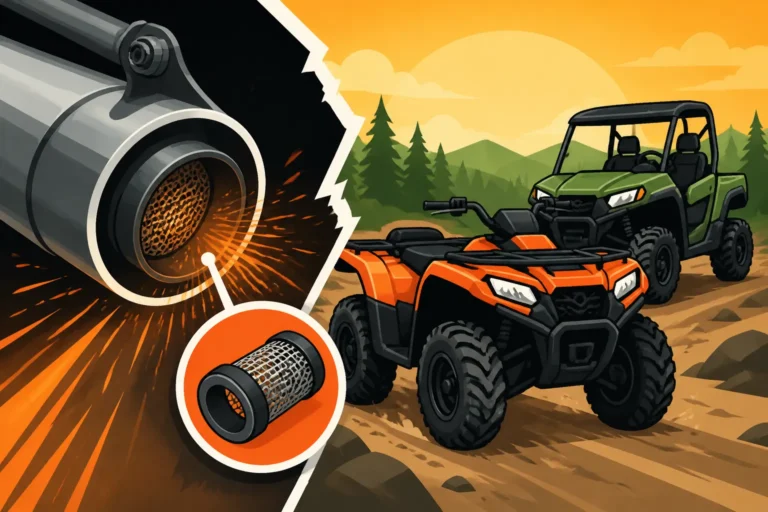
- Spark Arresters: All ATVs must be equipped with a spark arrester that is in good working order. This is a crucial piece of equipment to prevent wildfires, especially when riding through dry woods or fields adjacent to designated roads. It's often a U.S. Forest Service approved device.
- Lights and Reflectors: If you're operating after sunset, or even in low-visibility conditions, your ATV must have a working headlight and taillight. Some local ordinances might even require lights during daytime hours on designated roads for increased visibility. Your machine should also have reflectors to enhance its visibility to other traffic.
- Mufflers: Your ATV needs an adequate muffler system that meets federal noise standards. Excessive noise can be a major source of complaint from residents along designated roads, and towns can impose stricter local noise ordinances.
- Tires: While not always explicitly detailed in every ordinance, tires must be in good condition with sufficient tread depth. Running bald tires not only compromises safety but could be considered an equipment violation. It is a good practice to check [New York ATV Tread Depth Requirement] before heading out.
Ignoring any of these basic equipment and safety requirements isn't just risky; it could mean a ticket or, worse, losing access to the designated roads you enjoy.
Operational Restrictions: Speed, Hours, and Passengers
Beyond the equipment, designated roads often come with specific rules about how you can operate your ATV. These restrictions are often put in place to minimize impact on residents and ensure safety.
- Speed Limits: Do not assume the posted speed limit for cars applies to your ATV. Many designated roads, especially those passing through residential areas or connecting to off-road trails, will have lower speed limits specifically for ATVs. Always watch for signs indicating these reduced speeds. Going too fast is a primary reason for public complaints and can lead to towns rescinding road designations.
- Nighttime Restrictions: A very common restriction on designated roads is limited operating hours, often prohibiting ATV use after sunset or before sunrise. This is particularly true in areas with residential homes. New York State law has a [New York's 100-Foot Rule After Midnight] regarding noise near dwellings, and towns often incorporate even stricter nighttime bans on designated roads. Always check the local ordinance for specific hours of operation. Riding a designated road at 10 PM might be legal in one area, but strictly prohibited in another.
- Passenger Rules: Not all ATVs are designed to carry passengers, and New York law is quite clear on this. Generally, passengers are only allowed if the ATV is specifically designed by the manufacturer to carry more than one person, with a factory-fitted seat and handholds. You cannot simply add a second person to a single-rider quad. [New York Passenger Rules on an ATV] and [New York Rules for a Child Passenger] are strict; children must also be old enough to reach the footrests and firmly grasp the handholds.
- Age Restrictions: New York has specific age requirements for ATV operators. While a designated road may be open, the age rules still apply. For example, [New York Minimum Age to Ride an ATV] is 10 years old, and riders aged 10-15 generally need a valid New York State ATV Safety Certificate and direct supervision by an adult over 18, unless specifically exempted by a local ordinance for a youth-only ride.
These operational restrictions are often the source of local contention, and adhering to them shows respect for the communities that allow ATV access.
Understanding Local Ordinances and Their Variations
This is perhaps the most critical takeaway: "designated and posted" does not mean "uniform rules across the state." While state law sets a baseline for registration, insurance, and some safety equipment, the specific rules for riding on designated roads are highly variable and depend entirely on the local ordinance passed by that town or county.
- No Statewide Standard: There is no single, state-mandated set of rules for designated roads. Each town or county that designates roads has the power to add its own, often stricter, conditions. One town might allow ATVs only on weekends, another only on specific loops, and yet another might have a stricter noise ordinance or an earlier curfew than the state minimums.
- Checking Local Rules is Paramount: Before you load up your quad and head to a new designated area, you absolutely must check the specific local laws and ordinances for that town or county. This information is usually available on the town or county's official website, or you can call the clerk's office. Don't rely solely on word-of-mouth or outdated online maps. What was true last year, or in the next county over, might not be true for your intended riding location today. For instance, the Lewis County ATV system has specific rules, and these might differ slightly from a smaller club trail system in Oswego County.
- Impact of Local Concerns: These variations often reflect local concerns. A town with a lot of seasonal residents might have stricter noise or evening hour rules. A town concerned about road wear might limit the total mileage or specific types of machines. Understanding this local context helps explain why the rules aren't always consistent and reinforces the need for diligent research by riders.
Finding and Accessing Designated ATV Roads
One of the biggest hurdles for New York ATV riders is simply knowing where to go. With the general prohibition on public roads and the specific "designated and posted" exceptions, finding legal riding areas can feel like a treasure hunt. Thankfully, there are resources and communities dedicated to making this easier.
Resources for Identifying Open Roads and Trails
The search for legal riding spots often requires a bit of detective work, but there are some reliable places to start. Gone are the days of just showing up with a map; now, digital resources and local knowledge are key.
- County Tourism and Parks & Recreation Websites: Many counties that have embraced ATV tourism, such as Lewis County, will prominently feature information about their designated trail systems on their official tourism or parks and recreation websites. These sites often include downloadable maps, lists of open roads, permit requirements, and seasonal updates. [New York Trails Open in Spring] and [New York Trails Open in October] are topics often covered here. These are usually the most authoritative sources.
- ATV Club Websites and Forums: Local ATV clubs are often at the forefront of advocating for and maintaining designated trails. Their websites or social media groups can be goldmines of up-to-date information, trail conditions, and details on local ordinances. They often have firsthand knowledge of which roads are open and any specific rules that apply. Many clubs also publish their own maps.
- Online Mapping Apps and GPS Databases: A growing number of riders use dedicated GPS apps or online mapping platforms that crowd-source or officially list ATV-friendly trails and roads. While useful, always cross-reference this information with official county or town sources, as these apps can sometimes be out of date.
- Local DMV Offices (Limited Information): While the DMV handles registration, they typically won't have comprehensive lists of every designated road in every town. Their primary role is vehicle registration. However, they might be able to point you to county resources or general state rules.
- Word of Mouth (Use with Caution): While talking to other riders can be helpful, always verify information from unofficial sources. What one rider thinks is legal might not be, or rules might have changed. Always seek out official, published information to be safe.
The Role of ATV Clubs in Opening and Maintaining Access
Local ATV clubs are absolutely invaluable to the New York riding community. They are the boots on the ground, the advocates, and often the unsung heroes who work tirelessly to create and maintain legal riding opportunities.
- Advocacy and Lobbying: Clubs are instrumental in approaching town boards and county legislatures to advocate for the designation of roads. They present organized proposals, attend public hearings, and demonstrate the positive economic and recreational impact of ATV riding. Their collective voice carries much more weight than individual riders acting alone. They are often the driving force behind getting towns to [Ask a Town Board to Post a Road].
- Trail Work and Maintenance: Once roads or trails are designated, clubs often volunteer their time and resources to help with maintenance. This can include clearing fallen trees, maintaining signage, picking up trash, and even minor repairs to trail surfaces. This voluntary effort is crucial, as many towns have limited budgets for recreational trail upkeep. For instance, many of the clubs associated with the [Lewis County ATV Trail System in New York] actively participate in trail cleanups and maintenance.
- Landowner Negotiations: Many trail systems rely on private landowner agreements. ATV clubs often act as the intermediaries, building relationships with landowners, drafting agreements, and ensuring riders respect private property. This relationship management is vital for maintaining access, as a single incident of trespassing can jeopardize an entire section of trail.
- Promoting Responsible Riding: Clubs are also key in educating their members and the wider riding community about responsible riding practices. They emphasize adherence to rules, proper etiquette, and environmental stewardship, all of which contribute to a positive public perception and help secure continued access. [New York Club Memberships and Trail Access] are often synonymous with the sustainability of these systems.
Trail Permits and Fees on Designated Systems
While some small, local designated roads might not require a specific permit beyond your state registration, many larger, organized county or club trail systems do. These permits are typically a modest fee that directly supports the maintenance and administration of the trails.
- County-Level Permits: The most prominent example in New York is the Lewis County ATV Trail System. To ride their designated roads and trails, you need a Lewis County ATV Trail Permit. [Lewis County ATV Trail Permit Cost and Rules] outline the fees, which are often structured with a base rate for the first machine and a reduced rate for additional machines registered to the same owner.
- Funding Maintenance: The revenue generated from these permits is critical. It often goes directly back into the trail system for things like signage, mapping, surface improvements, bridge repairs, and administrative costs. Without these permit fees, many of these extensive trail systems simply wouldn't be financially viable. [Where Lewis County Permit Money Is Spent] is a clear example of this.
- Club Membership Benefits: In some cases, belonging to a local ATV club that is a partner in the trail system can offer a discount on county permits. This encourages club membership, which further bolsters the volunteer base for maintenance and advocacy. [How Club Membership Cuts Your Lewis County Permit Price] makes joining a club even more appealing.
- Lack of Statewide Permit: New York State does not have a single, statewide ATV trail permit. This means if you want to ride in multiple counties, you might need to purchase separate permits for each county's system. [New York Charges Visitors to Ride] on these systems, just like residents, ensuring that everyone contributes to their upkeep. This can sometimes be confusing for riders, but it reflects the localized nature of trail management in the state.
- Proof of Permit: Always carry your trail permit with you when riding on a system that requires one. Trail wardens or law enforcement may check for it, similar to how they check for registration and insurance.
Challenges and Future Outlook for New York's ATV Road Network
While New York has some fantastic designated ATV roads and trails, the landscape isn't without its challenges. From legislative hurdles to environmental concerns and the evolving nature of the machines themselves, the future of ATV access in the state is a dynamic and often contentious topic.
Ongoing Debates and Legislative Efforts
The push and pull over ATV access is a constant in New York State. While local designations happen, there's always a broader legislative conversation happening in Albany.
- Bills for Expanded Access: Riders and advocates have long sought state-level changes to expand ATV access. This often takes the form of bills aimed at redefining what constitutes an "ATV" to include larger machines or at making it easier for municipalities to open roads. For instance, there have been efforts to pass [A New York Bill to Widen the ATV Definition] to allow for a broader range of machines.
- UTV Registration Struggles: The rise of UTVs (Utility Task Vehicles, or side-by-sides) has created a particularly thorny issue. Many modern UTVs are wider and heavier than the traditional ATV definition in New York State law. This means that [Why a Modern Side-by-Side Fails the Test] for registration, and consequently, [Why Most Side-by-Sides Cannot Be Registered in New York] at all. This leaves many UTV owners with machines they can only ride on private property, which is incredibly frustrating. Bills like [A New York Bill on UTV Registration] have been introduced to address this, seeking to create a specific category or modify existing rules to accommodate these popular machines.
- Why Bills Get Stuck: Unfortunately, many of these proposed bills face significant hurdles in the legislature. They can get bogged down in committees, face opposition from environmental groups, or simply fail to garner enough political will to pass. [Why New York's UTV Bills Are Not Law Yet] is a common lament among riders. This legislative inertia means that changes often happen slowly, if at all, leaving the local "designated and posted" approach as the primary avenue for expanding access.
- Electric ATV Considerations: The emergence of electric ATVs also presents a new legislative frontier. Existing laws were written long before electric machines were common. Advocates are pushing for clarity on how these machines fit into current regulations, as discussed in [What New York's Electric ATV Bill Would Change].
Landowner Relations and Environmental Concerns
The delicate balance between recreation, private property rights, and environmental protection is always a central theme in New York. The long-term sustainability of any ATV network hinges on managing these relationships responsibly.
- Respect for Private Property: Many designated roads and trails traverse or abut private lands. Any instance of trespassing, excessive noise, or littering can quickly erode the goodwill of landowners. It's a fundamental principle that [New York Landowner Permission Rules] are respected, and any deviation can lead to trails being closed permanently. A single bad apple can spoil the bunch for an entire riding community. ATV clubs often work hard to maintain strong relationships with landowners who grant access.
- Trail Etiquette and Conservation: Responsible riding includes adhering to "Tread Lightly!" principles. This means staying on marked trails, avoiding sensitive areas like wetlands, not creating new unauthorized trails (known as "rogue trails"), and packing out everything you pack in. The phrase "leave no trace" is paramount.
- Balancing Recreation with Conservation: Environmental groups often raise concerns about erosion, habitat disturbance, noise pollution, and water quality impacts from ATVs. These are valid concerns that need to be addressed through careful trail planning, maintenance, and rider education. Showing that the ATV community is committed to environmental stewardship is crucial for gaining public and political support for more designated areas. The challenges in areas like the Adirondack Park ([New York's Adirondack Park and Motor Vehicles]) illustrate this tension.
- The Forest Preserve: Areas like the Adirondack and Catskill Forest Preserves operate under unique "Forever Wild" constitutional protections, which generally prohibit motorized recreational vehicles. [Why New York's Forest Preserve Is Closed] to ATVs is a clear example of how conservation mandates can limit access, and these protections are unlikely to change.
The Evolution of Machines and Regulations
The ATV and UTV market is constantly evolving, with new machines that push the boundaries of size, weight, and power. This evolution often outpaces existing regulations, creating a regulatory lag that frustrates riders and complicates enforcement.
- Wider and Heavier Machines: As mentioned earlier, the increasing popularity of wider and heavier UTVs presents a significant challenge. New York's current ATV definition is quite narrow, leading to situations where many popular side-by-sides simply cannot be registered. Even if a road is designated for "ATVs," it might implicitly exclude a wide UTV if the local ordinance uses the state's narrow definition or if the trails themselves are too narrow. This forces riders of these machines to either risk riding unregistered or to limit their use to private property. This is why [New York ATV Width Limit for Registration] and [New York ATV Weight Limit for Registration] are such contentious issues.
- Electric ATVs: Electric ATVs are becoming more prevalent, offering quieter operation and zero emissions. However, existing laws were written for gasoline-powered machines. Questions arise about how they fit into registration, noise regulations, and even trail access rules. Are they considered ATVs, or do they need a separate classification? New York is grappling with how to adapt its framework to these new technologies.
- Adapting Regulations: The challenge for policymakers is to adapt regulations to these new machines while still maintaining safety and environmental protections. This often involves legislative updates, which, as we've seen, can be slow and difficult. In the meantime, riders must operate within the confines of existing, sometimes outdated, laws. This creates a difficult situation for consumers, who buy a machine only to find it's legally restricted. For example, a new SuperATV UTV with a lift kit and wide tires might be perfect for rugged terrain but immediately exceed New York's registration width limits, making it impossible to ride on designated trails.
Practical Tips for Riding New York's Open Roads
Navigating New York's designated and posted roads requires more than just knowing where to go; it demands preparedness, respect, and good judgment. Following these practical tips will enhance your riding experience and help ensure continued access for everyone.
Pre-Ride Checklist for Designated Roads
Before you even think about hitting a designated road, a thorough pre-ride check is essential. This isn't just about safety; it's about being legal and responsible.
- Machine Inspection: Give your ATV a once-over. Check tire pressure, brakes, lights (headlight, taillight, brake light), fluid levels, and ensure your spark arrester and muffler are in good working order. Are all essential components, like your SuperATV skid plates, securely fastened? A breakdown far from home is never fun.
- Legal Documents: Have your ATV's current registration, proof of insurance, and your ATV Safety Certificate (if required for your age) readily accessible. An officer may ask to see these. While not always a ticketable offense to leave it at home, it saves a lot of hassle to have your [New York ATV Registration and Insurance Proof] on you.
- Proper Gear: Beyond the mandatory DOT-approved helmet, consider wearing eye protection (goggles or a face shield), sturdy boots that cover your ankles, long pants, and a long-sleeved shirt or jacket. Gloves are also a good idea for grip and protection.
- Navigation and Communication: Bring a map of the specific designated roads and trails you plan to ride. A GPS device or a reliable GPS app on your phone (with downloaded offline maps, as cell service can be spotty) is highly recommended. Let someone know your route and expected return time, especially if riding alone.
- Emergency Kit: Pack a basic first-aid kit, some tools for minor repairs (spark plug wrench, tire repair kit), a small air pump, water, snacks, and a way to signal for help (whistle, fully charged phone). A small tow rope or winch can be a lifesaver, especially if you have deep mud ahead, and SuperATV offers reliable winch options.
Trail Etiquette and Responsible Riding
Your behavior on designated roads directly impacts the public perception of ATV riders and the willingness of communities to maintain access. Responsible riding is an investment in the future of the sport.
- Stay on Marked Trails: This is perhaps the most critical rule. Designated roads and trails are clearly marked for a reason. Do not deviate from them, cut switchbacks, or attempt to create new routes. This causes erosion, damages sensitive habitats, and shows disrespect for landowners and land managers. [New York Rules for Riding Off a Marked Trail] usually involve significant fines.
- Respect Speed Limits and Yield: Adhere strictly to any posted speed limits for ATVs. Slow down in residential areas, near homes, or when approaching other trail users. Always yield to pedestrians, horses, and bicycles, as they often have the right-of-way. Give a friendly wave and announce your presence politely.
- Mind the Noise: While your ATV must meet muffler standards, try to minimize unnecessary noise, especially near homes or other quiet recreational areas. Avoid revving your engine excessively.
- Pack it in, Pack it Out: Take all your trash with you. Leave the environment cleaner than you found it. This simple act goes a long way in demonstrating responsibility.
- Be Mindful of Wildlife: Observe wildlife from a distance. Do not harass or pursue animals. Be aware of hunting seasons if riding in areas where hunting occurs. [New York Rules for Riding During Hunting Season] might have specific limitations.
- Share the Trail: You might encounter hikers, cyclists, or equestrians. Be courteous, slow down, and pass safely.
Dealing with Unexpected Situations
Even the most prepared rider can encounter surprises. Knowing how to react calmly and effectively can prevent a minor incident from becoming a major problem.
- Weather Changes: New York weather can be unpredictable. A sunny morning can quickly turn into a rainy, muddy afternoon. Be prepared for changing conditions, and if the weather becomes severe (e.g., thunderstorms, heavy rain), seek shelter or turn back. Riding in heavy rain can make designated roads very slick and dangerous.
- Machine Breakdowns: If your ATV breaks down, try to move it to the side of the road or trail to avoid obstructing others. Use your emergency kit for minor repairs. If you can't fix it, use your communication device to call for help. Having a riding buddy is always a good idea for this reason.
- Getting Lost: If you realize you're off-course, don't panic. Consult your map or GPS. If you're completely disoriented, retrace your steps to the last known point. Don't continue deeper into unfamiliar territory. Stay put if it's getting dark or weather is worsening, and use your communication device.
- Encountering Law Enforcement: If you are stopped by law enforcement, remain calm, polite, and cooperative. Turn off your engine, remove your helmet, and keep your hands visible. Present your registration, insurance, and safety certificate when asked. If you believe a ticket is unwarranted, gather the officer's information and challenge it through the proper legal channels, not roadside. Remember, an officer checking your credentials at a [Lewis County ATV Trailhead] is just doing their job to keep everyone safe and ensure compliance.
By being prepared, riding responsibly, and being a good steward of the land, you'll not only enjoy your time on New York's designated and posted roads but also help to preserve and expand these vital riding opportunities for years to come.
Comparison of New York Road Types and ATV Access
To help visualize the information, here's a quick comparison of different road types and their general status for ATV access in New York. Remember, always check local ordinances for the most precise details.
| Road Type | Ownership/Jurisdiction | Likelihood of ATV Designation | Typical Use & Key Considerations | Enforcement Focus |
|---|---|---|---|---|
| Town Roads | Local (Town Board) | High | Often rural, lower traffic, connect trails, vital for community access. | Local ordinances, speed, noise, hours, equipment. |
| County Roads | Local (County Legislature) | High | Connect larger trail systems, often part of county-wide networks. | County ordinances, permits (e.g., Lewis Co.), speed, insurance, helmets. |
| State Highways | New York State DOT | Extremely Low (Near Zero) | High speed, high traffic, designed for cars/trucks. Generally prohibited. | State law, strict enforcement for any ATV presence. |
| Interstates | New York State DOT / Federal | Zero | Major arteries, absolutely no ATV access or crossings. | State law, extremely severe penalties for presence. |
| Private Roads | Individual Landowners | Depends on Permission | Access to private property, logging roads, farm lanes. Requires consent. | Landowner permission, trespassing laws, specific private agreements. |
| Forest Preserve | NYS (Adirondack/Catskill) | Zero | "Forever Wild" constitutional protection, prohibits motorized use. | DEC/Park Rangers, strict environmental enforcement. |
Disclaimer
This article is for general informational purposes only and does not constitute professional advice. Laws, prices and regulations vary by location and change over time. Consult a qualified professional for guidance on your specific situation.