Getting Pulled Over With No ATV Insurance Card
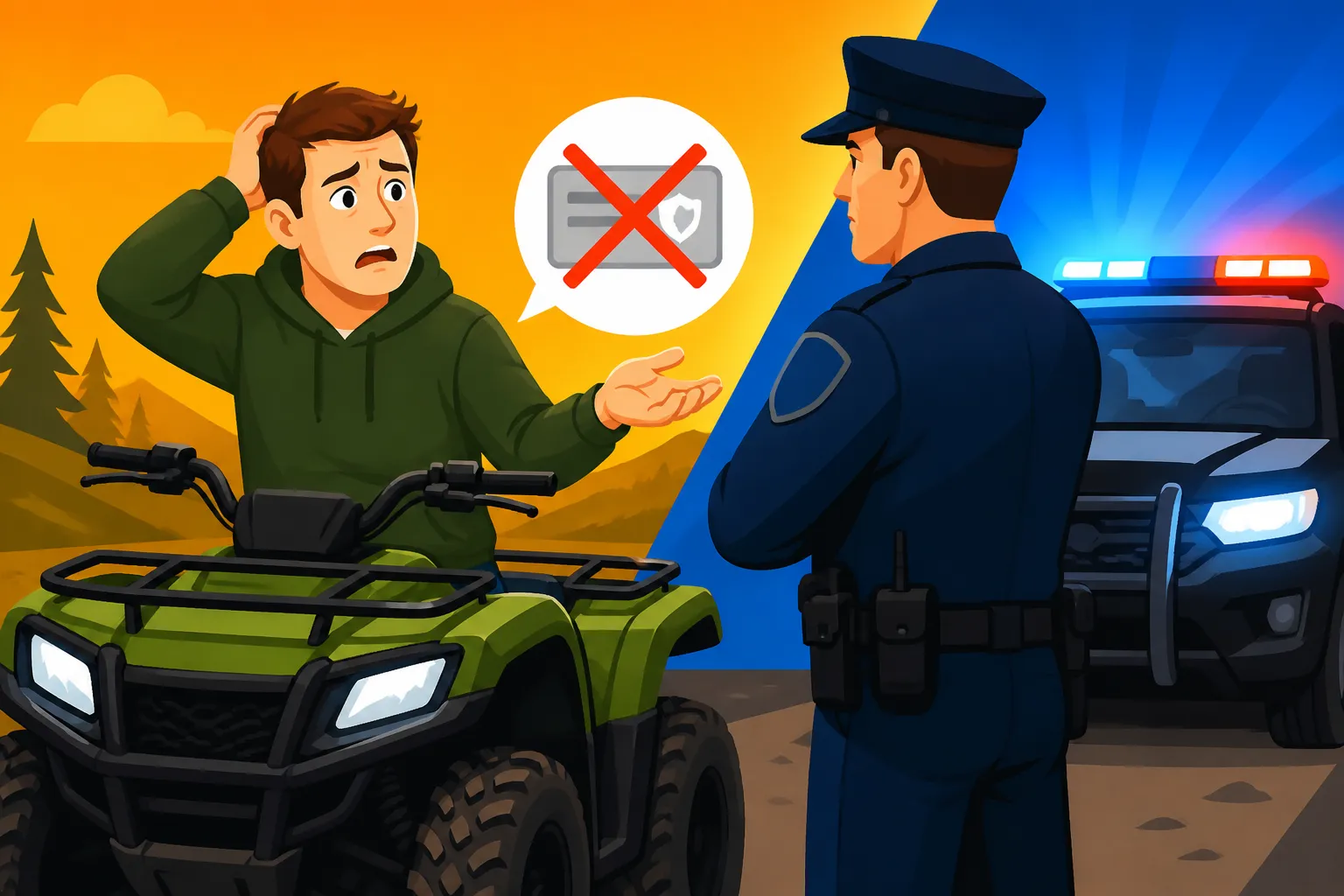
Picture this: you're out on a beautiful New York trail, the sun's shining, the engine's purring, and you're just enjoying the freedom that comes with off-road riding. Suddenly, you see flashing lights in your rearview. Your heart sinks. You pull over, reach for your wallet, and then it hits you: your ATV insurance card isn't there. Whether it slipped out, got soaked, or you simply forgot it, getting pulled over without that crucial piece of paper can turn a perfect day into a real headache. This guide is here to walk you through exactly what New York law says about ATV insurance, what to do if you're stopped without proof, and how to make sure you're always prepared.
The Non-Negotiable Reality of ATV Insurance in New York
Riding ATVs in New York is a fantastic experience, with miles of trails through varied landscapes, from the Adirondacks to Tug Hill. But unlike some other states where ATV insurance might feel like an optional add-on, in New York, it's a fundamental requirement. The state takes its off-road safety and liability seriously, and that means every rider needs to be adequately covered.
Why Insurance Isn't Just "Recommended" Here
Let's be blunt: in New York, ATV insurance isn't a suggestion; it's the law. If you plan to ride your ATV anywhere other than on your own private property, you absolutely must have a valid insurance policy. This isn't just about protecting yourself; it's about protecting others. Accidents happen, even to the most experienced riders, and when they do, New York wants to ensure that any potential damages or injuries can be covered without undue burden on the involved parties.
This mandatory requirement stems from the fact that ATVs, while incredibly fun, can also be powerful machines that pose risks if not operated responsibly. The state has put these rules in place to ensure that medical bills, property damage, and legal fees resulting from an incident don't fall solely on the victim or the rider's personal assets. It's a critical piece of the puzzle that allows public and designated private trails to exist. Understanding [New York's Mandatory ATV Insurance] is the first step toward responsible riding, and it highlights why simply having a machine is not enough. You can learn more about the specifics by checking out the article on [New York ATV Insurance Requirement].
What "Proof of Insurance" Actually Means
Having an insurance policy is one thing; being able to prove you have it is another. When an officer pulls you over, they're not going to take your word for it. They need tangible evidence, which typically means a physical insurance card or a digital equivalent readily available on your phone. This card serves as immediate confirmation that you meet the state's minimum liability requirements.
The card usually contains vital information: your name, your policy number, the effective dates of your coverage, and a description of the ATV covered (often by VIN or plate number). Imagine you're riding a new set of trails for the first time, perhaps exploring some of the great spots up near Watertown. You're feeling confident, perhaps with some new upgrades from SuperATV on your machine, making the ride even better. But if that little card isn't in your wallet or a waterproof pouch, all those upgrades won't save you from a potential fine. It’s not just about knowing you’re covered; it’s about showing it. This proof is as important as your registration, and for a deeper dive into how these two pieces of documentation fit together, you can refer to [New York ATV Registration and Insurance Proof].
The Specific Risks of Riding Without the Card
Even if you are fully insured, the act of being caught without your insurance card in hand presents its own set of immediate problems. You might think, "Well, I have insurance, so it's not a big deal," but from the officer's perspective, without proof, you might as well not have it. This can lead to delays as the officer tries to verify your coverage (which isn't always quick or easy roadside), and potentially, a citation for failing to provide proof of insurance.
The distinction between genuinely having no insurance and simply lacking the physical card is crucial, but often, the roadside stop doesn't allow for immediate resolution. An officer isn't going to sit there while you call your agent or scramble through emails looking for a digital copy if you can't readily access it. The initial interaction can be frustrating, lengthy, and can easily result in a ticket that you'll then have to dispute later. It adds stress and uncertainty to what should be a simple interaction, and frankly, it's a hassle you want to avoid.
What Happens When an Officer Stops You Without Proof
So, you're pulled over, and that sinking feeling confirms you don't have your insurance card. What happens next? The interaction with law enforcement is critical, and how you handle it can significantly influence the outcome.
The Initial Interaction: Staying Calm and Cooperative
First and foremost, stay calm. Pull over safely and promptly. Turn off your ATV's engine and remove your helmet. Keep your hands visible, and wait for the officer to approach. When they do, be polite and cooperative. Provide your driver's license (if applicable), ATV registration, and any other requested identification. When it comes to the insurance card, honestly explain that you don't have the physical card with you. Avoid arguing or making excuses; simply state the fact.
An officer's job is to enforce the law, and they'll be looking for specific documents. They'll ask for your insurance card as a routine part of any stop, and not being able to produce it immediately can raise red flags. While you might know you're insured, the officer needs to confirm it. They might try to look up your policy information, but this isn't always guaranteed, especially with ATV-specific policies that aren't always linked directly to motor vehicle databases in the same way car insurance might be. A good overview of what officers look for can be found in [What a New York Officer Checks Roadside].
The Immediate Consequences: Tickets, Fines, and More
If you cannot provide proof of insurance at the time of the stop, you're likely going to receive a ticket. This citation isn't necessarily for "no insurance," but rather for "failure to produce proof of insurance." While it might seem like a minor offense, it still carries a fine and can be a significant hassle. The exact fine can vary depending on the municipality and the officer's discretion, but it's never a cheap lesson.
Now, if you genuinely do not have insurance, the situation is far more severe. This isn't just a paperwork issue; it's a violation of state law, and the fines are much higher. Beyond the financial penalties, riding uninsured can lead to points on your driving record (yes, even for ATV violations if they impact your driver's license), and could potentially result in your ATV's registration being suspended. The state takes uninsured operation very seriously because of the significant liability risks involved. It's a stark reminder that [New York Fines for Riding Without Insurance] are substantial, and the consequences for [What an Insurance Lapse Costs] can extend far beyond a simple ticket.
Potential Vehicle Impoundment and Its Aftermath
In serious cases, particularly if you are genuinely uninsured or if there are other violations involved (like riding impaired or on a suspended registration), an officer has the authority to impound your ATV. This is one of the most immediate and impactful consequences of not having your paperwork in order. If your ATV is impounded, you'll be responsible for towing fees, storage fees, and potentially other administrative costs, all of which can quickly add up.
Getting your ATV back from impound can be a lengthy and frustrating process. You'll likely need to first resolve the legal issues—either by paying your fines or appearing in court—and then provide proof of valid insurance before the impound lot will release your machine. This could mean obtaining a new policy on the spot, which can be expensive and inconvenient. The inconvenience alone, of having your machine taken away and having to arrange for its retrieval, is a powerful motivator to always keep your documents current and accessible.
| Scenario | Proof of Insurance Card Absent? | Actually Uninsured? | Immediate Consequence | Potential Long-Term Consequences |
|---|---|---|---|---|
| Forgot Card, But Insured | Yes | No | Ticket for "no proof" | Fine, court appearance, possible dismissal with proof later |
| No Card, No Insurance | Yes | Yes | Heavier ticket, possible impound | Significant fines, registration suspension, legal action, impound |
Navigating the Aftermath and Avoiding Future Headaches
Being stopped without your insurance card is certainly a stressful experience, but how you handle the situation after the initial interaction can make a big difference in the final outcome. It's about damage control and proactive steps.
Proving Coverage After the Stop (If You Had It)
If you were ticketed for "failure to produce proof of insurance" but you genuinely do have an active policy, your immediate goal should be to get that charge dismissed or reduced. This typically involves presenting valid proof of insurance to the court or the prosecuting attorney before your court date. Most courts understand that people forget documents, and if you can quickly show that you were indeed covered on the date of the stop, they may be willing to drop the charge or reduce the fine significantly.
Act quickly. Don't wait until the day of your court appearance. Contact your insurance provider right away to get a copy of your insurance card or a letter of experience proving your coverage for the date in question. Present this documentation to the court clerk or prosecutor's office as soon as possible. Demonstrating your legitimate coverage often leads to a more lenient outcome, saving you money and hassle, and keeping your record cleaner.
Understanding New York's Insurance Minimums
To ensure you're always riding legally, it's crucial to understand [The Coverage Minimums New York Requires]. These minimums are not just arbitrary numbers; they are the baseline protection the state mandates for liability. Typically, this includes coverage for bodily injury per person, bodily injury per accident, and property damage. While these minimums provide legal compliance, it's often wise to consider higher limits. An ATV accident can lead to significant medical costs or extensive property damage, and the minimums might not always be enough to cover everything, leaving you personally liable for the remainder.
Thinking about upgrading your machine with robust parts from SuperATV is a great idea for enhancing performance and durability, but parallel to that, you should always review your insurance policy. A comprehensive policy can also protect your investment in your ATV itself, covering theft, fire, or collision damage. It’s about more than just checking a box for the DMV; it’s about peace of mind and genuine financial protection.
The Unique Rules for Private Land and Visitors
New York law carves out a specific exception for ATV insurance: if you are riding exclusively on your own private property, you are not legally required to carry ATV insurance. This is what's often referred to as [Riding Your Own Land Without Insurance]. However, the moment your tires touch public land, a designated trail, or even another person's private property without their explicit permission and understanding of your lack of insurance, that exception vanishes. So, while you might enjoy tearing up your back forty without a policy, the minute you load that quad onto a trailer and head to the Lewis County trails, you absolutely need coverage. This distinction is vital and clarifies [When ATV Insurance Becomes Mandatory Off Your Own Land].
For those visiting New York from out of state, there's often confusion about reciprocity. While New York might honor an out-of-state ATV registration for a short period, the insurance requirements are generally non-negotiable. Your out-of-state policy needs to meet New York's minimum liability coverage, and you still need to be able to provide proof. Simply having a policy from Pennsylvania or Vermont won't automatically satisfy New York's rules unless it specifically extends to cover operation in New York and meets the state's minimums. It's always best for visitors to confirm with their insurer or consider purchasing a temporary New York-compliant policy to avoid any issues. Make sure to read [Does an Out-of-State Policy Satisfy New York's ATV Rule?] to fully understand these nuances before you ride here.
Disclaimer
This article is for general informational purposes only and does not constitute professional advice. Laws, prices and regulations vary by location and change over time. Consult a qualified professional for guidance on your specific situation.