New York Rules for Riding After Dark
There’s a unique allure to riding your ATV after the sun dips below the horizon in New York. The trails are quieter, the air is often cooler, and the stars can be absolutely incredible. But that peaceful solitude comes with a hefty dose of responsibility, and a specific set of rules from New York State. Ignoring them won't just spoil your serene ride; it could land you in serious trouble. This guide will walk you through everything you need to know to enjoy the trails safely and legally after dark, without tripping up on confusing regulations.
Essential Lighting Requirements for New York Night Riding
When you're out on the trails after dark, your visibility—both seeing and being seen—is paramount. New York State doesn't just suggest you have lights; it mandates them with specific requirements designed to keep everyone safe. It's not enough to have a dim, flickering bulb; your lighting system needs to be up to snuff.
Headlights and Taillights: Your Mandatory Illuminators
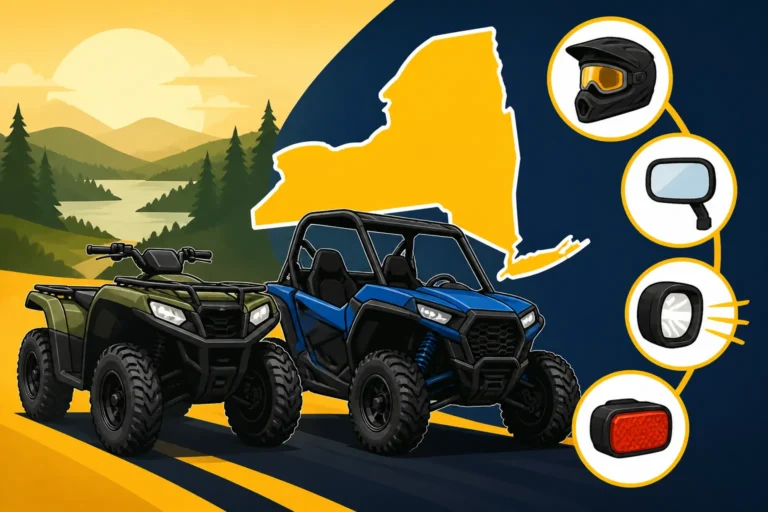
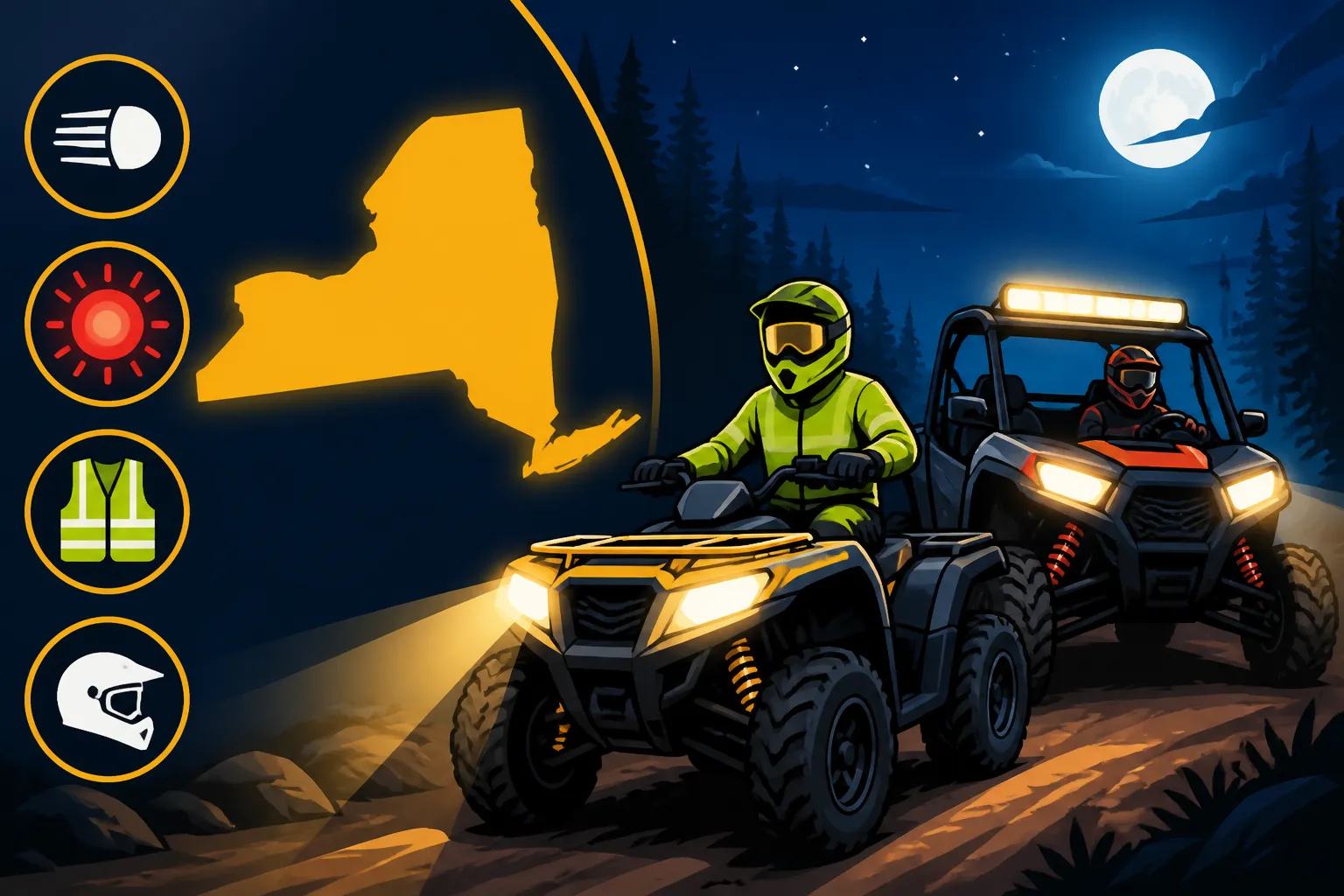
Let's start with the basics: your headlights and taillights. These aren't just for decoration; they're your primary tools for navigating the darkness and for alerting others to your presence. For your headlight, New York requires a white light that can illuminate objects at least 200 feet ahead. This isn't just about seeing the trail; it's about seeing that fallen branch, that deer darting across your path, or that unexpected puddle before it becomes a problem. Think about those long, winding trails in Lewis County or the dense woods of the Tug Hill region – you need every bit of light you can get. A weak beam can turn a fun ride into a treacherous one in a heartbeat.
Your taillight, on the other hand, must be a red light, visible from at least 200 feet to the rear. This is crucial for group rides or for trails that might see other users, like snowmobilers during the crossover seasons. Imagine riding in a tight formation, or even just stopping briefly on a trail, and the rider behind you can't see your taillight until it's too late. That's a recipe for a bad day. Both lights must be securely mounted and in good working order. A quick tap test or a visual inspection before you head out is a small step that can save you a huge headache later. It's part of the general [New York Equipment Requirements for ATVs] that ensures your machine is ready for the trail.
Reflectors and Other Visibility Aids
While headlights and taillights are the stars of the show, New York's rules also typically include requirements for reflectors. These passive safety devices might seem old-fashioned, but they're incredibly effective, especially if your electrical system hiccups or your lights get caked with mud. You'll generally need red reflectors on the rear and amber reflectors on the sides, though specifics can vary. These catch light from other sources, like another rider's headlight or even a passing vehicle on a trail crossing, helping to outline your machine.
Beyond the mandated equipment, consider adding extra layers of visibility. High-visibility clothing, whether a bright jacket or reflective strips on your helmet, can make a huge difference, particularly if you find yourself off the machine or if your lights fail. Many riders also turn to aftermarket solutions to significantly enhance their visibility and illuminate the path ahead on those truly dark upstate trails. Companies like SuperATV offer a fantastic range of auxiliary lighting options, from powerful LED light bars that turn night into day, to accent lights that make your machine stand out. These aren't always legally mandated, but they're smart investments in your safety, especially when you're tackling unfamiliar terrain or pushing into the deeper woods where even a strong factory headlight might struggle to penetrate the darkness. It’s about being proactive, not just compliant.
Defining "After Dark" and When Lights Become Mandatory
It might sound obvious, but "after dark" isn't just when you can't see your hand in front of your face. New York State, like many places, has a specific legal definition for when your lights absolutely must be on, regardless of how bright the moon is or how clear the sky might seem.
The Sunset to Sunrise Rule
For ATV riders in New York, the general rule is that your lights, specifically your headlight and taillight, must be on from one-half hour after sunset to one-half hour before sunrise. This means even if there’s still a faint glow on the western horizon, or the eastern sky is just starting to lighten, you need to be illuminated during this window. It's a clear-cut rule, designed to remove any ambiguity about when your [Headlight and Taillight After Sunset] should be active. This isn't just a suggestion; it's a legal requirement, and ignoring it can lead to fines.
This rule is in place for a good reason. Even in twilight conditions, visibility changes drastically, especially in wooded areas where shadows can quickly obscure obstacles or other trail users. What looks clear during the day can become a tricky maze as the light fades. By setting a specific timeframe around sunset and sunrise, the state ensures a consistent standard for everyone, reducing the risk of accidents caused by inadequate lighting. It's about safety first, always.
Low Visibility Conditions and Beyond Sunset
The "sunset to sunrise" rule is just one part of the equation. New York also mandates the use of your lights whenever visibility is limited, regardless of the time of day. This means if you're riding through dense fog, a heavy downpour, or even a sudden blizzard, your lights need to be on. Picture yourself on a trail in the Adirondacks when a thick fog rolls in unexpectedly, or a sudden squall hits, reducing visibility to mere feet. Even at noon, those conditions warrant your lights being on.
This particular aspect of the rule emphasizes safety above all else. It acknowledges that natural light isn't the only factor impacting visibility. Heavy weather can make you virtually invisible to other riders, hikers, or even emergency personnel. Proactively switching on your lights in these conditions isn't just about following the law; it's about making a conscious effort to protect yourself and others sharing the trails. Always err on the side of caution. If you have to ask yourself if it's dark enough or foggy enough for lights, the answer is probably yes.
The Infamous 100-Foot Rule: Riding Near Homes at Night
Among New York's specific regulations for ATV riding, the "100-foot rule" is one that often catches riders off guard, or at least causes a good deal of frustration. This rule specifically targets noise and disturbance, which can be a significant concern for residents living near trails, especially during the quiet hours of the night.
What the 100-Foot Rule Means
Here's the gist of it: in New York, you are generally prohibited from operating an ATV within 100 feet of a dwelling or structure used for human occupancy between the hours of midnight and 5 a.m. Let that sink in. This isn't just about public roads; it applies to trails, private land, and anywhere an ATV might be operated. The intent is clear: to prevent noise disturbances that could disrupt residents' sleep. ATV engines, even well-maintained ones, can generate a significant amount of noise, and that noise carries, especially in the still of the night. It's the state's way of balancing the recreational desires of riders with the peace and quiet of residential communities. This is the very core of [New York's 100-Foot Rule Near Homes at Night].
This rule highlights why you always need to be aware of your surroundings, even on established trail systems. A trail might be perfectly legal to ride during the day, but if it snakes close to a residential area, or even a remote cabin, it becomes a no-go zone during those early morning hours. It's a huge point of contention for many riders, especially those on multi-day trips or returning from a late session, who might be just trying to get back to a cabin near the trail. It's a reminder to always know your route, especially when using navigational accessories, perhaps from SuperATV, that help keep you on track, so you don't inadvertently break this rule.
Practical Implications for Trail Riders and Landowners
The 100-foot rule has significant practical implications for everyone involved in the ATV community. For trail system managers, it means careful planning and sometimes rerouting trails to avoid encroaching on residential areas during those restricted hours. It's why some trails might have specific night riding curfews or why access points near homes might be closed after a certain time. For landowners who graciously allow trails on their property, it provides a layer of protection against noise complaints, but it also means they need to be aware of how close their land is to any neighboring dwellings.
For riders, this rule means you absolutely must plan your night rides meticulously. If your route involves passing near any structures, you need to either ensure you're through that section before midnight, or wait until after 5 a.m. This is often where riders ask, [How Close to a House Can You Ride at Night?], and the answer is simple: 100 feet or more during those specific hours. This can be especially frustrating if you're just a short distance from your camp or lodging and have to stop. But knowing this rule ahead of time can prevent a ticket. Also, remember that [Why a New York Town May Be Stricter] is a real possibility; some local municipalities might have even tighter restrictions or outright bans on night riding in certain areas, so always check local ordinances before you head out. These localized rules are often born from resident complaints and can be strictly enforced by local authorities.
Consequences of Non-Compliance and Safe Night Riding Practices
Ignoring New York's rules for riding after dark isn't just about potentially spoiling your fun; it carries real legal and safety consequences. Understanding these can motivate you to always ride by the book and adopt best practices.
Potential Fines and Legal Ramifications
Operating an ATV without proper lighting, or violating the 100-foot rule, can lead to fines and other legal penalties. While I can't give you exact figures (these change over time and by specific violation), rest assured that getting caught by an officer on patrol can be an expensive lesson. Law enforcement personnel, whether state troopers or local deputies, are well aware of these regulations and will pull you over if your machine isn't properly lit or if you're riding too close to homes during the restricted hours. They're often out there specifically to ensure compliance, especially when complaints about noise or unsafe riding come in. You can be sure that [What an Officer Checks Roadside] includes working lights and adherence to local time restrictions.
Beyond immediate fines, repeated violations could lead to more serious repercussions, though less common for simple lighting issues. The aim of these laws is prevention, not punishment, but the legal system does have teeth. It's a much better scenario to spend a little time making sure your lights are working and planning your route to avoid the 100-foot rule window, than to deal with the hassle and expense of a ticket or a court appearance. Understanding [New York Fines for an ATV Violation] is a good deterrent to ensure you're always riding legally.
Safety Beyond Legalities: Best Practices for Night Riding
While legal compliance is essential, safety should always be your top priority, especially when riding after dark. Reduced visibility dramatically increases the risk of accidents. You're less likely to spot obstacles, misjudge terrain, or react quickly to unexpected situations. Always reduce your speed significantly at night, even on familiar trails. What looks like a small rut in daylight can become a wheel-eating ditch in the dark. Ride within your skill level and your machine's capabilities; don't push the limits when visibility is compromised.
Riding with others is a smart move for night excursions. There's safety in numbers; if someone gets stuck or injured, help is immediately available. Carry essential emergency gear, including a first-aid kit, a fully charged cell phone (though be aware of dead zones in remote areas), extra lighting, and basic tools. Before every night ride, conduct a thorough pre-ride check: test all your lights, check tire pressure, ensure you have enough fuel, and confirm all your accessories are secure. Beyond the legal requirements, safety should always be your top priority. Investing in a good winch system, perhaps from SuperATV, can be a lifesaver if you get stuck in the dark, turning a bad situation into a manageable one. Also, consider the specific challenges of night riding, like the increased risk of encountering wildlife, which often become more active after dusk.
Planning Your Night Ride in New York
Effective planning is the backbone of a successful and safe night ride. Never head out spontaneously without a clear route in mind, especially if you're exploring new territory. Always tell someone your route, where you plan to ride, and your expected return time. This "float plan" is crucial for your safety should something unexpected happen. Check trail conditions beforehand; a trail that's challenging during the day can become extremely difficult and dangerous at night if it's muddy, icy, or filled with recent storm debris.
Also, be mindful of local noise ordinances, as [Why a New York Town May Be Stricter] is a genuine concern, particularly if you're riding near any populated areas. Even if you're outside the midnight to 5 a.m. window, excessive noise late at night can still lead to complaints and potentially new, stricter local rules. The spirit of these regulations is to maintain peace, so being a courteous rider by keeping noise down late in the evening benefits everyone. A well-planned night ride can be incredibly rewarding, offering a unique perspective on New York's beautiful landscapes, but always prioritize preparation, legal compliance, and safety.
Here's a quick checklist for your next New York night ride:
| Aspect | Requirement | Why It Matters |
|---|---|---|
| Headlights | White light, visible for 200 ft (minimum) | Essential for seeing obstacles and being seen by others. |
| Taillights | Red light, visible for 200 ft (minimum) | Alerts riders behind you to your presence; critical for group safety. |
| Reflectors | Required on sides (amber) and rear (red) | Provides passive visibility, especially if active lights fail or dim. |
| "After Dark" Legal | 1/2 hour after sunset to 1/2 hour before sunrise | Legal obligation for lights; ensures consistent safety standards. |
| Low Visibility | Lights on during fog, heavy rain, snow (any time of day) | Crucial for safety when natural light is insufficient, regardless of time. |
| 100-Foot Rule | No riding within 100 ft of dwelling/structure between midnight and 5 a.m. | Prevents noise disturbance to residents; avoid legal penalties. |
| Local Ordinances | Always check for stricter local rules or curfews | Local laws can vary and impact your ride; ignorance is no excuse. |
| Extra Lighting | (Optional, e.g., SuperATV light bars) | Significantly enhances visibility for challenging terrain; a safety booster. |
| Reduced Speed | Mandatory for night riding | Compensates for limited reaction time due to decreased visibility. |
| Group Riding | Highly recommended for safety and assistance | Ensures help is available in case of breakdowns, injuries, or getting lost. |
| Pre-Ride Check | Verify lights, fuel, tires, and emergency gear | Prevents unexpected issues and ensures readiness for any eventuality. |
| Route Planning | Know your route, avoid 100-foot rule zones, inform others | Crucial for legal compliance, safety, and avoiding getting lost or stuck. |
Disclaimer
This article is for general informational purposes only and does not constitute professional advice. Laws, prices and regulations vary by location and change over time. Consult a qualified professional for guidance on your specific situation.