Riding Your Own Land in New York
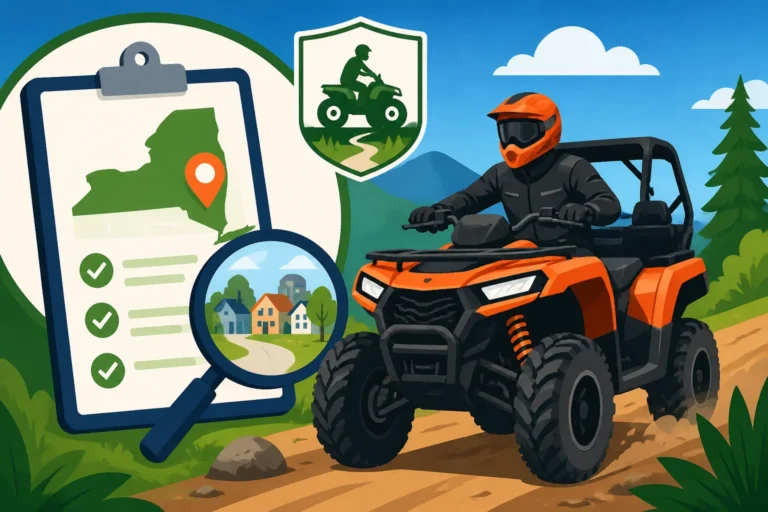
You’ve got a patch of land, your ATV is gassed up, and all you want to do is cut some laps, haul some firewood, or just plain enjoy the freedom of your own property. It feels like this should be the one place where you don't have to worry about the New York State Department of Motor Vehicles or complicated trail rules, right? Well, while riding your own land certainly offers a lot more freedom than public trails, it’s not always a complete free-for-all. This guide will walk you through the nuances of New York law regarding ATV and UTV use on private property, helping you understand where your freedom truly lies and what responsibilities still fall on your shoulders.
The Freedom and Limits of Your Own Property
There's a special feeling that comes with owning land, especially when you have an ATV or UTV. The idea that you can ride whenever you want, wherever you want, without a care in the world, is truly appealing. And for the most part, that feeling is well-founded. New York law generally grants landowners significant control over activities on their private property. However, it's not an absolute vacuum from all regulations, and it's these specific nuances that often catch people off guard.
What New York Law Says About Private Land
When it comes to motor vehicles, New York law makes a significant distinction between public lands (like state trails, designated roads, or even crossing a public right-of-way) and private property. For activities wholly contained within your own property lines, many of the stringent regulations that apply to public riding tend to relax. You’re not typically subject to the same registration and insurance mandates that apply on public access points, for example. The state acknowledges your right to use your property as you see fit, provided it doesn't infringe on the rights or safety of others.
However, "not infringing on others" is where the line can sometimes blur. While you might not need state permits, your actions still fall under general legal principles. This includes things like reckless endangerment, negligence, and nuisance laws. If your riding practices create a clear and present danger to neighbors, or if you're engaging in activities that violate other general laws (like operating while impaired), being on private property doesn't give you a free pass. It’s a common frustration that even on your own land, you still have to be mindful of the world around you, but it’s an important distinction for everyone’s safety.
Local Ordinances and Your Own Backyard
Here’s where things get a bit more localized and can often lead to the most confusion and frustration. While the state may have a relaxed view on private land ATV use, your town, village, or county might not. Local municipalities have the authority to enact their own ordinances that can impact how you use your ATVs on your property. These can range widely depending on where you live in New York.
For instance, many towns have noise ordinances that dictate permissible noise levels and hours, especially in residential or mixed-use zones. What might be perfectly acceptable on a sprawling, remote acreage could quickly become a source of neighbor complaints and potential fines in a more suburban setting. Imagine a weekend warrior constantly ripping around their two-acre lot at 10 PM. That's a surefire way to get a visit from the local authorities, even if they're "just on their own land." Always check with your local town or village clerk’s office to understand any specific rules they might have in place. It’s not uncommon for municipalities to have rules about the use of recreational vehicles, even on private property, to prevent nuisance and maintain peace in the community.
Registration, Insurance, and Safety Equipment on Private Land
Navigating the rules for ATVs in New York can be a maze, especially when trying to figure out what applies on your own property versus public trails. The good news is that for private land use exclusively, many of the headaches associated with public riding can often be avoided. However, there are still some key considerations that are wise to keep in mind, even if not strictly mandated by state law.
Do You Need to Register Your ATV for Private Land Use?
This is perhaps one of the most frequently asked questions for New York ATV owners. The short answer, if your ATV or UTV never leaves your private property and never crosses or operates on a public highway, road, or public land, is generally no, you do not need to register it with the New York State DMV. The state's registration requirements are primarily designed for machines that will be used on public trails, designated areas, or for crossing public thoroughfares.
However, that "never" is a very strict word. Even a quick jaunt across a town road to get to another section of your property, or a moment's ride down the shoulder, immediately brings your machine under state registration rules. Many riders find it easier just to register their machine even if they primarily ride on private land, just in case a need or desire arises to venture onto public access points, even briefly. For a deeper dive into when registration is truly required, check out [Do You Need to Register an ATV in New York?].
The Insurance Question: Are You Covered on Your Own Property?
New York has a mandatory ATV liability insurance law, but like registration, it largely applies when operating on public lands or crossing public ways. If your ATV strictly stays on your private property and never interacts with public roads or trails, the state's mandatory insurance minimums may not strictly apply. This doesn't mean you're in the clear, though. This is a huge area where personal responsibility and financial protection come into play.
Even on your own land, accidents happen. A guest could get injured, or you could accidentally cause damage to a neighbor's property if you lose control. Without a dedicated ATV insurance policy or adequate coverage through your homeowner's insurance (which may have exclusions for ATVs), you could be personally liable for significant costs. Imagine a friend crashing into your barn on your property and getting severely injured – that could lead to medical bills and legal fees that far exceed what most people could handle out of pocket. Many experienced riders choose to carry an ATV-specific insurance policy regardless of where they ride, simply for peace of mind. To understand the full scope of requirements, it's worth reading about [New York's Mandatory ATV Insurance]. While a robust roll cage and good aftermarket protection like SuperATV heavy-duty bumpers can make your machine safer, they won't cover the medical bills if someone gets hurt due to negligence.
Helmets and Safety Gear for Private Riding
New York State has very clear helmet laws for ATV riders. For anyone under the age of 16, a helmet is absolutely mandatory, regardless of where they are riding – and yes, that includes your own private property. There's no exception for kids just learning in the backyard. This is a critical safety rule designed to protect young, vulnerable riders, and it's strictly enforced. If you have a child riding on your property, they must wear a DOT-approved helmet. For more specifics, see [New York Helmet Law for ATV Riders] and [New York Rules for Riders Under 16].
For adult riders (16 and over) on private land, the state's helmet mandate is typically relaxed as long as you remain entirely within your property boundaries and do not venture onto public property or cross any public right-of-way. However, just because it might not be legally mandated doesn't mean it's a good idea to go without. Accidents can happen anywhere, and a helmet is your best defense against serious head injury. Most seasoned riders will tell you that a helmet, eye protection, sturdy boots, and gloves are non-negotiable safety gear, whether you’re on the gnarliest public trail or just cruising around your own field. Safety should always come first.
Invited Guests and Liability
One of the great joys of having your own land and ATVs is sharing the experience with friends and family. A barbecue and some rides on your own trails can make for a fantastic day. However, inviting guests to ride on your property significantly shifts your liability considerations. This isn't just about state rules; it delves into common law principles of premises liability and negligence, which can have very real financial consequences.
When Friends Ride Your Land: Understanding Your Exposure
When you invite someone onto your property, you assume a certain duty of care to ensure their safety. This doesn't mean you're responsible for every scrape and bump, but it does mean you have a responsibility to warn them of known dangers or to mitigate unreasonable risks. If a guest is injured due to a hazard you knew about and failed to address or warn them about, you could be held liable. This is especially true if you are providing the ATV for them to ride, as you have a duty to ensure the machine is in safe working order.
Consider a scenario where you've got a hidden trench on your property that isn't clearly marked. A friend, unfamiliar with your land, hits it while riding your ATV and breaks a leg. In New York, that could open you up to a personal injury lawsuit, seeking compensation for medical bills, lost wages, and pain and suffering. The term "attractive nuisance" can also come into play, particularly if children are involved, even if they trespass. This legal doctrine essentially states that if you have something on your property (like an ATV or an unsupervised pool) that is likely to attract children, you may be held liable if they get injured, even if they weren't explicitly invited. It's a heavy burden, and it's why understanding your exposure is so crucial.
Protecting Yourself: Insurance and Best Practices
Given the significant liability exposure when inviting guests, proactive protection is key. The most fundamental step is to ensure you have robust insurance coverage. Review your homeowner's insurance policy to understand its limitations regarding recreational vehicles and guest injuries. Many standard policies have exclusions for ATVs, especially if they are powerful machines or used frequently. An umbrella insurance policy, which provides additional liability coverage above your homeowner's and auto policies, is often a wise investment for landowners. Better yet, a specific ATV insurance policy, even if not state-mandated for private land, can offer tailored liability protection for those specific risks.
Beyond insurance, adopting best practices can significantly reduce your risk. Clearly communicate rules and boundaries to all riders, especially those unfamiliar with your property. Emphasize safety gear, and if you're lending out a machine, ensure it's in top mechanical condition and suitable for the rider's experience level. Consider having guests sign a waiver acknowledging the inherent risks of ATV riding, although it's important to understand that a waiver doesn't always provide absolute protection against negligence claims. Maintaining your trails, clearing fallen trees, and marking hazards can also reduce the likelihood of an accident. Investing in quality aftermarket protection like SuperATV's comprehensive skid plate kits can not only protect your machine but also reduce potential hazards from sharp rocks or stumps that might otherwise damage a machine and cause a rider to lose control.
Specific Situations and Considerations on Your Land
Riding on your own land, while offering immense freedom, still requires a degree of mindfulness about your surroundings and potential impacts. While you're not typically dealing with public trail regulations, you still need to be a good neighbor and a responsible landowner.
Noise, Neighbors, and Nuisance Laws
This is a hot-button issue for many landowners who enjoy their ATVs. Your property might be yours, but sound travels, and your neighbors have a right to the peaceful enjoyment of their own property. Excessive noise from ATVs, especially late at night or early in the morning, is the quickest way to spark a dispute with neighbors and invite complaints to local law enforcement. Even if you're not violating a specific state ATV law, you could be violating a local noise ordinance.
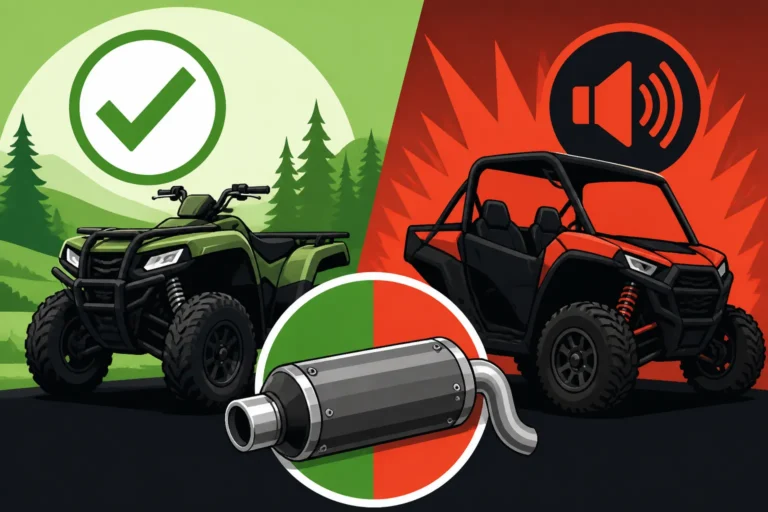
Most municipalities have rules about acceptable noise levels and hours. It's always a good idea to be considerate: try to ride during reasonable hours, especially if you live in an area with closer neighbors. Ensure your ATV's muffler is in good working order and not excessively loud. Aftermarket exhaust systems designed for competition can be thrilling, but they might be too loud for a quiet residential area. For more information on general noise considerations, especially at night, take a look at [New York Rules for Riding Near a House at Night]. A little common courtesy goes a long way in preventing headaches and keeping good relations with those living around you.
Environmental Impact and Property Damage
While you might not be under the watchful eye of a state park ranger on your own property, responsible land stewardship is still important. Reckless riding can lead to significant environmental damage, such as soil erosion, degradation of wetlands, or damage to delicate ecosystems. Creating deep ruts can lead to drainage problems, and tearing up fields can hinder agricultural use. Beyond the environmental aspect, consider the long-term impact on your property value and usability.
Another specific consideration is riding on frozen water bodies within your property, such as ponds or lakes. While New York has specific rules for public waters, the same dangers apply on private ones. The ice may look thick, but conditions can change rapidly. Always exercise extreme caution, confirm ice thickness, and never ride alone or without proper safety gear. For a broader understanding of the dangers, even if not directly applicable to your private pond, you can review [New York Rules for Riding on Frozen Water].
Expanding Your Riding: What if You Want to Cross the Road?
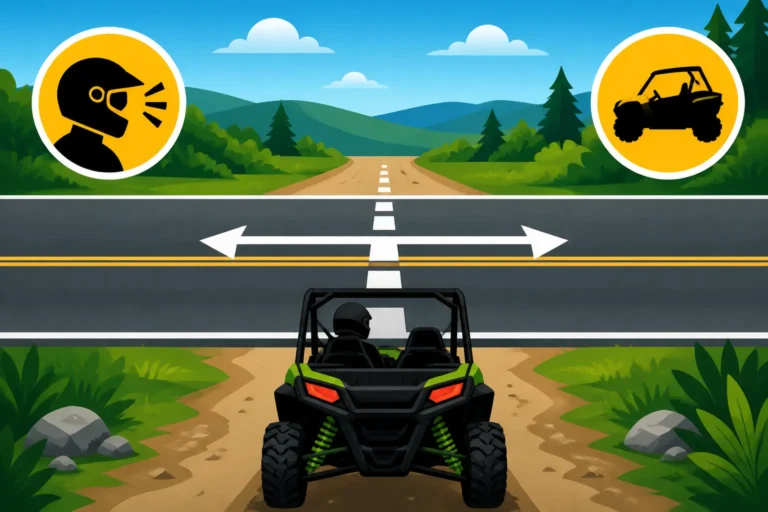
This is perhaps the biggest "trap" for private land riders. You might have acres of land, but if you want to access another section that requires crossing a public road, or even just driving a short distance on a paved shoulder, you immediately transition from private land use to public land use in the eyes of New York law.
The moment your wheels touch a public right-of-way, your ATV must be registered, you must have the mandatory liability insurance, and all riders (including adults) must wear helmets. This applies even if it's just a few feet. Many frustrated landowners have found themselves ticketed for briefly crossing a rural road without meeting all these requirements. Planning your access points carefully and knowing when you're on your own land versus a public access is critical. For details on crossing public thoroughfares, see [Crossing a Highway on an ATV in New York]. It's a stark contrast in regulations that can catch even the most experienced riders off guard.
To help clarify the differences, here's a quick comparison:
| Feature | Riding Exclusively on Private Land | Riding on Public Land or Crossing Public Roads |
|---|---|---|
| Registration | Generally NOT required by NYS DMV (check local ordinances) | REQUIRED by NYS DMV |
| Insurance | NYS mandatory liability NOT strictly required (personal liability still a risk) | REQUIRED by NYS DMV (minimum liability coverage) |
| Helmet (Adult) | NOT strictly required by NYS (highly recommended for safety) | REQUIRED by NYS (DOT-approved) |
| Helmet (Under 16) | REQUIRED by NYS (DOT-approved) | REQUIRED by NYS (DOT-approved) |
| Local Ordinances | MAY apply (noise, hours, setbacks, etc.) | Generally do NOT apply; state & county rules take precedence |
| Liability to Guests | Significant personal liability if an accident occurs | Primarily covered by mandatory liability insurance if specified |
| Proof of Ownership | Bill of sale, past registration often sufficient | Bill of sale, past registration, or [New York ATV Proof of Ownership Requirements] |
Disclaimer
This article is for general informational purposes only and does not constitute professional advice. Laws, prices and regulations vary by location and change over time. Consult a qualified professional for guidance on your specific situation.