Crossing a State Route at a Right Angle
It's an age-old dilemma for us ATV riders in New York: you're out on the trails, having a fantastic time, and then you hit a public road. Maybe it's a quiet town road, or maybe it's something a little more intimidating like a state route. The thought of connecting two sections of trail that are separated by a bustling highway can be nerve-wracking, especially when you're not entirely sure of the rules. This guide is here to cut through the confusion and explain exactly how to legally and safely cross a state route with your ATV in New York, helping you navigate these situations with confidence and peace of mind.
The Strict Reality of New York's Road Rules
Let's be honest, the desire to just "connect the dots" between trails by riding a short stretch of road is strong. We've all been there, looking at a map and seeing two perfect trail segments separated by what seems like just a tiny bit of pavement. However, New York's laws regarding ATVs on public roads are quite strict, and it's vital to understand the difference between riding on a road and crossing one. It's a nuance that can save you a hefty ticket or, more importantly, prevent a dangerous accident.
Why ATVs Aren't "Street Legal" in New York
One of the biggest misconceptions out there is that ATVs can be made "street legal" in New York. The cold, hard truth is, for almost all practical purposes, they cannot. Our quads and side-by-sides just aren't designed or classified as on-road vehicles by the state DMV. They lack many of the safety features and design characteristics required for highway use, and the state's vehicle and traffic law simply doesn't recognize them as such. This means that riding an ATV on a state route as if it were a car or motorcycle is illegal and incredibly dangerous.
This isn't just about technicalities; it's about safety. Imagine trying to keep up with highway traffic on a machine built for dirt and trails, without turn signals, proper mirrors, or the robust braking systems of a road vehicle. It's a recipe for disaster. The law is in place to protect everyone on the road, including us riders. This fundamental rule shapes how we interact with all public roadways, including state routes, and it’s why the concept of "crossing" is so distinct from "riding." For a deeper dive into this, you might find our article on [Are ATVs Street Legal in New York?] insightful.
Designated Roads Versus Crossings
Now, just because ATVs aren't street legal doesn't mean all public roads are entirely off-limits. There's a crucial distinction between designated roads and simple crossings. Some towns or counties in New York do have ordinances that permit ATVs to ride on specific, designated public roads – usually quieter, less trafficked local roads. These roads are typically clearly marked with signage indicating they are open to ATV use, often connecting trail systems or providing access to services. If you're on a designated road, you're expected to follow all traffic laws, including speed limits and signage, just like any other vehicle.
However, a state route is a different beast entirely. It's rare, almost unheard of, for a state route to be designated for regular ATV use. These are major arteries, often with higher speed limits and significant traffic volumes. Therefore, when you encounter a state route, you are generally not permitted to ride on it. Your only legal option, if it's necessary to connect trails, is to cross it. This means moving directly from one side to the other, with minimal time spent on the pavement itself. It's a quick, purposeful maneuver, not a leisurely drive. Understanding this difference is key to staying within the law and keeping yourself safe.
Understanding the "Right Angle" Rule for Crossings
Alright, so we've established that riding on a state route is out, but crossing is often necessary. This is where the "right angle" rule comes into play, and it's probably the most critical piece of information for any New York ATV rider. This isn't just a suggestion; it's a specific requirement under New York law, designed to ensure your safety and the safety of other motorists. Ignoring it can lead to dangerous situations and legal trouble.
The Letter of the Law: What "Right Angle" Truly Means
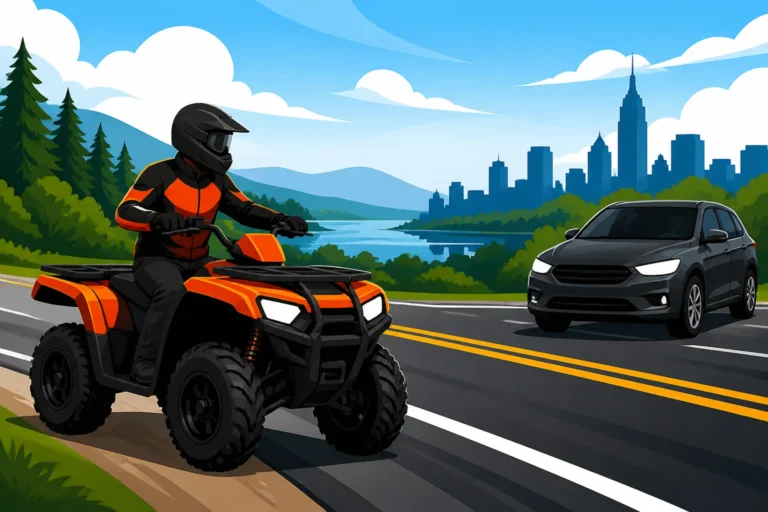
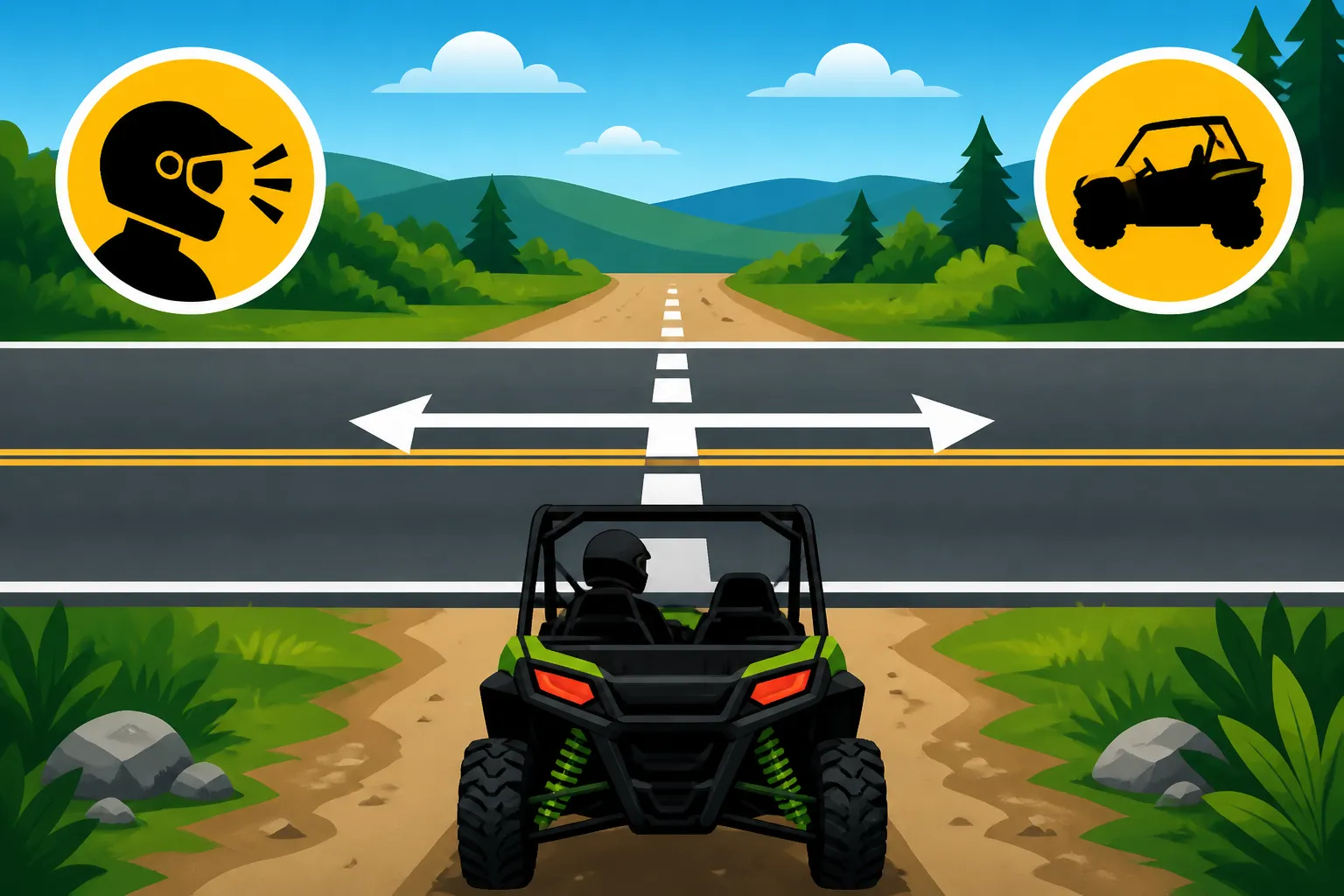
New York Vehicle and Traffic Law Section 2403, which governs ATV operation, explicitly states how you must cross a public highway. It mandates that you must cross "at right angles to the roadway." What does "at right angles" actually mean in practice? It means you should approach the road, stop, look both ways, and then proceed directly across, perpendicular to the flow of traffic. Think of it like a perfectly straight line from one side of the road to the other, making a 90-degree angle with the road's edge.
This isn't about convenience; it's about minimizing your exposure to moving traffic. When you cross at a right angle, you're presenting the smallest possible profile to oncoming vehicles, reducing the time you spend in their lane of travel. You're not turning onto the road, riding a few feet, and then turning off. You're simply traversing it. This precise maneuver makes it easier for other drivers to predict your path and react accordingly. Any deviation from this, like traveling down the shoulder for a short distance before crossing, is not only illegal but also creates an unpredictable situation for everyone else.
Stopping Before a New York Crossing
Before you even think about starting that right-angle crossing, there's another non-negotiable step: you must come to a complete stop. New York law requires this. Imagine rolling up to a busy intersection in your car; you don't just ease out into traffic, right? The same applies, even more stringently, to your ATV when crossing a state route.
This complete stop should happen before you enter the paved roadway. Get your machine fully stopped, ideally on the shoulder or very edge of the trail, where you have a clear view of traffic in both directions. Use this moment to assess the situation thoroughly. How fast is traffic moving? Are there any blind spots? Is there enough clear space for you to safely cross without having to rush or impede another vehicle? Never assume that just because you stopped once, you can just go. Each crossing is unique, and a fresh assessment is crucial. This pre-crossing stop is a cornerstone of safe ATV operation on or near public roads, ensuring you have the best possible chance to execute a safe and legal maneuver. For more on this, check out [Stopping Before a New York Crossing].
Visibility and Lights for a Low-Visibility Crossing
Visibility is your best friend when crossing any public road, especially a state route. Our ATVs are smaller and often less noticeable than cars, and that's a dangerous combination when interacting with fast-moving traffic. You need to do everything you can to make yourself seen, regardless of the time of day. Even in broad daylight, bright colors on your gear can make a difference. If your machine isn't naturally bright, consider adding some reflective tape to your helmet or the machine itself.
When it comes to your ATV's lighting, New York law has requirements, especially for riding after sunset. Your ATV must be equipped with at least one headlight and one taillight, both operational. If you're going to be out anywhere near dawn, dusk, or night, these lights aren't just a good idea; they're mandatory. Ensure your headlight is aimed properly to illuminate your path, and your taillight is clearly visible from the rear. Many riders also choose to add auxiliary lighting or bright LED whips for enhanced visibility, especially if they use aftermarket components like those from SuperATV, known for their robust off-road accessories. While not always legally required for a quick daytime crossing, having your lights on, even during the day, can significantly increase your chances of being seen by approaching vehicles. It’s a simple flick of a switch that could make all the difference.
Essential Safety Measures Beyond the Law
While adhering to New York's specific laws for crossing state routes is non-negotiable, true safety goes beyond just checking off legal boxes. As experienced riders, we know that the trail can throw unexpected challenges our way, and public roads introduce an entirely new set of risks. Taking a few extra precautions can transform a potentially hazardous crossing into a smooth, uneventful part of your ride. These are the practices that separate a safe, responsible rider from someone just getting by.
Scanning for Traffic and Exercising Extreme Caution
Once you've stopped at the edge of the state route, the most critical "non-legal" step is your thorough scan for traffic. This isn't a quick glance; it's an active, deliberate sweep of your surroundings. Look left, then right, then left again. Check your mirrors if you have them. Listen for the sound of approaching vehicles that might be out of sight around a bend. State routes often have higher speed limits, meaning vehicles can appear very quickly.
You need to make a judgment call: is there a sufficient gap in traffic for you to cross safely and completely, without having to rush or cause another driver to brake or swerve? If there's any doubt, wait. It's always better to take a few extra minutes waiting for a clear opening than to try to squeeze across and risk an accident. Remember, car drivers might not expect an ATV to suddenly appear, so you can't assume they're looking out for you. Your caution is your first line of defense. Always err on the side of extreme caution, even when it means delaying your crossing a bit.
Wearing the Right Gear
We talk a lot about gear for trail riding – helmets, boots, gloves, and chest protectors. But sometimes, when you're just thinking about a quick road crossing, it's easy to let your guard down. Don't. Every single time you swing a leg over your ATV, especially when there's any chance of interacting with public roads, you need to be wearing your full safety gear.
In New York, helmets are mandatory for all ATV riders, regardless of age, on public lands or when crossing public roads. This isn't just a rule; it's a lifesaver. Beyond the helmet, sturdy boots that cover your ankles, long pants (preferably riding pants with padding), a long-sleeved shirt or riding jacket, and gloves are all crucial. In the event of an unforeseen incident on a hard surface like asphalt, your trail gear provides essential protection against scrapes, bruises, and more serious injuries. Never, ever think that a "short hop" or "quick cross" justifies skimping on your protective equipment. You can read more about [New York Helmet Law for ATV Riders] to understand the specifics.
The Importance of a Designated Crossing Point
Ideally, you're not just crossing a state route anywhere. The safest and often most permissible way to cross is at a designated crossing point. These are locations where trail systems are intentionally designed to intersect with public roads, often marked with signage warning motorists of ATV crossing activity. These spots are usually chosen for good visibility, slower traffic, or other features that enhance safety.
If you're planning a ride that involves crossing a state route, it's always best practice to check maps and local ATV club information beforehand to identify these designated crossing points. Many county trail systems, like those in Lewis County, will have specific points marked on their maps. Simply riding up to a state route wherever your trail happens to meet it might not be the safest or most legal option, especially if it's a blind curve or crest of a hill. Utilizing marked crossing points not only enhances your safety but also demonstrates responsible riding, which helps maintain positive relationships between riders, landowners, and the local community. [Where New York Designates a Road for ATVs] provides more context on how roads are opened up.
Penalties and Avoiding Risks
Nobody wants to get a ticket or, worse, be involved in an accident. The rules surrounding ATV use on and around public roads in New York exist for a reason: to keep everyone safe. Understanding the potential consequences of not following these rules is a powerful motivator to always ride responsibly. It’s not just about the monetary cost; it’s about your safety, your riding privileges, and the reputation of the ATV community as a whole.
New York Fines for Improper Crossings
Let's not sugarcoat it: riding an ATV improperly on a state route, or failing to execute a crossing according to the law, can lead to significant fines and penalties. If a law enforcement officer observes you riding on a state route, making an illegal turn onto it, or failing to stop and cross at a right angle, you could be ticketed. The specific fines can vary, but you could be looking at a fine for unlawful operation of an ATV, which can be several hundred dollars. This doesn't include potential additional charges if your machine isn't registered or you don't have the required insurance.
Beyond the initial fine, there could be other repercussions. Repeat offenses could lead to higher fines, impoundment of your ATV, or even loss of your ATV registration. It's a costly lesson to learn, both financially and in terms of your riding enjoyment. These fines are designed to deter unsafe behavior, and law enforcement takes these violations seriously, especially on high-speed state routes where the potential for a severe accident is much greater. Riding on an expired registration or without a permit in a designated area can also compound the issue, so always ensure all your paperwork is in order. You can learn more about general penalties in [New York Fines for an ATV Violation].
Insurance Implications
This is a big one that many riders overlook until it's too late. New York mandates that all ATVs operated off an owner's private property must carry liability insurance. This isn't just for trail riding; it absolutely applies to any interaction your ATV has with public roads, including crossings. If you are involved in an accident while crossing a state route, and you are found to be operating your ATV illegally (e.g., not crossing at a right angle, riding on the road, or simply not having insurance), the financial consequences can be devastating.
Your insurance policy might deny coverage if you were operating outside the law's parameters or outside the terms of your policy. This means you could be personally liable for damages to other vehicles, property, and, most critically, for any medical expenses for injuries to yourself or others. Imagine totaling someone's car and being on the hook for tens of thousands of dollars because you didn't cross properly or lacked the right insurance. It's a risk that's simply not worth taking. Always ensure your insurance is current and covers you for legal off-road and crossing activities. For details on what's required, see [New York's Mandatory ATV Insurance].
How to Identify a State Route
It might sound obvious, but how do you actually know you're approaching a state route versus a county or town road? This knowledge is crucial because the rules for crossing can differ, and the traffic volume and speed are almost always higher on state routes.
Here are some common indicators:
- Signage: State routes are usually identified by a white-on-black (often circular or shield-shaped) route number sign. Town and county roads usually have different, less prominent signage, if any.
- Road Quality and Design: State routes are typically wider, better maintained, and have more lanes than local roads. They often feature larger shoulders, clear sight lines (though not always!), and more advanced road markings.
- Traffic Volume and Speed Limits: State routes generally carry more traffic and have higher posted speed limits (often 45 mph or higher) compared to local roads. You'll hear the hum of faster-moving vehicles.
- Google Maps/GPS: When planning your ride, always consult a map or GPS device. These tools clearly differentiate between state, county, and town roads, allowing you to anticipate crossings and plan your approach well in advance. Some apps and devices even offer satellite views, which can help you identify potential crossing points and assess visibility.
Being able to quickly and accurately identify a state route on the fly is a crucial safety skill for any New York ATV rider. When in doubt, always assume it's a higher-traffic road and proceed with maximum caution.
Table: New York Road Crossing Rules at a Glance
To help summarize some of the key points for various types of roads you might encounter, here's a quick reference table. Remember, this is a general overview; always check local ordinances and current laws.
| Road Type | ATV Riding Permitted? | Crossing Rules | Key Considerations |
|---|---|---|---|
| State Route | No (generally) | Must stop, cross at a right angle. | High traffic, high speed. Maximize visibility. Strict legal requirements. |
| County Road | No (generally) | Must stop, cross at a right angle (unless designated). | Varies by county. Some may have designated crossing points or limited segments for ATV use. Check local laws. |
| Town Road | Varies by local ordinance | May be permitted to ride if designated and posted. | Often designated by local towns to connect trails. If not designated, crossing rules apply. Lower speed/traffic generally. |
| Private Road | Only with landowner consent | Not applicable (private property). | Permission is paramount. Still ride safely and responsibly. |
| Designated Trail | Yes | Follow trail rules. May include road crossings. | These are where we belong! Still cautious at road intersections. |
Planning Your Ride Around State Routes
One of the best ways to ensure a safe and legal ride is to plan effectively, especially when state routes are involved. Spontaneous detours might be fun on the trail, but they can be problematic when you're suddenly faced with a busy highway. A little foresight can prevent a lot of headaches and keep your adventure enjoyable.
Using Maps and GPS for Pre-Ride Planning
Before you even load your ATV onto the trailer, take some time to study your intended route. Utilize detailed maps – whether they're paper, online mapping services, or specialized GPS apps for off-road enthusiasts. These tools will clearly show you where state routes intersect with trails or other permissible riding areas.
Specifically, look for designated ATV trail maps provided by counties (like Lewis County Recreation, Forestry and Parks) or local ATV clubs. These maps are invaluable because they often highlight legal crossing points, areas where ATVs are permitted, and sections to avoid. Identifying state routes in advance allows you to:
- Anticipate crossings: You'll know exactly where you'll need to stop, scan, and execute a right-angle crossing.
- Assess alternatives: Maybe there's a different trail segment or a less busy county road that could connect your ride, avoiding a state route altogether.
- Pinpoint safe staging areas: Knowing where you'll encounter major roads helps you plan where to park your tow vehicle and unload, ensuring you don't start your ride directly onto a prohibited section.
Some riders even create custom routes on apps like Gaia GPS or Polaris Ride Command, marking problematic intersections or designated crossing zones. This way, the information is right there on your handlebar-mounted device, guiding you in real-time. For a good read on how trail systems are mapped, check out [New York Trails That Connect Towns].
Connecting Trails Legally and Safely
The dream for many New York ATV riders is to seamlessly connect long stretches of trail. And while state routes can be a barrier, responsible planning allows for legal and safe connections. This often involves more than just a quick dash across the asphalt.
- Seek out club-maintained routes: Many ATV clubs work with landowners and local municipalities to create official routes that legally connect trails, sometimes even utilizing short stretches of town or county roads where permitted. Membership in a club like the Central Oswego County Riders or Tug Hill Wheelers can provide access to these well-planned routes and invaluable local knowledge.
- Utilize designated multi-use corridors: Some areas in New York have multi-use corridors, often old railroad beds or utility lines, which may cross state routes at specifically engineered points with enhanced visibility or traffic control measures. These are generally safer options than an unmarked, impromptu crossing.
- Consider a short trailer move: Sometimes, the safest and most legal option to connect two distant trail systems separated by a particularly difficult or dangerous state route is to simply trailer your machine for that short distance. It might interrupt the flow of your ride, but it's infinitely safer than taking an unnecessary risk. Think of it as a strategic portage. While it might feel like cheating, it prioritizes safety above all else, which is always the best choice.
Ultimately, your responsibility as a New York ATV rider is to know the law, plan your route meticulously, and prioritize safety over convenience. State routes are a necessary part of our infrastructure, but with careful planning and adherence to the "right angle" rule, you can navigate them safely and legally, keeping your focus on the enjoyment of the trails.
Disclaimer
This article is for general informational purposes only and does not constitute professional advice. Laws, prices and regulations vary by location and change over time. Consult a qualified professional for guidance on your specific situation.