New York Rules for Riding During Hunting Season
Hunting season in New York is an exciting time, but if you're planning on using your ATV or UTV, you need to be acutely aware of the rules. Many riders assume that because they're on private land, or because they're just "helping out," the usual regulations don't apply. This couldn't be further from the truth, and a simple mistake can lead to hefty fines, loss of privileges, and even property confiscation. This guide will walk you through everything you need to know to safely and legally integrate your machine into your hunting plans, ensuring you stay on the right side of the law and respect the wilderness.
The Intersection of Hunting Season and ATV Use in New York
It's easy to get caught up in the thrill of the hunt, but remember that New York State has a clear set of rules for operating ATVs and UTVs, and these don't magically disappear just because it's deer season. In fact, the presence of hunters and the sensitive nature of the activity often means an even closer look at compliance.
Understanding New York's General ATV Operation Laws First
Before you even consider heading out during hunting season, you must be absolutely crystal clear on New York's fundamental ATV operation laws. These are non-negotiable and apply year-round, regardless of whether you're scouting, hunting, or just joyriding. Every ATV or UTV operated off a private property must be registered with the New York Department of Motor Vehicles. This isn't just a suggestion; it's a legal requirement. Along with registration, you also need to carry proper insurance. New York mandates specific minimum coverage for liability, and you must be able to prove this if requested by law enforcement. Think of it this way: your ATV is essentially a motor vehicle in the eyes of the law when you're off your own backyard, and it needs to be treated with the same respect.
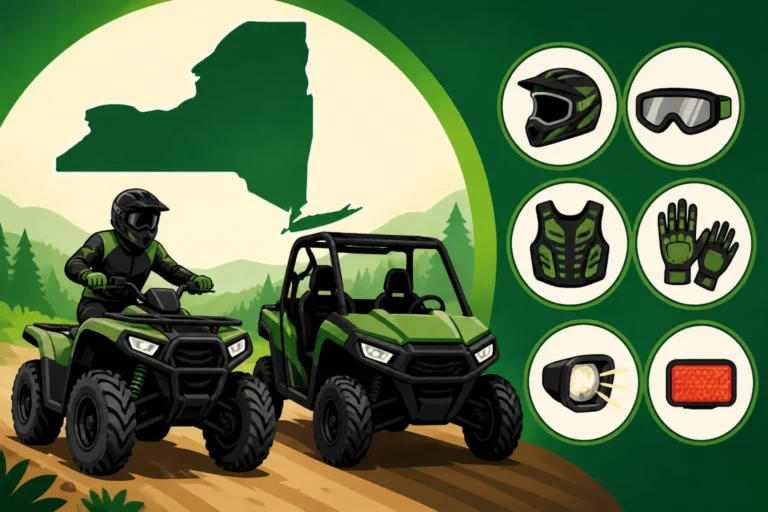
Furthermore, helmet laws are still in full effect. Even if you're an experienced rider, even if you're just driving slowly to a deer stand, a helmet is required for all riders, regardless of age. It's not worth risking a head injury or a ticket for something so easily preventable. Many a hunter, eager to get to their spot, has been surprised by a game warden checking for basic compliance before they even start looking for game. Imagine being stopped on a trail and finding yourself facing a ticket for an unregistered machine, all while your hunting buddies are already out in the woods. It's a frustrating situation that can ruin your entire day, and the fines associated with riding an [New York Fines for an Unregistered ATV] or [New York Fines for Riding Without Insurance] can quickly add up. Don't let hunting season distract you from these core responsibilities.
The Core Restriction: No Retrieval of Game by ATV on State Land
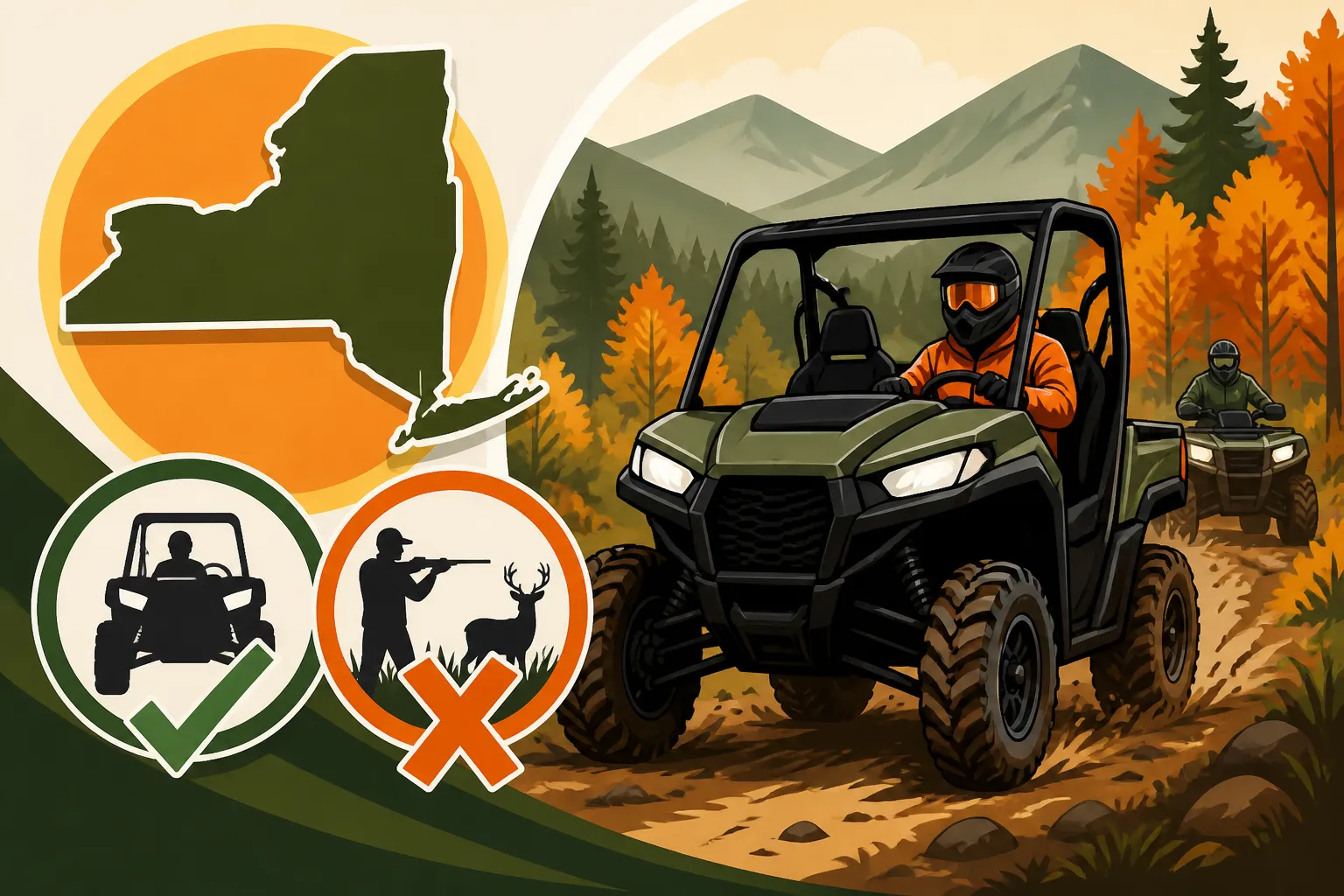
This is perhaps the most critical rule for hunters using ATVs in New York: you cannot use an ATV or UTV to retrieve game on most state lands. This isn't just about driving directly to a downed deer; it often extends to using the machine to transport the carcass out of the woods. The intent behind this rule is multifaceted. Primarily, it's about preserving the natural environment. ATVs can create ruts, damage vegetation, and disrupt sensitive ecosystems, especially when driven off designated trails or across fragile terrain. It's also tied to the concept of fair chase, ensuring that hunting remains a challenge and doesn't become overly mechanized.
It's vital to distinguish between accessing hunting areas and retrieving game. You might be able to ride your ATV on designated trails to get to a hunting spot on state land, but once you've made a kill, the machine generally can't be used to bring it out. This often means a long, hard drag or quartering the animal and carrying it out by hand. There are very, very limited exceptions, typically for disabled hunters who have obtained specific permits from the Department of Environmental Conservation (DEC) that allow for special access or methods. These permits are rare and highly specific, so unless you have one in hand, assume the general rule applies. Ignoring this can lead to severe penalties, including fines and the confiscation of your machine and even your game. For a deeper dive into this, you'll want to read about [New York Rules for Retrieving Game by ATV].
Navigating Private Land and Specific Exemptions
While state land has very strict rules regarding ATV use during hunting season, private land offers more flexibility. However, "more flexibility" does not mean "no rules," and understanding these distinctions is key to avoiding trouble.
Riding on Private Land with Permission During Hunting Season
The game truly changes when you're on private property. If you own the land, or if you have explicit, clear permission from the landowner, the rules for ATV use become much less restrictive regarding game retrieval. On your own land, or land where you have been given permission, you generally can use your ATV or UTV to access hunting areas, scout for game, and yes, even retrieve a downed animal. This is a huge benefit for landowners and those with strong relationships with property owners, especially when dealing with large tracts of land or heavy game.
However, even on private land, you still need to adhere to general ATV safety regulations, such as wearing a helmet, particularly if you're riding on private trails that might intersect with public access points or if your riding extends beyond your immediate field. The most critical element here is permission. Verbal permission is a start, but written permission is always, always better. It removes any ambiguity and protects both you and the landowner. Imagine a scenario where you're dragging a deer out with your quad on what you thought was your buddy's land, only to find out he sold the back forty and the new owner isn't happy. A quick check of [Landowner Consent on New York Private Land] will give you more context. Always carry that written permission with you, especially if you're not the landowner. It's your best defense if anyone questions your presence or activities.
Farm Quads and Agricultural Exemptions
New York State provides certain exemptions for ATVs and UTVs used exclusively for agricultural purposes. This distinction is important because many hunting lands in New York are either active farms, former farms, or adjacent to them. A machine primarily used for farming tasks, like moving feed, checking fences, or towing equipment, might be exempt from certain registration requirements if it never leaves private property or only crosses public roads under very specific, limited circumstances (like directly crossing from one field to another).
However, this exemption is not a blanket pass for recreational riding or hunting activities. If you're using your "farm quad" to access your deer stand for personal hunting, or to retrieve game for recreational purposes, you're likely falling outside the agricultural exemption for that specific use. The moment your activity shifts from legitimate farming to recreation or hunting, you typically need to comply with standard ATV registration, insurance, and safety laws. Don't assume that just because your machine could be used for farming, it's exempt when you're hunting. Misinterpreting [The Agricultural Exemption in New York] could lead to unexpected fines. Always ensure your machine is properly registered and insured if there's any chance its use could be interpreted as recreational, even on private land, especially during hunting season when activity is higher and enforcement more visible.
Safety and Ethical Considerations for Hunters on ATVs
Using an ATV during hunting season isn't just about following the letter of the law; it's also about practicing good outdoor ethics and ensuring your own safety and the safety of others. The woods are a busy place during hunting season, and an ATV introduces new dynamics.
Increased Visibility and Awareness
During hunting season, the woods are populated by people who are often looking for movement and camouflaged against the natural environment. Introducing an ATV into this scenario demands extra caution. It's absolutely crucial to ensure you, and your machine, are as visible as possible. This means wearing hunter orange or other bright, contrasting colors, even if you're just riding your ATV to your stand before dawn or after dusk. Don't just rely on your camouflage; wear an orange vest over your camo while riding. This simple act drastically reduces the chance of being mistaken for game by another hunter. Many experienced hunters will don an orange vest or hat simply while walking to and from their stand, and the same principle applies, perhaps even more so, when operating a machine.
Consider adding visibility accessories to your ATV, especially if you plan to operate it at dawn, dusk, or in dense cover. Bright flags, additional lighting, or reflective tape can make a huge difference. Companies like SuperATV offer a range of aftermarket lights and whips that can significantly boost your presence in low-light conditions or heavy brush, making you much more noticeable to other hunters. Think about the sightlines through the woods – a quick flash of orange or a distinct light can prevent a dangerous misidentification. Your goal isn't just to be seen by deer; it's to be seen by other people.
Securely Transporting Firearms and Equipment
Transporting firearms on an ATV or UTV during hunting season requires careful attention to New York State law and common sense safety. Generally, New York law dictates that a firearm must be unloaded and securely cased or otherwise inaccessible while being transported on a motor vehicle. This rule usually extends to ATVs and UTVs. You can't just throw your uncased, loaded rifle onto the passenger seat of your UTV and drive off. Doing so is incredibly dangerous and can lead to serious legal repercussions.
Invest in proper gun scabbards, cases, or secure racks that are designed to safely hold your firearm. These accessories protect your weapon from damage, dirt, and moisture, but most importantly, they ensure it's transported safely and legally. The firearm should be unloaded – confirm this repeatedly before mounting it on your machine. All ammunition should be stored separately. This prevents accidental discharges, which could have tragic consequences, and keeps you compliant with the law. Always consult [New York Rules for Carrying a Firearm on an ATV] for the specific legal requirements. Even if you have a concealed carry permit, the rules for transport on an ATV can be different, so it's always best to err on the side of caution and keep firearms unloaded and secured.
Minimizing Impact and Respecting Fellow Hunters
An ATV can be a fantastic tool, but it can also be a disruptive force if not used thoughtfully. During hunting season, noise pollution from your machine can carry for long distances, potentially spooking game away from other hunters who might have been patiently waiting for hours. Always be mindful of your approach, especially when nearing known hunting spots or areas where others might be. Try to keep your noise to a minimum by maintaining your muffler and avoiding unnecessary revving.
Stick to designated trails and roads. Going off-trail to get "just a little closer" to your stand or a downed animal can damage habitat, create new, unauthorized trails, and erode trust with landowners and conservation agencies. Remember, a lot of the access we have today is thanks to the goodwill of private landowners and the hard work of trail maintenance clubs. Abusing access can lead to trails being closed permanently. For more on this, check out [New York Rules for Riding Off a Marked Trail]. Always consider the wider impact of your actions. A shared love of the outdoors and hunting means respecting not only the land but also the experience of other enthusiasts.
Penalties and Avoiding Costly Mistakes
Ignoring New York's ATV and hunting regulations during the season can lead to more than just a stern talking-to. The penalties can be significant, impacting your wallet, your riding privileges, and even your hunting opportunities.
Common Violations and Their Consequences
It's easy to think that a small deviation from the rules might go unnoticed, but enforcement during hunting season is often heightened. Game wardens, DEC officers, and local law enforcement are frequently patrolling known hunting areas, and they are well-versed in both ATV and hunting regulations. Common violations include riding in prohibited areas (like off-trail on state land), attempting to retrieve game with an ATV where forbidden, operating an unregistered or uninsured ATV, and improper transport of firearms. The consequences for these can be severe.
For instance, being caught riding an unregistered ATV can result in a hefty fine, and if your machine isn't insured, the penalties are even higher. If you're caught using your ATV to retrieve game illegally, you could face fines, confiscation of your machine, and even the loss of your hunting license. Imagine spending hundreds or thousands on your ATV, only to have it impounded, or worse, permanently confiscated, because you cut corners. Furthermore, if you're involved in an accident while operating an unregistered or uninsured machine, you'll be personally liable for damages, which can be financially devastating. Don't risk it; ensure your machine is always compliant. You can find more detail on specific penalties in resources like [New York Fines for an Unregistered ATV] and [New York Fines for Riding Without Insurance].
Checking Local Regulations and Trail Conditions
New York State law sets the baseline, but individual counties, towns, and even specific trail systems can have their own, more restrictive regulations. What's perfectly legal in one town might be forbidden just across the county line. This is especially true for [New York's Designated and Posted Roads] where some local authorities might have specific ordinances restricting ATV use during certain hours or seasons. Always, always check the local rules for the specific area you plan to hunt or ride. Many towns have specific ordinances regarding ATV use that you might not be aware of, so it's crucial to [Checking Your Town's ATV Ordinance Before You Ride].
Beyond legal regulations, keeping an eye on trail conditions is also vital, particularly during the transition from autumn into winter. Heavy rains can turn trails into impassable mud bogs, and early snowfalls can obscure hazards. Some trails might even close due to poor conditions, logging operations, or landowner disputes. Always check with the local land management office, county parks department, or ATV club responsible for the trails before you head out. Websites and social media groups for these organizations often provide real-time updates on closures and conditions. A quick check of [New York Trail Closures to Check First] could save you a long, frustrating drive and prevent you from unknowingly trespassing or damaging fragile trails. Being informed is your best defense against unexpected problems.
Summary of Key Regulations for ATVs During Hunting Season
Here's a quick overview to help you keep the critical distinctions clear when planning your hunt:
| Feature/Activity | State Land (e.g., State Forests, DEC Public Access) | Private Land (with landowner permission) |
|---|---|---|
| ATV Registration | REQUIRED for all off-road use, including trail access. | REQUIRED if riding off your own property, or if machine is not solely agricultural. |
| ATV Insurance | REQUIRED (minimum liability coverage). | REQUIRED if riding off your own property, or if machine is not solely agricultural. |
| Helmet Use | REQUIRED for all riders, regardless of age. | REQUIRED for all riders, regardless of age. |
| Game Retrieval by ATV | NOT ALLOWED (unless specific DEC permit for disabled hunters). | ALLOWED (with explicit landowner permission). |
| Access to Hunting Area | Allowed only on designated, marked ATV trails/roads. | Allowed as per landowner's permission. |
| Firearm Transport | Must be unloaded and securely cased or inaccessible. | Must be unloaded and securely cased or inaccessible (state law). |
| Visibility | Highly Recommended (hunter orange for rider, bright colors/lights for ATV). | Highly Recommended (hunter orange for rider, bright colors/lights for ATV). |
| Local Ordinances | Always check specific area regulations, as some may be stricter than state law. | Always check specific area regulations, as some may be stricter than state law. |
Hunting season is a cherished tradition for many New Yorkers, and your ATV or UTV can be an invaluable asset. By understanding and respecting the rules surrounding their use, you can ensure a safe, legal, and enjoyable experience for yourself and for everyone else who shares the woods. Remember, responsible riding and hunting go hand-in-hand.
Disclaimer
This article is for general informational purposes only and does not constitute professional advice. Laws, prices and regulations vary by location and change over time. Consult a qualified professional for guidance on your specific situation.