New York Rules for a Machine Over 70 Inches
It's an incredibly frustrating scenario: you've finally saved up for that dream side-by-side or a powerful, wide ATV, maybe a machine you've seen tearing up trails in other states, only to discover that New York's registration rules might put a serious damper on your riding plans. Many riders in the Empire State are caught off guard by the specific dimension limits, particularly the 70-inch width rule, that dictate what can and cannot be legally registered here. This guide will walk you through everything you need to know about New York's regulations concerning ATVs and UTVs that exceed the 70-inch width limit, helping you understand the implications and your limited options.
New York's 70-Inch Width Limit Explained
New York State has a very specific definition for what qualifies as an "all-terrain vehicle" (ATV) under its Vehicle and Traffic Law. This definition isn't just a technicality; it’s the cornerstone of whether your machine can be registered, and therefore, whether you can legally ride it on designated trails or even cross public roads. One of the most significant aspects of this definition is the width restriction, which often catches new buyers and those bringing machines in from out of state by surprise.
The law states that an ATV cannot exceed 70 inches in width. This isn't a suggestion; it's a hard limit. If your machine measures even an inch over this, it simply doesn't fit the state's legal definition of an ATV for registration purposes. This rule aims to regulate the types of vehicles that can access certain public lands and cross highways, largely due to concerns about road integrity, trail compatibility, and safety when interacting with smaller vehicles or traditional traffic. It can be a real headache when you're excitedly looking at machines only to realize many popular models simply don't make the cut for [New York ATV Width Limit for Registration].
Measuring Your Machine Accurately
Before you even think about purchasing a new machine or attempting to register one you already own, it's absolutely crucial to take accurate measurements. Don't rely solely on manufacturer specifications, as these can sometimes be misleading or not account for accessories. You need to measure your ATV or UTV from its widest points, which typically means from the outside edge of one tire to the outside edge of the opposite tire, including any part of the wheel or tire that protrudes. This should be done at the widest point on the machine.
What about aftermarket parts? This is where it gets tricky. If you've added wider tires, wheel spacers, or even certain A-arms from brands like SuperATV that extend your stance for stability or performance, you could inadvertently push your machine over the 70-inch threshold. Even if your machine was originally compliant, modifications can change its legal status. Always measure your vehicle in its current configuration to ensure you have the most accurate understanding of its width. Don't assume; always confirm with a tape measure.
The Impact on Registration and Riding
The direct consequence of exceeding the 70-inch width limit is straightforward: your machine cannot be registered as an ATV in New York State. Period. This isn't about paying a higher fee or getting a special permit; it's about the fundamental definition of the vehicle. Without registration, you are severely limited in where you can legally ride. You won't be able to ride on any state-maintained ATV trails, county trail systems that require registration, or even designated town roads.
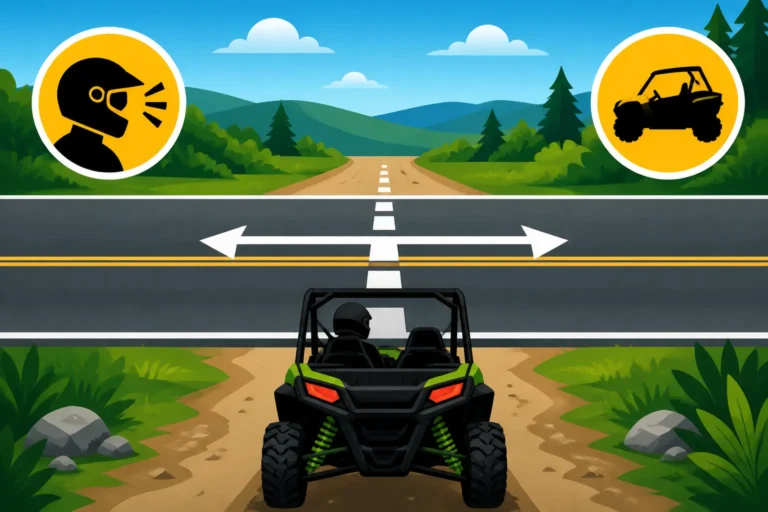
This lack of registration also means you cannot legally cross public highways, even quickly and at a right angle, which is often permitted for registered ATVs. Imagine living on a piece of private land that's split by a small town road – if your machine is over 70 inches, you can't even cross that road to get from one part of your property to another without risking a ticket. It's a hard pill to swallow, especially if you bought your machine with visions of exploring New York's beautiful landscapes. This rule is a major reason why many larger [Why Most Side-by-Sides Cannot Be Registered in New York].
Why Most Side-by-Sides Don't Qualify
This 70-inch rule is particularly impactful for side-by-sides (UTVs). While some narrower UTVs might sneak under the wire, the vast majority of popular models on the market today exceed this width. Manufacturers design UTVs for stability, passenger comfort, and cargo capacity, which often means a wider stance. This design choice, while excellent for performance and utility, directly conflicts with New York's ATV definition.
It's a source of immense frustration for many potential UTV owners who see these versatile machines as ideal for hunting, farming, or recreational trail riding. They invest a significant amount of money in a machine that is perfectly legal and popular in other states, only to find it effectively barred from most public use in New York. The market is flooded with incredible UTVs, but if they're wider than 70 inches, they're essentially relegated to private land use only within New York's borders.
Common UTV Widths and the NY Limit
Take a quick look at the specifications of almost any modern recreational side-by-side, and you'll likely see widths ranging from 60 to 72 inches, and often much wider for high-performance or multi-passenger models. Even many utility-focused UTVs, designed for tasks around a property, easily push past the 70-inch mark. This means that a large percentage of what's available from major manufacturers simply won't meet New York's definition of an ATV.
For example, a popular sport model that's 64 inches wide might barely squeeze under, but many multi-passenger UTVs or those with robust suspension designs will instantly go over. It's not uncommon to find UTVs that are 72, 74, or even 80 inches wide. This stark reality means that if you're eyeing a side-by-side, you absolutely must verify its width against the 70-inch limit if you ever hope to ride it off your own property in New York. The situation is further complicated because, unlike ATVs, there are very few provisions for [New York UTV Registration Rules].
The Weight Limit Connection
While the focus here is on the 70-inch width limit, it's important to briefly mention that New York's ATV definition also includes a weight limit: 1,000 pounds. Many UTVs, especially those designed for multiple passengers or heavy utility work, easily exceed this weight as well. This means that even if a UTV somehow managed to be under 70 inches wide, it would likely still fail the weight test. This dual restriction makes it exceedingly difficult for almost any modern side-by-side to qualify for registration as an ATV in New York.
This combination of width and weight limits effectively rules out a vast segment of the off-road vehicle market from public trail access in the state. It's not just about one dimension; it's a comprehensive set of criteria that most side-by-sides simply cannot meet. This is why you'll often hear experienced New York riders lamenting the inability to ride their UTVs on state trails, despite having machines that are perfectly capable and safe.
What You Can Do With an Over-70-Inch Machine
So, you've got a machine that's wider than 70 inches. Or maybe you're considering buying one, but now you know about New York's rules. What are your options? The truth is, they're quite limited within New York State, but not entirely non-existent. It boils down almost exclusively to private land use or taking your machine across state lines. It's a far cry from the expansive trail access many riders dream of, but understanding these limitations is key to avoiding fines and disappointment.
Private Land Riding
For a machine that's over 70 inches wide and therefore unregistered in New York, your primary option for riding is on private land. This includes your own property or property where you have explicit permission from the landowner. When riding on private land, the registration requirements typically don't apply. However, it's crucial to remember that all other safety laws and common sense still do. This means operating responsibly, respecting property boundaries, and always using appropriate safety gear.
Even on private land, be mindful of noise ordinances and local regulations that might exist, especially if you're riding near residential areas. While the state might not dictate registration, local townships can have their own rules. If you're riding on someone else's land, always get written permission. This protects both you and the landowner. Many hunters and farmers use wide UTVs for work and recreation on their own extensive properties, and this is where these machines truly shine in New York, as discussed in [Riding Your Own Property Under New York Law].
Out-of-State Opportunities
If you're eager to experience broader trail systems with your over-70-inch machine, your best bet is to trailer it to another state that has more permissive ATV/UTV registration and riding laws. Many neighboring states, and those further afield, have different definitions for off-road vehicles that accommodate wider side-by-sides. Before you pack up, however, thoroughly research the specific regulations of your destination state.
Each state has its own registration, permit, and equipment requirements, and these can vary wildly. Some states might honor your New York registration (if you had one for a compliant ATV), but since your wider machine can't be registered in New York, you'll need to figure out the visitor registration or permit process for the state you plan to visit. This often involves temporary permits or specific trail passes. It's an extra step, but it opens up a world of riding opportunities not available within New York. Think Pennsylvania, Vermont, or even states further south that have extensive UTV-friendly trail networks. You might even find that [Registering a Visitor's Machine in New York] has specific rules you'd need to consider if you ever brought an out-of-state registered UTV back for very limited, specific reasons here.
Future Possibilities and Legislative Efforts
The strict 70-inch width limit, along with the 1,000-pound weight limit, has been a contentious issue among New York's off-road riding community for years. Many riders and industry advocates argue that these limits are outdated and prevent New Yorkers from enjoying modern off-road vehicles on state trails, especially when compared to more progressive laws in neighboring states. As a result, there have been ongoing efforts to update these laws.
While the current situation remains unchanged, it's not for lack of trying. The legislative process for updating vehicle laws can be incredibly slow and complex, often involving numerous stakeholders, public hearings, and significant debate. Many riders hold out hope that one day, New York will adopt a more modern approach that allows for wider UTVs to be registered and ridden on appropriate trails, similar to how snowmobiles are regulated.
Ongoing Discussions and Proposed Bills
Over the years, various bills have been introduced in the New York State Legislature aimed at modifying the definition of an ATV to accommodate wider and heavier machines, particularly side-by-sides. These proposals often seek to increase the width limit, raise the weight limit, or even create a separate classification for UTVs altogether. The arguments in favor typically highlight the economic benefits of increased tourism for rural areas, the safety advancements in modern UTVs, and the desire for New Yorkers to have the same recreational opportunities as those in other states.
However, these bills frequently face hurdles and can languish in committees without ever coming to a vote. Concerns about environmental impact, trail damage, safety on shared trails, and the cost of enforcement are often raised by opposing groups or governmental agencies. It's a slow grind, and riders often find themselves frustrated by the lack of progress. For example, a [A New York Bill to Widen the ATV Definition] might gain some traction but ultimately stall out, leaving riders in the same position they were in before.
Staying Informed About Changes
Given the slow pace of legislative change, the best thing you can do as a rider or potential owner of a wider machine is to stay informed. Follow local and state off-road advocacy groups, trail riding clubs, and legislative updates from your representatives. These organizations are often at the forefront of pushing for change and can provide the most current information on proposed bills and their status. Don't rely on rumors; always seek official sources or updates from reputable groups.
It’s important to understand that even if a bill is introduced, it doesn't mean the law has changed. [Why a Bill in Committee Changes Nothing] is a critical piece of knowledge for any advocate. Until a bill passes both houses of the legislature and is signed into law by the governor, the existing 70-inch width and 1,000-pound weight limits remain firmly in place. So, while hope for change persists, always plan your riding activities based on the current legal framework to avoid any unwelcome surprises or penalties.
Here's a quick comparison of what you're up against in New York:
| Feature | Machines Under 70 Inches Wide & Under 1,000 lbs | Machines Over 70 Inches Wide or Over 1,000 lbs |
|---|---|---|
| NY Registration | Yes, can be registered as an ATV | No, cannot be registered as an ATV |
| Public Trail Access | Yes, on designated/posted trails and roads | No, generally prohibited |
| Road Crossings | Yes, typically permitted at right angles | No, generally prohibited |
| Private Land Riding | Yes, with landowner permission | Yes, with landowner permission |
| Out-of-State Riding | Yes, check state laws | Yes, often your best option, check state laws |
| Insurance Requirement | Mandatory if riding off private property | Not legally required for unregistered machines, but highly recommended for all riding |
| Plate & Decal | Required | Not issued |
Disclaimer
This article is for general informational purposes only and does not constitute professional advice. Laws, prices and regulations vary by location and change over time. Consult a qualified professional for guidance on your specific situation.