New York DWI Rules for ATV Riders
It’s a common misconception, one that I hear pretty often out on the trails or at the staging areas, that the rules about driving while impaired somehow don't quite apply when you're on an ATV, especially if you're "just riding on private property." Let me be clear: that simply isn't true in New York State. This guide is here to cut through that confusion and lay out exactly what New York’s DWI rules mean for anyone operating an ATV, whether you’re on designated trails, crossing a road, or even just tooling around your own land.
The Core Truth: DWI Laws Apply to ATVs in New York
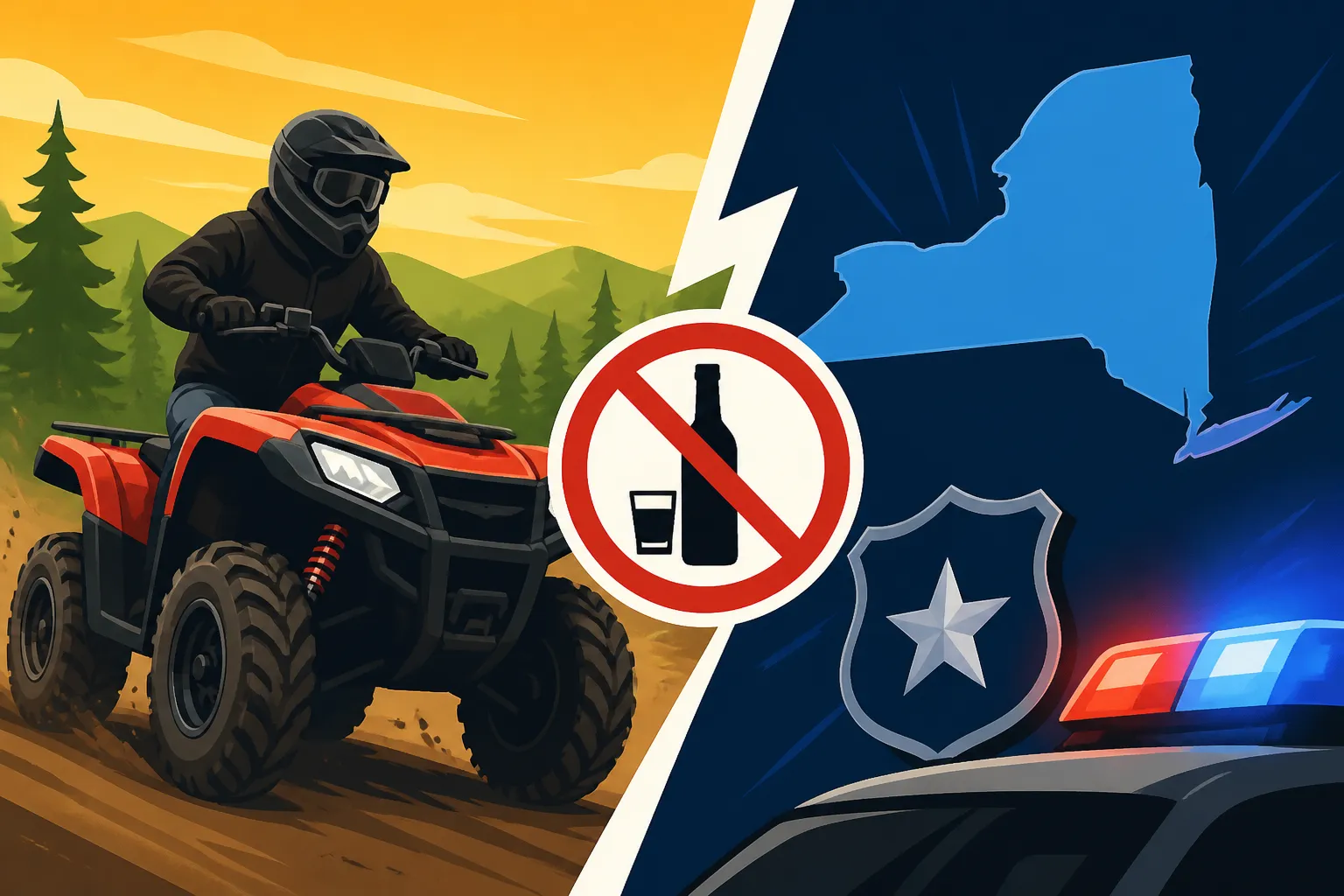
Many folks, bless their hearts, come to the world of ATV riding from a place of seeking freedom and adventure, a break from the strictures of daily life. And sometimes, that includes thinking that a beer or two, or maybe something stronger, won’t be an issue because you’re not in a car. But New York law doesn't make that distinction. When you're on an ATV, you're operating a motor vehicle, and that means the same serious DWI (Driving While Intoxicated) and DWAI (Driving While Ability Impaired) laws that apply to cars, trucks, and motorcycles apply to you.
No "Safe Haven" on Private Land
This is probably the biggest myth I encounter. Riders often mistakenly believe that if they're on their own acreage, or a friend's private land, they're somehow exempt from DWI laws. They might think, "Well, it's not a public road, so what's the harm?" The harm, unfortunately, can be immense, both legally and physically. New York's Vehicle and Traffic Law (VTL) is broad enough to cover ATV operation in many private land scenarios, particularly if there's any public access or if the operation spills over into public visibility. A common scenario might involve a landowner inviting friends for a riding party, and someone has a few too many and decides to take their quad out for a spin. If an incident occurs, or if law enforcement is called for any reason, those DWI laws can absolutely come into play. The idea that your property line creates an invisible barrier against state law is a dangerous fantasy. Even if you're just riding in your back field, you can still face charges if you're impaired. We even have a specific article addressing [Riding Impaired on Private Land in New York].
Consider a situation where you’re having a bonfire out in the back forty, and you’ve got your quad parked nearby. After a few hours and a few adult beverages, you decide it would be a quick trip to grab something from the garage, or maybe just circle the fire pit a couple of times. If a neighbor complains about noise, or if someone gets hurt and emergency services are called, you can find yourself in serious trouble. The law looks at impairment, not just the specific location. So, while it feels like a private activity, the legal implications can be very public. It's a harsh reality, but it’s one that every ATV rider in New York needs to understand.
Public Lands, Public Roads, and Zero Tolerance
Now, if the rules on private land can be a bit of a gray area for some, there's absolutely no ambiguity when it comes to public lands or crossing public roads. Designated ATV trails within state forests, county lands, or even approved town roads are all considered public access areas. When you're on these trails, or when you're crossing a road (which must be done according to very specific rules, by the way), you are fully subject to all New York traffic laws, including those pertaining to DWI. An officer can pull you over, administer sobriety tests, and if you're found to be impaired, you will be arrested and charged.
Think about the popular trail systems, like those up in Lewis County. These trails, while designed for ATVs, are still regulated. If you're out enjoying the scenery, maybe taking your SuperATV-equipped quad for a spin, and you stop for a break and decide to crack open a few beers, you're putting yourself at significant risk if you get back on the machine. It’s no different than driving your car on a public highway. Law enforcement patrols these areas, and they are trained to spot impaired operators. It's not just about designated trails either; any area that the public has access to, whether it's explicitly for ATVs or not, can be considered "public" under these laws. So, if you're riding on a utility corridor, a rail trail, or even a field that's commonly used by the public, you need to ride sober. Understanding [New York Rules for Riding State Land] is crucial for all riders.
What Constitutes DWI on an ATV in New York?
Understanding that DWI laws apply is one thing, but knowing what actually constitutes DWI or DWAI is another. It's not just about being "drunk"; New York's laws are pretty comprehensive, covering various levels of impairment and substances.
Alcohol Impairment and BAC Limits
For most adults in New York, the legal Blood Alcohol Content (BAC) limit is 0.08%. If you operate an ATV with a BAC at or above this level, you can be charged with DWI. It’s a pretty straightforward measure. However, it’s important to remember that even if your BAC is below 0.08%, you can still be charged with Driving While Ability Impaired (DWAI) if your ability to operate the ATV safely is compromised by alcohol. This is a lower-level offense but still carries significant penalties.
Imagine you're at a gathering, and you've had a couple of drinks. You might feel "fine," but your judgment, reaction time, and coordination could be subtly affected. On an ATV, where quick reflexes and balance are absolutely critical for safety, even a slight impairment can lead to a serious accident. And if that accident involves another person, property damage, or attracts the attention of law enforcement, that feeling of "fine" won't stand up in court. The law isn't just about a number; it's about whether you're safe to operate the vehicle. It's better to err on the side of caution and avoid alcohol entirely if you plan to ride.
Drugs, Prescription Medications, and Impairment
Alcohol isn't the only substance that can lead to a DWI charge. New York also has strict laws against Driving While Ability Impaired by Drugs (DWAI-D). This includes illegal drugs, certainly, but it also extends to prescription medications and even some over-the-counter drugs if they impair your ability to operate the ATV safely. This is where it gets tricky for many people. You might have a valid prescription for a painkiller or an anxiety medication, but if that medication causes drowsiness, dizziness, or affects your concentration, and you get behind the handlebars, you could be charged with DWAI-D.
I've heard stories of riders who were completely unaware that their prescribed medication could be an issue. They took their medicine as directed, felt okay, and then found themselves facing charges after a minor incident. Always read the warning labels on your medications, and if there's any doubt about how they might affect your ability to operate heavy machinery (which an ATV definitely is), err on the side of not riding. The same goes for combining substances; alcohol mixed with even a seemingly innocuous cold medicine can have a magnified, impairing effect that you might not anticipate. Your machine, perhaps kitted out with robust SuperATV bumpers, might be tough, but your body and mind need to be even tougher and totally clear.
The Consequences of an ATV DWI in New York
A DWI or DWAI conviction on an ATV isn't just a slap on the wrist. The consequences can be severe and far-reaching, impacting not just your ability to ride, but your entire life. It's crucial to understand the gravity of these charges.
Immediate Penalties and Legal Ramifications
If you're arrested for an ATV DWI in New York, the immediate fallout can be intense. Your operator's license (which could be your regular driver's license, as New York doesn't have a separate ATV license) can be suspended or revoked, even if the incident occurred on an ATV and not in a car. The ATV itself might be impounded, leading to towing and storage fees on top of everything else. You'll face court appearances, legal fees, and potential fines that can quickly add up to thousands of dollars.
For a first offense, you might be looking at significant fines, a suspended license for a period, and potentially even jail time, especially if there was an accident or injury. Subsequent offenses carry increasingly harsher penalties, including longer license revocations, steeper fines, and mandatory jail sentences. The state takes repeat offenses very seriously. Don't forget, these charges often come with additional fees and surcharges that make the initial fine just the tip of the iceberg. You should also be aware of [New York Fines for an ATV Violation] which can range from minor infractions to major offenses.
Here's a simplified look at the progression of alcohol-related ATV offenses in New York:
| Offense Type | Typical First Offense Penalties (General) | Subsequent Offense Penalties (General) |
|---|---|---|
| Driving While Ability Impaired (DWAI) | Fine, license suspension, possible jail | Higher fines, longer suspension, mandatory jail |
| Driving While Intoxicated (DWI) – Alcohol | Substantial fine, license revocation, jail | Felony charges, multi-year revocation, prison |
| DWAI by Drugs (DWAI-D) | Similar to DWI, license revocation, jail | Felony charges, multi-year revocation, prison |
| Aggravated DWI (High BAC or Child in Vehicle) | Harsher penalties than standard DWI | Significantly increased fines and prison time |
Note: Specific fines, jail times, and license actions vary based on the exact circumstances, judge, and prior record. This table is for general informational purposes only and not specific legal advice.
Long-Term Impacts Beyond the Trail
Beyond the immediate legal headaches, an ATV DWI conviction can cast a long shadow over your future. A criminal record can make it difficult to find or keep employment, especially if your job requires driving or a clean background check. Your car insurance rates, yes, even for your car, will almost certainly skyrocket, and some insurance companies might even drop your coverage entirely. You might also be required to install an ignition interlock device on any vehicle you operate for a period, which is both inconvenient and costly. This applies to any vehicle you drive, not just your ATV.
The financial strain is immense. Legal fees, fines, court-mandated programs, increased insurance, and the potential loss of income can easily set you back tens of thousands of dollars. It's a heavy price to pay for a decision that could have been avoided. Moreover, the social stigma and personal regret can be profound. Riding an ATV is meant to be fun and freeing, a way to connect with nature and friends. A DWI conviction fundamentally undermines that experience and can lead to lasting personal and professional consequences. It's why promoting [New York ATV Insurance Requirement] and responsible riding is so critical.
Protecting Yourself and Others: Prevention is Key
Given the serious consequences, preventing an ATV DWI is paramount. It’s all about making smart choices before you even start your engine.
Plan Ahead and Designate a Sober Rider
The simplest and most effective way to avoid an ATV DWI is to plan. If you know you'll be enjoying adult beverages, make sure you have a designated sober rider or a safe alternative way to transport your ATV and yourself. This might mean trailering your machine to the staging area with a friend who commits to not drinking, or simply choosing not to drink at all on riding days. For group rides, discuss this beforehand. One person sacrificing a drink for the day can save everyone a world of trouble and expense.
Consider this scenario: You and your buddies are heading up to the Tug Hill area for a weekend of riding. You've got your gear, your machines (some perhaps with sturdy SuperATV skid plates to protect against rocks), and a cooler. Before you even leave home, decide who's riding sober. If everyone wants to partake, then plan to park the ATVs for the night and find alternative transportation or simply enjoy the camaraderie off the machines. Don't let the desire for a good time lead to a bad outcome. [New York Rules for Riding Private Land] also extend to your planning, ensuring you have landowner permission and know the local rules before you even consider cracking a cold one.
Understand Your Limits and Stay Informed
Everyone reacts to alcohol and other substances differently. What might be "one too many" for one person could be less for another. The key is to know your own body and its limits, and then to respect those limits with extreme caution when it comes to operating any vehicle, especially an ATV that requires significant physical and mental acuity. It's not a forgiving machine if your judgment is impaired.
Beyond personal limits, staying informed about New York's specific ATV laws is essential. Laws can be complex and sometimes change, so keeping up-to-date ensures you're always riding legally and safely. Take an ATV safety course, even if you’re an experienced rider; these courses often cover legal aspects beyond just riding technique. Always wear a [New York Helmet Law for ATV Riders] compliant helmet, use proper [New York ATV Equipment Requirements] like lights and mirrors, and ride within your skill level. The more you educate yourself and practice responsible habits, the safer and more enjoyable your ATV experience will be for everyone involved. It's not just about avoiding a ticket; it's about making sure everyone, including you, gets home safely.
Disclaimer
This article is for general informational purposes only and does not constitute professional advice. Laws, prices and regulations vary by location and change over time. Consult a qualified professional for guidance on your specific situation.