New York Equipment Rules for ATVs
Riding ATVs in New York offers incredible outdoor experiences, but nothing sours a great day faster than an unexpected encounter with the law over equipment you didn't even know was required. New York State has a very specific set of rules for the gear you need on your quad, and understanding them is crucial for both your safety and avoiding hefty fines. This comprehensive guide will walk you through every essential piece of equipment mandated for ATVs in the Empire State, helping you ride confidently and legally.
The Foundation: Why New York Regulates ATV Equipment So Closely
It's easy to get frustrated with all the red tape surrounding ATV riding, especially when you just want to hit the trails and enjoy the freedom. We all crave that feeling of open air and adventure, but New York's equipment rules aren't just arbitrary roadblocks. They're thoughtfully designed with rider safety, environmental protection, and public peace in mind. These regulations reflect a broader commitment to ensuring that ATVs can be enjoyed responsibly, minimizing negative impacts on other outdoor enthusiasts, local communities, or the delicate ecosystems that make our state so beautiful. When you view these rules, try to see them not as hindrances, but as essential guardrails that keep everyone safer and preserve access to the trails we love.
Navigating the "Street Legal" Maze and How It Impacts Equipment Choices
One of the biggest sources of confusion and frustration for ATV riders in New York is the persistent myth of "street legal" ATVs. Let's be brutally honest and set expectations straight: for the vast majority of ATVs, operating them on public roadways, highways, or even the shoulders of such roads in New York State is simply not allowed. This fundamental truth profoundly shapes almost every equipment rule. You cannot simply add a horn, turn signals, and a rearview mirror and suddenly expect to legally drive your quad to the local diner or grocery store.
The state's definition of an "all-terrain vehicle" is very specific and quite narrow. It generally excludes machines capable of sustaining highway speeds or those that exceed certain weight and width limits, a category that many modern side-by-sides fall into. This means that while some equipment, like functional headlights and taillights, might appear road-ready, their primary purpose in New York is for enhancing visibility and safety on designated trails and private land, not for mingling with passenger vehicle traffic on public roads. Understanding this distinction is vital.
This context is crucial when you're considering what accessories to purchase or how to outfit your machine. Many aftermarket companies, including well-known names like SuperATV, offer a vast array of parts such as turn signal kits, rearview mirrors, and even windshield wipers. While these additions can certainly enhance your safety and convenience on the trails, making you more visible to other riders or allowing you to signal turns on wide logging roads, they will not magically transform your ATV into a vehicle that can legally cruise down Main Street in Upstate New York. The core legal definition of an ATV and the limited places where it's permitted to operate fundamentally restrict what "street legal" means for these machines. Ultimately, you're outfitting your machine for rugged, off-road environments, not for highway commuting, and your equipment choices should reflect that reality.
The Crucial Distinction: Equipment for Private Land Versus Public Trails
It's a common misconception among ATV enthusiasts that if you're riding exclusively on private property, none of New York's ATV laws or equipment rules apply. While it's true that landowners have significant control over what activities are permitted on their own acreage, when it comes to your personal safety equipment, the state still maintains certain fundamental requirements. For instance, the helmet law is a broad mandate, applying virtually everywhere you operate an ATV.
However, many other equipment requirements, particularly those relating to registration, licensing, and general machine operation, primarily come into play when you leave your own land and venture onto public trails, designated roads, or any lands open to public use. If you're fortunate enough to own expansive, fenced-off acreage and choose to ride only within its boundaries, the enforcement of certain regulations might differ. Even in such scenarios, however, equipping your machine with proper safety gear and ensuring its noise output is reasonable is simply a matter of good practice, minimizing risks to yourself and potential disturbances to neighbors.
The moment you venture onto a designated public trail system—whether it’s a state-managed route, a county trail network like the extensive system in Lewis County, or a club-maintained path that traverses various private properties through landowner agreements—the full weight of New York's ATV laws and equipment regulations comes into play. Law enforcement officers, including Environmental Conservation Officers (ECOs) and State Troopers, regularly patrol these areas, and they will check for compliance. A broken taillight, a missing spark arrester, or an unapproved helmet that might go unnoticed on your private land could quickly result in a citation and the premature end of your ride on publicly accessible trails. Understanding this critical distinction is vital not only for staying out of legal trouble but, more importantly, for ensuring your safety and the longevity of trail access for everyone.
Rider and Passenger Safety: Helmets and Seating Standards
When it comes to ATV riding, personal safety is not just a priority; it's the absolute foundation of responsible operation, and New York State takes this commitment very seriously. While some states might have age-based exceptions or allow experienced adult riders to forgo certain protective gear, New York maintains a clear, comprehensive, and non-negotiable stance on rider and passenger protection, particularly concerning helmets and proper seating. These aren't mere suggestions or recommendations; they are hard-and-fast legal rules designed to minimize severe injury in the event of an accident. It doesn't matter if you're a seasoned rider with decades of trail experience, a casual weekend warrior, or a newbie just getting comfortable on your first quad – the helmet rule applies to everyone, everywhere.
New York's Mandatory Helmet Rule for Every Rider and Passenger
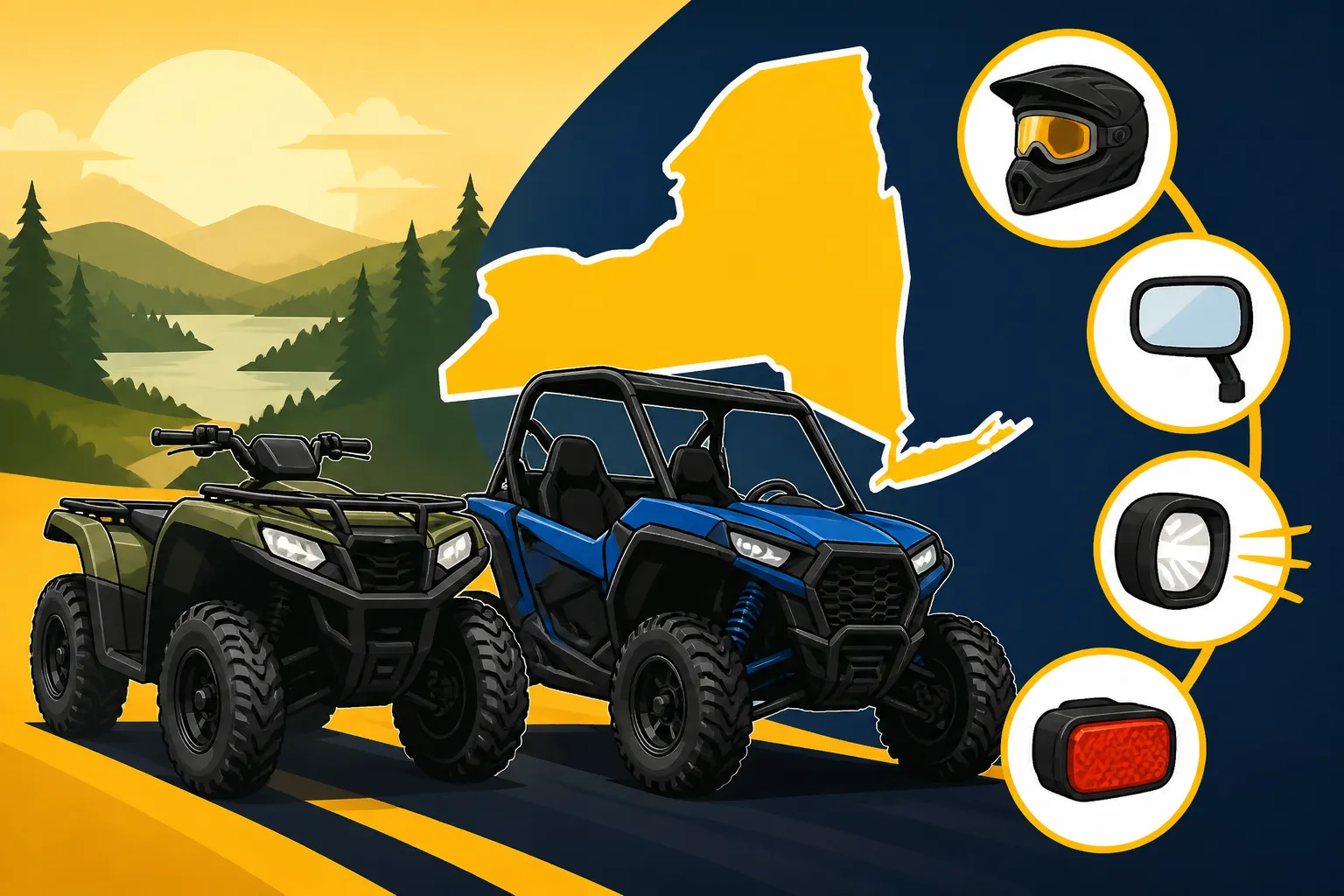
Let's address this directly and without ambiguity: in New York State, if you are operating an ATV or riding as a passenger on one, you must wear an approved helmet. There are absolutely no exceptions for adults based on age, perceived experience level, or the type of terrain you're on. This isn't just a recommendation from a safety advocate; it's a legal mandate that law enforcement actively upholds. The helmet you wear must be securely fastened to your head and meet specific safety standards, such as those set by the U.S. Department of Transportation (DOT), the Snell Memorial Foundation, or other recognized standards from the American National Standards Institute (ANSI).
This means that those trendy, often minimalist, novelty helmets that lack one of these crucial certifications are a definitive no-go for legal ATV operation in New York. Riders often voice frustrations about helmets, especially on a hot summer day, citing discomfort or a desire for more freedom. However, the stark reality is that a properly certified and worn helmet is the single most effective piece of safety equipment you can utilize to protect yourself from severe head injuries, which are tragically common and often life-altering in ATV accidents. Don't risk receiving a hefty fine, or far worse, suffering a preventable and devastating injury; make it an unwavering habit to put on that approved, securely fastened helmet every single time you swing a leg over the seat. [New York Helmet Law for ATV Riders]
It’s crucial to understand that merely owning a helmet isn't enough; it must be the right kind of helmet, and it must be worn correctly. Many riders might possess an older helmet that has seen better days, or one that was never certified in the first place. If your helmet doesn't bear a DOT sticker on the back or an equivalent Snell or ANSI certification, it likely won't pass muster with law enforcement. Regular inspection of your helmet for any signs of wear, cracks, compromised straps, or impact damage is equally important, as a compromised helmet cannot provide the protection it was designed for. A helmet that has sustained a significant impact, even if it looks okay, should always be replaced.
Furthermore, the "securely fastened" part of the regulation is just as critical as the certification. A helmet that's unbuckled, too loose, or perched precariously on your head is effectively useless in a crash. In fact, it could even become a hazard if it shifts or comes off during an impact. It's a common, yet dangerous, sight to see riders with chin straps dangling or helmets that are clearly ill-fitting. Law enforcement officers are trained to observe this behavior, and it can be sufficient grounds for a stop and a ticket, even if your machine is otherwise perfectly compliant. Take those extra few seconds to properly adjust and secure the chin strap, ensuring the helmet fits snugly and won't fly off or rotate during a sudden jolt, impact, or even just a particularly bumpy section of trail. Your brain, and your wallet, will undoubtedly thank you for this simple but vital precaution.
The Strict Rules for Passengers and Factory-Fitted Seating
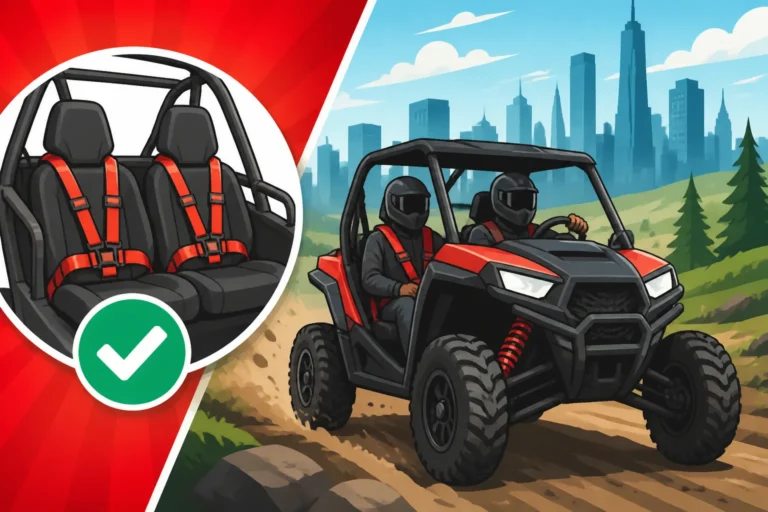
So, you’ve got your certified helmet firmly on your head, but what about bringing a friend, family member, or child along for the ride? New York State law is exceedingly clear and strict on this matter: an ATV can only carry passengers if it was explicitly "designed by the manufacturer to carry more than one person and is equipped with a seat designed for a passenger." This means there is absolutely no room for improvisation, modification, or creative seating arrangements. You cannot, under any circumstances, simply throw a makeshift cushion or pillow on your rear cargo rack, have a friend stand on the footpegs, or try to squeeze two people onto a single-rider seat that was clearly designed for one.
If your quad came from the factory with only one saddle-style seat, then it is legally and functionally a single-rider machine, full stop. Any attempt to carry an extra person on such a machine is not only a direct violation of state law but is also incredibly dangerous. Adding an unauthorized passenger significantly alters the ATV's weight distribution, compromises its stability and handling characteristics, and places both the operator and the extra person at a substantially higher risk of injury, especially during turns, over uneven terrain, or when encountering unexpected obstacles. It can also impede the operator's ability to shift their body weight for control or to react quickly in an emergency.
For machines like many side-by-sides (UTVs), which are indeed designed from the ground up to carry multiple passengers, the rule still emphasizes proper, factory-fitted seating. This means ensuring that there are designated seats, appropriate seatbelts (where equipped by design), and secure handholds for all occupants. For instance, if you own a UTV with a bench seat, you must ensure that the seat is designed for the number of people you are carrying and that everyone is utilizing their appropriate restraints. Aftermarket modifications intended to add passenger capacity to a single-rider ATV, even if they appear robust or are marketed as "passenger kits," are typically not recognized as legal for passenger transport under New York law. When in doubt, the golden rule is simple: if your ATV was not explicitly sold and manufactured as a two-up model or a multi-passenger UTV, assume it is for one rider only. [Why a Passenger Needs a Factory-Fitted Seat in New York]
Seeing and Being Seen: Lighting and Visibility Requirements
Riding an ATV isn't always a fair-weather, daylight-only activity. There will be times when you're caught out on the trail as dusk begins to settle, or perhaps you're intentionally heading out for a night ride on a designated and permitted route. In these scenarios, having proper lighting on your ATV is not merely a convenience; it is an absolute and non-negotiable requirement in New York State. These rules aren't just about illuminating your path so you can see where you're going; they are fundamentally about ensuring that other riders, landowners, or even passing vehicles at a designated road crossing can clearly see you coming, preventing potential collisions and ensuring safety for everyone sharing the environment. Skimping on or neglecting your ATV's lighting system is akin to riding blindfolded—a surefire recipe for disaster.
Headlights and Taillights: Mandatory for Low Light and Night Riding
New York State law is very specific regarding when your ATV must be equipped with and utilizing its lighting systems. Any ATV operated between one-half hour after sunset and one-half hour before sunrise, or at any other time when environmental conditions severely limit visibility (such as heavy fog, pouring rain, or dense snowfall), must be equipped with at least one functional headlight and one functional taillight. These lights must be in good working order, clearly visible, and properly aimed. The headlight should project a white light, illuminating the path ahead, while the taillight must emit a red light, making you visible from behind.
This lighting requirement extends beyond just designated public trails; if you are operating on private land that allows night riding, these rules generally still apply for your own safety and the safety of anyone else present on that property. Imagine attempting to navigate a rocky, uneven trail or a dense, wooded section in the dark without adequate and reliable lighting – it's an incredibly dangerous proposition that puts you at high risk of accident or injury. [Headlight and Taillight After Sunset]
A common, yet avoidable, scenario involves riders planning a daytime excursion only to encounter unexpected delays, mechanical issues, or challenging trail conditions that push their return journey closer to, or even past, sunset. In these moments, those functional lights transition from a useful feature to an absolute legal necessity. It's therefore prudent to perform a quick check of your headlight and taillight before every single ride, even if the sun is shining brightly. A burnt-out bulb, a loose wire, or a fouled connection can leave you stranded in the dark, or worse, lead to a citation if encountered by law enforcement. This diligence is particularly critical if your planned route involves navigating near hunting camps, crossing quiet, unlit town roads, or entering any area where ATVs might briefly interact with other forms of traffic after dark.
Modern ATVs typically come equipped with excellent lighting systems, often featuring bright and durable LED technology. For riders seeking to significantly enhance their visibility and ability to see the trail in challenging conditions, aftermarket solutions are readily available. Companies like SuperATV offer a wide range of auxiliary LED light bars, spot pods, and floodlights that can provide truly impressive illumination. While these enhanced lighting systems are fantastic for improving off-road performance and safety, it's vital to remember that they are additions. They do not replace the basic legal requirement for your primary, factory-installed headlight and taillight to be functional and correctly positioned on your machine. Ensure your fundamental, legally compliant lights are always in working order before you consider adding extra illumination for off-road adventures.
Ensuring You're Seen: Reflectors and Additional Visibility Aids
Beyond the active, electrically powered lights, New York law also mandates the presence of certain passive visibility aids on your ATV. Specifically, your ATV must be equipped with at least one red reflector mounted on its rear. This simple, often overlooked, and inexpensive piece of equipment is critically important because it ensures that even if your taillight fails or you're parked with your machine off, your ATV still offers some level of visibility to others approaching from behind when their own headlights illuminate it. It acts as a crucial, non-powered backup system.
While not always explicitly mandated by state law for all riding scenarios, many savvy and safety-conscious riders go above and beyond by adding additional reflective tape or high-visibility markings to their machines. This practice is particularly beneficial when riding during specific seasons, such as fall hunting season, or in areas characterized by mixed recreational use where you might encounter hikers, mountain bikers, or horseback riders. Placing reflective strips in key locations on your fenders, racks, or even your helmet can significantly increase your profile and make you stand out against the natural backdrop, especially at dawn, dusk, or in heavily wooded areas.
It's a simple truth: being seen by others is just as important, if not more so, than your ability to see where you're going, especially when trails can be narrow, winding, and full of unexpected surprises around the next bend. The rear reflector serves as a continuous safety feature. If your electrical system malfunctions or a taillight bulb blows, that red reflector can still effectively catch the light from another rider's headlight, providing them with crucial seconds to recognize your presence and react appropriately. It's a low-tech yet highly effective solution that provides continuous, passive safety. While New York State law doesn't typically require side reflectors for ATVs, most manufacturers include them as a standard safety feature, and they are always a good idea, as they help your machine be seen from the side, which is critical if you are making a turn or pulling out from a hidden trail entrance. When [New York Rules for Riding After Dark] come into play, maximizing your visibility from all angles becomes your best friend, and every bit of reflective material contributes to a safer ride.
Keeping the Peace: Noise and Environmental Controls
ATVs are powerful machines, and with that power, inherently comes both exhaust emissions and engine noise. New York State, renowned for its vast natural beauty, diverse wildlife, and often close-knit rural communities, has wisely implemented specific equipment rules to manage both the acoustic footprint and environmental impact of ATVs. These regulations are designed to strike a delicate and necessary balance: allowing riders to fully enjoy their sport and the thrill of off-road adventure, while simultaneously protecting wildlife habitats, maintaining the integrity and peace of our trails, and ensuring that residents living near riding areas are not unduly disturbed by excessive noise or pollution. Ignoring these crucial rules not only increases your risk of receiving fines but can also contribute to trail closures and foster a negative public image for the entire ATV riding community.
The Non-Negotiable Spark Arrester Requirement
Every single ATV operated in New York State must be equipped with an effective spark arrester. This is not merely a suggestion or a recommended accessory; it is a clear, unambiguous legal requirement, and it is one that law enforcement officers frequently check for during roadside inspections and trail patrols. A spark arrester is a specialized device, typically integrated into the exhaust system, designed with a critical purpose: to prevent hot carbon particles (sparks) from escaping the engine's exhaust. These sparks, if allowed to exit unfiltered, can easily ignite dry leaves, grasses, and other vegetation, leading to devastating and rapidly spreading wildfires.
Many modern ATVs come with USFS (U.S. Forest Service) approved spark arresters integrated directly into their muffler systems from the factory. However, if you have modified your ATV's exhaust system with an aftermarket pipe or if you are riding an older machine, it is your responsibility to ensure that this critical piece of equipment is present, functional, and meets the required federal standards. A USFS-approved spark arrester will typically have a specific stamp or marking indicating its compliance. Operating your ATV without an approved and functional spark arrester doesn't just put you at risk of receiving a significant fine; it places you and the surrounding environment at risk of initiating a catastrophic and potentially deadly wildfire. [The Spark Arrester Section 2406 Requires]
The spark arrester rule is a cornerstone of environmental protection, particularly vital during dry seasons when the risk of wildfire is elevated. Many riders, often unintentionally, remove or modify their ATV's exhaust systems without fully understanding the profound legal and environmental implications of doing so. Aftermarket exhaust systems, while often marketed for performance gains or a more aggressive "sound," frequently do not come equipped with a USFS-approved spark arrester or are designed in a way that bypasses the original factory-installed system. If you have chosen to change your exhaust, it is incumbent upon you, the operator, to meticulously verify that the new setup fully complies with the spark arrester requirement. Always look for the USFS stamp on your muffler or the specific spark arrestor element itself.
An officer conducting a roadside or trailside check of your ATV will almost certainly look for this crucial stamp or verify the physical presence and apparent functionality of a spark arrester. If it is missing, clearly non-compliant, or appears damaged, you are almost guaranteed to receive a citation. Beyond the immediate legal ramifications, it is crucial to consider the devastating impact a wildfire can have on the very trails, forests, and natural areas that we cherish and rely on for our riding adventures. A single errant spark is all it takes to ruin thousands of acres of pristine wilderness, destroy wildlife habitats, and potentially displace entire communities. This is one rule that undeniably benefits everyone, from ATV riders to hikers, campers, and local residents.
Mufflers and Adherence to Federal Noise Standards
While a throaty, loud exhaust note might be appealing to some ATV riders, New York law dictates that ATVs must be equipped with a muffler system that is in good working order and effectively prevents the emission of excessive or unusual noise. More specifically, the law refers to adherence to federal noise emission standards. This means that aftermarket exhausts that are primarily designed for maximum performance and significantly increase the sound output of your machine are highly likely to be considered illegal for use on designated public trails and even potentially problematic on private land if they generate complaints from neighboring properties.
Law enforcement officers, particularly forest rangers and environmental conservation officers, are specifically trained to identify and listen for machines that are excessively loud. They take noise complaints seriously, as these are a frequent source of conflict between ATV riders and other land users or residents. Maintaining your stock muffler in good condition or ensuring any aftermarket option you choose demonstrably meets federal noise standards is absolutely key to fostering a harmonious riding experience for everyone, including those who simply wish to enjoy the peace and quiet of nature. Excessive noise is widely recognized as one of the quickest and most common reasons for getting trails shut down or for generating animosity from local communities, threatening future access. [Mufflers Under the Federal Noise Standard]
The enforcement of noise ordinances is often a frequent point of contention within the ATV community. What sounds "good" or "powerful" to an individual rider can easily be perceived as an irritating, disruptive roar to a homeowner living near a trail, a hiker seeking solace in the quiet woods, or a local farmer trying to tend to their livestock or crops. New York's laws are specifically designed to mitigate these kinds of conflicts and ensure that recreational activities can coexist respectfully. While the state law doesn't explicitly specify a precise decibel level, its reference to federal standards implies that an ATV's exhaust system should closely mimic the sound output it had when it originally left the factory. Many purely performance-oriented aftermarket exhaust pipes can exceed these acceptable noise levels considerably.
If you are contemplating an exhaust upgrade for your ATV, it is imperative that you conduct thorough research to ensure that any chosen system is fully compliant with New York's regulations. Brands like SuperATV might offer various exhaust options, but it is the rider's responsibility to verify their legality for use on trails within New York State. The overarching goal of these regulations is not to completely silence ATVs or to diminish the riding experience, but rather to keep their noise emissions within reasonable and respectful limits. Adhering to these standards demonstrates a vital respect for other outdoor enthusiasts, fosters positive relationships with landowners whose cooperation is essential for maintaining trail access, and ultimately helps to preserve the future of ATV riding in New York. When trails face closure, it is very often due to unresolved noise complaints, underscoring how a little consideration for others can go a very long way in keeping our cherished riding areas open.
Machine Performance and Control: Tires and Braking Systems
Beyond the critical aspects of lighting, noise, and environmental controls, the actual performance and control of your ATV are undeniably crucial for ensuring a safe and enjoyable riding experience. New York's equipment rules extend directly to the very components that provide your machine's connection to the ground and its fundamental ability to stop. These requirements are not merely about passing a quick visual inspection; they are about guaranteeing that you possess adequate traction to confidently navigate challenging and varied terrain, and, most importantly, the reliable ability to bring your ATV to a safe and controlled stop, regardless of the conditions you encounter. Neglecting the condition of your tires or the functionality of your braking system is, quite frankly, like playing Russian roulette with your personal safety and the safety of others on the trail.
The Importance of Proper Tire Tread Depth and Condition
Your ATV's tires represent its singular point of contact with the ground, making their overall condition absolutely vital for maintaining effective traction, responsive steering, and reliable braking performance. New York law explicitly specifies that ATV tires must maintain at least "two thirty-seconds of an inch tread depth" as accurately measured by a tire depth gauge in any two adjacent major tread grooves. If your tires are worn down below this critical minimum point, they are legally considered unsafe and prohibited for use on public trails. Beyond this legal minimum, it is paramount to consider the specific types of terrain you will be riding on. Attempting to navigate muddy trails or rocky ascents with bald or excessively worn tires is not just ineffective; it is inherently dangerous, significantly increasing your risk of slips, slides, and a complete loss of control.
It is strongly recommended that you regularly inspect your ATV's tires for any signs of cuts, bulges, punctures, or uneven wear patterns, and always ensure they are inflated to the manufacturer's recommended pressure, especially before each and every ride. Investing in a good set of high-quality tires, specifically chosen for New York's remarkably varied terrain—ranging from the notoriously rocky Tug Hill Plateau to the often muddy forest paths and technical singletrack—can make an enormous difference in your confidence, the machine's performance, and crucially, your overall safety on the trails. Well-maintained tires allow you to climb hills more securely, cross streams with greater stability, and navigate challenging obstacles with significantly greater ease and control. [Two Thirty-Seconds of Tread in New York]
It's surprisingly easy to overlook the gradual wear and tear on ATV tires, especially if your riding is intermittent or consists mostly of shorter, less demanding outings. However, the reality is that worn tires dramatically diminish your ATV's ability to effectively grip the ground, a capability that is absolutely indispensable for both safety and precise control. Consider the increased danger of trying to stop quickly on a loose gravel trail with tires that have minimal tread – your stopping distance will be significantly extended, and the likelihood of skidding uncontrollably becomes much higher. Similarly, attempting to climb a steep, rocky incline becomes a far more precarious and challenging endeavor without the necessary bite and traction provided by adequate tread depth.
Before embarking on any ride, take a few moments for a thorough visual inspection of your tires. Look carefully for any embedded debris, such as sharp rocks or thorns, check for visible damage to the sidewalls, and, most critically, assess the tread depth. While a dedicated tire tread depth gauge is the most accurate tool, a quick visual check can often reveal if your tires are nearing or have already passed the legal minimum limit. Maintaining the manufacturer's specified tire pressure is also incredibly important for optimizing performance, extending tire life, and preventing uneven or premature wear, even though it's not a direct state equipment mandate. Remember, a new set of tires, while an upfront cost, is a direct investment in your safety and the longevity of your riding enjoyment. [How Worn Is Too Worn for an ATV Tire?]
Fully Functioning Brakes on All Wheels: Non-Negotiable Safety
It should go without saying, but it is unequivocally mandated by law nonetheless: your ATV must be equipped with fully effective and properly functioning brakes on all wheels. This is not a mere suggestion for improved performance; it is a fundamental and absolutely non-negotiable safety requirement. In New York, the braking system must be capable of stopping the vehicle safely and within a reasonable distance under various operating conditions. This means that your brake levers (for the front brakes) and pedals (for the rear brakes, or combined systems) should consistently feel firm and responsive, not spongy or excessively soft. Furthermore, when applied, the machine should decelerate smoothly and stop squarely, without any noticeable pulling or veering to one side.
Regular, diligent inspection and maintenance of your ATV's braking components are paramount. This includes checking brake pads for wear, rotors for damage or warping, hydraulic fluid levels and condition (for hydraulic systems), and cables for proper adjustment and any signs of fraying or sticking (for mechanical systems). Imagine the terrifying scenario of descending a steep, muddy hill or approaching an unexpected obstacle only to discover that your brakes are inadequate or have completely failed – that is a nightmare situation no rider ever wants to encounter. If you observe any issues whatsoever with your braking system, no matter how minor they may seem, it is absolutely essential that you address them immediately before your next ride. Do not, under any circumstances, put yourself or other trail users at risk by operating a machine with compromised stopping power. This is one crucial area where attempting to save a few dollars on maintenance or repairs is simply not worth the potential, often catastrophic, cost in personal injury, property damage, or even loss of life.
Brakes are arguably the most critical active safety system on your ATV. Without a fully functional braking system, you effectively lose the ability to control your speed, bring the machine to a halt, or avoid potential obstacles and accidents. A common pitfall for many riders is neglecting routine brake maintenance, such as delaying brake fluid changes until the fluid is contaminated or allowing brake pads to wear down to the metal backing, which can cause irreversible damage to expensive rotors and drastically reduce braking effectiveness. It's not uncommon for riders to become complacent about these vital maintenance tasks, especially if they only ride occasionally or perceive their riding style as low-risk.
Before every single ride you take, make it a steadfast habit to test your brake levers and pedals. Do they engage with a firm, confident feel? Does the machine respond immediately to your input? Do all four wheels engage the brakes effectively, providing consistent stopping power? Any sensation of sponginess, an unusual amount of lever/pedal travel, or any grinding or squealing noises are definitive red flags that demand your immediate attention. If your riding often involves tackling challenging trails with steep descents, like those frequently encountered on the rugged Tug Hill Plateau, having powerful, perfectly reliable brakes is not just a preference—it's the fundamental difference between a controlled, safe descent and a dangerous, runaway machine. There is simply no room for compromise when it comes to your ATV's braking system; diligent and proactive maintenance is an absolute necessity.
Other Essential and Often Overlooked Equipment Details
While the primary safety components like helmets, proper seating, lighting, mufflers, tires, and brakes cover the major safety and environmental concerns, New York's comprehensive equipment rules also delve into several other specific details that can often catch unsuspecting riders off guard. These might appear to be minor requirements individually, but collectively, they form a crucial framework designed to ensure that your ATV is not only fit for the trail but also respectful of other users and the environment. Being fully aware of these specific details can save you from an unexpected citation and unnecessary hassle.
License Plates, Decals, and Official Markings
Just like any other motor vehicle you operate on public roads, your ATV requires proper identification to be legally ridden on designated public lands in New York. This means you must display a valid ATV license plate issued by the New York State Department of Motor Vehicles (DMV). This plate must be securely attached to the rear of your machine in a location where it is clearly visible and easily readable at all times. It's not enough to simply have the plate; its legibility is equally important. If your plate becomes caked in mud, obscured by a poorly placed cargo bag, or bent out of shape from a particularly tough trail ride, you could still face issues and potentially a citation from law enforcement.
In addition to the physical license plate, you will also receive a validation decal each year when you successfully renew your ATV registration. This small but important sticker must be affixed to the license plate itself, serving as a clear visual indicator that your registration is current and valid for the operating season. These official visual identifiers are how law enforcement officers quickly verify that your machine is legally registered and authorized for use on public land or designated trail systems. It is always a good practice to ensure your license plate and the accompanying validation decal are clean, clearly visible, and in good condition before you head out for any ride. [New York ATV Plates and Where They Mount]
The precise placement of your ATV license plate is generally straightforward: it must be on the rear of the machine. However, the specific mounting location can vary somewhat depending on your particular ATV's design, the presence of aftermarket accessories like a cargo rack or a rear bumper, and your personal preference for keeping it safe from trail hazards. The overriding principle, however, is clear visibility. The plate should not be obscured by a cooler, a tool bag, an extra fuel can, or even excessive mud accumulation. Many riders find that mounting the plate directly to the rear grab bar, using a robust aftermarket license plate bracket, or integrating it into a rear bumper system offers the most effective way to keep it both visible and securely attached, minimizing the risk of damage or loss on bumpy trails. If your plate does become damaged to the point of being unreadable or if it falls off entirely due to trail debris or rough riding, you are legally required to obtain a replacement from the DMV. [Replacing a Lost New York ATV Plate]
Beyond the physical plate itself, the annual validation decal is equally, if not more, important as an indicator of current registration. This small sticker, renewed annually, clearly shows whether your machine is legally registered for the current season. An expired decal is often one of the first things an officer will notice during a trailside check and is a surefire way to draw unwanted attention. Make it a routine habit to quickly check the condition and currency of both your plate and decal before every single ride, just as you would check your tire pressure or fuel level. This small act of diligence can save you from significant hassle and potential fines.
Equipment for Specific Conditions: Headlights, Mirrors, and Horns
While not universally mandated for all ATVs in New York State for every type of riding, certain additional pieces of equipment become legally necessary under specific operating circumstances or are simply highly recommended for enhanced safety. As previously discussed, functional headlights and taillights are strictly required for low-light conditions and night riding. But what about items like mirrors and horns? For typical ATV trail riding, these are generally not required by default in the same comprehensive way they are for street-legal passenger vehicles.
However, if you anticipate operating your ATV on a designated road or public way where ATVs are specifically permitted to cross, share space with other vehicles, or where local ordinances dictate, having a functional horn for signaling and rearview mirrors for critical situational awareness becomes an incredibly smart, and potentially legally mandated, addition. It's always crucial to check with local authorities, county tourism boards, or specific trail system managers, as some county or club trail networks might have local ordinances that go beyond baseline state law and require additional equipment. While New York State law does not generally require a horn for the majority of ATV use, a quick "toot" can effectively alert hikers, horseback riders, or other ATV operators to your presence around a blind corner, preventing potential conflicts or collisions.
Let’s delve a bit deeper into the practical utility of these items. While a horn isn't a blanket legal requirement for ATVs on every single trail, its usefulness and contribution to safety cannot be overstated. Imagine you're approaching a blind turn or a crest on a shared multi-use trail, and you suddenly encounter hikers, mountain bikers, or horseback riders. A quick, friendly tap of the horn (if your ATV is equipped with one) can provide an early, non-alarming warning of your approach, giving others time to react and preventing a potential close call or tense encounter. Similarly, if you're riding with a group, a horn can serve as an effective, easily understood communication tool for signals like "stopping," "hazard ahead," or "slow down." Many aftermarket options are available, and reputable companies like SuperATV offer universal horn kits that are relatively simple to install and provide a noticeable boost in safety.
Mirrors fall into a similar category of highly recommended, though often not strictly mandated, equipment. While not required for most standard trail riding, their value for enhancing situational awareness is immense. Being able to quickly check who or what is behind you, particularly when slowing down, coming to a stop, or navigating tight sections of trail where backing up might be necessary, can be a critical factor in preventing accidents. Furthermore, if your ATV frequently traverses short stretches of designated town or county roads, as some interconnected trail systems require, or crosses public highways at marked intersections, then mirrors become an even more prudent and advisable safety feature. Always make it a point to check the specific rules and regulations of any local trail system you plan to ride, as some may indeed specify additional equipment requirements for enhanced safety, particularly on shared-use paths or within areas with complex traffic flows.
The Consequences: Fines and Liability for Equipment Violations
It's one thing to be aware of all the intricate rules and regulations governing ATV equipment, and an entirely different, and often more impactful, thing to fully understand the ramifications of not following them. In New York State, equipment violations for ATVs are not just minor inconveniences that can be easily dismissed; they can lead to substantial financial fines, significant legal troubles, and, perhaps most critically, have a detrimental impact on your insurance coverage and personal liability in the event of an accident. Riding an improperly equipped ATV simply isn't worth the inherent risks, both financially and in terms of your personal safety and legal exposure. Law enforcement officers are actively patrolling trails, designated roads, and access points where ATVs operate, and they will check for compliance, often diligently.
The Financial and Legal Repercussions of Non-Compliance
Operating an ATV without all the required equipment in New York State can quickly result in substantial financial penalties. The precise amount of these fines can vary significantly depending on the specific nature and severity of the violation, as well as any prior infractions. However, be warned: these penalties can accumulate rapidly, swiftly transforming what began as an enjoyable day out on the trails into a very expensive and regrettable experience. For instance, riding without a DOT-approved helmet or operating a machine without a functional spark arrester can each carry their own distinct fines. Beyond the immediate financial hit to your wallet, repeated or egregious violations can lead to further legal complications, including the potential suspension of your ATV registration privileges, making it impossible to legally ride.
Consider a very common scenario: you're out enjoying a beautiful Saturday afternoon, savoring the crisp air and the vibrant fall foliage on your favorite trail system. Suddenly, as you approach a popular trailhead, you spot an Environmental Conservation Officer (ECO) or State Trooper flagging you down for a routine check. During their swift, professional inspection, they discover that your spark arrester has been removed or is non-compliant, or perhaps your crucial taillight isn't working at all. That's an immediate ticket for an equipment violation. If, adding to your woes, you're also riding a single-seat quad with a passenger squeezed on the back, that constitutes another, distinct violation. These multiple fines can quickly escalate, potentially reaching into the hundreds of dollars, overshadowing any enjoyment you might have had.
Furthermore, these violations become a part of your official record. While they may not necessarily carry points on your primary driver's license in the same manner as a moving traffic violation, they can certainly be taken into account for any future infractions or if you are unfortunately involved in an accident. The message from New York State authorities is unmistakably clear: compliance with all equipment regulations is an absolute mandatory requirement for safe, legal, and responsible ATV use. Don't underestimate the dedication of law enforcement officials to uphold these standards, maintain the safety of our shared trails, and protect the environment from preventable hazards and disturbances. [New York Fines for an ATV Violation]
How Missing Equipment Can Affect Your Insurance and Personal Liability
Here is a severe consequence that far too many riders fail to adequately consider until they are faced with a devastating situation: if you are involved in an accident while operating an ATV that is not equipped according to New York State law, your insurance company might have legitimate grounds to deny your claim. Most ATV insurance policies contain explicit clauses stipulating that you must operate your vehicle legally and in compliance with all applicable laws and regulations. If your machine lacked a mandatory piece of safety equipment – such as a properly functioning headlight for a night ride, or if you were not wearing the legally required helmet during the incident – an insurer could very well argue that your non-compliance contributed directly to the cause or the severity of the accident, or that you were operating the machine unlawfully, thereby potentially voiding your coverage entirely.
Such a denial of coverage could leave you personally and solely responsible for a staggering array of costs, including astronomical medical bills for yourself or others, extensive property damage, and any subsequent legal judgments or settlements awarded against you. These expenses can potentially run into the tens, or even hundreds, of thousands of dollars, a financial burden that could cripple you for years. This is precisely why the state mandates not only proper equipment but also comprehensive [New York's Mandatory ATV Insurance]. However, that essential insurance coverage is only truly effective and reliable if you are consistently operating your ATV within the established legal boundaries.
Imagine the absolute worst-case scenario: you are involved in a collision with another rider on a busy trail, or, even more disastrously, you accidentally damage someone else's valuable private property. If, during the post-incident investigation, your ATV is found to be in violation of equipment rules – for instance, if your brakes were demonstrably inadequate, or you were riding after dark without any functional lights – your insurance provider could very reasonably use that documented non-compliance as a strong basis to deny paying out for any damages or injuries. This horrifying outcome would mean that you would be solely "on the hook" for every single penny of the costs.
The financial burden of medical treatment, especially for severe or long-term injuries, can be astronomical, spiraling quickly out of control. Similarly, the costs associated with repairing or replacing damaged property can quickly become incredibly expensive. This dire potential is why a little diligence and proactive attention to ensuring your ATV meets all state equipment requirements before each and every ride is not merely a suggestion. It is a small, proactive investment that secures your peace of mind and provides genuine financial and legal protection in the face of unforeseen circumstances. Don't ever give your insurance company a valid reason to deny your claim.
New York ATV Equipment Requirements at a Glance
To help you keep track of all these important details, here's a quick summary of essential and commonly required equipment for ATVs in New York State. Remember, this is a general overview, and local ordinances or specific trail rules might have additional requirements. Always double-check with local authorities or trail system operators before you ride!
| Equipment Item | New York State Requirement | Notes & Considerations |
|---|---|---|
| Helmet | Yes, securely fastened, DOT, Snell, or ANSI approved. | Mandatory for ALL riders and passengers, regardless of age or experience. |
| Passenger Seating | Only if designed by manufacturer for multiple persons, with a designated seat. | No improvised seating; single-rider ATVs cannot carry passengers. |
| Headlight(s) | At least one white light, clearly visible, for low-light/night conditions (1/2 hr after sunset to 1/2 hr before sunrise). | Must be functional. Check before every ride, especially if conditions could lead to low visibility. |
| Taillight(s) | At least one red light, clearly visible, for low-light/night conditions. | Must be functional. Essential for being seen from the rear. |
| Rear Reflector | Required (Red). | Passive safety device; crucial backup if taillight fails. |
| Spark Arrester | Required, USFS-approved and in proper working order. | Prevents wildfires. Often integrated into the muffler. Ensure it's stamped and functional, especially with aftermarket exhausts. [The Spark Arrester Section 2406 Requires] |
| Muffler | Good working order, meeting federal noise standards. | Prevents excessive noise. Aftermarket exhausts must still comply. Loud pipes often lead to trail closures. [Mufflers Under the Federal Noise Standard] |
| Tires | At least 2/32nds of an inch tread depth. No cuts, bulges, or excessive wear. | Vital for traction, steering, and braking. Inspect regularly. [Two Thirty-Seconds of Tread in New York] |
| Brakes | Effective brakes on all wheels, capable of safe stopping within reasonable distance. | Non-negotiable safety feature. Test before every ride. |
| Steering | No perceptible play beyond usual manufacturer tolerances. Must respond immediately to user input. | Essential for control. Check for looseness or stiffness. |
| License Plate/Decal | Valid NYS DMV plate securely displayed on the rear; current validation decal affixed to plate. | Must be clean, readable, and current. [New York ATV Plates and Where They Mount] |
| Mirrors | Generally not required, but highly recommended for situational awareness, especially on shared trails or road crossings. | Some local ordinances may require them. SuperATV offers great options for enhanced visibility. |
| Horn | Generally not required, but highly recommended for signaling other users. | Useful for alerting hikers, other riders, or vehicles around blind spots. |
Disclaimer
This article is for general informational purposes only and does not constitute professional advice. Laws, prices and regulations vary by location and change over time. Consult a qualified professional for guidance on your specific situation.