New York Rules for Riding a Town Road
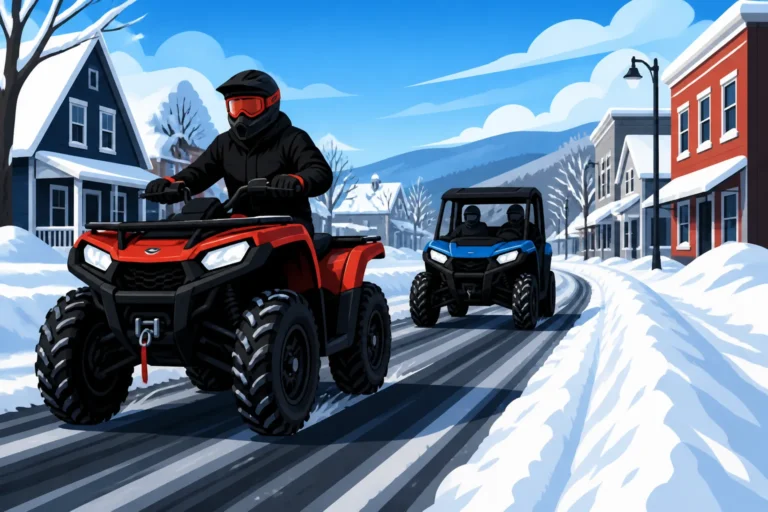
There's a common dream among ATV riders in New York: being able to hop on your machine and simply ride down the road, whether it's to a friend's house, a local store, or to connect to a nearby trail. The reality, however, is often a source of deep frustration and confusion, as New York's laws on ATV use on public roads are notoriously strict. This guide will cut through the uncertainty and explain exactly when and how you can legally ride your ATV on a town road in New York, helping you understand the rules and avoid costly fines.
The Fundamental Truth: ATVs Are Generally Not Street Legal in New York
Let's get this out of the way upfront, because it's the biggest misconception out there: in New York, ATVs are generally not considered street legal vehicles for operation on public highways, streets, or roads. This isn't just a suggestion; it's a core principle embedded in state law, and it’s why so many riders feel boxed in. You see an open road, you want to ride it, but the law says "no," and it can feel incredibly restrictive when all you want to do is enjoy your machine.
Why the Distinction Matters So Much
The reason for this strict stance comes down to how the state defines and categorizes vehicles. An ATV, or All-Terrain Vehicle, is specifically designed for off-road use. Think about it: they have knobby tires for grip on dirt, mud, and rocks, a high center of gravity for tackling uneven terrain, and often lack many of the safety features required for on-road vehicles, such as turn signals, rearview mirrors, or even robust suspension systems meant for pavement.
Operating an off-road machine on paved surfaces or public thoroughfares presents a number of safety concerns, both for the ATV operator and for other motorists. The handling characteristics are different, braking distances can vary wildly, and the protection offered in a collision with a passenger car is minimal. This fundamental design difference is why New York, like many other states, draws a very clear line in the sand between your daily driver and your weekend warrior quad. It's not about spoiling your fun, but about public safety, even if it feels like an unnecessary hurdle sometimes.
The Critical "Designated and Posted" Exception
Now, for the good news – or, at least, the crucial exception that makes some road riding possible. While the general rule is "no," New York Vehicle and Traffic Law does provide a specific pathway for ATVs to legally operate on certain town roads. This pathway is known as "designated and posted."
This isn't a blanket permission, nor is it something you can decide on your own. It means that the local governing body – in this case, a town board – has gone through a specific legal process to identify certain roads or portions of roads where ATV use is permitted. Furthermore, these roads must then be physically marked with clear signage indicating that ATVs are allowed. Without both designation by the town and proper posting, that town road remains off-limits for ATV operation. It’s a very specific two-step process, and if either step is missing, you're out of luck and potentially facing a ticket. This is why checking with your local town clerk or police department is so important before you ever consider riding on a local street.
How a Town Road Becomes "Designated and Posted" for ATV Use
Understanding that "designated and posted" is the key is one thing, but knowing how it actually happens (or doesn't happen) in your town is another. It's not as simple as a few locals deciding it would be a good idea; there’s a formal, legal process involved, and it often requires a significant amount of public input and deliberation. Many towns are hesitant to open roads to ATVs due to concerns about noise, dust, safety, and potential liability, which is why you won't see this exception everywhere.
The Town Board's Crucial Role in Designation
For an ATV to be legally operated on a town road, that specific road or section of road must be designated by the town board. This usually begins with a local law or ordinance proposed by the board. The process typically involves:
- Public Hearings: Before any decision is made, the town board is usually required to hold public hearings. This gives residents, landowners, and ATV riders a chance to voice their opinions, concerns, and support. These meetings can get quite passionate, with arguments for and against often coming from all sides of the community.
- Environmental Review: Depending on the scope of the designation, the town may need to conduct an environmental impact review, especially if it involves opening significant new areas.
- Resolution or Local Law: If the board decides to move forward, they will pass a resolution or enact a local law specifically listing the roads or trails where ATVs are permitted. This legal document is the "designation" part of the equation. It's a formal declaration, not just an informal agreement.
- Notification: Once a law is passed, the town is responsible for making this information available to the public. You might find it on the town's website, posted at the town hall, or announced in local newspapers. Checking [How a Town Designates a Road for ATVs] can give you more insight into this process.
This is why you can't just assume a road is open. Without a formal designation by your town's elected officials, it's considered off-limits, no matter how quiet or unused it might seem.
What "Posted" Truly Means: The Physical Signage Requirement
Even after a road is legally designated, it's still not open for ATV use until it is properly "posted." This means there must be physical signs clearly visible to riders, indicating that ATV use is permitted on that specific road or section. These aren't just little handwritten notes; they need to conform to certain standards.
Imagine riding down a back road you think might be open. If there are no clear, official signs indicating ATV access, then you should treat it as closed. The "posted" requirement is there to eliminate ambiguity for riders and law enforcement alike. It helps ensure that you, as a rider, have clear guidance and aren't left guessing. The absence of a sign means the absence of permission. You can learn more about this by looking at [A Road Designated and Posted in New York].
Important Limits to Road Designation Powers
It's also critical to understand that town boards don't have unlimited power to designate just any road. There are specific restrictions:
- State Highways (Routes): Towns generally cannot designate state highways (like Route 3, Route 12, etc.) for ATV use. These are under the jurisdiction of the New York State Department of Transportation, and state law does not permit ATVs on these roads, except for specific crossings.
- County Roads: Similarly, towns usually cannot designate county roads. These fall under county jurisdiction, and while some counties might have their own limited permissions, a town board can't unilaterally open a county road. If you’re ever considering riding on a county road, you'd need to check with the county legislature directly, which is a far more complex hurdle.
- Private Roads: Of course, designation only applies to public town roads. Private roads, even if they look like public access, are still private property, and you would need explicit permission from the landowner to ride on them. Don't confuse a designated town road with a private driveway or unpaved lane.
Knowing these limitations can save you a lot of trouble. Always verify the status of a road before you even consider riding on it.
Your Responsibilities When Riding on Designated Town Roads
Alright, so you've found that unicorn: a town road that has been properly designated and posted for ATV use. Congratulations! But don't just hit the throttle and go. Even on these rare permissible roads, you have a host of responsibilities to ensure you're riding legally and safely. Riding on a designated town road isn't like riding on a private trail; you are sharing the space with other potential users, and you are subject to many of the same rules as other vehicles, with some ATV-specific additions.
Essential Equipment and Registration Requirements
First and foremost, your ATV must meet all of New York's standard requirements for operation, even on these designated roads. This is non-negotiable and something that can easily lead to a ticket if overlooked.
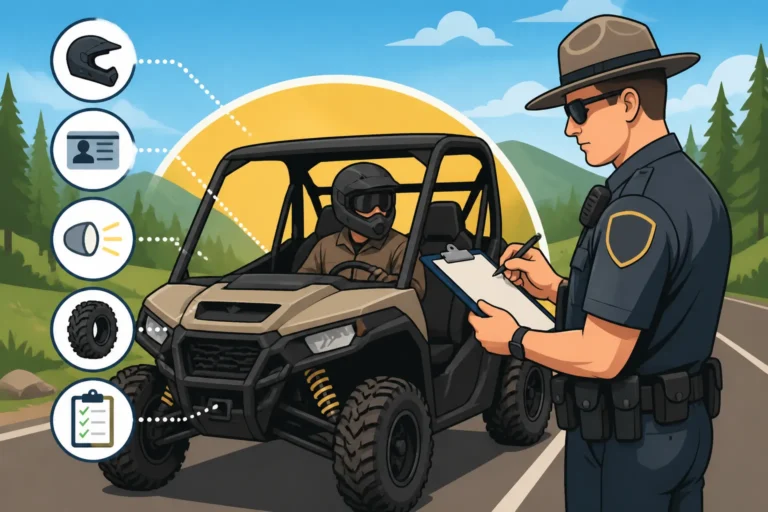
- Registration: Your ATV must be registered with the New York State Department of Motor Vehicles. This involves a registration fee and receiving a plate and validation decal. There’s no getting around this for public land or road use. Without a current registration, you're looking at fines for an unregistered vehicle. For more details, check out [New York ATV Registration and Insurance Proof] and [New York Fines for an Unregistered ATV].
- Insurance: New York law mandates that all ATVs operated off the owner's property must carry liability insurance. This isn't just a good idea; it's a legal requirement. An officer can and will ask for proof of insurance. Make sure your policy meets the state's minimum coverage requirements. You can read more about this at [New York's Mandatory ATV Insurance].
- Helmet: Every rider and passenger, regardless of age, must wear an approved helmet when operating or riding on an ATV in New York. There are no exceptions for adults. This is a crucial safety measure and a legal mandate. Learn more about [Helmet Rules for New York Riders].
- Other Equipment: Your ATV also needs to have specific functional equipment, including a properly working muffler to meet noise standards, effective brakes, a spark arrestor (this is very important for preventing wildfires), and lights if you're riding after dark. If you're running aftermarket parts, especially from a company like SuperATV, make sure they are still compliant with state laws for noise and emissions. While SuperATV offers fantastic performance and utility upgrades, always double-check local regulations for street use. More on this can be found in [New York Equipment Requirements for ATVs].
Age and Supervision Requirements for Young Riders
New York State has very clear rules about who can operate an ATV and under what conditions, especially for younger riders. These rules apply equally to designated town roads.
- Minimum Age: The absolute minimum age to operate an ATV in New York is 10 years old, and then only under direct supervision on private land. For public access, like designated town roads, the rules get stricter.
- Safety Certificate: Riders aged 10-15 must possess an ATV Safety Certificate issued by the New York State Office of Parks, Recreation and Historic Preservation (OPRHP) to ride on designated trails or roads. Without this, they cannot legally ride on these public access points. You can find more information about this in [New York Minimum Age to Ride an ATV] and [New York Supervision Rules for Minors].
- Supervision: Even with a safety certificate, riders under 16 must be under the general supervision of someone 18 years or older when riding on designated roads. This means the supervising adult must be readily available and able to provide assistance, though not necessarily riding directly behind them.
Parents and guardians are not only responsible for ensuring their child meets these requirements but also for the actions of their children while operating an ATV. It’s a serious responsibility, and ignoring these age and supervision rules can lead to significant penalties.
Adhering to Speed Limits and Safe Operation
Even though you’re on an ATV, when you’re on a designated town road, you are essentially a motorized vehicle operating within a public roadway system. This means you must:
- Obey Posted Speed Limits: The speed limits on designated town roads apply to ATVs just as they do to cars. You cannot exceed them, and in many cases, ATVs might need to operate at a lower speed for safety.
- Follow Traffic Laws: Stop signs, yield signs, one-way signs, and all other traffic control devices must be obeyed. You are expected to ride responsibly, giving way to other vehicles, pedestrians, and cyclists.
- Stay Alert: Designated town roads might still have potholes, unexpected debris, or other hazards. Always be aware of your surroundings, and ride defensively. Don't assume other drivers will see you, especially if your ATV is smaller or less conspicuous than a typical car.
Crossing a Public Highway: A Separate and Crucial Rule
Beyond riding on designated town roads, there's another very common scenario that riders encounter: needing to cross a public highway to get from one section of trail to another, or to access a designated town road. This is distinct from riding on the road and has its own very specific set of rules. It’s a moment of potential danger and legal vulnerability, so understanding it thoroughly is paramount.
The "At Ninety Degrees" Rule
New York law allows ATVs to cross public highways (including state and county routes that are otherwise closed to ATV travel) under specific, strict conditions. The primary condition is that you must cross "at ninety degrees" to the road, or as nearly perpendicular as possible.
What does this mean in practice? It means you cannot ride down the shoulder for a hundred feet to find a better crossing spot. You cannot ride along the edge of the pavement. You must approach the highway from an off-road area, make a direct crossing to the other side, and immediately exit the highway onto another off-road area or designated trail. The idea is to minimize your time on the highway itself, reducing the risk of a collision with other traffic. Many riders find this frustrating when the direct crossing means navigating tougher terrain or crossing at a blind spot, but the law is clear: minimize your time on the road. You can dive deeper into this specific rule with [Crossing a Highway on an ATV in New York].
Stopping Before the Shoulder: Additional Safety Measures
Beyond the ninety-degree rule, there are other critical steps you must take when crossing any public highway:
- Come to a Complete Stop: Before entering the roadway or even driving onto the shoulder, you must bring your ATV to a complete stop. This is non-negotiable.
- Look Both Ways: Just like when you learned to cross the street as a child, you must look both ways to ensure no oncoming traffic poses a hazard. Wait for a clear and safe opportunity.
- Yield to All Traffic: You must yield the right-of-way to all vehicles and pedestrians on the highway. They have the right of way, not you.
- Use Lights if Necessary: If visibility is low, such as at dusk or dawn, ensure your headlights and taillights are on, even if the law doesn't strictly require them on for a brief crossing. Better safe than sorry.
- No Passengers Unless Designated: Generally, you cannot carry a passenger while crossing unless the machine is specifically designed for two riders and the crossing point is part of a designated multi-use trail.
Failing to follow these crossing rules can not only lead to serious accidents but also significant fines and legal consequences. Officers are particularly vigilant about this, as improper crossings are a major safety concern.
Comparing ATV Road Rules in New York
To help clarify the various scenarios, here's a quick comparison of ATV rules related to roads in New York.
| Feature / Scenario | General Public Roads (Non-Designated) | Designated Town Roads | Highway Crossing (Brief) | Private Property (Your Own) |
|---|---|---|---|---|
| ATV Registration | Mandatory (if operated anywhere off own land) | Mandatory | Mandatory | Not required |
| ATV Insurance | Mandatory (if operated anywhere off own land) | Mandatory | Mandatory | Not required |
| Helmet Requirement | Mandatory for all riders/passengers | Mandatory for all riders/passengers | Mandatory for all riders/passengers | Mandatory for all riders/passengers |
| Operating Age (10-15) | Safety Certificate + Supervision required | Safety Certificate + Supervision required | Safety Certificate + Supervision required | Supervision by 18+ for 10-15 years old |
| Operating Age (Under 10) | Prohibited | Prohibited | Prohibited | Prohibited |
| "Street Legal" Status | No, generally prohibited | Yes, by local ordinance | No, only for crossing | N/A (not a "road") |
| Required Action at Roadway | Prohibited | Follow all traffic laws/speed limits | Stop, look, yield, cross at 90 degrees | N/A |
| Physical Signage Needed | N/A | Yes, clearly posted | N/A | N/A |
| Typical Fine for Violation | High fines, potential impoundment | Standard traffic/ATV violations | High fines, safety risk | N/A (unless local ordinance exists) |
Conclusion
Navigating the rules for riding your ATV on town roads in New York can feel like walking a tightrope, but understanding the "designated and posted" exception is your most important tool. The default answer is always "no" when it comes to riding your ATV on public roads, so never assume a road is open. Always, always verify with your local town government – your town clerk or town police department – whether a specific road has been formally designated for ATV use and is properly posted with signs.
Ignoring these rules can lead to hefty fines, impoundment of your machine, and even more serious legal consequences if an accident occurs. While it’s tempting to connect trails or take a shortcut on a quiet back road, the legal ramifications far outweigh the convenience. Ride smart, stay informed, and always prioritize safety and legality when you're out enjoying the fantastic trail systems and riding opportunities New York does offer.
Disclaimer
This article is for general informational purposes only and does not constitute professional advice. Laws, prices and regulations vary by location and change over time. Consult a qualified professional for guidance on your specific situation.