New York Rules for Riding a County Road
Oh, the dream of just hopping on your ATV and taking the scenic route down a quiet county road! It’s a common thought for so many of us in New York, especially when you live in a more rural area or your favorite trail system connects via a stretch of gravel. But here's the kicker: riding your ATV on a county road in New York isn't as simple as just firing it up and going. There are very specific rules, and ignoring them can lead to a world of trouble, from hefty fines to impounded machines. This guide is going to walk you through exactly what you need to know, dispelling some myths, and helping you understand the real deal about ATVs and New York's county roads.
The Core Challenge: Designated and Posted Roads
One of the biggest hurdles and sources of frustration for New York ATV riders is the strict interpretation of where we can actually ride. It's not like other states where an ATV might be considered "street legal" with a few modifications. New York has a much tighter rein, particularly when it comes to county roads.
What "Designated and Posted" Really Means
When you look at New York's ATV laws, you'll consistently encounter the phrase "designated and posted." This isn't just bureaucratic jargon; it's the lynchpin of legal ATV use on any public road, including county roads. It means that for an ATV to legally operate on a particular stretch of road, two things must be true:
- Designated: The specific county legislature (or town board for town roads) must have formally passed a law or resolution explicitly designating that road or segment of road as open to ATV use. This isn't just an informal nod or a wink from a local official; it's a formal, public act that is usually recorded in local laws. This designation process is rigorous and often involves public hearings, environmental reviews, and careful consideration of safety implications for both riders and other road users. It’s designed to ensure that opening a road to ATVs is a deliberate and well-thought-out decision, not a casual one.
- Posted: Once designated, the road must then be physically posted with clear, visible signage indicating that ATVs are permitted. These signs aren't just little "ATV crossing" warnings; they are specific signs that explicitly state ATV use is allowed. Think of it like a speed limit sign – you wouldn't know the speed limit without the sign, and you can't assume ATV use is allowed without the proper posting. Without both the designation and the posting, riding your ATV on that county road is considered illegal, even if it feels like a quiet, out-of-the-way lane. This double requirement can be incredibly frustrating because a road might look suitable, or you might hear a rumor that "they allow ATVs on that road now," but unless you see the official signs, you're better off assuming it's closed. For more on this, check out [How a Town Designates a Road].
The intent behind this two-part rule is primarily safety and local control. Counties want to ensure that if ATVs are on their roads, it's on segments that are appropriate for shared use, perhaps with lower traffic volumes, wider shoulders, or specific times of year. It also gives local municipalities the power to decide what's best for their residents and road infrastructure, rather than a blanket state rule.
How a County Road Becomes ATV-Friendly
So, what does it take for a county road to actually become "ATV-friendly" under New York law? It's a journey, not a sprint. Typically, it begins with local ATV clubs or concerned residents petitioning their county legislature. They present arguments for why a particular road segment should be opened, often citing its importance as a connector to a trail system, its low traffic volume, or its general suitability.
The county legislature then has to take action. This often involves:
- Public Hearings: Giving residents a chance to voice concerns or support. This can be contentious, with arguments about noise, safety, and property values.
- Traffic Studies: Assessing the impact of ATVs on traffic flow and safety.
- Coordination with Other Agencies: Consulting with law enforcement, highway departments, and sometimes even state agencies if the county road connects to state routes.
- Passing a Local Law or Resolution: This is the formal legislative act that officially designates the road.
- Funding for Signage: Once designated, the highway department needs to install appropriate signs, which clearly indicate where ATV use is permitted and often any specific restrictions (e.g., speed limits, time of day).
Most "ATV-friendly" county roads you might encounter are usually in very rural areas, often connecting established trail networks like those found in Lewis County or Oswego County. These are not typically main thoroughfares or roads with significant residential density. They often serve as vital links, allowing riders to get from one section of a trail to another without having to trailer their machines for short distances. Without this formal process, any riding is strictly off-limits.
Essential Requirements Before You Even Think About a County Road
Even if you're lucky enough to find a county road that is legitimately "designated and posted" for ATV use, you can't just jump on and ride. New York has a baseline set of requirements for any ATV operating on any public land or designated route, and these absolutely apply to county roads.
Registration, Insurance, and Plate: Non-Negotiables for Public Riding
Think of these as your basic ticket to ride. Without them, you're not just breaking a minor rule; you're essentially operating an unregistered, uninsured vehicle on a public road, which carries significant penalties.
- Valid Registration: Every ATV operated in New York State, even if only on designated trails or county roads, must be registered with the DMV. This means you need current registration papers and a valid registration decal. The process involves paperwork, usually at the DMV office, and a fee. Without a current registration, you're risking a ticket and possibly having your machine impounded. You can learn more about this by reading [New York ATV Registration Cost].
- Proof of Insurance: Just like a car, your ATV needs to be insured to be ridden on public land or designated roads. New York's insurance mandate requires specific minimum liability coverage. You must carry proof of insurance with you while riding, and it should be readily available if an officer asks for it. Riding without insurance can lead to severe fines and suspension of your driver's license (even if you weren't driving a car!). [New York ATV Insurance Requirement] goes into more detail on this.
- Visible Plate and Decal: Your New York ATV registration comes with a plate, which must be securely mounted and clearly visible on the rear of your machine. In addition, you'll receive a validation decal that needs to be affixed to the plate itself. An officer needs to be able to easily see and read your plate and decal from a reasonable distance. A bent, muddy, or obscured plate is just as bad as no plate at all. For placement specifics, check out [New York ATV Plates and Where They Mount].
These three elements are not optional. They're the foundation of legal ATV operation in New York. If you're pulled over on a county road, even a designated one, and you're missing any of these, you're going to have a bad day.
Helmets and Rider Age: Safety First, Always
New York takes ATV safety very seriously, and the rules around helmets and rider age are some of the strictest. These apply without exception on county roads.
- Helmet Law for All Riders: This isn't just for kids or inexperienced riders. In New York, every single person operating or riding as a passenger on an ATV must wear an approved helmet, regardless of age or experience. There are no exemptions for adults. This helmet must be properly fastened and meet specific safety standards. It’s a non-negotiable safety measure designed to protect against serious head injuries, which are tragically common in ATV accidents. Don't risk it; always wear your helmet. Learn more with [New York Helmet Law for ATV Riders].
- Rider Age Restrictions: New York has specific age requirements for ATV operators. Generally, riders must be at least 10 years old to operate an ATV, and those between 10 and 15 years old must have an ATV Safety Certificate and be under the direct supervision of an adult (18 or older). A 14- or 15-year-old with a safety certificate can ride unsupervised only if on land owned or leased by their parent/guardian. On a designated county road, even with a safety certificate, a rider under 16 must still be under direct supervision. This means an adult needs to be in a position to see and hear them and provide immediate assistance if needed. No one under 10 may operate an ATV under any circumstances. These rules are in place to ensure that young riders have the maturity and skill necessary to safely operate a machine, especially when sharing space with other vehicles. For the full breakdown, read [New York Minimum Age to Ride an ATV].
Equipment Mandates: Lights, Mufflers, and More
Beyond registration and insurance, your ATV itself needs to be properly equipped to be legal on a designated county road. These aren't just suggestions; they're legal requirements.
- Spark Arrester: Every ATV must be equipped with a spark arrester that is in good working order. This is a crucial safety device, particularly in dry conditions, as it prevents hot carbon particles from escaping the exhaust and potentially starting a brush fire. Most factory ATVs come with them, but if you've modified your exhaust, ensure it still meets the requirement.
- Tread Depth: Your tires need to have at least 2/32 of an inch of tread depth. Worn tires reduce traction, especially on paved or gravel surfaces, making your ATV less safe.
- Muffler: Your ATV must have a muffler that keeps noise levels within federal standards. Excessive noise is a common complaint from residents, and local law enforcement can ticket you for a loud exhaust.
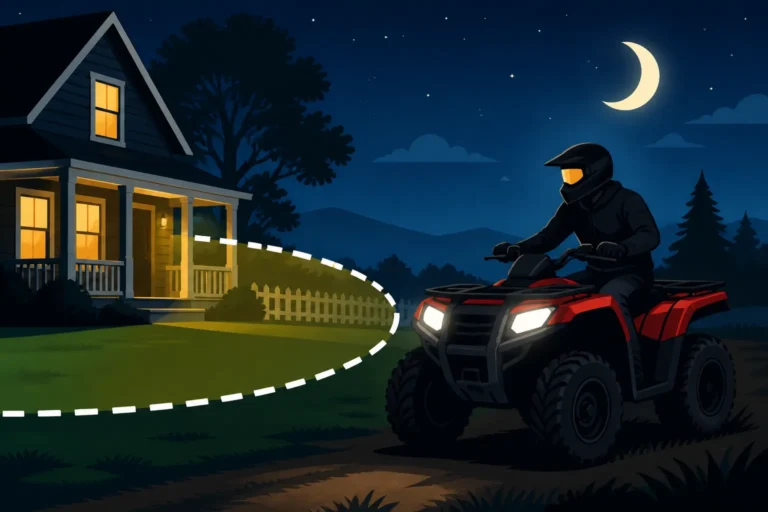
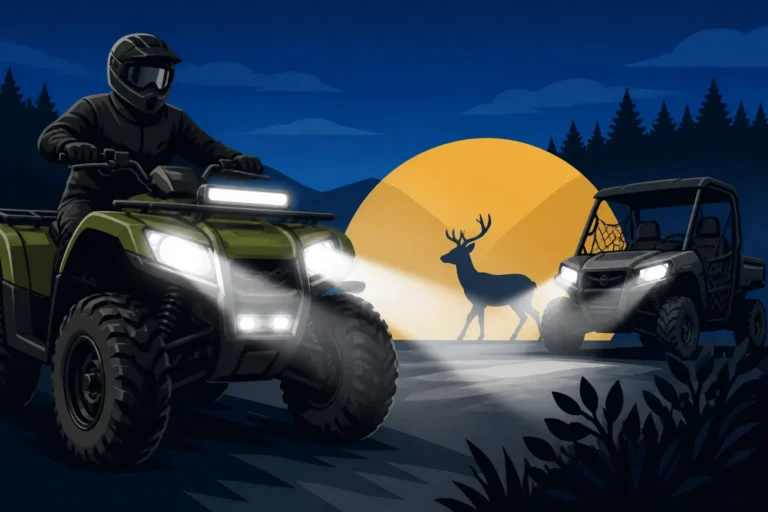
- Headlight and Taillight: If you're riding a designated county road at any time from one-half hour after sunset to one-half hour before sunrise, or at any other time when visibility is limited, your ATV must have a working headlight and taillight. This is critical for being seen by other vehicles.
- Brakes: Your ATV needs fully functional brakes, both front and rear. This might sound obvious, but ensuring your braking system is properly maintained is paramount for safety on any road.
When you're equipping your machine for safe road travel, even on designated county roads, you'll want to ensure all your lights are in tip-top shape. Companies like SuperATV offer a huge range of robust lighting solutions, from LED light bars for better visibility to replacement taillights that meet legal requirements. While they focus heavily on off-road performance, their durable components are certainly built to handle the varied conditions you might encounter, even on a well-maintained gravel county road. Ensuring your ATV is in top mechanical condition is paramount before hitting any public thoroughfare, including designated county roads. This means checking your brakes, tires, and all critical components. Investing in quality replacement parts, which you can often find from suppliers like SuperATV, helps ensure your machine is reliable and safe, reducing the risk of breakdowns or failures while sharing the road with others.
Navigating County Roads: What You Can and Cannot Do
Even on a properly designated and posted county road, your ATV isn't suddenly a car. There are still very specific rules of engagement that you must follow to ensure your safety and stay within the bounds of the law.
Crossing State and Other Roads: The "90-Degree Rule"
One of the most common legal maneuvers for ATVs on New York roads is the ability to cross them. Even if a state route or a non-designated town road doesn't allow continuous ATV riding, you are generally permitted to cross it. However, this crossing must adhere to the "90-degree rule."
Here’s what that means in practice:
- Stop and Yield: Before attempting any crossing, you must come to a complete stop before entering the traveled portion of the road. You must also yield the right-of-way to all other vehicles and pedestrians. This is basic road safety, but it's especially critical when you're on a less visible ATV.
- Cross at a Right Angle: The law requires you to cross at a right or 90-degree angle to the roadway. This minimizes the time your ATV spends in the traffic lane and makes your intentions clearer to other drivers. You can't ride down the shoulder for a bit or make a diagonal cut. It's straight across.
- Quick and Direct: The crossing should be as direct and quick as possible. This isn't an opportunity to sightsee or slow-roll across the road.
- Lights On for Visibility: Especially in low light conditions, having your headlights and taillights on can significantly improve your visibility to oncoming traffic.
This rule is designed to allow riders to connect trails or access designated county roads that might be separated by a non-designated thoroughfare. It's a privilege, not a right, to be exercised with extreme caution. Neglecting these steps can lead to dangerous situations and citations. For a deeper dive into road crossings, refer to [Crossing a Highway on an ATV in New York].
Speed Limits and Road Etiquette: Treat it Like Any Other Vehicle
When you're on a designated county road, even a gravel one, you are sharing the road with other vehicles – cars, trucks, farm equipment, and potentially bicycles or pedestrians. This means you must adhere to all standard traffic laws that apply to that road, with a few ATV-specific considerations.
- Obey Posted Speed Limits: If the county road has a posted speed limit, you must obey it. If there's no posted limit, the statewide maximum speed limit (often 55 MPH in rural areas) still applies, but you should ride at a speed that is safe and prudent for the conditions, your machine, and the surface. Remember, ATVs handle differently than cars on hard surfaces and can be less stable at higher speeds.
- Stay to the Right: Keep to the right side of the road, leaving ample space for oncoming traffic and allowing vehicles to pass you safely.
- Avoid Excessive Noise: While your muffler must meet legal standards, you should still be mindful of noise, especially near homes. Rural residents value peace and quiet, and excessive engine noise can lead to complaints and pressure to close designated roads.
- Hand Signals (or Turn Signals if Equipped): Since many ATVs don't have factory turn signals, use clear hand signals to indicate turns or stops. If your machine does have turn signals (perhaps from an aftermarket kit), use them consistently.
- No Reckless Operation: Stunting, speeding, creating dust clouds unnecessarily, or riding in a manner that endangers others is strictly prohibited and will result in serious penalties.
If you're upgrading your suspension or looking for durable parts for your ATV, say a new set of A-arms or heavy-duty axles, you might find yourself browsing brands like SuperATV. These kinds of upgrades are fantastic for the trails, but remember, the core rules for road use remain about registration, insurance, and safety equipment rather than how robust your aftermarket parts are. Still, having reliable components from a company like SuperATV can certainly contribute to a safer, more controlled ride, wherever you are. For example, some riders add extra storage boxes for tools or emergency gear, or perhaps more robust mirrors to improve visibility on shared roads. Many aftermarket companies, including SuperATV, provide excellent accessories designed for durability and utility, which can certainly enhance your riding experience, even if they aren't directly mandated for county road use.
Local Ordinances and Their Impact: The Hidden Complexities
Here's where things get even trickier: even if a county has designated a road, the individual towns or villages within that county can sometimes have their own local laws that impose additional restrictions or even outright prohibitions on ATV use. This layering of laws means that what might be legal on one segment of a county road might suddenly become illegal once you cross into a different town's jurisdiction.
- Rider's Responsibility: It is ultimately your responsibility as the rider to know and understand all applicable state, county, town, and even village laws before you ride. You cannot use ignorance as an excuse if you're cited.
- Checking Local Rules: Before venturing onto any county road you think might be designated, it's wise to contact the county clerk's office, the local town clerk, or even the local police or sheriff's department. Ask specifically about ATV ordinances for the roads you plan to ride. Websites for local municipalities often list their local laws, but sometimes these can be hard to navigate or keep up to date. This proactive step can save you a lot of grief.
The complexities of navigating these layered regulations are a constant frustration for riders, but unfortunately, it's the reality of ATVing in New York. Always err on the side of caution.
Consequences of Riding Illegally on County Roads
The temptation to take a shortcut or explore a new route on your ATV can be strong, especially when you're in a rural area. However, the consequences of riding illegally on a New York county road are far from minor.
Fines and Penalties: What Happens if You Get Caught
Getting caught riding an ATV illegally on a county road can result in a laundry list of fines and penalties. These aren't just slaps on the wrist; they can be substantial and quickly add up.
Let's break down some common violations:
- Operating an Unregistered ATV: This is a primary offense and carries a significant fine. You could be looking at hundreds of dollars, plus court costs and surcharges. Furthermore, the machine might be seized.
- Operating Without Insurance: This is perhaps the most serious non-safety-related offense. Fines for operating an uninsured ATV can be very high, and it can also lead to the suspension of your driver's license (even if you weren't operating a car at the time). Should you be involved in an accident without insurance, you could face personal financial ruin from liability claims.
- No Helmet: Even if everything else is in order, failing to wear a helmet carries a fine.
- Underage Operator/No Safety Certificate/Unsupervised Minor: These violations are serious, especially when involving young riders. Fines can be assessed against both the operator and the parent/guardian who permitted the operation.
- Improper Equipment: Missing a spark arrester, having an illegal muffler, or riding at night without proper lights can all lead to separate citations.
- Trespass: If you stray onto private property adjacent to a county road without permission, or if the road isn't truly designated, you could face trespass charges in addition to the ATV violations.
Each of these can stack up, turning a fun ride into a very expensive mistake. For an idea of the costs involved with just one violation, see [New York Fines for an Unregistered ATV].
Vehicle Impoundment and Liability: Worse Case Scenarios
Beyond the fines, the consequences can escalate dramatically, particularly if you're involved in an accident or repeatedly violate the law.
- Vehicle Impoundment: Law enforcement has the authority to impound your ATV if it's being operated illegally. This means your machine is towed away, and you'll be responsible for all towing and storage fees, which can quickly become exorbitant. Retrieving an impounded ATV often requires proving registration, insurance, and paying all outstanding fines, which can be a difficult and costly process.
- Accident Liability: This is arguably the most frightening consequence. If you're involved in an accident while riding illegally (e.g., unregistered, uninsured, or on a non-designated road), your insurance policy might refuse to cover damages or injuries. This leaves you personally liable for potentially massive medical bills, property damage, and legal fees. Imagine hitting a car or injuring a pedestrian; the financial burden could be life-altering.
It’s crucial to remember that New York's laws are designed to promote safety and regulate ATV use in a state with a diverse landscape and population. While it can feel restrictive, understanding and adhering to these rules is the only way to protect yourself, your machine, and the future of ATV riding in New York. Always verify the legality of your chosen route before you trailer your machine or even consider riding that enticing county road.
Summary of New York ATV County Road Rules
To help clarify the various rules and considerations for riding ATVs on New York county roads, here's a quick reference table. Remember, this is a summary, and specific local ordinances can always add more layers of complexity!
| Requirement / Rule | What It Means for County Roads in New York |
|---|---|
| Road Designation | Road must be formally designated by county/town legislature as open to ATVs. |
| Road Posting | Road must be clearly marked with signs indicating ATV use is permitted. |
| Registration | Your ATV must have current NYS registration and a valid decal. |
| Insurance | You must carry proof of current liability insurance for your ATV. |
| License Plate | A valid NYS ATV plate must be securely mounted and visible on the rear. |
| Helmet | All operators and passengers, regardless of age, must wear an approved helmet. |
| Minimum Age | Minimum age 10. Riders 10-15 must have a safety certificate and be supervised by an adult (18+) on designated county roads. No one under 10. |
| Equipment | ATV must have a working spark arrester, muffler (federal noise standards), minimum 2/32" tread depth, and working lights after dark. |
| Road Crossings | Permitted only at a 90-degree angle after stopping and yielding to all traffic. |
| Speed Limits | Must obey all posted speed limits and drive prudently for conditions. |
| Road Etiquette | Stay to the right, use signals, avoid excessive noise, respect other road users. |
| Local Ordinances | Be aware that towns/villages may have stricter rules or outright bans, even on county-designated roads. |
| Penalties for Violations | Fines, possible license suspension (for insurance), vehicle impoundment, personal liability in accidents. |
This article is for general informational purposes only and does not constitute professional advice. Laws, prices and regulations vary by location and change over time. Consult a qualified professional for guidance on your specific situation.