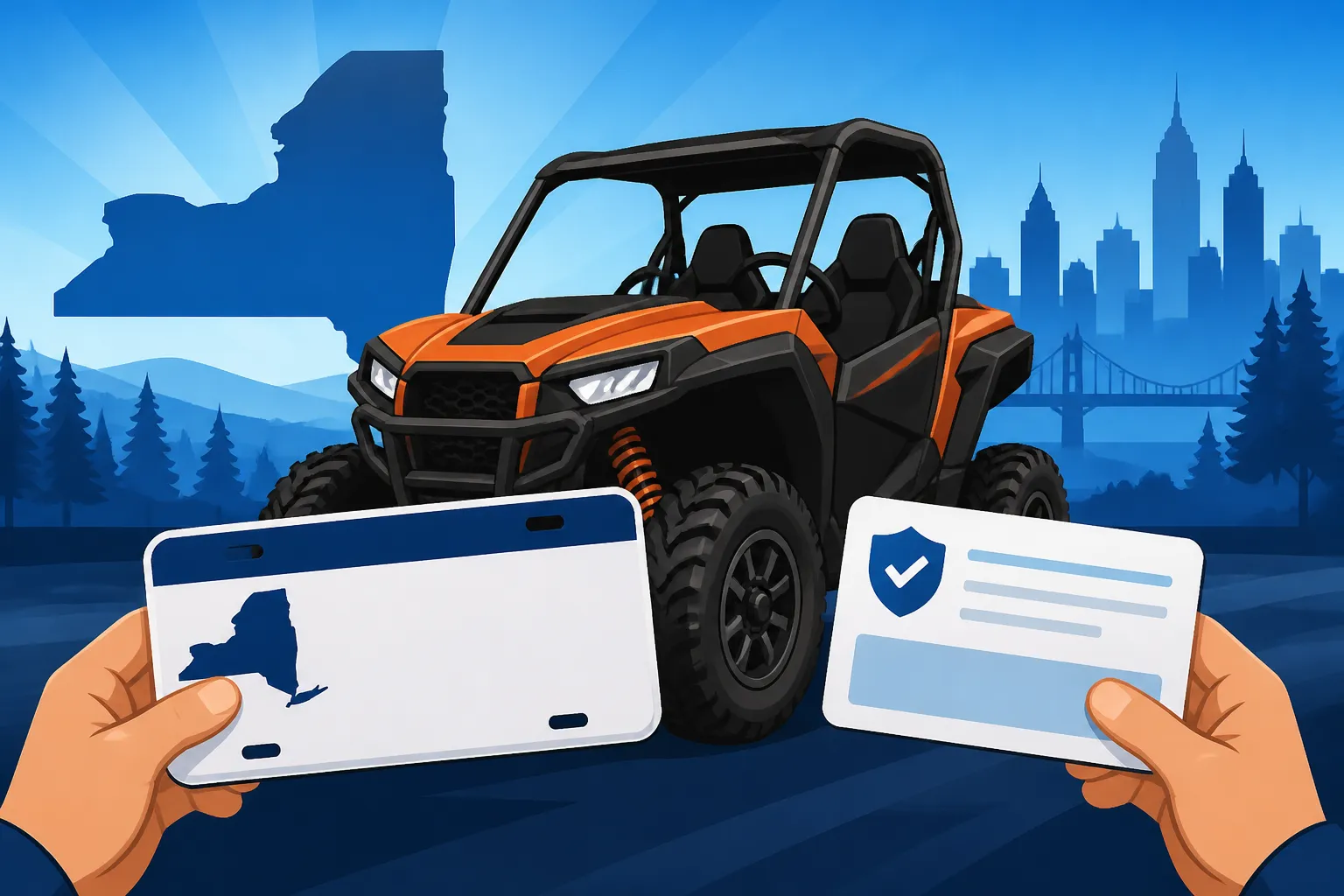
Showing a Plate and an Insurance Card
There are few things that can instantly deflate a perfect day of trail riding like the flashing lights of an official vehicle in your rearview. That knot in your stomach isn't just about the stop itself; it's often the sudden panic of wondering if you have all your paperwork in order. This guide is here to walk you through exactly what New York law requires when it comes to presenting your ATV's plate and insurance card, ensuring you're prepared and can get back to enjoying the trails with confidence.
The Basics: Why You Need Your Plate and Insurance Card Handy
When you hit the trails in New York, you're not just out for a joyride; you're operating a registered vehicle that, in most cases, requires insurance. Think of your ATV like a smaller, more rugged version of your car in terms of legal requirements for identification and financial responsibility. Being stopped by a law enforcement officer, whether it's a State Trooper, a Sheriff's Deputy, or a local Conservation Officer, means they'll want to verify these two critical pieces of information. Having them readily available, and understanding what they signify, can make the difference between a quick chat and a much longer, more frustrating encounter. It’s all about proving you’re a responsible rider, respecting the rules that keep our trails open and safe.
The Plate: Your ATV's Identity Tag
Your New York ATV plate isn't just a decorative piece of metal; it's the physical proof that your machine is properly registered with the Department of Motor Vehicles. It tells any officer at a glance that your ATV has been accounted for and is authorized for use on designated trails and lands where registration is required. Think of it as your ATV's unique fingerprint in the eyes of the law. Without a plate, or with an expired or unreadable one, your ATV is essentially anonymous, and that's a red flag for law enforcement.
The plate needs to be securely mounted and clearly visible on the rear of your machine. New York law is pretty specific about this. You can't just tuck it under your seat or stash it in your backpack. It needs to be affixed to the rear, usually on a bracket or directly to a rear rack, where it can be easily seen. This allows an officer to quickly identify your machine if they need to, whether they're observing from a distance or approaching you directly. The validation decal for the current registration year must also be clearly displayed on the plate, showing that your registration is up-to-date and active. For more details on this, you might find [New York ATV Plates and Where They Mount] helpful. If your plate is missing, obscured by mud, or bent beyond recognition (and let's be honest, sometimes those Tug Hill trails can be brutal on hardware!), you could face fines for an unregistered or improperly displayed machine. [Can You Be Ticketed for an Unreadable ATV Plate?] is definitely something to consider if your plate has seen better days.
The Insurance Card: Your Proof of Financial Responsibility
Just like driving a car, operating an ATV on public lands, or even crossing a public road, in New York requires you to carry liability insurance. This isn't just a suggestion; it's a legal mandate. Your insurance card is the tangible evidence that you have met this requirement. It proves that should an accident occur that is deemed your fault, there are financial protections in place to cover potential damages or injuries to others. This crucial piece of paper (or digital equivalent) offers peace of mind to everyone, including landowners who allow trail access and other riders.
The card will typically show your policy number, the effective dates of your coverage, and the specific ATV it applies to. When an officer asks for proof of insurance, they're looking to confirm that you have an active policy that meets New York's minimum liability coverage requirements. Just knowing you have insurance isn't enough; you need to be able to show proof. The state's [New York's Mandatory ATV Insurance] rule is serious, and failing to provide valid proof of insurance at a roadside stop can lead to significant fines and penalties. It signals a major breach of responsibility and undermines the safety framework for all riders. Keep your card safe and dry, perhaps in a sealed plastic bag or a dedicated waterproof compartment.
What an Officer Checks Roadside in New York
Being stopped by a law enforcement officer, even for something routine, can be a bit unnerving. But knowing what to expect and how to properly present your documents can make the interaction go smoothly. Officers on ATV patrol are well-versed in the specific regulations that apply to these machines, and they're primarily looking for compliance with registration, insurance, and safety laws. They're not out to ruin your day, but they are ensuring everyone is riding legally and safely.
The Stop: What to Expect When Pulled Over
The scenario usually begins with an officer signaling you to stop. This might be with lights, a siren, or a hand gesture. Your first step is to calmly and safely pull your ATV over to the side of the trail or road, in a manner that doesn't obstruct others. Turn off your engine, if safe to do so, and keep your hands visible. An officer will then approach your machine, often starting with a polite greeting and an explanation of why they stopped you. They might ask if you know why you were pulled over, or they might directly state the reason, such as a check for proper registration or observed riding behavior.
They will then typically ask for your "license, registration, and insurance." Now, here's where ATVs differ slightly from cars. While you'll need your personal driver's license (if you're on a public road or certain trails, or just for identification), ATVs in New York don't have titles in the same way cars do, so you won't be presenting a vehicle title. This often causes confusion for new riders. If an officer asks for a title, you can politely explain that [Why New York Issues No ATV Title] for ATVs, and offer your registration instead. Your job is to be cooperative, answer questions truthfully, and provide the requested documents without hesitation.
Presenting Your Documentation
When asked for your registration and insurance, you'll need to produce the physical documents. This is where preparedness pays off. Having your physical insurance card and your ATV registration clearly labeled and stored in a waterproof pouch or a secure pocket is invaluable. Fumbling through gear bags or trying to remember policy numbers isn't ideal when an officer is waiting. SuperATV, for example, offers various storage bags and compartments that can be securely mounted to your ATV, providing a perfect spot for these essential documents.
The officer will examine your ATV's registration to ensure it's current and matches the machine's Vehicle Identification Number (VIN). They'll also check your plate to confirm it's legible and has the current validation decal. For your insurance card, they'll verify the policy is active and meets the state's minimum coverage. If you're carrying a digital copy on your phone, many officers will accept it, but it's always safer to have a physical copy, especially in areas with poor cell service or if your device battery dies. Remember, the goal is to quickly and clearly demonstrate your compliance. Your ability to present these documents efficiently shows respect for the law and the officer's time. Don't forget, that little sticker on your plate is super important; ensuring you have the current year's decal can prevent a headache, so knowing [Where to Stick a New York ATV Validation Decal] is practical.
Common Scenarios and How to Handle Them
Even the most prepared rider can run into unexpected situations. Maybe your plate got crunched on a tight section of trail, or you realized your insurance card went missing somewhere between home and the trailhead. Knowing how to react in these moments, and what steps to take beforehand, can save you a lot of hassle and potential fines.
The Lost or Damaged Plate/Card
It happens to the best of us. That gnarly rock garden seemed like a great idea until you looked back and saw your ATV plate hanging by a thread, or worse, gone entirely. Or perhaps your wallet fell out of your pocket and took your insurance card with it. If your plate is bent, obscured, or otherwise unreadable, it's considered a violation, just like not having one. An officer needs to be able to read the numbers and letters clearly. If you find yourself with a damaged or lost plate, don't wait for an officer to point it out. You'll need to contact the DMV to arrange for a replacement. Articles like [Replacing a Lost New York ATV Plate] or [Replacing an ATV Plate Bent on the Tug Hill Rocks] can provide helpful guidance on the process. Many riders opt for aftermarket plate relocation brackets or protective covers from brands like SuperATV to help safeguard their plates from trail damage. These can be great investments, especially if you frequently ride aggressive terrain.
Similarly, if you lose your insurance card, contact your insurance provider immediately. Most companies can email or fax a temporary card, or allow you to print one from their website. While a digital copy is often accepted, having a fresh physical card is always the best practice. It’s a good idea to make a few photocopies and keep them in different places – one on the machine, one in your truck, and one at home. That way, if the original goes missing, you have backup.
Riding an Out-of-State Machine
New York is a popular destination for ATV enthusiasts from neighboring states like Pennsylvania, Vermont, and even Canadian provinces like Ontario. If you're visiting New York with your ATV, you might assume your home state's registration and insurance are all you need. However, New York has specific rules for out-of-state riders. While your home state's registration is generally recognized for limited periods, New York often requires you to register your machine here if you plan to ride its designated trails. This is especially true for prolonged visits or if your home state doesn't have an equivalent ATV registration program.
When stopped, an out-of-state rider will still need to present their home state's registration and proof of insurance. It's crucial to understand [New York Reciprocity for Out-of-State Registrations] and the nuances involved. In many cases, even if your machine is registered elsewhere, you might still need a New York trail permit to access certain county-run trail systems like those in Lewis County. Always carry your home state's documentation, and if you've obtained a New York registration or permit, carry those too. Being prepared for this dual requirement is key to avoiding issues when riding in the Empire State. [Registering a Visitor's Machine in New York] can help clarify what's needed for those coming from outside the state.
Riding on Private Land or Exempt Machines
It's important to understand that not all ATV riding in New York requires registration or insurance. If you are riding your ATV exclusively on your own private property, for instance, you are generally not required to register the machine or carry liability insurance. This is a common misconception, and it's where many riders get confused. The moment your wheels touch public land, cross a public road, or enter a designated trail system, those rules kick in. [Riding Your Own Property Under New York Law] covers this in more detail.
There are also certain exemptions, such as for ATVs used exclusively for agricultural purposes on specific farm properties, which might not require registration. However, even with an [The Agricultural Exemption in New York], if that farm quad needs to cross a public road to get to another field, or is used for a non-exempt purpose, the rules can change rapidly. The key takeaway is: if there's any chance your ATV will leave private property that you exclusively own or control, you should operate under the assumption that registration and insurance are required. Even if you're exempt, carrying proof of ownership (like a bill of sale) and voluntary insurance is always a smart move for identification in case of theft or an accident on private land. It shows you're a responsible owner, even when the law might not strictly demand it.
Staying Compliant and Prepared
Avoiding a citation or a lengthy roadside delay is largely about preparation and routine. Getting into good habits with your ATV's documentation can save you a world of trouble and keep your focus where it belongs: on the trail ahead. A little proactive effort goes a long way in ensuring your riding adventures remain hassle-free.
Regular Checks and Maintenance of Documents
Just as you'd check your tire pressure and oil levels before a ride, make it a habit to regularly inspect your ATV's documentation. Before each riding season, or even just before a big trip, pull out your registration and insurance card. Verify that the registration decal on your plate is current and that your insurance policy has not expired. [When a New York ATV Registration Expires] will tell you that they typically renew in August, so mark your calendar! If your registration is nearing its expiration, don't procrastinate; renew it promptly. This small routine check can prevent you from inadvertently riding on an expired registration, which can lead to fines.
It’s also wise to keep copies of these documents. A waterproof bag containing physical photocopies stored separately from the originals on your ATV can be a lifesaver if the originals are lost or damaged. You could also keep digital copies on your phone or in a cloud service, but remember the caveats about cell service and battery life mentioned earlier. Having redundant copies means you’re prepared for almost anything the trail throws your way.
Enhancing Visibility and Protection for Your Plate
Your ATV plate takes a beating. It’s exposed to mud, rocks, branches, and often sits right in the line of fire for roost from your rear tire. Ensuring its visibility and protection isn’t just about aesthetics; it’s about compliance. Make sure your plate is mounted securely and doesn't flap around, which could bend or damage it or make it unreadable. Standard bolt-on methods are usually sufficient, but for riders who tackle rougher terrain, investing in a heavy-duty plate holder or relocation bracket can make a big difference. Brands like SuperATV offer robust solutions that can tuck your plate up higher or further in, providing better protection from trail hazards while still keeping it visible.
Beyond mounting, simple maintenance helps. A muddy plate is an unreadable plate. After a particularly messy ride, take a moment to clean your plate with a quick rinse. This ensures that if you are stopped, or if an officer is simply observing from a distance, your plate is clearly identifiable. A little effort here goes a long way in preventing an unnecessary stop or fine for an obscured plate.
| Document Type | New York Resident Riding Public Land | Out-of-State Visitor Riding Public Land | Riding Exclusively on Own Private Land |
|---|---|---|---|
| ATV Registration | Required (NY Plate & Decal) | Required (NY Plate & Decal, OR home state if reciprocity applies) | Not required |
| Insurance Card | Required (NY Minimums) | Required (NY Minimums) | Not required (but highly recommended) |
| Driver's License | Required (for rider, if applicable) | Required (for rider) | Not required (for operating machine) |
| Trail Permit | Often Required (e.g., Lewis County) | Often Required (e.g., Lewis County) | Not required |
Disclaimer
This article is for general informational purposes only and does not constitute professional advice. Laws, prices and regulations vary by location and change over time. Consult a qualified professional for guidance on your specific situation.