New York ATV Tread Depth Requirement
Navigating the myriad rules and regulations for ATV riding in New York can feel like tackling a particularly gnarly section of trail – confusing, sometimes frustrating, and full of potential pitfalls if you don't know the terrain. One area that often gets overlooked, but is absolutely critical for both your safety and staying on the right side of the law, is your ATV's tire tread depth. This guide is here to cut through the confusion and explain exactly what New York State expects from your tires, why it matters, and how you can ensure your machine is always trail-ready.
Why Tread Depth Matters for New York ATV Riders
When you're out exploring the vast trails of Lewis County, maneuvering through the challenging terrain of Tug Hill, or just enjoying a ride on approved routes, your tires are your primary point of contact with the ground. Their condition dictates everything from how well you steer to how quickly you can stop, especially when conditions get tricky.
Safety on New York's Diverse Terrain
Think about the diverse landscapes we have here in New York. One minute you could be on a dry, hard-packed dirt road, and the next you're plunging into a muddy bog in Oswego County, or climbing a rocky incline in the Southern Tier. Proper tread depth isn't just about looking good; it's fundamental to maintaining control in all these varied conditions. Worn tires are like trying to walk on ice with smooth-soled shoes – you'll slip, slide, and struggle for traction.
When your tire treads are sufficiently deep, they're designed to grip the terrain, channeling away mud and water, and biting into loose earth for maximum traction. This is crucial for acceleration, but even more so for braking and steering. Imagine needing to stop suddenly to avoid a fallen branch or another rider, only to find your tires hydroplaning over a puddle or skidding on a loose gravel patch because the tread is too shallow to find purchase. That's a recipe for an accident. In regions known for their challenging trails, like the Tug Hill Plateau after a heavy rain, the difference between a safe, controlled ride and a precarious slide can often come down to the condition of your tires. This also ties into the broader [New York Equipment Rules for ATVs] which are designed to keep everyone safe.
The Legal Mandate and Its Purpose
Beyond personal safety, New York State has a specific legal requirement for ATV tire tread depth. This isn't just an arbitrary rule; it's a measure put in place to ensure that all ATVs operating on designated trails, public lands, or permitted roads meet a minimum standard of operational safety. The state wants to prevent machines with dangerously worn tires from posing a risk to the rider, other trail users, and the environment.
When an officer conducts a roadside check, perhaps at a popular trailhead in the Lewis County system, they're not just looking for your registration or insurance. They're also making sure your machine is in safe operating condition, and that includes checking your tires. Having tires that fall below the minimum tread depth isn't just a safety hazard; it can lead to fines and citations, putting a damper on your riding day and your wallet. It's a clear signal that the state takes the physical condition of your ATV seriously, aiming to foster a safer riding environment for everyone who enjoys New York's beautiful outdoor spaces.
Unpacking New York's Specific Tread Depth Requirement
So, what exactly is the magic number when it comes to ATV tire tread depth in New York? The state's regulations are quite clear on this, aiming to eliminate ambiguity and provide a concrete standard for riders to follow.
The "Two Thirty-Seconds of an Inch" Rule
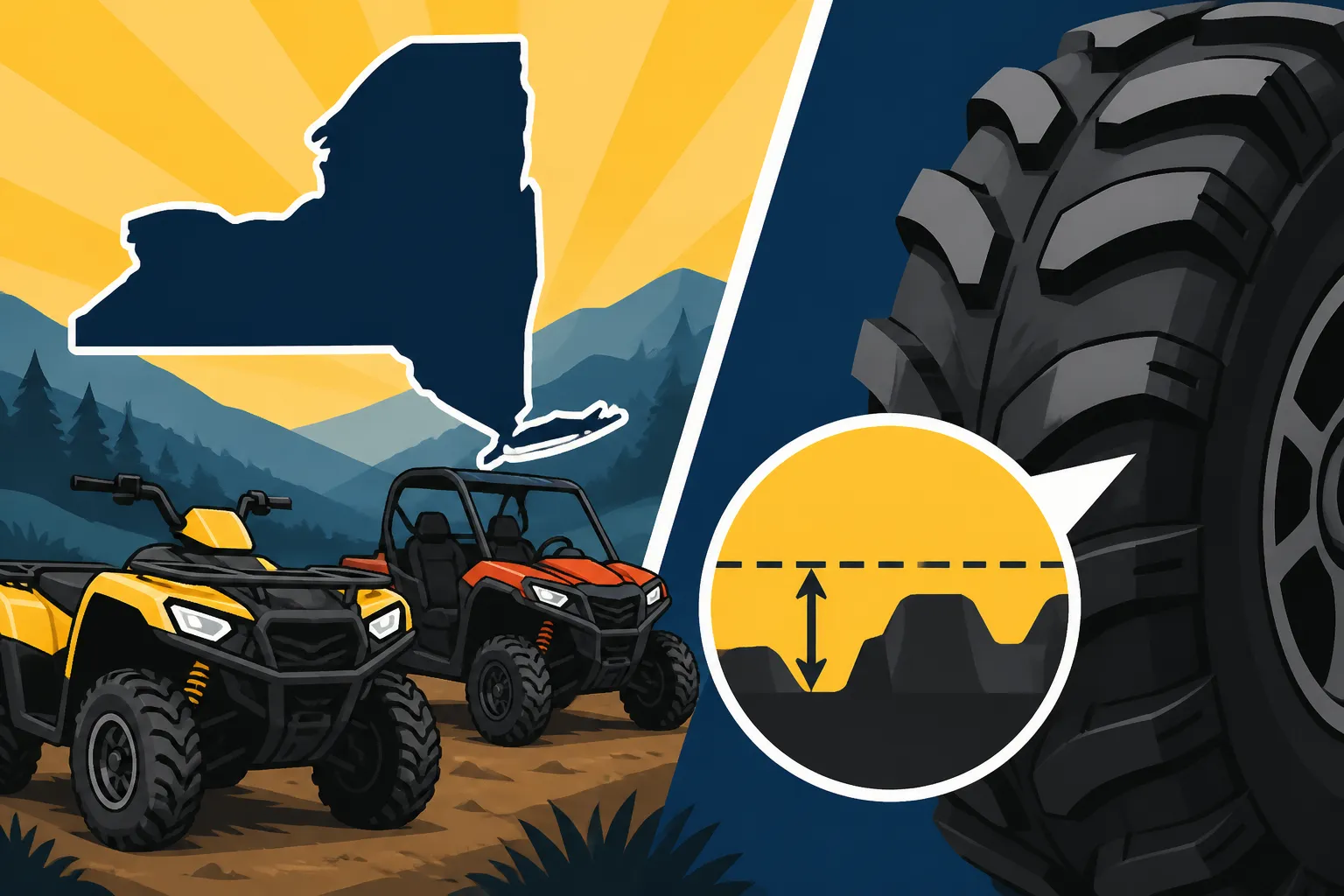
New York law explicitly states that your ATV tires must have at least two thirty-seconds of an inch (2/32") of tread depth across all major grooves. This measurement refers to the main grooves of the tire, not just the small sipes or minor details. If any major groove on your tire is shallower than 2/32", your tires are considered illegally worn and your machine is not compliant for riding on public land or designated trails.
Understanding 2/32" can be a bit abstract, so let's break it down practically. While a dedicated tire tread depth gauge is the most accurate tool (and highly recommended!), you can get a quick, albeit less precise, estimation using a penny. Insert a penny into a tire groove with Lincoln's head facing down. If you can see the very top of Lincoln's head, your tread is likely less than 2/32" and it's time to consider replacement. However, for a precise measurement that stands up to scrutiny, especially if you're concerned about compliance, a proper gauge is indispensable. You should be [Checking Tread Before a Ride] as part of your routine maintenance.
It's important to remember that 2/32" is the minimum legal requirement. Many experienced riders will tell you that for optimal performance, especially in mud, snow, or challenging off-road conditions, you'll want significantly more tread than that. A brand new ATV tire often has tread depths ranging from 1/2 inch (16/32") to 1 inch or more, depending on its design and intended use. Riding with just the bare minimum tread depth can still compromise performance, even if it's technically legal. You might find yourself struggling for grip in conditions where a tire with deeper tread would excel.
When and Where This Rule Applies
This specific tread depth requirement isn't just for show; it's enforced wherever New York State's ATV laws apply. This means if you're riding on any officially designated ATV trail system, such as those found in Lewis, Oswego, or St. Lawrence counties, or on any public land or roads where ATVs are legally permitted, your tires must meet this 2/32" minimum.
Law enforcement officers – including New York State Troopers, county sheriff deputies, and Department of Environmental Conservation (DEC) officers – have the authority to pull you over and inspect your machine. During such an inspection, they'll often include a check of your tire tread depth as part of their assessment of your vehicle's roadworthiness. This is part of [What a New York Officer Checks Roadside]. If your tires are found to be below the legal limit, you could face fines for an ATV violation. These regulations are designed to maintain safety standards across all public riding areas, ensuring that all riders are operating machines that are reasonably safe.
While the rule primarily applies to public riding, it's always a good idea to maintain proper tread depth even if you only ride on private land you own. Safety knows no boundaries, and the risks of riding with worn tires don't diminish just because you're on private property. However, the legal enforcement of the 2/32" rule would typically apply when you venture onto public access trails or roads. Be aware that riding on someone else's private land without permission, regardless of your tire condition, is a separate issue with its own legal consequences, as detailed in [New York Rules for Riding Private Land].
Here's a quick look at how tread depth typically measures up:
| Tread Depth (Inches) | Condition | New York Legality | Performance Impact | Action Needed |
|---|---|---|---|---|
| 1/2" or more | New/Excellent | Legal | Optimal traction, braking, handling | Enjoy the ride! |
| 1/4" – 1/2" | Good | Legal | Very good traction, slight reduction in extreme conditions | Monitor wear, plan for future replacement |
| 3/32" – 1/4" | Fair | Legal | Acceptable traction, noticeable reduction in very wet/muddy conditions | Consider replacement soon, especially before heavy use |
| 2/32" | Minimum | Legal (barely) | Limited traction, compromised braking, prone to slipping | Replace immediately for safety and performance |
| Less than 2/32" | Worn/Poor | Illegal | Dangerous, very poor traction, high risk of accidents | Must replace before riding on public land |
Practical Tips for Maintaining Your ATV's Tread Depth
Just like changing your oil or checking your brakes, keeping an eye on your ATV's tires is a crucial part of responsible ownership. Regular maintenance and smart choices can ensure you stay safe and compliant on New York's trails.
Regular Inspection and Measurement
Making tread depth a routine part of your pre-ride checklist is one of the easiest and most effective ways to stay ahead of potential issues. Before every major ride, especially if you're heading out to challenging areas like the rock gardens or deep mud of Tug Hill, take a few minutes to walk around your ATV and visually inspect your tires. Look for:
- Uneven Wear: Are some areas of the tire more worn than others? This could indicate improper tire pressure, alignment issues, or suspension problems that need addressing.
- Punctures or Damage: Small rocks, thorns, or sharp sticks can cause punctures, cuts, or tears in the sidewall or tread. Even if a tire holds air, significant damage can compromise its integrity.
- Dry Rot/Cracking: Over time, especially if your ATV sits exposed to the sun or harsh weather, the rubber can dry out and develop small cracks. This is a sign the rubber is degrading and losing its elasticity, making it more prone to sudden failure.
- Tread Depth: Use a dedicated tread depth gauge to accurately measure in several spots around each tire, particularly in the major grooves. [How Worn Is Too Worn for an ATV Tire?] is a question you should always be asking yourself. Be honest about your findings; pushing a tire past its safe limit is never worth the risk.
Your riding style and the terrain you frequent have a huge impact on how quickly your tires wear. Aggressive riding, hard braking, sharp turns, and frequent trips over rocky or abrasive surfaces will degrade your tires much faster than leisurely rides on soft forest trails. Being mindful of these factors can help you anticipate when replacements might be needed.
Choosing the Right Replacement Tires
When your tires consistently measure close to or below the 2/32" minimum, it's definitely time to invest in a new set. Don't wait until they're bald; replace them proactively for optimal safety and performance. When choosing new tires for New York riding, consider a few factors:
- Terrain Type: Are you mostly riding in deep mud (common in spring in many New York areas), over rocky trails, or on mixed-use paths? There are specific tread patterns designed for each. Mud tires have aggressive, widely spaced lugs to dig and clear mud, while all-terrain tires offer a balance for various conditions.
- Ply Rating: This indicates the tire's strength and puncture resistance. Higher ply ratings (e.g., 6-ply or 8-ply) are generally more durable and less prone to punctures, which can be a real benefit on trails with sharp debris.
- Size: Always stick to the manufacturer's recommended tire size for your ATV model unless you're intentionally modifying your machine for specific performance gains, and you understand the implications on clearance and handling.
- Quality Brands: Investing in quality tires from reputable brands is always a good idea. Companies like SuperATV offer a wide range of ATV tires designed for various terrains and performance needs, from aggressive mud tires to durable all-terrain options. Look for tires known for their durability and grip on different surfaces. You might also want to explore options from other well-known brands that cater to the demanding conditions found across New York's riding seasons.
- Budget vs. Performance: While it's tempting to go for the cheapest option, remember that your tires are a critical safety component. Balancing your budget with performance and durability is key. Sometimes, spending a little more upfront on a quality set of tires can save you money and headaches in the long run by preventing punctures and premature wear, and improving your overall riding experience. [Replacing Tires on a New York Machine] is an investment in your safety.
The Cost of Neglecting Tire Maintenance
Ignoring your ATV's tire tread depth can hit you in multiple ways – and none of them are good.
First and foremost, there's the safety risk. Riding on worn tires dramatically increases your chances of losing control, experiencing a skid, or having a blow-out, all of which can lead to serious injury or damage to your machine. Imagine riding through a technical section of trail, perhaps on the Lewis County ATV Trail System, and a critical tire fails. That's a scenario no rider wants to face.
Then there are the legal consequences. As mentioned, if an officer determines your tires don't meet the 2/32" minimum, you can receive a citation. [New York Fines for an ATV Violation] can quickly add up, turning an enjoyable day on the trails into an expensive lesson. Beyond the initial fine, you might also be required to cease riding until the issue is rectified, which means hauling your ATV off the trail and dealing with repairs.
Finally, there are the performance and financial costs beyond legal penalties. Worn tires provide less grip, meaning your ATV's engine has to work harder, potentially leading to increased fuel consumption. Poor traction can also put undue stress on other drivetrain components as they struggle to compensate. And if a worn tire leads to an accident, the repair costs for your ATV could far exceed the price of a new set of tires. Considering the overall [What an ATV Costs to Own in New York], factoring in regular tire replacement is a small but critical part of budgeting for your riding season. Reputable shops offering [New York ATV Repair Shop Rates] will always advise on tire condition during routine service.
Disclaimer
This article is for general informational purposes only and does not constitute professional advice. Laws, prices and regulations vary by location and change over time. Consult a qualified professional for guidance on your specific situation.