Registering an Out-of-State Machine in New York
Bringing an ATV or UTV into New York State from another state can feel like navigating a maze, especially when you're used to different rules back home. Many folks arrive in New York, ready to hit the trails, only to find that the Empire State has its own unique way of handling ATV registrations, often leaving riders scratching their heads. This comprehensive guide is here to untangle that confusion, walking you through everything you need to know to get your out-of-state machine properly registered in New York.
Understanding New York's Unique ATV Registration System
New York's approach to ATV registration can be quite a shock if you're coming from a state with a different system. It's not just about filling out a form; it's about understanding a philosophy that prioritizes certain types of machines for trail use and manages ownership without traditional titles. This foundational understanding is key to a smooth registration process.
Why New York's Approach Differs
One of the biggest hurdles for out-of-state owners is New York's stance on ATV titles. Unlike many states where an ATV comes with a certificate of title, just like a car, New York generally does not issue titles for ATVs. This can be incredibly confusing if your machine originally came with a title from another state. You might be wondering what to do with that piece of paper, or how you prove ownership without it. Essentially, New York views ATVs more like snowmobiles in this regard, relying on registration and a robust bill of sale as proof of ownership. This non-titling policy means the DMV process focuses heavily on verifying the purchase and the machine's physical characteristics, rather than a title transfer.
Another peculiar aspect is the uniform expiration date for all ATV registrations: August 31st. Imagine buying a machine in February and having its registration expire just six months later, instead of a full year from your purchase date. This is the reality in New York. It's not a prorated system, which means whether you register in September or May, your registration will still be due for renewal by August 31st of the following year. This can feel a bit unfair, but it's crucial to be aware of it so you're not caught off guard when your renewal notice arrives sooner than you might expect. For more on this, you can look into [New York's August 31 Expiration]. These differences aren't meant to complicate things, but rather stem from specific legislative decisions and the state's long-standing approach to recreational vehicles.
Key Differences for Out-of-State Owners
The absence of an ATV title in New York creates a unique challenge for those bringing a machine from a titling state. When you present your out-of-state title to the New York DMV, they won't simply transfer it. Instead, they'll typically take it, mark it as "canceled" or "surrendered," and rely on a strong bill of sale and your previous registration as the primary proofs of ownership. This can be unsettling for owners who are used to holding onto their title as the ultimate proof. The crucial takeaway here is that you'll need to prepare alternative documentation to establish your ownership history, which we'll dive into shortly. Understanding [Why New York Issues No ATV Title] helps put this into perspective.
Beyond ownership documentation, New York also imposes specific physical requirements on ATVs that can be a major stumbling block for out-of-state machines, particularly many modern side-by-sides. The state has strict limits on width and weight for a machine to qualify as an "ATV" for registration purposes. If your side-by-side, for example, is wider than 70 inches or heavier than 1,000 pounds, it simply will not meet New York's definition of an ATV and cannot be registered under the ATV program. This is a critical point that many out-of-state owners discover too late. It means you could bring a perfectly legal machine from Pennsylvania or Vermont, only to find it's deemed too large for New York's trails and registration. Always check these dimensions before you even start the paperwork process. You'll want to be familiar with [New York ATV Width Limit for Registration] well in advance.
Essential Documents for Out-of-State Registration
Navigating the New York DMV for an out-of-state ATV registration means having all your ducks in a row with paperwork. Since New York has its own distinct way of proving ownership, you'll need to be extra diligent about gathering and preparing the right documents to ensure a smooth process.
Proving Ownership Without a New York Title
This is where things can get a little tricky, especially if your ATV came from a state that does issue titles. If you have an out-of-state title, the New York DMV will usually take it from you, marking it as surrendered. From that point on, New York's system will rely on other documents to establish your ownership. The most critical piece of this puzzle, particularly for older machines or those from non-titling states, is a comprehensive bill of sale. This document needs to clearly identify the buyer and seller, the ATV's make, model, year, and crucially, its Vehicle Identification Number (VIN). Without a clear chain of ownership documented through bills of sale, you could run into significant delays or even outright rejection at the DMV.
For those situations where you might have an older machine, perhaps one that was purchased years ago or inherited, and the original paperwork is scarce, you’ll need to work diligently to reconstruct the ownership history. This might involve getting a notarized affidavit from the previous owner, if possible, or even seeking legal counsel to help establish a claim of ownership. It’s not an impossible task, but it requires patience and thoroughness. The DMV isn't trying to make it hard; they simply need clear evidence that you are the rightful owner of the machine you're attempting to register. Think of it as building a strong legal case for your ATV's provenance. You'll find more helpful tips on this topic in [Proving Ownership Without a Title in New York].
The Importance of a Bill of Sale (Even for Gifts)
A robust bill of sale is not just recommended; it's virtually essential when registering an out-of-state ATV in New York, especially given the state's non-titling policy. This document serves as your official proof of purchase and, in many cases, the most direct evidence of your ownership. It should be meticulously detailed, including the full legal names and addresses of both the buyer and seller, the date of sale, the purchase price, and a complete description of the ATV, including its make, model, year, and the all-important VIN. Even if the ATV was a gift, or perhaps inherited from a family member, you'll still need some form of ownership transfer document. A gift letter or a bill of sale with a nominal price will suffice, but it must clearly establish the transfer of possession and intent.
For those who want to ensure they're covering all their bases, using a reputable template can be incredibly helpful. Services like LawDepot offer customizable bill of sale templates that can guide you through including all the necessary information, reducing the risk of missing a crucial detail that could hold up your registration. A well-prepared bill of sale from a trusted source like LawDepot can prevent headaches at the DMV counter, where even minor omissions can lead to a rejected application. Remember, the DMV agents need to be able to follow the trail of ownership without a title, and a clear, complete bill of sale is your best tool for that. This document is often the linchpin in the entire registration process, so don't underestimate its significance. To get a handle on what New York specifically requires for this document, check out [New York ATV Bill of Sale Requirements].
VIN Verification and Other Forms
Beyond proof of ownership, the New York DMV requires a physical verification of your ATV's Vehicle Identification Number (VIN). This isn't just a simple visual check; they often require what's called a "pencil tracing" of the VIN. This involves carefully placing a piece of paper over the VIN plate or stamping and rubbing a pencil over it to create a physical impression of the numbers. It's a method designed to ensure the VIN on your paperwork matches the physical machine, and to deter fraudulent registrations. This requirement can catch people off guard, so make sure you have a pencil and paper ready when you head to the DMV, or complete it beforehand. Don't forget that dirty or rusted VIN plates can make this challenging, so ensure your VIN is clean and legible before attempting the tracing. This unique requirement is explained further in [Why New York Wants a Pencil Tracing of the VIN].
In terms of actual forms, you'll primarily be dealing with the New York State Department of Motor Vehicles (DMV) Form MV-51B, which is titled "Vehicle Registration/Title Application (Non-titled Vehicles)." This is the form specifically designed for vehicles like ATVs that New York does not title. You'll need to fill this out completely, providing all the requested information about your ATV and yourself. It's crucial to be accurate and thorough, as any discrepancies can lead to delays. You'll also need proof of New York State insurance, which must be in place before you can register the machine. While the MV-51B covers the registration application, you might also need supplemental forms depending on your specific circumstances, such as if you're registering an inherited machine or one that previously had a lien. Always double-check the DMV website or call ahead to confirm the exact forms required for your unique situation, especially since you're bringing an out-of-state machine. Understanding [New York's Form MV-51B Explained] will be a big help here.
Meeting New York's Machine Requirements
This is arguably the most critical section for anyone bringing an out-of-state machine into New York. The state has very specific definitions for what constitutes an "ATV" for registration purposes, and if your machine doesn't fit these definitions, it simply cannot be registered under the ATV program, regardless of how meticulously you've completed your paperwork.
The 70-Inch Width Limit: A Common Hurdle
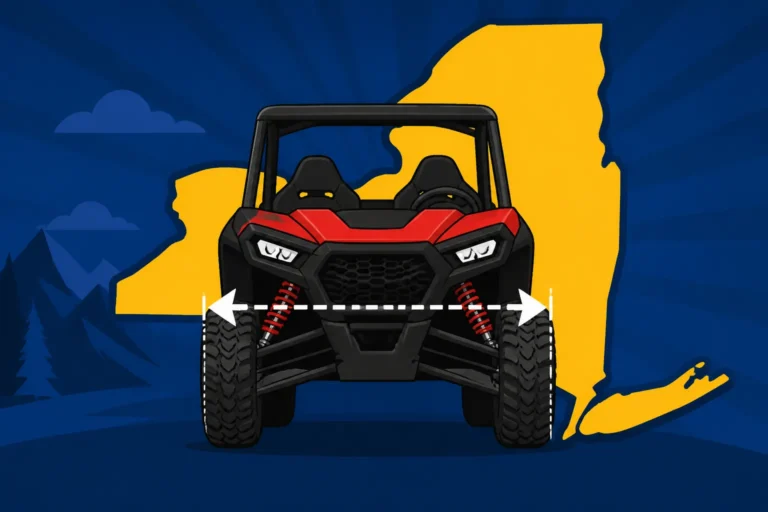
New York law defines an ATV, in part, as a machine that is no more than 70 inches in width. This particular regulation is a major stumbling block for many out-of-state owners, especially those with modern side-by-sides (SxS or UTVs). In recent years, the trend in the powersports industry has been towards wider, more stable machines, and many popular models from manufacturers like Polaris, Can-Am, and Yamaha easily exceed this 70-inch threshold. For example, a Polaris Ranger XP 1000 or a Can-Am Defender MAX XT are fantastic utility vehicles, but their factory width almost always puts them squarely over New York's limit. This means if you own one of these machines and plan to bring it to New York for trail riding, you will likely be unable to register it as an ATV.
It's a frustrating reality for many. You might have legally ridden your wide side-by-side on trails in Vermont or Pennsylvania, only to discover New York's trails are off-limits because your machine is too broad. The state's reasoning often circles back to trail infrastructure and safety, with many designated ATV trails not being designed for the wider footprint of larger UTVs. This limit is a non-negotiable aspect of New York's ATV definition. There's no variance, no special permit, and no workaround if your machine physically measures over 70 inches from the widest point of tire to tire. Before you even pack your bags, it's absolutely crucial to measure your machine. If it's wider than 70 inches, you'll need to seriously reconsider your plans for registering it in New York as an ATV for trail use. For a deeper dive into this, see [New York's 70-Inch Width Limit] and [Why Most Side-by-Sides Cannot Be Registered in New York].
The 1,000-Pound Weight Limit
Complementing the width restriction, New York also specifies a weight limit for ATVs, capping them at 1,000 pounds. Like the width rule, this is another significant hurdle for many larger ATVs and especially for most side-by-sides. While many traditional single-rider ATVs (quads) will fall within this weight limit, some of the beefier utility quads or two-up models might push the boundaries. The problem becomes much more pronounced with side-by-sides. Even smaller, two-seater UTVs can easily weigh over 1,000 pounds dry, and when you add fluids, accessories, and cargo, they quickly soar past this threshold.
Determining the exact weight of your out-of-state ATV can sometimes be a challenge. Manufacturers usually provide a "dry weight" or "curb weight" specification, which can give you a good idea. However, if you've added accessories like a winch, plow mount, cargo racks, or heavy-duty tires, these can all contribute significantly to the total weight. If you're close to the limit, it might be worth getting your machine weighed at a commercial scale, such as those found at truck stops or recycling centers, to be absolutely certain. The DMV isn't likely to weigh your machine on site, but they will rely on manufacturer specifications and your declaration. If your machine is clearly over this limit, it simply won't qualify for ATV registration in New York, leaving you with limited options for legal off-road riding in the state. Understanding [New York's 1,000-Pound Weight Limit] is paramount.
Understanding Exemptions and How They Apply
While New York has strict rules for what constitutes a registrable ATV, there are certain exemptions to the registration requirement itself. However, these exemptions are very specific and rarely apply to someone looking to register an out-of-state machine for recreational trail riding. For instance, ATVs used exclusively for agricultural purposes on farmland, or those used solely for snow removal on private property, may be exempt from registration. The keyword here is "exclusively." If you use your machine for farming during the week but want to hit the Lewis County trails on the weekend, that agricultural exemption immediately becomes void, and you'll need to register.
It's a common misconception that if you only ride on your own private land, you don't need to register your ATV. While this is true in many states, New York law requires registration for an ATV to be operated anywhere other than the owner's private property (or property where permission has been granted, but still within the scope of a registered machine if riding beyond that specific parcel). For out-of-state visitors, the likelihood of an exemption applying is extremely low, as their intent is almost always to ride on designated public or club trails, which unequivocally requires New York registration. Therefore, don't rely on these narrow exemptions if your goal is to enjoy the extensive trail systems New York has to offer. Make sure to review [Machines New York Exempts From Registration] to fully understand the limited scope of these provisions.
The Registration Process Step-by-Step
Once you've confirmed your out-of-state machine meets New York's physical requirements and you've gathered all your ownership documents, it's time to tackle the actual registration process. While it might seem daunting, breaking it down into manageable steps can make it much smoother.
Gathering All Your Paperwork
Before you even think about stepping foot into a New York DMV office, you need to ensure you have every single piece of required documentation firmly in hand. This isn't the time to rely on vague memories or hope for the best; a missing document will inevitably lead to a wasted trip and frustration. Here's a crucial checklist:
- Proof of Ownership: This is paramount. If your state issued a title, bring it. Be prepared for the DMV to keep it. More importantly, bring your original bill of sale – the clearer and more detailed, the better. If you have a chain of previous bills of sale, bring those too to demonstrate continuous ownership. Remember, a comprehensive document, perhaps drafted using a service like LawDepot, can make all the difference here, especially if your initial purchase was in a state with less stringent documentation requirements.
- Proof of Identity: Your valid driver's license or other government-issued photo ID.
- Proof of New York Insurance: You must have an active insurance policy for your ATV that meets New York's minimum liability requirements. This cannot be an out-of-state policy that isn't authorized to operate in New York, and it must be in effect before registration.
- Form MV-51B: The "Vehicle Registration/Title Application (Non-titled Vehicles)" form, fully completed and signed.
- VIN Tracing: Your pencil tracing of the ATV's VIN.
- Sales Tax Form (if applicable): If you purchased the ATV privately and haven't paid New York sales tax yet, you might need to fill out Form DTF-802, "Statement of Transaction – Sale or Gift of Motor Vehicle, Trailer, All-Terrain Vehicle (ATV), Vessel (Boat), or Snowmobile."
Organizing these documents neatly in a folder will not only make you look prepared but will also prevent you from scrambling at the counter. Double-check everything, including dates, names, and VINs, for accuracy. A little extra time spent on preparation now can save you hours of headaches later.
Navigating the DMV Visit
With your pristine folder of documents in hand, the next step is to visit a New York State Department of Motor Vehicles office. While you can usually visit any DMV office in the state, it's often wise to choose one that is less busy or one in a county where you intend to frequently ride, as local offices may sometimes have more familiarity with ATV registrations. It's always a good idea to check the specific office's hours and requirements online before you go, as some might require appointments for certain transactions. For details on locations, refer to [Where to Register an ATV in New York].
When you get to the counter, be prepared for questions. The DMV agent will meticulously review your paperwork. They will check your bill of sale for clarity and completeness, verify your VIN tracing, and ensure your insurance meets New York's mandate. This is where a vague or incomplete bill of sale can cause significant issues. If there are any ambiguities in your ownership history, they will likely ask for further clarification or additional documents. Patience is key. DMV processes can be time-consuming, and being polite and prepared will greatly aid your experience. It's not uncommon for the process to take a bit longer for out-of-state machines due to the added steps of surrendering an out-of-state title or scrutinizing non-traditional ownership proofs. Just remember, they're simply following established protocols to ensure proper registration.
What Happens After Registration
If all your paperwork is in order and your machine meets the requirements, congratulations! You'll leave the DMV with a temporary registration document, your new New York ATV registration sticker (validation decal), and crucially, your New York ATV license plate. This plate is typically small and designed to be mounted on the rear of your machine. You'll need to affix it securely and ensure it's visible, as riding without a plate or with an obscured plate can lead to fines. Details on this can be found in [New York ATV Plates and Where They Mount]. The validation decal, which indicates the current registration year, needs to be placed on the plate in the designated area. This decal confirms your registration is current and valid. For tips on where it goes, see [Where to Stick a New York ATV Validation Decal].
It's critical to remember the August 31st expiration date. No matter if you registered your ATV in October or March, your registration will expire on August 31st of the next year. You will receive a renewal notice in the mail well in advance, usually giving you ample time to renew. However, if you register late in the season (say, in June or July), your first registration period will be quite short. This is just how New York's system works; registrations are not prorated to give you a full year from your registration date. This uniform expiration helps the state manage its registration cycle, but it means you need to be mindful of that first renewal date, which might come sooner than you'd expect.
Insurance Requirements for Your Newly Registered ATV
Even if your out-of-state ATV was insured back home, New York has its own specific mandate regarding ATV insurance. This isn't just a suggestion; it's a legal requirement that you must meet before you can even register your machine.
New York's Mandatory Insurance
New York State law requires that all ATVs operated off private land (with very specific exceptions) carry minimum liability insurance coverage. This means that if you're planning to ride on any public or designated private trails, or even cross a public road, your ATV must be insured. This isn't optional, and the DMV will not process your registration without proof of a New York-compliant policy. The purpose of this mandatory insurance is to protect others in the event of an accident caused by your ATV. It covers bodily injury and property damage that you might cause to another party while operating your machine.
The minimum coverage limits in New York are typically:
- $25,000 for bodily injury to one person in an accident.
- $50,000 for bodily injury to two or more persons in an accident.
- $10,000 for property damage in an accident.
These figures represent the bare minimum, and many riders choose to carry higher limits for greater protection. It’s important to note that these liability coverages do not protect your own machine or your own injuries; they are strictly for third-party damages. You’ll want to have your proof of insurance, such as an insurance card or declaration page, ready when you visit the DMV. Without it, your registration process will grind to a halt. For comprehensive details, review [New York's Mandatory ATV Insurance].
Finding an Insurer Authorized in New York
One of the biggest pitfalls for out-of-state owners is assuming their existing insurance policy, even if it covers ATVs, will satisfy New York's requirements. This is often not the case. Your out-of-state insurer might not be authorized to write ATV policies in New York, or their policy structure might not fully meet the state's specific mandates. You need an insurance provider that is licensed to operate in New York State and specifically offers ATV insurance policies that comply with local laws.
Many national insurance carriers have a presence in New York and offer ATV coverage. Companies like Progressive, GEICO, Allstate, and State Farm are typically good places to start, as they are generally familiar with New York's requirements. It's a good idea to shop around and get quotes from a few different providers to find the best coverage and rates. When speaking with an agent, be explicit that you need an ATV policy that meets New York State's minimum liability requirements for registration. They should be able to confirm compliance. Don't be shy about asking questions and ensuring you understand exactly what your policy covers and, just as importantly, what it doesn't. Having a policy from [Which Companies Can Legally Insure a New York ATV] will streamline your DMV visit. Remember, securing this insurance is a prerequisite to registration, so it's a step you should take well before you schedule your DMV appointment.
Common Challenges and Troubleshooting
Even with meticulous preparation, you might encounter unexpected hurdles when registering an out-of-state ATV in New York. Knowing these common challenges ahead of time can help you prepare or at least manage your expectations.
What If Your Machine Exceeds Width/Weight Limits?
This is perhaps the most painful challenge for many out-of-state UTV owners: you bring your beloved side-by-side to New York, only to find it's too wide (over 70 inches) or too heavy (over 1,000 pounds) to be registered as an "ATV." The blunt reality is that if your machine exceeds these statutory limits, the New York DMV simply will not register it under the ATV program. There are no waivers, no special permits for oversized machines, and no "grandfathering" for machines that were legal elsewhere. This means your machine will effectively be relegated to private property use only, if you own or have permission to ride on suitable land. It cannot be legally operated on any public land, designated trails, or even crossed on public roads. This can be a huge disappointment for riders hoping to explore New York's vast trail systems. [Why a Modern Side-by-Side Fails the Test] is a common story.
While there have been legislative efforts to create a separate registration category for UTVs that exceed the current ATV dimensions, these bills have not yet become law. So, as of now, the old rules still apply, and wider, heavier machines are out of luck for legal trail riding on New York's designated ATV trails. It's important not to confuse snowmobile trails or certain multi-use trails with ATV trails; specific ATV registration is required for ATV use on those systems. Keeping an eye on [Why New York's UTV Bills Are Not Law Yet] might offer a glimmer of future hope, but for today, the limits are firm. If your machine is over the limit, your options are unfortunately quite limited for legal public riding in New York.
Dealing with Lost or Incomplete Out-of-State Paperwork
Life happens, and sometimes critical documents like a bill of sale or previous registration get lost, damaged, or were never particularly detailed to begin with. This can be a significant setback when trying to register an out-of-state ATV in New York, especially if you're coming from a non-titling state where documentation might have been less formal. The New York DMV needs a clear chain of ownership, and if a link in that chain is missing, you'll need to work hard to prove you are the rightful owner.
If your original bill of sale is lost or inadequate, try to contact the previous seller to obtain a new, more detailed one. If that's not possible, an affidavit of ownership might be an option. This is a sworn statement, often notarized, where you declare that you are the rightful owner of the ATV, detailing how and when you acquired it, and why original documents are missing. While not always a guaranteed solution, a well-drafted affidavit can sometimes persuade the DMV, particularly for older machines. Legal document services, such as LawDepot, often provide templates for affidavits of ownership that can help you structure this statement correctly. Be honest and comprehensive in your explanation; the DMV is looking for credible proof. It's a challenging situation, but not always an impossible one, as highlighted in [Proving Ownership Without a Title in New York].
Understanding Sales Tax for Out-of-State Purchases
Even if you purchased your ATV in another state, New York State sales tax is still generally due when you register the machine in New York. This is a common point of confusion and frustration for out-of-state buyers. New York has what's called a "use tax," which means if you buy an item out-of-state but bring it into New York for use, and you didn't pay sales tax at a rate equivalent to or higher than New York's, you're responsible for paying the difference. The statewide sales tax rate is 4%, but local county and city sales taxes are added on top of that, meaning the total rate can be anywhere from around 7% to over 8% depending on where you reside in New York.
When you go to register your out-of-state ATV, the DMV will assess sales tax based on the purchase price listed on your bill of sale. If you paid sales tax in another state, you'll need to provide proof of that payment (like a line item on your bill of sale or a separate receipt), and New York will only charge you the difference if its rate is higher. If you bought the ATV privately from an individual and no sales tax was collected, you will be responsible for the full New York sales tax at the time of registration. This often catches people off guard, so it's wise to factor this cost into your budget when bringing an out-of-state machine into New York. For more specific information, check [New York ATV Registration and Sales Tax].
After Registration: Staying Compliant
Getting your out-of-state ATV registered in New York is a huge accomplishment, but the journey doesn't end there. To ensure continued legal operation and enjoyment, you need to understand the ongoing responsibilities that come with being a New York ATV owner.
Annual Renewal Process
As we discussed earlier, New York ATV registrations operate on a fixed cycle, regardless of when you initially registered your machine. All ATV registrations expire on August 31st of each year. This means that if you registered in, say, March, your first registration period would be only five months long before the renewal deadline. You won't get a prorated refund for that short first period, nor will your next renewal be a full year from your initial registration date. It simply resets to the August 31st cycle. The New York DMV typically sends out renewal notices in the summer, giving you ample time to complete the process.
Renewing your registration is usually a straightforward process. You can often do it online, by mail, or in person at a DMV office. You'll need your current registration information, proof of active New York ATV insurance, and payment for the renewal fee. It's crucial not to let your registration lapse, especially if you plan to continue riding on public or designated trails. Riding with an expired registration can lead to fines and potentially impact your insurance coverage if you're involved in an incident. Mark your calendar for August 31st each year to ensure you're always up to date. Details on the process are available in [Renewing a New York ATV Registration].
Riding Rules and Regulations
Once your ATV is legally registered in New York, the next step is to familiarize yourself with the state's extensive riding rules and regulations. Registration is just the first hurdle; operating your machine safely and legally involves adherence to a host of other laws designed for rider safety and environmental protection.
Key regulations to be aware of include:
- Helmet Laws: New York has a universal helmet law for all ATV riders, regardless of age. This means you and any passengers must wear an approved helmet at all times while riding. [New York Helmet Rules for ATV Riders] provides more clarity here.
- Age Restrictions: There are specific age requirements for operating ATVs, especially for riders under 16, who often need a safety certificate and supervision.
- Where to Ride: ATVs are generally not street legal in New York and cannot be ridden on public roads unless they are specifically designated and posted for ATV use by a local municipality. Most riding occurs on designated ATV trails, which can be county-run, club-maintained, or located within private parks. Riding on state land, particularly in the Forest Preserve, is highly restricted or prohibited. It is absolutely critical to know where you are legally allowed to ride to avoid trespassing fines or other violations. For guidance on permissible areas, check [New York Rules for Riding State Land].
- Equipment: Your ATV must meet certain equipment standards, including working brakes, a spark arrester, and appropriate lighting for night riding.
- Environmental Laws: Respect for the environment is paramount. This includes staying on marked trails, avoiding sensitive areas, and adhering to noise regulations.
Before you head out on your first New York trail ride, take the time to review these rules. Ignorance of the law is not an excuse, and violations can result in significant fines and penalties. Many counties and clubs that host ATV trails also have their own specific rules you'll need to follow. A responsible rider is an informed rider, and understanding these regulations is essential for a safe and enjoyable experience in New York.
| Document Type | Required for Out-of-State ATV Registration in New York? | Notes |
|---|---|---|
| Out-of-State Title | Yes (if available) | Will be surrendered by the NY DMV. The bill of sale becomes primary proof of ownership. |
| Bill of Sale | Absolutely Yes | Must be detailed, including buyer/seller info, ATV description, VIN, and purchase price. Essential for proving ownership, especially without a NY title. Templates from services like LawDepot can ensure completeness. |
| Previous Registration | Recommended | Helps establish ownership history if other documents are weak. |
| Proof of Identity | Yes | Valid driver's license or other government-issued photo ID. |
| NY ATV Insurance Card | Yes | Must show proof of New York-compliant liability insurance at minimum limits. An out-of-state policy not authorized in NY is generally not accepted. |
| NY DMV Form MV-51B | Yes | "Vehicle Registration/Title Application (Non-titled Vehicles)." This is the primary registration form. |
| VIN Tracing | Yes | A pencil tracing of your ATV's VIN, demonstrating the number on your machine matches your paperwork. |
| Sales Tax Form (DTF-802) | Yes (if applicable) | Required if you purchased the ATV privately and haven't paid NY sales tax. You'll pay applicable state and local sales tax during registration if not already paid at an equivalent rate. |
| Proof of NY Residency | Recommended (if new to state) | May be requested to confirm your New York address, especially if your ID is still out-of-state. Utility bills, lease agreements, etc. can serve this purpose. |
Disclaimer
This article is for general informational purposes only and does not constitute professional advice. Laws, prices and regulations vary by location and change over time. Consult a qualified professional for guidance on your specific situation.