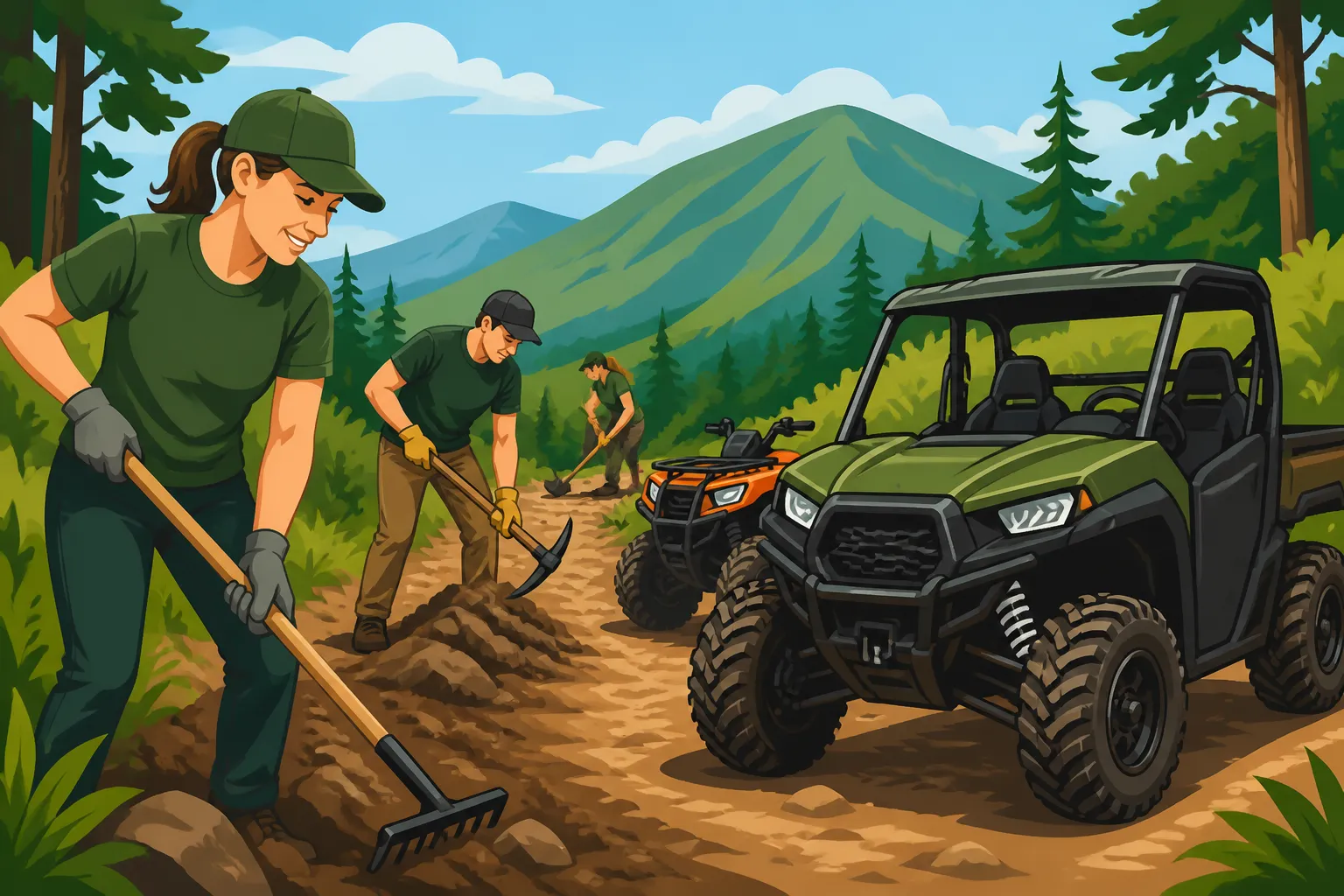
Volunteering on a Trail Work Day
A trail work day can be a practical way to support New York ATV riding, but showing up with tools is not always enough. Work may be organized by a club, county, or landowner, and each site has its own access rules and priorities. Here’s how to find an organized work day, prepare safely, and help without damaging the trail or putting access at risk.
Find an Organized Work Day Before You Go
In New York, many ATV routes depend on agreements among trail organizations, landowners, and local agencies. A volunteer day might involve clearing brush, repairing a drainage problem, replacing signs, or picking up litter. The work is specific to the site, so start by contacting the organization responsible for the trail rather than heading out on your own.
A local ATV club is often a good place to ask. County trail programs and park or recreation offices may also share information about volunteer opportunities. The right contact depends on who manages the route. If you’re interested in helping on a club trail, Joining a New York ATV Club can explain the role clubs play in trail access and maintenance.
Ask the organizer a few practical questions before committing:
- Where should volunteers meet, and when?
- Is the work day open to nonmembers?
- Do you need to register in advance or sign a waiver?
- What tasks are planned, and what tools should you bring?
- Are there age, supervision, or physical requirements?
- Is lunch, drinking water, or protective equipment provided?
- Will the trail be open to riding during or after the work?
- Is an ATV needed, and if so, what registration or permit applies?
Don’t assume that a public-looking trail is open for volunteer work. A route may cross private land, have seasonal restrictions, or be closed temporarily for maintenance. Even a well-intentioned volunteer can create trouble by entering land without authorization or doing work the landowner hasn’t approved. Landowner Agreements That Keep Trails Open gives more context on why access depends on ongoing cooperation.
The organizer should be able to confirm the work location and what permission covers the activity. If nobody can confirm that, wait for clarification. Cutting brush, moving rocks, digging a ditch, or changing a sign can affect drainage, safety, and landowner expectations. The work should match an approved plan, not a volunteer’s guess about what would improve the trail.
Some work days are limited to club members or people who have completed a sign-up process. Others welcome anyone willing to help. Ask rather than assuming. If the work involves power tools, machinery, or specialized trail equipment, the group may limit those tasks to trained operators. You can still contribute by carrying materials, clearing small debris under direction, or helping with cleanup.
A club membership may matter for some trail systems, but it is not automatically a requirement for every volunteer opportunity. Likewise, participating in a work day does not necessarily grant riding access. What Club Dues Pay For explains how club support can contribute to trail upkeep, while New York Club Trail Rules covers why a work day does not replace the rules for riding a route.
| Before you go | What to confirm |
|---|---|
| Who is organizing | Club, county, landowner, or another authorized group |
| Where the work is | Meeting point, route access, and parking arrangements |
| What is planned | Assigned tasks, tools, and any training needed |
| Who can attend | Registration, membership, age, and supervision rules |
| Whether you can ride | Trail status, machine requirements, and any separate permit |
| What to bring | Clothing, footwear, water, food, and personal protective gear |
Prepare for the Work, Not Just the Ride
Trail work can mean hours on uneven ground, in brush, mud, or changing weather. Dress for the task and conditions, not just the trip to the trailhead. Sturdy boots with good grip, work gloves, eye protection, and long sleeves are sensible basics for many jobs, but the organizer’s instructions should guide your final choices.
Bring drinking water and food unless the organizer says they will be available. A phone can be useful, but don’t count on reliable coverage in remote areas. Tell someone where you’ll be, especially if the work site is far from a road or other regular access point. Ask the lead volunteer what the group’s check-in and emergency plan is.
Do not bring tools unless they’re requested or approved. A shovel, loppers, hand saw, or rake might be useful on one job and inappropriate on another. Chainsaws and other powered equipment need more caution: use them only if you are qualified, authorized, and equipped for the task. Don’t borrow a tool and start using it without the lead’s approval.
For a first work day, it’s often best to bring only personal essentials and let the organizer assign tools. That helps avoid duplicated equipment and prevents well-meaning volunteers from using the wrong tool on a sign, drainage feature, or trail surface. If a task requires a specific tool, ask whether the group supplies it or expects volunteers to bring one.
Some useful questions to ask before packing include:
- Will work take place near standing water, steep slopes, or heavy equipment?
- Are there ticks, insects, or plants that require extra protection?
- Will the group provide gloves, safety glasses, or hearing protection?
- Are volunteers expected to carry tools or materials over a distance?
- Is there a place to store personal gear while working?
Avoid buying specialized gear until you know what the job requires. If you need basic items such as durable gloves or safety glasses, a retailer such as Amazon may offer plenty of options, but fit and appropriate protection matter more than the seller. Check the organizer’s recommendations, read product details carefully, and don’t assume ordinary sunglasses or lightweight gardening gloves are adequate for every task.
Leave alcohol and recreational drugs out of the work day. Trail maintenance can involve sharp tools, vehicles, uneven footing, and other hazards. Follow the organizer’s safety briefing, keep a safe distance from equipment, and stop if you’re unsure how to perform an assigned task. It is better to ask for another job than to improvise with a tool or machine.
If you bring an ATV to transport tools or materials, confirm that the organizer actually needs it. A machine may need to be registered and insured, and trail access may require a separate permit or permission. A volunteer assignment does not automatically excuse a machine from applicable requirements. For access questions, see Do You Need a Trail Permit in New York? and New York Reciprocity for Out-of-State Registrations if you’re visiting from elsewhere.
Follow the Lead and Protect the Trail
At the meeting point, check in with the work leader before unloading tools or going onto the route. The leader can explain the day’s plan, identify hazards, and tell you which areas are off limits. Stay with the assigned group unless the leader directs otherwise. If you arrive late, find the organizer rather than trying to locate the crew on your own.
Trail work is not simply a matter of making a route wider or smoother. Drainage, vegetation, signs, and the trail’s footprint can all be part of an approved plan. Moving a rock or cutting a branch may seem harmless, but it can change water flow or create a new path around an obstacle. Ask before altering anything beyond the task you were given.
Follow instructions on tool use and spacing. Keep other volunteers clear of swinging tools, saws, and moving loads. When carrying long materials, communicate with the people sharing the load and watch for other trail users. If a machine is being used to move material, stay out of its operating area and follow the operator’s directions.
Common tasks may include:
- Picking up litter and removing small debris
- Trimming vegetation within an approved area
- Carrying signs, posts, or supplies
- Helping install or straighten trail markers
- Moving material under a trained operator’s direction
- Reporting washouts, damaged structures, or confusing intersections
Some work may be inappropriate for an untrained volunteer. Don’t attempt to repair a bridge, cut large trees, operate heavy equipment, or change drainage structures unless the organizer has assigned the job and confirmed that you’re qualified to do it. If you find a hazard outside the work area, report it rather than fixing it on your own.
Be especially careful with signs and route markers. A marker can indicate a property boundary, permitted route, closure, or direction of travel. Do not move or replace one unless asked. If a sign appears damaged or misleading, take note of its location and tell the lead. The group can determine whether it needs repair and who has authority to make the change.
If riding is permitted as part of the work, treat the machine as a work vehicle, not as an invitation to explore. Use only the route and access approved by the organizer. Ride at a controlled speed, avoid unnecessary trips, and don’t take shortcuts around a closed section. A work crew may need to close or limit access while repairs are underway. Checking a County Notice Before You Load is a useful reminder to verify trail status before traveling to a riding area.
The route may also cross private property. Follow posted signs and the work leader’s directions about boundaries, parking, and where volunteers may walk or ride. Do not invite friends to use the trail or treat the work day as permission to return later. For broader riding questions, Permission Before You Ride Someone’s Land explains why access permission needs to be specific.
Finish the Day Responsibly
Before leaving, check with the lead about where tools go and whether the group needs help with cleanup. Pick up your own trash, return borrowed gear, and report any injuries, near misses, damaged tools, or work that remains unfinished. If you noticed another issue on the trail, give the organizer its location as clearly as possible rather than making an unapproved repair after the crew has dispersed.
Ask whether the group wants volunteers to share photos or notes. Images can help document completed work or show a hazard, but avoid posting details that could encourage unauthorized riding or reveal a private access point. Get permission before photographing people, property, or equipment when appropriate.
Do not assume the trail is open just because the work is done. A crew may still need to inspect the site, remove equipment, or wait for permission before reopening the route. Trail conditions can also remain unsafe after repair. Check with the organization or official trail notice before planning a ride. New York Trail Closures to Check First and New York Trail Conditions Before You Ride can help with that next step.
A work day is also a chance to find out how to help again. Ask whether the group has a volunteer list, scheduled maintenance days, or a preferred way to report problems. Consistent, modest help can be more valuable than a one-time effort that creates extra work. If you want to stay involved, ask about membership, donations, or other support—but don’t assume any one option is necessary to volunteer.
Most importantly, respect the boundary between volunteering and making decisions for the trail organization. Volunteers contribute labor and observations; the people responsible for the route decide what work is authorized and when it can happen. That distinction protects the trail, the landowner relationship, and the opportunity for riders to return.
Disclaimer
This article is for general informational purposes only and does not constitute professional advice. Laws, prices and regulations vary by location and change over time. Consult a qualified professional for guidance on your specific situation.