New York Minimum Age for a Safety Certificate
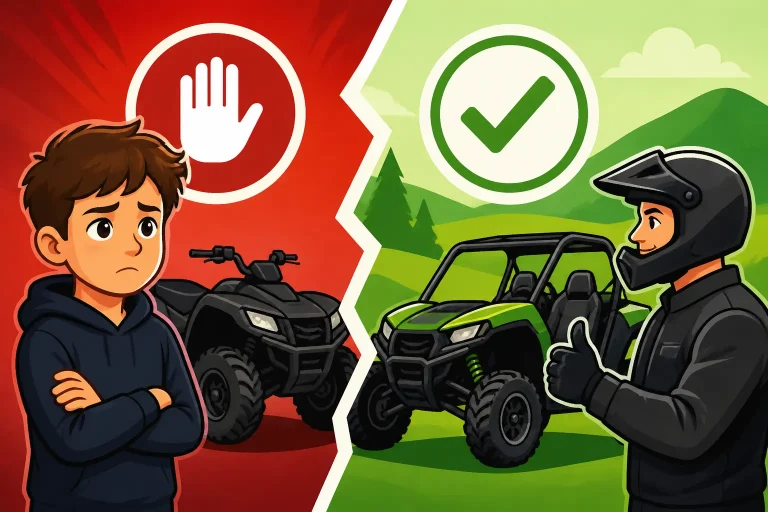
New York’s minimum age for an ATV safety certificate is easy to confuse with the minimum age for riding. They are not the same rule. The key takeaway is that a rider generally must be 14 to earn the certificate, but younger riders may face separate limits on where and how they can operate an ATV.
The minimum age for a New York ATV safety certificate
In New York, a person must be at least 14 years old to earn an ATV safety certificate. A 13-year-old cannot get the certificate simply by completing the course early; the age requirement still applies. For more on the certificate itself, see The New York ATV Safety Certificate Explained and Why the Certificate Starts at Fourteen.
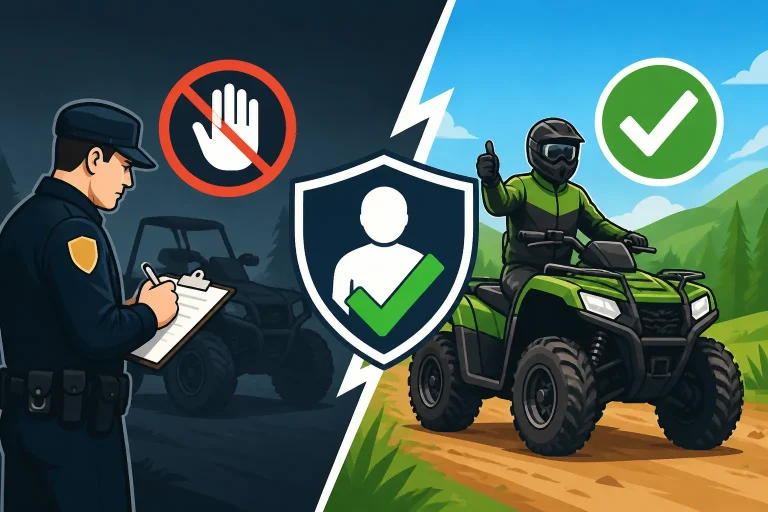
The certificate is proof that a rider has completed an approved ATV safety course. It is not a driver’s license, vehicle registration, trail permit, or general permission to ride wherever they choose. Those are separate requirements, and the rules that apply can depend on the rider’s age, the place they are riding, and whether an adult is supervising.
A common source of confusion is treating the certificate age as a universal minimum riding age. It is not. Some riders younger than 14 may be allowed to operate in limited circumstances, while still being too young to receive a certificate. Conversely, a 14- or 15-year-old who has a certificate must still follow the rules that apply to riders under 16.
| Question | Practical answer |
|---|---|
| How old must a rider be to earn a New York ATV safety certificate? | At least 14. |
| Can a 13-year-old earn the certificate by taking the course? | No. The minimum age for the certificate still applies. |
| Does the certificate let a rider go anywhere? | No. Location, supervision, machine, registration, and access rules still matter. |
| Does a certificate automatically mean a rider under 16 can ride alone? | No. Check the supervision rules for the specific riding situation. |
| Is a safety certificate the same as a trail permit? | No. They serve different purposes. |
Before signing up, confirm the current course and certificate requirements with an approved provider. Start with New York ATV Safety Certificate Requirements and Where to Take a New York ATV Safety Course. If the rider is not yet 14, ask the provider about the age limit rather than assuming that completing the lessons will make the rider eligible for a card.
What the certificate changes and what it does not
A safety course is intended to help riders understand safe operation and applicable rules. For a young rider, the certificate may be relevant to whether they can operate in a particular situation, but it does not cancel the broader restrictions that apply to children and teens. A card in a wallet does not, by itself, make every trail, road, private property, or machine suitable or lawful for that rider.
For someone under 16, think of the certificate as one part of the decision, not the whole decision. The rider’s age, adult supervision, the landowner’s permission, and any rules governing the specific riding area still need to be considered. The rules may differ between private land and an organized trail system, so do not use permission for one setting as proof that riding is allowed in another.
The same distinction applies to permits. A trail permit concerns access to a particular trail system or riding area; a safety certificate concerns rider training and eligibility. A permit does not replace a certificate when one is required, and a certificate does not provide trail access. For the age-related access question, see The Age Floor for a New York Trail Permit and New York Trail Access for Riders Under 16.
The certificate also does not replace registration or insurance requirements that apply to the machine and its use. Before a ride, check that the ATV is properly registered where required and that the rider has any required proof with them. A youth rider’s training card is only one item in that larger checklist.
Rules for riders younger than 16
The important practical distinction is between being old enough to earn a certificate and being allowed to ride without an adult. New York has separate rules for riders under 16, and the details can depend on where the ATV is being operated. Do not assume that turning 14 or earning a certificate automatically removes every supervision requirement.
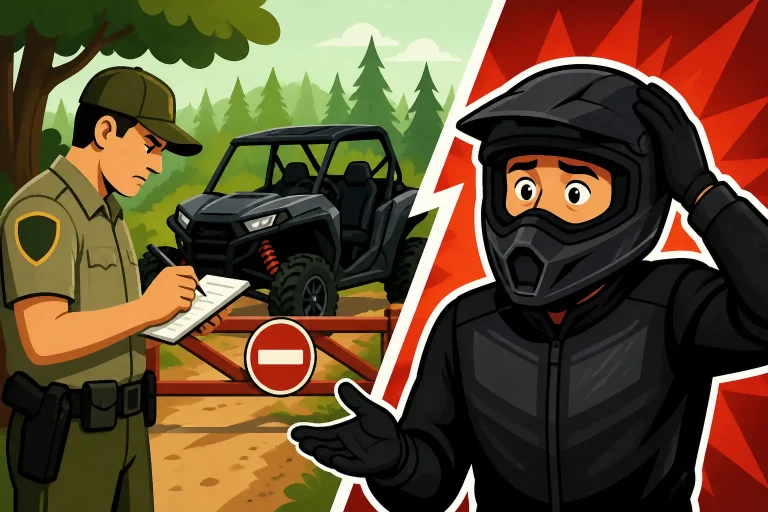
For a family making plans, identify the exact riding location first. Ask whether it is private property, a public road, or a managed trail system, and check the rules for that setting. If the ride is on someone else’s land, get permission from the landowner. If it is on a managed trail, check that trail system’s access rules as well as the state requirements.
Adults should also distinguish direct supervision from simply being nearby. If a rule requires supervision, confirm what counts for that situation and make a plan that meets it. A parent’s presence at the staging area, for example, should not be treated as a substitute for the supervision required while a young rider is operating.
For a fuller explanation of the age and supervision questions, see New York Rules for Riders Under 16, New York Supervision Rules for Minors, and What New York Requires of Riders Under 16. Riders below 14 should review [New York Rules for a Rider Under 14] rather than applying the rules for a 14- or 15-year-old.
A careful pre-ride check can prevent a certificate from being mistaken for permission to ride:
- Confirm the rider’s age and whether they are eligible for a certificate.
- Check whether the rider’s age requires adult supervision in the planned location.
- Verify that the landowner or trail operator allows the ride.
- Confirm the machine meets the requirements for that location.
- Check registration, insurance, and any local trail-access requirements.
- Carry the certificate and other required documents, if applicable.
If any part of the plan is unclear, postpone the ride until the applicable rules are confirmed. A certificate is useful, but it should not be used as a shortcut around age, supervision, or land-access requirements.
How to plan the course and first rides
When a rider turns 14, the next step is to find an approved ATV safety course and ask how enrollment, instruction, and certificate issuance work. Course arrangements can vary, so confirm the provider’s current age and participation requirements before registering. The information in Where to Take a New York ATV Safety Course can help with the search.
A good course plan is only part of preparing a young rider. Match the ATV to the rider’s size and ability, review the controls before each ride, and begin in a controlled area where practice is allowed. Protective gear and close adult attention remain important even when a rider has completed training.
Choose a first riding location that is clearly open to the machine and rider. Do not assume that a nearby road is an ATV route, that a trail is open because it appears on an old map, or that a private driveway gives access to adjoining land. Confirm access directly with the relevant landowner or trail operator. For public-road questions, see New York’s Designated and Posted Roads.
A family can also make a simple document checklist: safety certificate if applicable, registration papers, insurance proof if required, and the trail permit or membership information for the destination. Keep the checklist matched to the planned ride; requirements can differ by location and activity.
The short answer is straightforward: a New York rider generally must be 14 to earn an ATV safety certificate. The longer answer is that the certificate does not determine every riding right. For riders under 16, confirm the separate supervision and access rules for the exact place where the ATV will be used.
Disclaimer
This article is for general informational purposes only and does not constitute professional advice. Laws, prices and regulations vary by location and change over time. Consult a qualified professional for guidance on your specific situation.