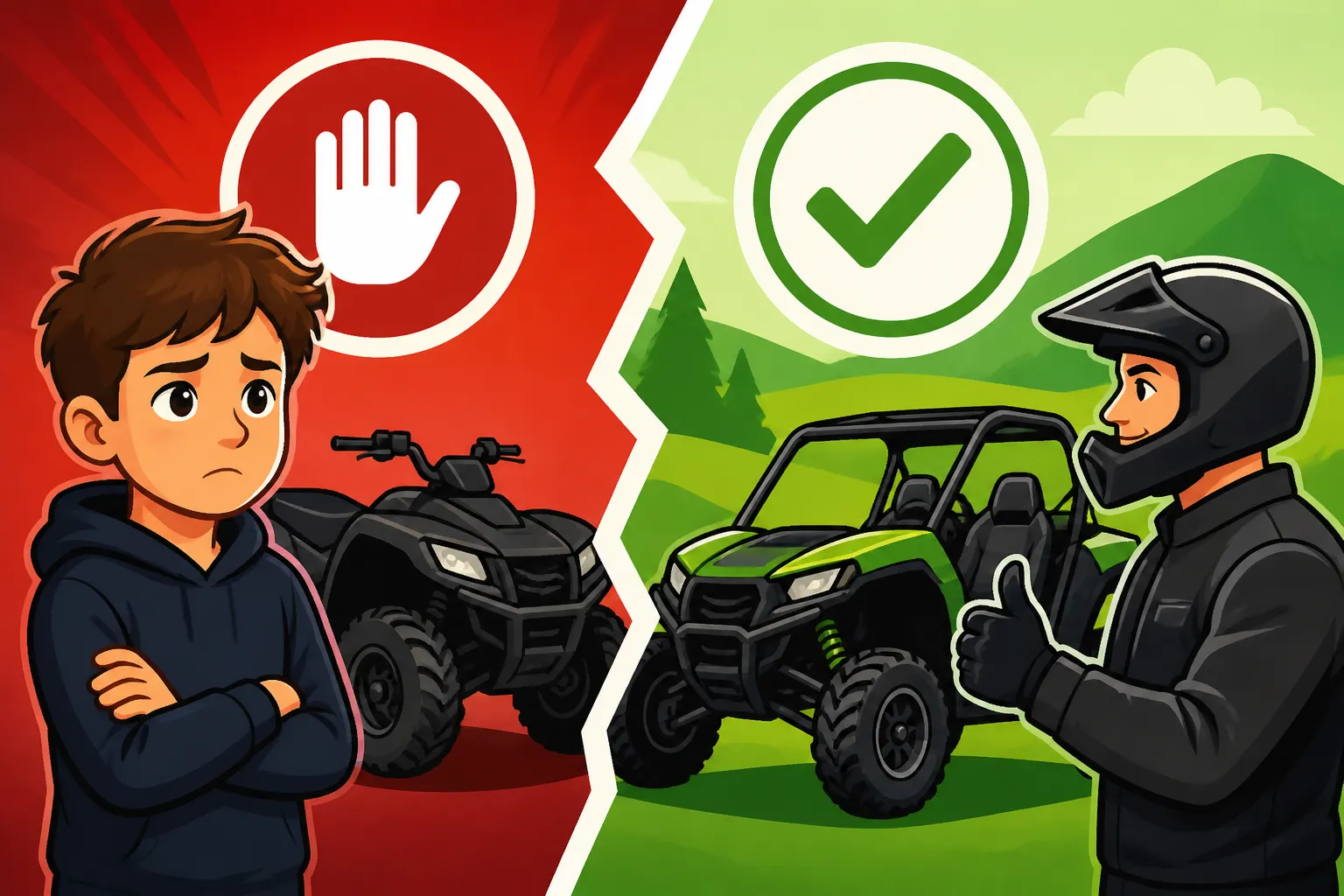
Why Thirteen Is Too Young for the Card
A 13-year-old may be ready for an ATV safety course, but New York sets the minimum age for the state safety certificate at 14. That can be confusing when a young rider is already operating a machine with adult supervision. Here’s what the age limit means, what it does not mean, and how families can plan safe, legal riding before a rider turns 14.
What the Card Is and Why Age 14 Matters
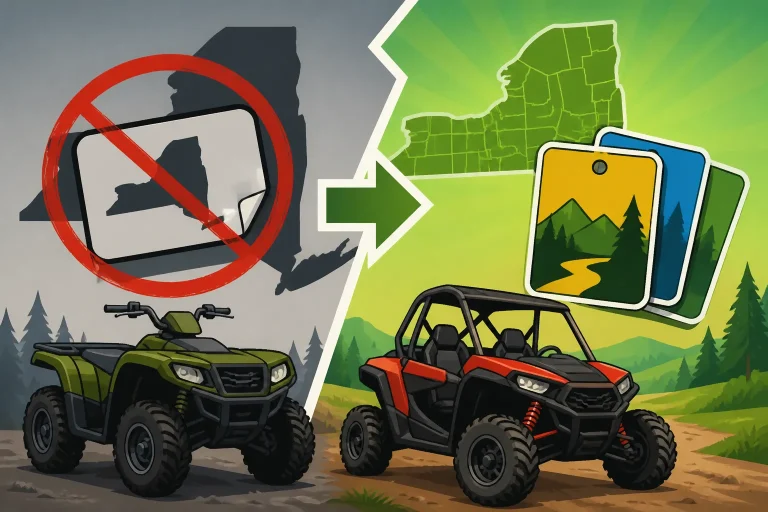
The “card” is the New York ATV safety certificate earned through an approved safety training course. It is evidence that a rider has completed required training; it is not an ATV registration, trail permit, or general pass to ride wherever they choose. The state’s minimum age for the certificate is 14, so a 13-year-old cannot receive it yet.
That threshold can feel arbitrary when a 13-year-old is close to turning 14. In practice, the key point is that the certificate is an age-restricted credential, not simply a course-completion document that anyone can receive. Finishing a class before the required age does not necessarily mean a rider can be issued the card early. Families should ask an approved course provider about its current enrollment and testing rules before signing up.
The certificate is part of New York’s approach to young riders: training matters, but age and supervision still matter too. A young person may be able to ride in some circumstances before turning 14, but that does not make them eligible for the certificate. The requirements are separate.
| Rider’s situation | What the age limit means | What to check before riding |
|---|---|---|
| 13-year-old seeking a safety certificate | Too young to receive the New York certificate | Whether a course provider allows early participation, and what rules apply to riding before age 14 |
| 13-year-old riding with an adult | The certificate age limit does not automatically prohibit all supervised riding | Applicable age, supervision, machine, property, and access rules |
| 14- or 15-year-old with a certificate | The rider has met the minimum age for the credential | Whether supervision is still required for the specific ride and location |
| Rider under 16 on a trail or other shared route | A certificate does not grant access by itself | Trail rules, registration, insurance, permits, and any remaining supervision requirement |
For the broader certificate requirements, see New York ATV Safety Certificate Requirements and New York Minimum Age for a Safety Certificate. If the question is about a 13-year-old’s riding options rather than the card itself, New York Rules for a Rider Under 14 is also relevant.
What a 13-Year-Old Can Do Before Turning 14
Not being old enough for the card does not automatically mean a 13-year-old can never ride. It means the certificate cannot be used as the basis for riding privileges at that age. Any riding must fit the rules that apply to the rider, machine, supervision, and location.
For a young rider, the practical starting point is direct adult supervision. New York’s rules for riders under 16 make supervision an important part of determining whether and where a child may operate an ATV. The supervising adult should understand the applicable requirements, stay involved, and avoid treating supervision as a formality. An adult who is nearby but cannot see or respond to the rider may not provide the kind of oversight a young operator needs.
Do not assume that supervision alone makes every ride lawful. The rules can depend on where the ATV is being used and who owns or controls the land. A private property ride, a marked club trail, a county trail system, and a public road are not interchangeable settings. Permission to ride on private land does not automatically authorize riding on a neighboring parcel, a public trail, or a road.
It is also important to distinguish the rider’s age from the machine’s suitability. A machine that is too large, powerful, or difficult for a 13-year-old to control can create serious safety risks even if the ride is supervised. The adult should consider the young person’s size, experience, ability to reach and use the controls, and capacity to respond to changing terrain. A course or certificate cannot make an unsuitable machine appropriate.
Before a supervised ride, confirm these points:
- The rider’s age and the supervision rule. Check what is required for a rider who is not yet 14 and who must supervise them.
- The location and permission. Confirm that riding is allowed on that land and that the person controlling it has given permission where needed.
- The machine and its condition. Choose a machine the young rider can control, and make sure it is maintained and equipped for the ride.
- The access requirements. Check registration, insurance, trail permits, and any local or trail-system rules that apply.
- The protective equipment and ride plan. Make sure the rider has appropriate safety equipment and knows the boundaries, route, and basic expectations.
The rules for young operators are not identical to the rules for adults. What New York Requires of Riders Under 16 and General Supervision by Someone Eighteen or Over address the wider age and supervision framework. For the youngest riders, Why Ten Is the Youngest a Rider Can Be explains why the minimum riding age is a different question from the certificate age.
What Changes at 14—and What Does Not
Turning 14 makes a rider old enough to meet the certificate’s age threshold. It does not automatically put a safety certificate in the rider’s hand. The rider still has to meet the course and testing requirements, and families should confirm the current process with an approved provider.
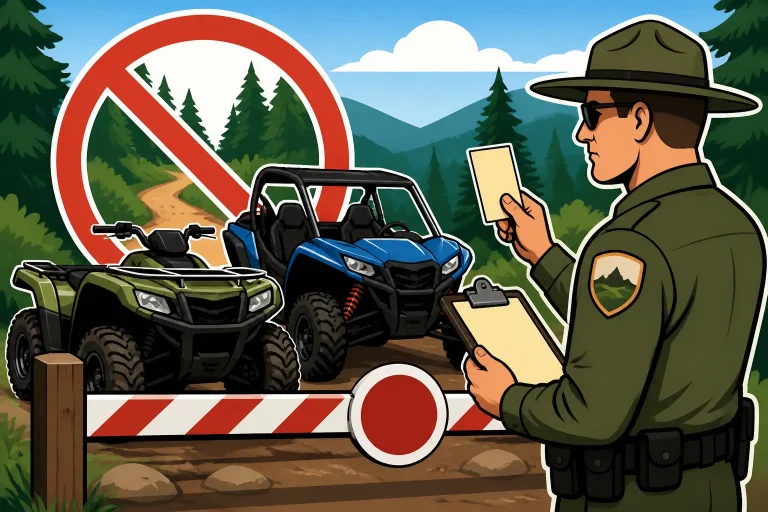
Nor does turning 14 make every ride legal or safe. A certificate is not a substitute for permission to use land, a machine’s registration, required insurance, or a trail permit. It does not open a closed trail or turn a road into an approved ATV route. Before riding, check the requirements that apply to the specific place and activity.
A certificate may affect the adult-supervision rules for some riders and rides, but families should not assume that every 14- or 15-year-old certificate holder can ride unsupervised in every setting. Confirm the exact rule for the intended location and route. Trail operators and landowners may also set additional conditions for access. A county trail permit, for example, may have its own age and access rules; it is separate from the safety certificate. See New York Trail Access for Riders Under 16 for more on how youth access can differ from general certificate eligibility.
The certificate also does not replace the adult’s role in deciding whether a young person is ready for a particular ride. A trained rider can still be inexperienced, tired, distracted, or overwhelmed by mud, steep slopes, traffic at a crossing, or other machines. Adults should match the route to the rider’s skills and be ready to adjust the plan.
A useful way to think about the transition is:
- At 13: the rider cannot receive the New York ATV safety certificate. Any riding must comply with the rules that apply without that credential, including applicable supervision and location requirements.
- At 14: the rider reaches the certificate’s minimum age, but must still complete the required training and meet any other requirements.
- At 14 or 15 with a certificate: the rider may have additional options, but a certificate does not remove every restriction or requirement.
- At any age: permission, machine suitability, safe conduct, and location-specific rules still matter.
That distinction helps avoid two common mistakes: assuming that a 13-year-old is barred from every possible supervised ride, and assuming that a 14-year-old with a card can ride anywhere without an adult. Neither is a safe shortcut. Review What a Fourteen-Year-Old May Ride With a Safety Certificate and New York Supervision Rules for Young Riders when planning for the transition.
How to Plan Ahead Without Treating the Card as a Shortcut
Families can use the year before a rider turns 14 to build habits and check requirements rather than focusing only on the certificate date. Start by identifying the kind of riding the young person will do. A controlled practice area on permitted private land raises different access questions from a club trail or a county system. Ask the landowner or trail operator what youth riders need, and verify the rules before loading the machine.
Next, contact an approved course provider. Ask whether a 13-year-old may attend or begin any part of the training, what age is required for the test or certificate, and whether completing a course early affects eligibility later. Get the answer directly from the provider rather than relying on a friend’s experience or an old online discussion. Course policies and state requirements are not necessarily the same thing.
Keep the paperwork separate and organized. A safety certificate, registration document, insurance proof, and trail permit serve different purposes. Carrying one does not replace another. If a ride involves a trail system, confirm whether the permit is required for the machine and rider, and whether the system has special rules for minors. New York Club Trail Rules and New York Rules for a Rented Machine are useful when the planned ride involves club access or a rented ATV.
Finally, make the adult supervision real. Agree on the route, speed expectations, stopping points, and what the young rider should do if they become separated or encounter a problem. Choose a manageable ride and keep the machine appropriate for the rider. Training is valuable, but safe judgment develops through practice, boundaries, and adults who pay attention.
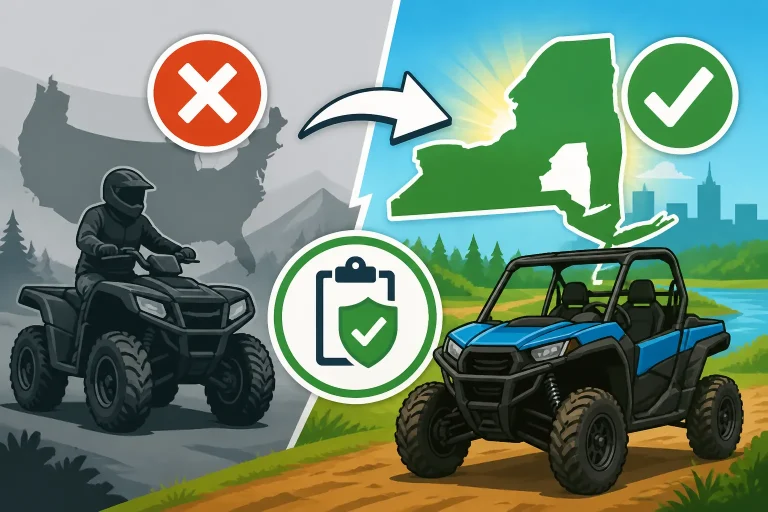
The simplest answer is that 13 is too young for the New York ATV safety certificate because the state sets 14 as the minimum age to receive it. That does not settle every question about whether a 13-year-old may ride. Supervision, location, machine, access rules, and the details of the planned activity still need to be checked. When the rider reaches 14, the certificate can become an option—but it is one part of the safety and legal picture, not permission to ignore the rest.
Disclaimer
This article is for general informational purposes only and does not constitute professional advice. Laws, prices and regulations vary by location and change over time. Consult a qualified professional for guidance on your specific situation.