Two Counties, Two Permits
A New York ATV ride can cross a county line without carrying your trail access with it. A permit that works on one system may not cover trails in the next county, and registration is a separate requirement. Here’s how to check what each system requires, avoid buying the wrong permit, and plan a ride across county lines.
Why two counties can mean two permits
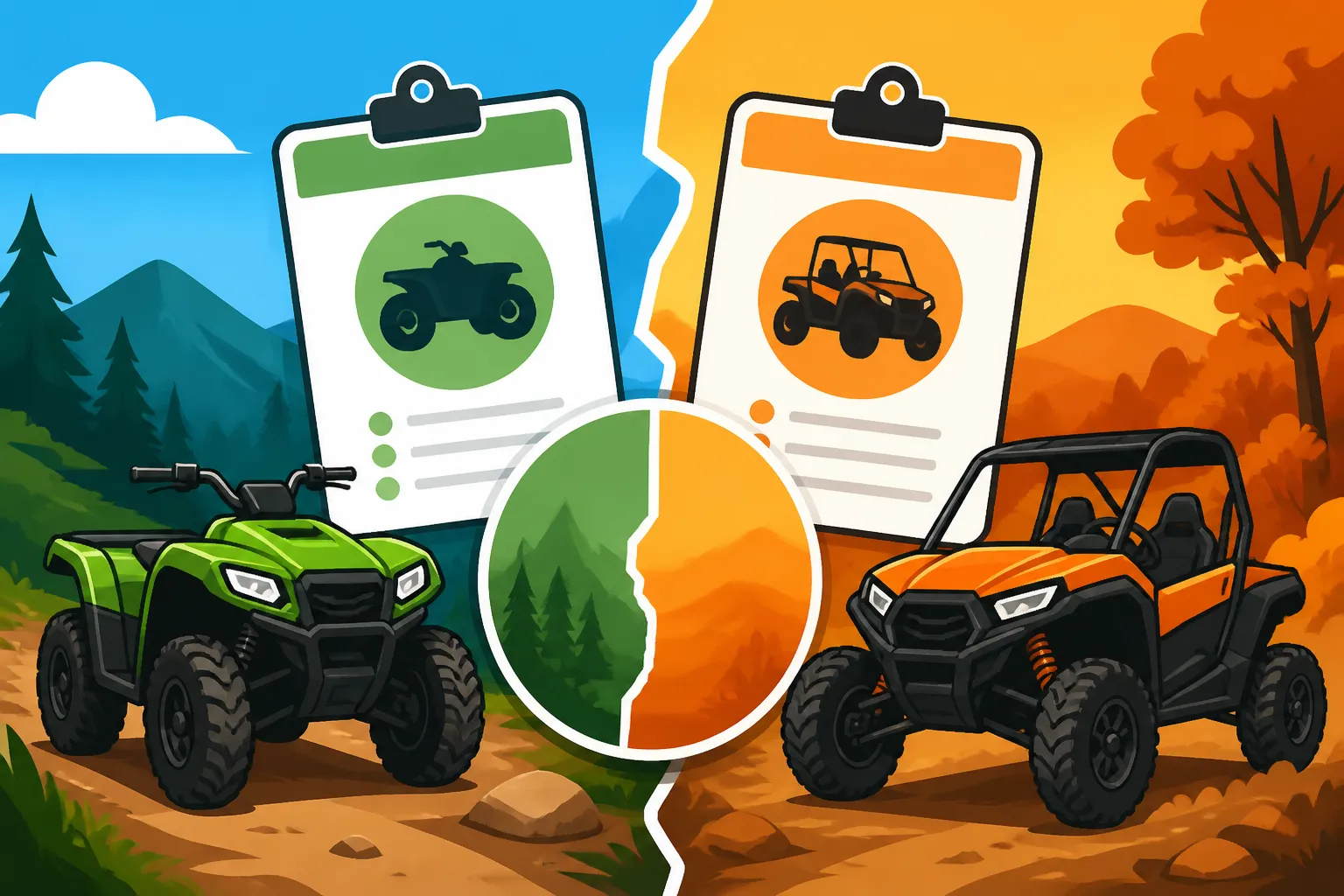
New York does not issue one statewide pass that grants access to every ATV trail. Trail access is organized locally: a county, club, private trail operator, or landowner may manage a system and set its own access conditions. A permit or membership that works for one system does not automatically cover another.
That is why a ride that crosses a county boundary needs more planning than a single-system trip. The boundary itself may not be marked on the ground, and a trail may connect to roads or corridors governed by different agreements. The important question is not just which county you’re in. It is which trail system you’re riding and who manages it.
For example, a permit for a county-operated system may not grant access to a nearby club trail. A club membership may open trails maintained by that club but not a separate network elsewhere. Some routes may not be open to public ATV use at all. Treat each system as its own access decision until its operator confirms otherwise. Why New York Has No Statewide Trail Pass explains why riders may encounter different permit arrangements across the state.
A trail permit is also not the same as vehicle registration. Registration concerns whether the machine is properly registered for use under New York rules; a trail permit or membership concerns access to a particular riding area. One does not replace the other. Review County Permits Instead of a State Sticker and Do You Need a Trail Permit in New York? if you’re sorting out which documents apply to your ride.
| What you need | What it generally covers | What it does not automatically cover |
|---|---|---|
| ATV registration | The machine’s registration status under applicable rules | Access to every trail or county system |
| County or system permit | Access to the system named by the operator, subject to its rules | A neighboring county’s trails or unrelated club routes |
| Club membership | Access to trails or activities the club says it covers | Every trail maintained by other clubs |
| Landowner permission | Access to the specific land and activity permitted | Nearby property or a marked trail beyond that land |
| Insurance and required rider documents | Applicable legal and safety requirements | Permission to ride a closed or restricted trail |
The table is a planning aid, not a substitute for the current rules of a trail operator. Confirm what a permit covers before relying on it, especially if a route crosses public roads, private property, or a second system.
How to check access before crossing a county line
Start with the route, not the permit. Find out which trail system manages each part of the ride and whether the route is currently open to ATVs. A line on a general map may show a road, trail, or recreation corridor without telling you whether ATVs are allowed there today.
Identify every system on the route
Break the ride into sections. For each one, note the county or operator, trail name or marker, and any planned road connections. If you are not sure who manages a segment, ask the county trail office, club, or operator whose map includes it. Do not assume that the group selling a permit also manages every nearby trail.
Use maps issued by the relevant county or operator where possible. Maps can help identify trail boundaries and staging areas, but conditions and access agreements can change. Check notices close to your ride date, too. A route that was open on an older map may be closed because of weather, landowner concerns, maintenance, logging, or another temporary restriction. Downloading a County Trail Map and New York Trail Conditions Before You Ride offer useful next steps for checking route information.
Confirm exactly what each permit covers
Before buying, check the permit’s stated coverage area and access dates. Ask whether it applies to the particular trails you intend to ride, whether it is valid for the whole season or a defined period, and whether each machine needs its own permit. If the route uses a club trail, ask whether membership is required or whether another access option is available.
Do not rely on a general statement such as “county trails” without confirming the named system. A county may have public trails, club-managed trails, or routes subject to different agreements. An operator’s current map and written permit terms are more useful than an assumption based on the county name.
If one permit is sold online and another by a club or local outlet, keep the receipts and any confirmation showing the systems covered. Save maps or notices to your phone, but do not depend on cell service along the route. A printed map or offline copy can help when coverage is limited.
Ask about connections, not just trail endpoints
Two mapped trail systems may appear to meet while having no legal or maintained connection for ATVs. The connection might use a public road with separate rules, private land where permission is limited, or a segment that is closed to motorized use. Ask the trail operators whether the connection is open and what route riders are allowed to follow.
This matters even if you have permits for both counties. A permit for each system does not necessarily authorize riding between them. You still need to use a legal, open connecting route and obey any requirements that apply along the way.
Registration, reciprocity, and permits are separate
Out-of-state riders sometimes assume a home-state registration or trail pass covers the entire New York trip. Keep the questions separate: Is the machine eligible to ride in New York under registration rules? Does the rider meet applicable insurance and equipment requirements? And does the selected trail system require its own permit or membership?
New York’s reciprocity rules for an out-of-state registration are distinct from local trail access. A valid registration may address the machine’s registration status, but it does not act as a permit for a county trail system. Likewise, buying a local permit does not fix a registration or insurance issue. Check New York ATV Reciprocity With Other States before traveling, and confirm trail access with each operator.
The same distinction applies to riders from elsewhere in New York. Having a New York registration does not mean you can ride any trail you find on a map. Before leaving home, verify registration, insurance, rider documents, equipment, and access rules separately. If you are riding on a club-managed route, consult New York Club Memberships and Trail Access as well as the club’s current trail information.
A practical way to organize the checks is:
- List every trail system and connecting segment on the planned route.
- Confirm which operator manages each segment and whether it is open to ATVs.
- Check the permit or membership requirements for each system.
- Verify that your registration, insurance, and any required rider documents are in order.
- Save current maps, access terms, and closure notices.
- Recheck conditions shortly before departure, especially after heavy rain, a thaw, or a trail notice.
This process can reveal that the most convenient route is not available, even if you have a permit for both counties. It is better to adjust the route in advance than to assume that two permits create uninterrupted access.
A practical plan for a two-county ride
Start planning early enough to contact both systems. Ask each operator the same focused questions: Which trails are open to ATVs? What permit or membership is required? What dates does it cover? Does it cover every machine in the group? Is the proposed connection to the neighboring system currently open? Where can you find the latest map and closure notices?
Be specific when asking. “Can I ride in the county?” may lead to a broad answer that does not address your route. Provide the trail name, staging area, or map segment, and ask whether your planned connection is permitted. If the operator cannot confirm a segment, do not treat it as open based on a map from another source.
When buying permits, use the instructions provided by the system operator. Check whether the permit must be displayed on the machine, carried by the rider, or accompanied by proof of membership. Avoid transferring a permit between machines unless the rules expressly allow it. Requirements can differ, so follow the terms for each system rather than assuming one display method applies everywhere.
Make a backup plan. Have a shorter route within one system in case the connection closes or a permit is unavailable. Share the route and expected return time with someone who is not riding. Bring enough fuel and supplies for the planned distance, and be prepared to turn around if signs or current notices show a closure. Do not bypass a gate, ride around a barrier, or continue onto land where permission is unclear.
For a route that includes Lewis County, check the current county information to confirm the permit’s coverage and trail conditions; Which Trails a Lewis County Permit Covers is a relevant starting point. For another county or club system, verify its rules directly rather than assuming the Lewis County permit applies there. Where to Buy a New York ATV Trail Permit can help you locate purchasing information, but the seller’s page should not replace checking what the permit actually covers.
A little verification avoids two common problems: paying for access you cannot use and arriving with no valid permission for the route you planned. If you have a separate permit for each system, know where each applies, and confirm that the route between them is open, you can make a realistic plan before loading the machine.
Disclaimer
This article is for general informational purposes only and does not constitute professional advice. Laws, prices and regulations vary by location and change over time. Consult a qualified professional for guidance on your specific situation.