Fifty Thousand for Two
Picture this: you're out on a beautiful New York trail, enjoying the crisp air and the thrill of the ride, when suddenly, an unexpected incident occurs. Maybe it's a fender bender with another rider, or perhaps you swerve to avoid wildlife and hit a fence. In that moment of chaos, beyond the immediate concern for safety, a wave of dread can wash over you as you realize the financial implications. Navigating the world of ATV insurance can feel like trying to ride through deep mud without four-wheel drive, especially when it comes to understanding exactly what coverage you need in New York. This guide is here to demystify the essential insurance requirements for ATVs in our great state, focusing on those crucial minimums that protect you and others when the unexpected happens on the trails.
What "Fifty Thousand for Two" Actually Means in New York ATV Insurance
When you hear talk about insurance minimums in New York, you'll often encounter numbers like "twenty-five, fifty, and ten." That "fifty" in the middle, referring to fifty thousand dollars, is what we often shorthand as "fifty thousand for two." It's a critical component of your bodily injury liability coverage, and understanding it is paramount for any rider in New York.
Let's break it down fully. New York law mandates specific minimums for ATV insurance, which are designed to cover costs if you're at fault in an accident and injure someone or damage their property. The bodily injury liability coverage is typically expressed as two numbers: the first for injury to one person, and the second for injury to all persons in a single accident. So, that "fifty thousand for two" actually refers to $50,000 in total bodily injury coverage per accident, regardless of how many people are injured. However, there's a cap per person within that total, which is usually $25,000. This means if you cause an accident where two people are hurt, the insurance will pay out a maximum of $25,000 to one individual and up to $50,000 for both combined. It's a cap, not a guarantee that each person gets half. If one person has $40,000 in medical bills and the other has $10,000, the policy might pay $25,000 to the first person (hitting the per-person limit) and $10,000 to the second, totaling $35,000 within the $50,000 accident limit. It's easy to see how quickly even minor injuries can exceed these limits.
This core liability coverage isn't just a suggestion; it's a legal requirement that protects other people, not your machine or your own injuries. If you're involved in an incident, say, on a busy weekend in Lewis County, and another rider suffers a broken arm and a concussion due to your error, this coverage is what helps pay their medical bills. Without it, or if the costs exceed these limits, you could be personally responsible for the difference, which can quickly lead to devastating financial strain. This is why many experienced riders will tell you that while the minimums are legally sufficient, they often fall far short of real-world costs.
Why New York Mandates ATV Insurance
It's a common question: "Why do I need insurance for a machine I only ride off-road?" The answer, as many of us have learned the hard way, boils down to public safety and financial responsibility. New York State recognizes that ATVs, even when used on designated trails or private property (though exceptions exist for purely private land use), still pose risks to other riders, pedestrians, and property. [New York's Mandatory ATV Insurance] rules are in place to ensure that anyone operating an ATV has the means to cover damages and injuries they might cause. This isn't just about protecting strangers; it's also about protecting you from potential ruin.
Imagine you're navigating a turn on a popular trail in Oswego County, and you misjudge the speed, colliding with another rider's brand new machine and sending them to the hospital. Without insurance, all those medical bills, repair costs for their ATV, and potential lost wages they might incur would fall squarely on your shoulders. New York's insurance mandate shifts some of that risk from the individual operator to an insurance provider, ensuring a degree of compensation for victims. It's a proactive measure to mitigate the financial chaos that can follow an accident. It means that whether you're riding a powerful sport quad or a utility machine, the state expects you to be prepared for the consequences of an unforeseen event.
The law isn't just about crashes with other machines. It also covers incidents where you might damage property, such as a farmer's fence that borders a trail, or even inadvertently cause harm to a bystander. The intent is clear: if you're riding an ATV anywhere off your own private property, you need to be financially accountable. [New York Fines for Riding Without Insurance] are substantial precisely because the state takes this mandate seriously. It's not a money-making scheme; it's a fundamental aspect of operating a motor vehicle in a responsible manner, even if that vehicle primarily sees dirt and mud instead of pavement.
Understanding New York's Minimum Coverage Requirements
Beyond the "fifty thousand for two" for bodily injury, New York's ATV insurance requirements include a third, equally important component: property damage liability. So, when we talk about the full set of minimums, we're talking about $25,000/$50,000 bodily injury liability and $10,000 property damage liability. This trifecta forms the absolute bare minimum you need to legally operate your ATV in New York, provided you're not solely on your own land. [New York ATV Insurance Minimum Coverage] isn't something you can opt out of if you plan to hit any public trail system or even cross a public road.
The $10,000 property damage liability means that if your ATV causes damage to someone else's property – say, you hit their mailbox during a tricky maneuver, or accidentally damage a vehicle parked too close to the trail – your insurance will cover up to $10,000 for those repairs or replacement. While $10,000 might sound like a lot, consider the cost of repairing a newer vehicle or a substantial structure; it can be eaten up very quickly. This is why many riders choose to carry more than the minimums, especially if they ride frequently or in areas where property damage is a higher risk.
These minimums apply to virtually all scenarios where you're riding off your own property. If you're on a county trail, a club trail, or even just crossing a local road to get to another section of private land, your insurance needs to be active and meet these thresholds. You'll need to show proof of this coverage if you're stopped by law enforcement or involved in an incident. [Insurance Proof at the Counter] is also a common requirement when you go to register your machine with the DMV. It’s all part of the overarching system designed to maintain safety and accountability on our trails.
Here’s a quick breakdown of the New York ATV insurance minimums:
| Coverage Type | Per Person Minimum | Per Accident Minimum | What it Covers |
|---|---|---|---|
| Bodily Injury Liability | $25,000 | $50,000 | Medical expenses, lost wages, pain, and suffering for others injured by your ATV |
| Property Damage Liability | N/A | $10,000 | Damage to other people's property (vehicles, fences, structures) caused by your ATV |
It’s important to remember these figures are just the minimum. They represent the ceiling for what your insurance company will pay out per accident under these specific liability categories, not the total cost of any given accident.
Beyond the Minimums: Protecting Yourself and Your Ride
While meeting New York's minimum insurance requirements is non-negotiable for legal riding, many seasoned ATV enthusiasts will strongly advise you to consider coverage that goes beyond these basic thresholds. Why? Because the reality of an accident often far exceeds what $25,000 or even $50,000 can cover, and those minimums do absolutely nothing to protect your own machine or your own injuries.
Think about it: a serious injury, even a broken bone, can quickly rack up tens of thousands in medical bills, let alone rehabilitation, lost income, and the non-economic damages like pain and suffering. If you're at fault and the other party's damages exceed your policy's limits, you're on the hook for the rest. This is where higher liability limits, often $100,000/$300,000 or even $250,000/$500,000, become a wise investment. They provide a much greater buffer against personal financial exposure.
Furthermore, the minimums don't cover your own ATV if it's damaged. If you invested in a robust machine, perhaps one outfitted with durable aftermarket parts from a brand like SuperATV – maybe heavy-duty bumpers, rock sliders, or a full skid plate package – you've made a significant financial commitment. Collision and comprehensive coverage are what protect your own machine against damage, theft, or other non-collision incidents. Collision coverage pays for repairs or replacement if your ATV is damaged in an accident, regardless of fault. Comprehensive coverage handles things like fire, theft, vandalism, or hitting an animal. These aren't legally required but are incredibly important if you want to protect your investment. [New York ATV Insurance Cost] discussions often highlight how these additional coverages can impact your premium, but the peace of mind they offer is often well worth it.
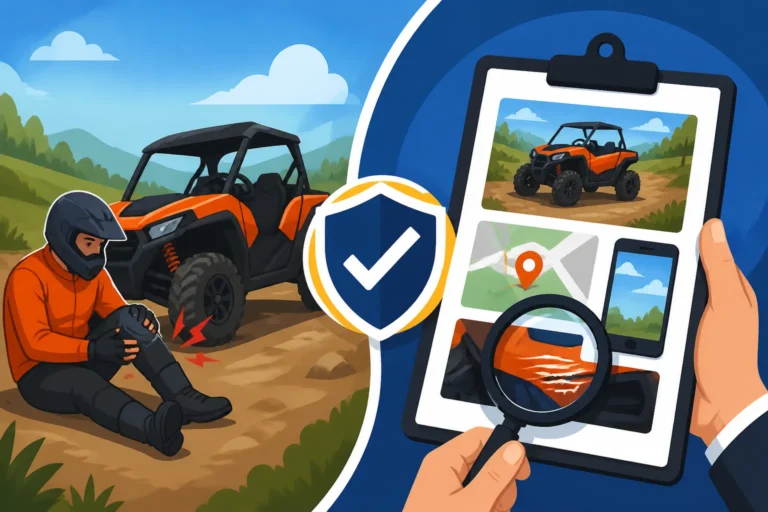
Finally, consider coverage for your own medical expenses, often called Medical Payments or Personal Injury Protection (PIP), depending on your policy. The minimum liability only covers others' injuries. If you crash and get hurt, your own health insurance might kick in, but having specific ATV medical coverage can fill gaps, cover deductibles, or provide quicker access to care. It's all about building a safety net that genuinely protects every aspect of your riding experience, not just the bare minimum the state requires. After all, the joy of hitting the trails should never be overshadowed by the worry of inadequate protection.
Disclaimer
This article is for general informational purposes only and does not constitute professional advice. Laws, prices and regulations vary by location and change over time. Consult a qualified professional for guidance on your specific situation.