Why a State Park Turns You Away
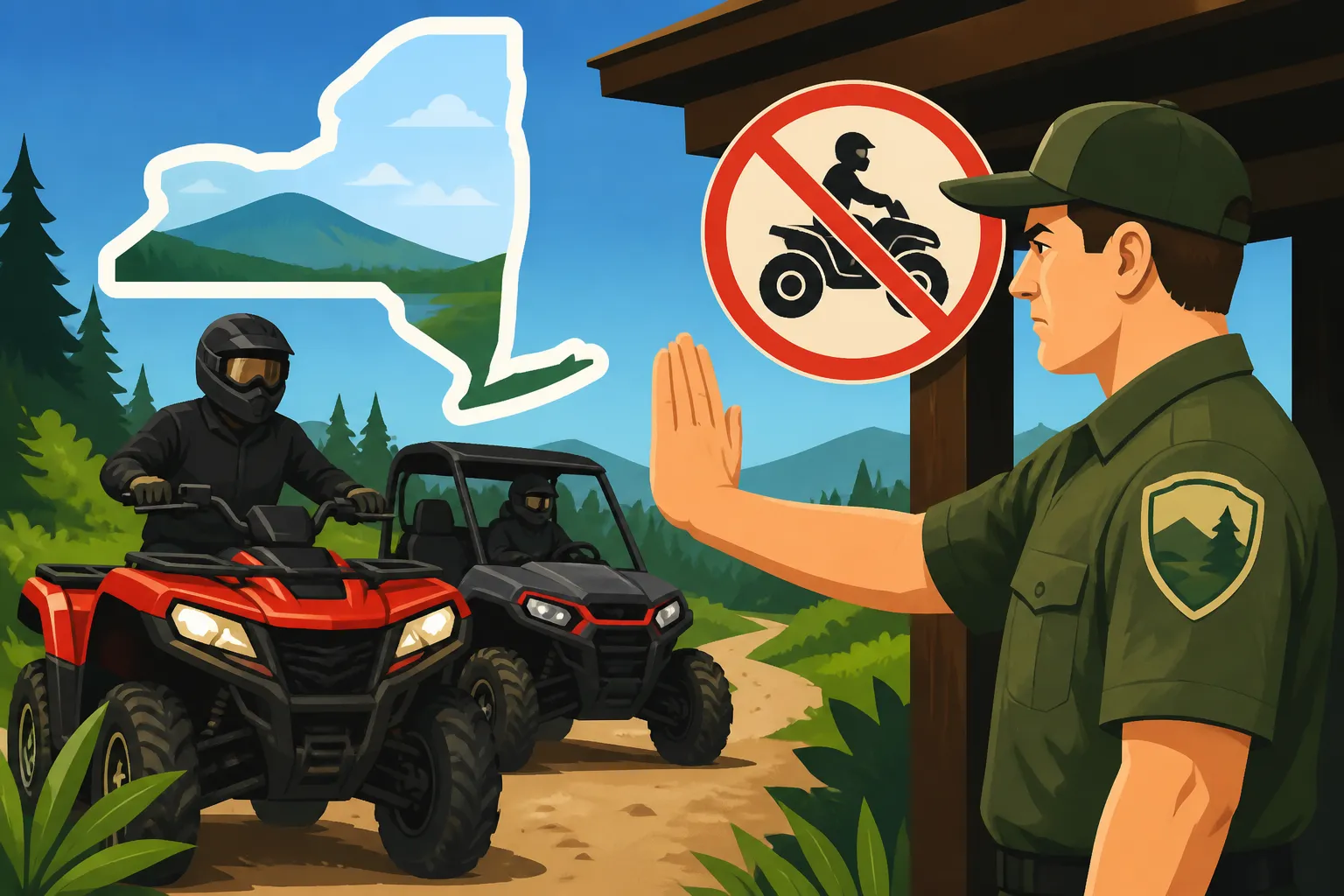
It's incredibly frustrating, isn't it? You've got your ATV loaded up, the sun is shining, and you're ready for a fantastic day of exploring New York's beautiful landscapes, only to arrive at a state park gate and be met with a firm "no ATVs allowed." It can be confusing and disheartening, especially when you see vast tracts of land. This guide will help you understand precisely why New York State Parks turn away ATVs and where you can legally and responsibly ride your machine in our gorgeous state.
The Core Rule: New York State Parks are Closed to ATVs
Let's cut right to the chase: New York State Parks, managed by the Office of Parks, Recreation and Historic Preservation (OPRHP), are simply not open to ATV use. This isn't a hidden rule or something that varies by park; it's a foundational policy across the entire system. While other parts of New York's vast public lands might offer different recreational opportunities, state parks have a distinct purpose and set of regulations that, unfortunately for ATV enthusiasts, exclude off-road motorized vehicles.
Understanding the Office of Parks, Recreation and Historic Preservation (OPRHP) Mission
The Office of Parks, Recreation and Historic Preservation (OPRHP) has a very specific mandate in New York, and it's quite different from, say, the Department of Environmental Conservation (DEC) that manages much of the Forest Preserve. OPRHP's mission focuses primarily on preserving natural and cultural resources, offering diverse recreational opportunities, and enriching the quality of life for all New Yorkers. When you think of a New York State Park, you often picture serene trails for hiking, tranquil lakes for fishing and kayaking, picnic areas for families, and historic sites.
The emphasis here is on activities that are generally considered "low impact." Imagine a family enjoying a quiet stroll through nature, a birdwatcher hoping to spot a rare species, or someone simply seeking solace from the hustle and bustle of daily life. The noise, speed, and potential environmental impact associated with ATVs simply don't align with this core mission. These parks are curated spaces designed for specific types of public enjoyment, and motorized trail riding, despite being a wonderful recreational activity in its own right, doesn't fit the mold that OPRHP has carefully crafted. They're trying to provide a particular type of experience for the broadest possible audience, and that means setting boundaries on activities that might detract from it.
The Difference Between State Parks and Other Public Lands
It's easy to get confused because New York has so much public land, and different agencies manage it with different rules. A New York State Park is not the same as a State Forest, a Wildlife Management Area, or a section of the Forest Preserve, even if they sometimes share similar names or are geographically close. For instance, the Department of Environmental Conservation (DEC) manages millions of acres, including some Wild Forests where designated multi-use trails might exist, or specific areas where ATVs are permitted under strict conditions. However, even within DEC lands, access varies wildly depending on the designation. You can learn more about general rules in [New York Rules for Riding State Land].
State Parks, on the other hand, are specifically managed to protect unique natural features, offer developed recreational facilities (like campgrounds, beaches, and historic buildings), and cater to passive recreation. This distinction is crucial. When you see a sign for a "State Park," know that it's going to be a different experience, and a different set of rules, than a sign for a "State Forest." These lands have their own distinct management plans, funding sources, and ultimately, their own specific permitted activities. Just because a trail looks wide enough for your ATV doesn't mean it's allowed; the legal designation of the land dictates what activities are permissible.
What "Closed to ATVs" Really Means
When a New York State Park is "closed to ATVs," it's not a suggestion or a guideline; it's an absolute prohibition. This means more than just not being able to ride on the trails. It encompasses nearly every aspect of bringing your machine to these cherished public spaces. Understanding the full scope of this ban can save you a lot of wasted time and potential hassle.
No Riding, No Parking, No Trail Access
Let's be crystal clear: if it's a New York State Park, you cannot ride your ATV there. Period. This isn't about finding an unmarked trail or hoping a park ranger isn't looking. The prohibition extends to all park lands, including any trails, roads, fields, or undeveloped areas within the park's boundaries. You cannot even unload your ATV from your trailer within park limits with the intent to ride elsewhere unless you are merely passing through on a public road that happens to bisect the park, which is a rare and specific scenario.
Furthermore, there are no designated parking areas for ATV trailers, no staging lots, and no specific routes marked for off-road vehicles. Bringing your machine on a trailer into a state park for any purpose related to ATV use is simply not going to work. Even parking your truck and trailer, emblazoned with a SuperATV sticker, might raise questions from park staff if it seems you're planning to ride. The infrastructure, the layout, and the entire philosophy of these parks are not designed to accommodate motorized off-road vehicles. Your best bet is to avoid these areas entirely if your primary goal is ATV riding.
The Exception You Won't Find: Medical Permits and Special Designations
Many ATV riders are aware that certain other state lands, particularly some areas within the Forest Preserve managed by the DEC, might have very specific and limited access points or designated routes for people with disabilities, often requiring a medical permit. This is a great program that allows broader access for those who need it. However, it's crucial to understand that this does not apply to New York State Parks.
State Parks operate under their own distinct set of rules, and as of now, there are no provisions for medical permits or special designations that would grant ATV access within their boundaries. There are no "secret" ATV trails, no designated back-country routes for off-road vehicles, and no exceptions for special circumstances. The policy is uniform: no ATVs in New York State Parks. It's a common misconception that if one type of state land offers an exception, all state lands might. This simply isn't the case here. Trying to argue for an exception at a State Park entrance will likely lead to frustration for both you and the park staff, as they are simply enforcing a clear, statewide policy.
Why This Policy Persists: Balancing Recreation and Conservation
The decision to keep New York State Parks closed to ATVs isn't arbitrary; it's rooted in a careful balancing act between providing recreational opportunities and fulfilling a mandate for conservation. There are very legitimate reasons behind this policy, encompassing environmental protection, ensuring a specific user experience, and practical infrastructure considerations.
Protecting Natural Resources and Wildlife
One of the primary reasons for restricting ATVs in State Parks is to protect the delicate natural resources and diverse wildlife within their boundaries. ATVs, by their very nature, can have a significant impact on the environment:
- Soil Erosion: The aggressive tires and weight of ATVs can quickly churn up soil, especially on trails not designed for such traffic. This leads to erosion, particularly on inclines or in wet conditions, washing away topsoil and silting up streams and waterways. This can damage aquatic habitats and impact water quality, something the OPRHP works hard to protect.
- Vegetation Damage: Riding off designated paths (or even on footpaths) can crush sensitive vegetation, including rare plants and young saplings. This degrades the aesthetic appeal of the park and can destroy critical food sources or habitats for wildlife.
- Wildlife Disturbance: The noise and speed of ATVs can scare away wildlife, disrupting their feeding, breeding, and resting patterns. Many parks are vital habitats for various species, and consistent disturbance can have long-term negative effects on animal populations. Imagine a birdwatcher trying to observe a nesting pair, only to have them flushed out by the roar of an engine.
- Water Contamination: Leaks of oil, gasoline, or other fluids from machines can contaminate soil and water sources, posing a risk to both wildlife and human visitors who might use these areas for swimming or fishing.
The OPRHP has a responsibility to maintain these environments for future generations, and restricting activities that could cause widespread, long-lasting damage is a key part of that stewardship.
Ensuring a Peaceful Experience for All Visitors
New York State Parks are designed to offer a specific kind of recreational experience, often centered around peace, quiet, and immersion in nature. Hikers, picnickers, birdwatchers, and families looking for a tranquil outing often seek out these parks precisely because they offer an escape from mechanical noise and high-speed activities.
The presence of ATVs, with their inherent engine noise, exhaust fumes, and rapid movement, would fundamentally alter this experience. What might be exhilarating for an ATV rider could be disruptive, or even perceived as dangerous, by a hiker on a narrow trail. OPRHP aims to minimize user conflicts and create an environment where different groups can coexist without impacting each other's enjoyment. By keeping motorized vehicles out, they maintain the park's character as a haven for quiet, nature-focused recreation, ensuring a predictable and enjoyable experience for the majority of their visitors. This is a common strategy in park management globally, where designated zones are often created to separate different types of recreation to prevent clashes.
Infrastructure Limitations and Maintenance Costs
Another practical consideration is the physical infrastructure of State Parks. The trails, bridges, and access roads within these parks are typically built and maintained for foot traffic, bicycles, or light equestrian use. They are generally narrower, less robust, and not engineered to withstand the weight, speed, and wear-and-tear of ATVs.
If ATVs were permitted, it would necessitate a massive overhaul of the park's trail system. Existing trails would quickly degrade, requiring expensive and frequent repairs. New, specially designed trails would need to be constructed, often with significant environmental impact and at considerable cost. Furthermore, there would be increased costs associated with managing, patrolling, and enforcing rules on ATV trails. These resources are already stretched thin managing existing park facilities and programs. Rather than diverting funds to build and maintain ATV-specific infrastructure, OPRHP prioritizes maintaining the existing facilities that serve their broader visitor base, which generally does not include ATV riders.
Where You Can Ride Your ATV in New York
So, if New York State Parks are off-limits, where can you enjoy your ATV? The good news is that New York State has a fantastic array of legal and designated riding areas; you just need to know where to look. It's all about finding the right kind of land and making sure you have the proper permits and permissions.
Exploring County and Club Trail Systems
Your absolute best bet for legal, organized ATV riding in New York is to explore the various county and club-managed trail systems. These are specifically designed, maintained, and permitted for ATV use, providing hundreds of miles of diverse terrain.
The most prominent and well-known example is the [Lewis County ATV Trail System in New York]. This system boasts hundreds of miles of marked and maintained trails, connecting towns and offering a truly immersive riding experience. To ride these trails, you'll need a county permit, and often, membership in a local ATV club can offer discounts or access to additional club-specific trails. These clubs work tirelessly with landowners and local governments to create and maintain these networks, ensuring sustainable riding opportunities. You can find detailed information on [New York ATV Trail Permits Explained] and [Club Trail Rules in New York] to understand the requirements. Other counties and private clubs also offer riding opportunities, sometimes through day passes or annual memberships, providing a range of options from leisurely scenic routes to challenging technical sections. Always check the specific rules and requirements for any system before you trailer your machine.
Private Land with Permission
Another excellent option for ATV riding is on private land, provided you have explicit permission from the landowner. This is a critical distinction. Riding on someone else's property without permission is trespassing, which can lead to legal trouble, fines, and severely damage the reputation of all ATV riders, potentially jeopardizing existing trail access agreements.
If you own private land, you can certainly ride your ATV there, subject to local ordinances and noise restrictions. For riding on someone else's property, a simple verbal agreement might suffice, but it's always safer and more respectful to get written permission. This could be a simple note or a more formal agreement, especially if you plan to ride regularly. Many landowners are open to the idea, particularly if you offer to help with chores, respect their property, and follow all safety guidelines. Always discuss boundaries, times of day, and any specific areas to avoid. [New York Rules for Riding Private Land] and [Landowner Consent on New York Private Land] offer more details on this important aspect of responsible riding.
Understanding Specific State Forest and Wild Forest Designations
While State Parks are off-limits, certain other types of state land, specifically some State Forests and Wild Forest areas managed by the Department of Environmental Conservation (DEC), may have designated multi-use trails that are open to ATVs. This is where it gets a bit nuanced and requires careful research.
Unlike State Parks, which prioritize passive recreation, the DEC manages a broader range of activities across its lands. However, access is not universal. You absolutely cannot assume that all State Forests or Wild Forests are open to ATVs. Many are not, and even those that are will have very specific, clearly marked trails for motorized use. Riding off these designated trails is illegal and environmentally damaging. For example, large portions of the [New York's Adirondack Park and Motor Vehicles] are designated as "Forever Wild" and prohibit motorized use entirely. Before heading out, you must consult the specific DEC unit management plans or current trail maps for the area you intend to visit. These are usually available on the DEC website or through local DEC offices. Never rely on outdated information or assumptions. When in doubt, call the local DEC office for clarification. Always remember, if a trail isn't explicitly marked and designated for ATV use, assume it's closed.
Comparison of New York Land Types for ATV Access
To help clarify where you can and cannot ride, here's a quick overview of common land designations in New York and their typical ATV access:
| Land Type | Managing Agency | Typical ATV Access | Key Characteristics |
|---|---|---|---|
| State Parks | OPRHP | Closed to ATVs | Focus on passive recreation, natural beauty, developed facilities (picnic areas, beaches). |
| Forest Preserve | DEC | Generally Closed; very limited, specific exceptions for medical permits on some roads. | Wilderness preservation, "Forever Wild" constitutional protection, strict rules. |
| State Forests | DEC | Limited, Designated Trails Only | Managed for timber, recreation, and wildlife; some multi-use trails may allow ATVs. |
| Wild Forest (DEC) | DEC | Limited, Designated Trails Only | Less restrictive than Wilderness, some roads/trails might be open to ATVs. |
| County Trail Systems | Local County/Clubs | Open with proper permits/memberships | Specifically designed and maintained for ATV use (e.g., Lewis County). |
| Private Land | Private Owner | Open with explicit landowner permission | Varies by owner's rules and local ordinances. |
| Town/Village Roads | Local Municipality | Generally Closed; very rare, specific local ordinances may allow crossing or limited use. | Primarily for street-legal vehicles; ATVs typically prohibited on public roads. |
This table highlights the clear distinction for State Parks. While you're looking for [Where to Ride an ATV in New York], always confirm the specific land designation and its rules. Riding responsibly and legally means doing your homework before you load up your SuperATV-equipped machine and hit the road. Remember, respecting the rules of the land ensures that these riding opportunities remain open for everyone.
Disclaimer
This article is for general informational purposes only and does not constitute professional advice. Laws, prices and regulations vary by location and change over time. Consult a qualified professional for guidance on your specific situation.