Ten Thousand for Property Damage
It's easy to look at the numbers associated with ATV insurance in New York and feel a wave of confusion wash over you. When you hear terms like "$10,000 for property damage," it often feels like a vague, official-sounding phrase that doesn't really tell you what you need to know. This guide is here to cut through that jargon, explain exactly what New York's property damage coverage means for ATV riders, and help you understand how it impacts your passion for the trails.
Demystifying New York's ATV Insurance Requirements
Navigating the world of ATV insurance can feel like trying to find your way through a dense patch of woods without a map. But once you understand the basic requirements, it gets a whole lot clearer. In New York, carrying ATV insurance isn't just a good idea; it's a legal obligation, especially if you plan to venture beyond your own private property.
The Mandate: Why You Need It
Let's be real: nobody wants another bill, but [New York's Mandatory ATV Insurance] is in place for a really important reason – protection. Not just for you, but for everyone else out there. Imagine you're out on a designated trail, enjoying the crisp air and the rumble of your machine, and something unexpected happens. Maybe you misjudge a turn, or another rider makes a sudden move, and there's an accident. Without insurance, the financial aftermath could be absolutely devastating.
The state mandates insurance because ATVs, while incredibly fun, are powerful machines that can cause significant damage or injury. This isn't about stifling your fun; it's about creating a safety net. Whether you're riding county trails, navigating a friend's private land with permission, or even crossing a public road, having that proof of insurance is critical. An officer stopping you at a trailhead, or even just during a routine check, will be looking for it. It's truly a foundational requirement for responsible riding in our beautiful state.
Understanding the Minimums: The Big Numbers
When you hear about ATV insurance, you'll often encounter a set of numbers that look something like this: 25/50/10. These aren't random; they represent the minimum liability coverage New York requires. Let's break down what each of those figures means, because understanding these basics is key to knowing what you're actually covered for.
First, the "25" refers to $25,000 in bodily injury liability coverage for one person in an accident. So, if you're deemed at fault for an accident and another individual is injured, your policy would pay up to $25,000 for their medical bills, lost wages, and other related expenses. It's about protecting you from the direct financial burden of someone else's injury. This is critically important, as medical costs can skyrocket incredibly fast. For more on this, you can check out [Twenty-Five Thousand for One Injury].
Next, the "50" means $50,000 in bodily injury liability coverage for all persons injured in a single accident. This is the aggregate limit. So, if two or more people are injured in an incident where you're at fault, your policy will pay out a maximum of $50,000 total for their combined expenses. The $25,000 per person limit still applies within that $50,000 total. This figure is designed to provide broader coverage for multi-person incidents. We dive deeper into this specific coverage in [Fifty Thousand for Two].
Finally, the "10" is what we're really focusing on today: $10,000 in property damage liability coverage per accident. This is what helps pay for damage to someone else's property that you cause while riding your ATV. It's a crucial part of your overall [New York ATV Insurance Requirement] and protects you from the costs of fixing or replacing things that aren't yours.
Diving Deep into Property Damage Coverage
The $10,000 property damage coverage is often the most overlooked part of an ATV policy, but it's incredibly important. While we all hope to ride safely and avoid incidents, accidents do happen, and sometimes, it's not another person who gets hurt, but their property.
What "Ten Thousand for Property Damage" Really Covers
So, what exactly does that "ten thousand" cover? Simply put, it's there to repair or replace property belonging to someone else if you're found legally responsible for damaging it with your ATV. Think about common scenarios:
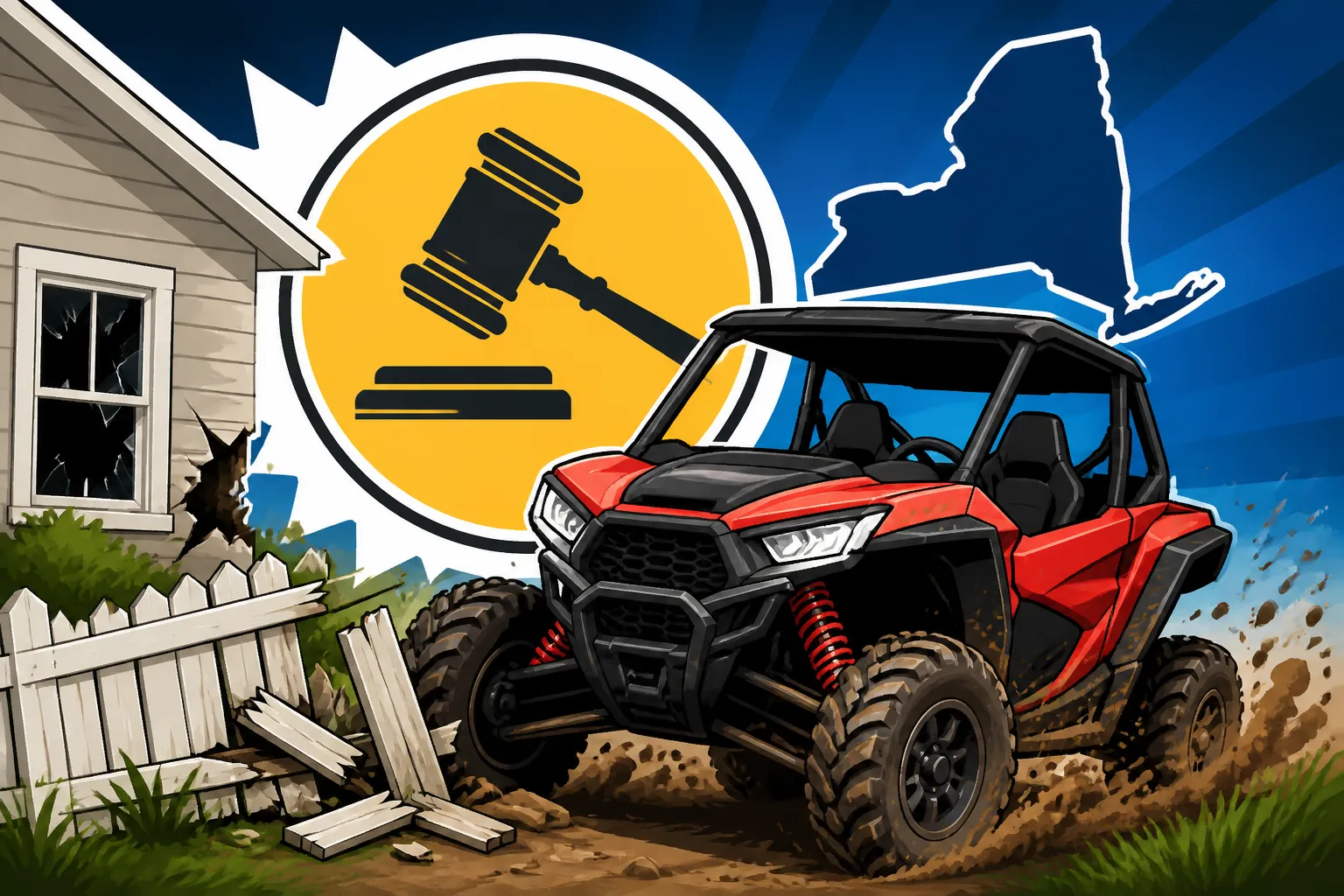
- A Farmer's Fence: You're cruising along a trail, maybe taking a sharp corner, and accidentally swerve, clipping a section of a farmer's fence that borders the trail. Your $10,000 property damage coverage would help pay for the materials and labor to repair or rebuild that fence. This is particularly relevant in areas like Lewis County, where many trails cross or border private agricultural land.
- A Neighbor's Mailbox or Landscaping: Perhaps you're riding a designated town road to get from one trail section to another, and you lose control, taking out a mailbox or even a small decorative shrub arrangement in someone's front yard. Your liability coverage would kick in to cover those repair or replacement costs.
- Another Vehicle (Parked or Moving): This is a big one. Imagine you're in a staging area, backing your quad out of a parking spot, and you misjudge the distance, bumping into a parked truck and leaving a dent. Or, worse, you're crossing a road and impact a passing car. Your property damage coverage would address the repairs needed for the other vehicle.
- Signage or Trail Infrastructure: On a maintained trail system, there might be informational signs, trail markers, or even small bridges. If your ATV causes damage to any of these, this coverage would help fund their repair or replacement.
These are just a few examples, but the core idea is simple: if you damage something that isn't yours, and you're responsible, this part of your insurance policy steps in to mitigate the financial impact on you. It's a lifesaver, truly, because property repairs can be surprisingly expensive.
Why $10,000 Might Not Be Enough
While $10,000 sounds like a fair amount of money, the reality of repair and replacement costs in today's world means that it can disappear surprisingly quickly. This is where a lot of riders find themselves in a bind, often realizing after an incident that their minimum coverage wasn't quite enough.
Consider the cost of a modern vehicle. A minor fender bender with a new truck or SUV can easily result in repair bills far exceeding $10,000. Even hitting something like a luxury mailbox post or a custom-built stone wall can rack up significant expenses. Labor rates for repairs, the cost of specialized parts, and the complexity of modern vehicles mean that what might seem like "minor" damage can quickly become a five-figure problem. If you were to damage a new car, for example, even a scratch could require painting multiple panels, and if any sensors or safety features are impacted, the costs can escalate.
Furthermore, if you damage property that requires cleanup or environmental remediation—say, you hit something that causes a small fuel spill—the costs can jump even higher, potentially eating into that $10,000 very rapidly. The minimum coverage is just that: the bare minimum. It provides a baseline of protection, but it's not necessarily tailored to the full scope of potential risks you might face on the trail or crossing a road. This is why many experienced riders choose to carry higher limits, giving themselves a larger buffer against unforeseen circumstances.
Practical Considerations for Your Policy
Understanding the basics of property damage coverage is one thing, but making sure your policy truly fits your needs and lifestyle is another. It's not just about ticking a box; it's about peace of mind.
Beyond the Minimums: When to Consider More
For many riders, the $10,000 minimum property damage coverage feels a bit light once they fully grasp what it might not cover. Think about the type of riding you do and where you do it. If you primarily stick to open fields on your own private land, your risk might be lower (though liability could still apply if you have guests). However, if you're frequently on county trails, riding near roads, or even participating in organized group rides, the chances of encountering other vehicles or valuable property increase significantly.
Many insurance providers offer higher property damage liability limits, often up to $25,000, $50,000, or even more, for a relatively small increase in your annual premium. It’s definitely worth getting a quote with higher limits to see the difference. That extra protection can be invaluable. It means that if you accidentally damage a vehicle that needs $15,000 in repairs, you won't be on the hook for the additional $5,000 out of your own pocket. This peace of mind allows you to focus more on the ride itself and less on "what if." It's part of ensuring you have adequate [New York ATV Insurance Minimum Coverage].
Finding the Right Insurer and What They Ask
When it comes to insuring your ATV, you'll want to work with a reputable insurance company that understands the unique aspects of off-road vehicle coverage in New York. Not all insurance companies are created equal, and some specialize more in powersports than others.
You'll need an insurer [Which Companies Can Legally Insure a New York ATV] and is authorized to do business in the state. When you contact them, they’ll typically ask about your machine (make, model, year, VIN), where you plan to ride (primary use), your riding history, and sometimes even if you have specific modifications. For instance, if you've added heavy-duty components like a SuperATV winch or a full skid plate package, these might be important details to share, as they speak to how you use and protect your machine.
They'll also ask about the coverage limits you want. This is your chance to discuss raising those property damage limits above the state minimum. Don't be shy about asking questions! Clarify what's covered, what's excluded, and how the claims process works. Understanding your policy up front is always better than finding out the hard way during an incident. Be sure to ask about any specific conditions related to [The Coverage Minimums New York Requires].
Keeping Your Ride and Your Wallet Safe
Responsible ATV ownership goes beyond just riding safely; it involves protecting yourself financially. The cost of an incident can truly overshadow the fun of the ride if you're not properly prepared.
The Consequences of Riding Uninsured
Ignoring New York's mandatory ATV insurance requirements is a risky gamble that can come with some very steep consequences. Riding without the proper liability coverage can result in significant fines and legal penalties. An officer who pulls you over or encounters you at a trailhead and finds you without valid insurance can issue a citation. These [New York Fines for Riding Without Insurance] can quickly add up, often costing far more than the annual premium for a policy.
Beyond the immediate fines, the real danger lies in what happens if you're involved in an accident without insurance. If you cause injury or property damage to another party, you become personally liable for all the costs. This means medical bills, vehicle repairs, legal fees, and potential lawsuits could come directly out of your bank account, your savings, or even lead to wage garnishments. It's a financial nightmare that no one wants to face, and it completely negates any perceived savings from not having a policy. While some might think [Riding Your Own Land Without Insurance] is fine, as soon as you step off that property, the mandate kicks in. It's essential to understand [When ATV Insurance Becomes Mandatory Off Your Own Land].
Protecting Your Investment
Of course, liability insurance focuses on damage to others, but protecting your own machine is also part of being a smart rider. While property damage liability won't cover your own ATV's repairs if you crash, having the right gear and making smart choices can reduce the chances of damage in the first place.
Many riders invest in protective accessories for their ATVs. Heavy-duty skid plates, like those you might find from a brand like SuperATV, can shield vital components like the engine, transmission, and differential from rocks, stumps, and other trail hazards. Robust bumpers, often from the same reputable manufacturers, can offer protection against impacts to the front and rear of your machine, minimizing damage during unexpected bumps or collisions. These accessories not only protect your ATV, potentially reducing your personal repair costs, but they also give you greater confidence to tackle challenging terrain. It's a proactive approach to keeping your machine in top shape, saving you headaches and money down the line. Remember to always have your [New York ATV Registration and Insurance Proof] on hand when you're out riding.
Here's a quick look at New York's minimum liability coverage:
| Coverage Type | Minimum Limit (Per Incident) | What It Covers |
|---|---|---|
| Bodily Injury (Per Person) | $25,000 | Medical expenses, lost wages for one injured party |
| Bodily Injury (Per Accident) | $50,000 | Total medical expenses, lost wages for all injured parties |
| Property Damage (Per Accident) | $10,000 | Repairs or replacement for another party's damaged property |
Disclaimer
This article is for general informational purposes only and does not constitute professional advice. Laws, prices and regulations vary by location and change over time. Consult a qualified professional for guidance on your specific situation.