Trails That Close Overnight in a Landowner Dispute
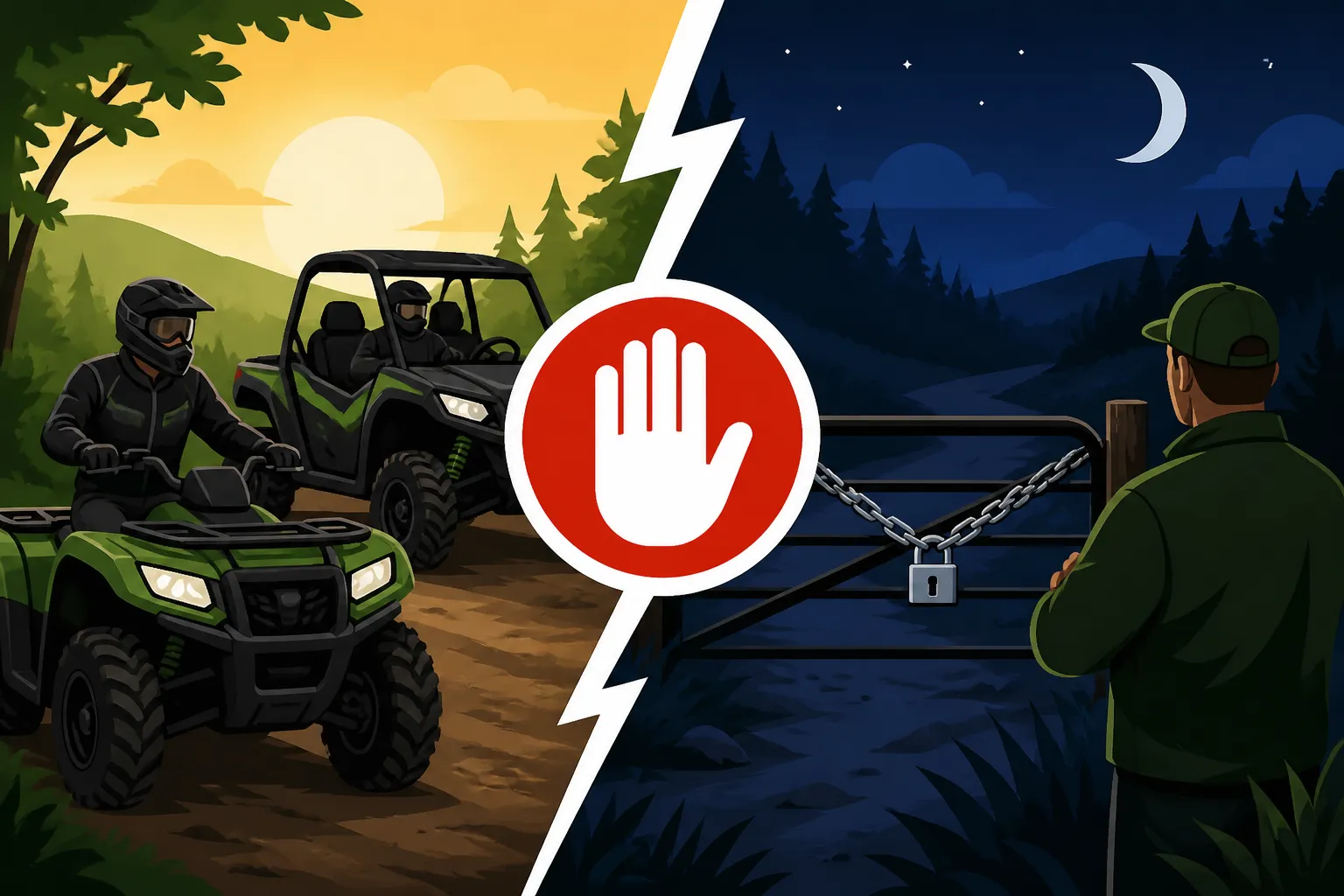
A New York ATV trail can be open when you plan a ride and closed by the time you reach it. When a landowner withdraws access or a dispute interrupts a trail agreement, a route may shut with little warning. Knowing what to check, what a permit does not guarantee, and how to respond to a closure can keep a changed plan from becoming a trespass problem.
Why a New York trail can close with little notice
Many riding routes depend on permission to cross private property. A county, club, or other trail manager may arrange access with landowners, mark a route, and maintain it, but the route can still depend on an agreement that changes. A landowner may withdraw permission, a property may be sold, or a disagreement may make continued access uncertain.
That is why a trail can close suddenly, even if it appeared on a recent map or was open on your last visit. A dispute does not necessarily mean every nearby trail is closed, but it can make one segment unusable or force a route change. The closure may also happen while riders are already on the trail system.
A permit is not a promise that every route will remain open for the whole season. Paying for access does not give you permission to cross land after the trail manager or landowner has closed it. Permit terms and the routes they cover can vary by system, so check the local rules rather than assuming that a pass authorizes access everywhere. For more on the role of access permits, see New York ATV Trail Permits Explained and New York Club Trail Rules.
Landowner relationships are part of how many trail systems operate. Agreements can set out where a route crosses a property, when riders may use it, and what conditions apply. Those arrangements help make access possible, but they do not necessarily prevent a closure if circumstances change. Landowner Agreements That Keep Trails Open explains why cooperation matters, while What Happens When a Landowner Pulls Trail Permission focuses on what can follow when that permission ends.
A sudden closure can be particularly confusing if a route is shown on an old map, appears in a trail app, or is marked by signs that have not yet been removed. Those sources may lag behind a current notice. Treat a current closure notice or instruction from the responsible trail manager as more reliable than an older map or a report from a previous ride.
| What you see | What it may mean | Safer response |
|---|---|---|
| A current closure notice from the trail manager | The route or a section is closed, possibly until further notice | Follow the notice and use only an authorized alternate route |
| A closed gate, barrier, or closure sign | Access is restricted at that point | Do not go around, move, or cross the barrier |
| An older map showing the trail as open | The map may not reflect a recent access change | Check a current county or club update before riding |
| Riders continuing past a closure | Their choice does not establish that the route is open | Turn back and verify the status with the trail manager |
| A permit covering a local trail system | It may allow use of specified routes, subject to current conditions | Confirm which routes remain open; do not treat the permit as landowner permission |
What to do when you find a closure on the ride
Stop before entering the closed section. Read the posted notice, note where it applies, and follow any instructions about turning around or using a signed detour. If the notice is unclear, do not try to resolve the uncertainty by riding farther. Contact the county, club, or trail operator responsible for that route and ask whether an alternate is currently authorized.
Avoid creating your own detour across nearby land. A field, logging road, utility corridor, or unmarked trail is not automatically open to ATVs because it looks like a way around the closure. Permission for one route does not transfer to adjacent property. The safest option is to retrace your route to a known open junction or staging area and confirm an authorized way forward. [New York Rules for Riding Off a Marked Trail] provides useful context on why leaving a designated route can create separate problems.
Do not remove a sign, open a gate, move a barrier, or follow another rider through a closed area. Even if you think the closure is temporary or the dispute is unfair, the landowner and trail manager—not individual riders—need to resolve access. Passing a barrier can put the rider in conflict with a restriction and can make it harder for the trail system to maintain good relationships with landowners.
If you are part of a group, tell everyone to stop and regroup before making a decision. A rider at the front may not have seen the notice, and riders behind may assume that the group has permission to continue. Agree on a safe return route, keep the group together where practical, and avoid splitting up to search for an unofficial bypass.
When a closure leaves you uncertain about the rest of the route, take a moment to record what you know: the trail name or marker, the nearest junction, the wording of the notice, and whether it identifies a boundary or alternate route. A photo can help you describe the situation to the trail operator, provided you stop in a safe place and do not cross the closure to get a better view. Share the information through the operator’s preferred contact channel rather than relying only on informal rider posts.
A closure may affect only one segment, or it may change a longer loop. Do not assume that the nearest connecting trail is open simply because it is not named on the sign. Check the full route before continuing, especially when the detour would take you toward private property or outside the trail system. New York Trail Closures to Check First and Checking a County Notice Before You Load can help with pre-ride checks and interpreting local updates.
How to check access before and during a ride
Before loading your machine, check the current information from the organization that manages the trail system. Depending on the area, that may be a county, a club, or another local operator. Look for notices about landowner access, closed segments, detours, seasonal restrictions, and changes to staging or parking. If the system publishes a map, check whether it is current and whether it includes a date or revision note.
When the status is not clear online, contact the trail manager directly. Ask a specific question: Is the route open today? Does the closure affect the full trail or only one segment? Is there a signed alternate, and where does it begin? A general statement that a trail system is open may not answer whether a particular landowner crossing is available.
Build flexibility into your route. Choose a ride that has a reasonable return option if one section is closed, and avoid planning around a single connection that you have not confirmed. If your route crosses several jurisdictions or club-managed sections, check each relevant source. A permit or open-trail notice for one area does not establish access in another.
Keep in mind that an out-of-state registration or a permit does not override a local trail closure. Visitors should confirm both that their machine and registration meet applicable New York requirements and that the route is open to them. New York ATV Reciprocity With Other States and Riding New York With an Out-of-State Plate address visitor registration questions; neither should be read as permission to ride a closed trail.
On the day of the ride, check for updates again before setting out. Conditions and access can change after an earlier planning check. At the trailhead, read signs and notices even if your map or phone shows the route as open. Keep a current map available, but use it as a navigation aid—not as proof that every mapped segment remains authorized.
If you discover a closure that is not reflected in the information you checked, report it to the trail operator with the location and the notice details. A clear report can help the operator update maps and alert other riders. Avoid posting speculation about the dispute or naming people involved; the useful information for other riders is which route is closed, where the restriction begins, and where to find an official update.
What a closure means for permits, plans, and future access
A closure does not necessarily mean that the entire trail network has shut down, nor does it mean that a route will reopen on a particular schedule. Access may be restored after the parties resolve a problem, moved to a different alignment, or remain unavailable. Until the manager confirms a change, plan around the closed segment rather than guessing that it will reopen soon.
If you bought a permit and a portion of the system closes, ask the permit seller or trail manager what options apply. Do not assume the permit automatically guarantees a refund, a substitute route, or access to a different trail system. Policies depend on the provider and the specific permit. New York ATV Trail Permit Cost explains the costs of a local permit, but the current seller is the right source for questions about its terms and what happens when access changes.
A permit system is also different from registration and insurance. A trail permit does not replace the legal requirements that apply to the machine or rider, and registration does not grant access to private property. Before setting out, check the relevant requirements as well as the route status. If you are riding from another state, confirm the rules that apply to your registration and insurance separately from the local trail permit and closure notices.
A considerate response can help protect future access. Turn back when a route is closed, stay on routes the manager identifies as open, and share accurate closure information with your group. Landowners and trail operators need confidence that restrictions will be respected. Riders who treat a closure as optional can damage that confidence and contribute to further limits on access.
The practical rule is simple: verify the route with the organization responsible for it, obey signs and barriers on the ground, and use only an authorized alternate. If access has changed overnight, adapt the ride rather than trying to negotiate your own way through the dispute.
Disclaimer
This article is for general informational purposes only and does not constitute professional advice. Laws, prices and regulations vary by location and change over time. Consult a qualified professional for guidance on your specific situation.