Where New York Trail Permit Money Goes
Where New York Trail Permit Money Goes
When you buy a New York ATV trail permit, it is natural to wonder what your payment actually supports. The answer depends on which permit you bought: New York does not have one statewide trail pass, and a county or private trail system may handle its revenue differently from the state’s registration program. Here is how to tell the money streams apart and how to check what a particular permit helps pay for.
First, separate a trail permit from ATV registration
The most important distinction is that an ATV registration and a trail permit are not the same payment.
Registration is handled through New York’s motor-vehicle registration system. It establishes that a machine is registered under state requirements. Registration does not, by itself, give you permission to ride every trail in New York. Trail access depends on where you ride, who operates the route, and what that operator requires. For the basics, see Do You Need to Register an ATV in New York?.
A trail permit, pass, or membership is different. It may be required by a county trail system, an ATV club, a private park, or another land manager as a condition of access. The fee may help support that particular system, but it does not replace registration, insurance, or permission to ride on the land.
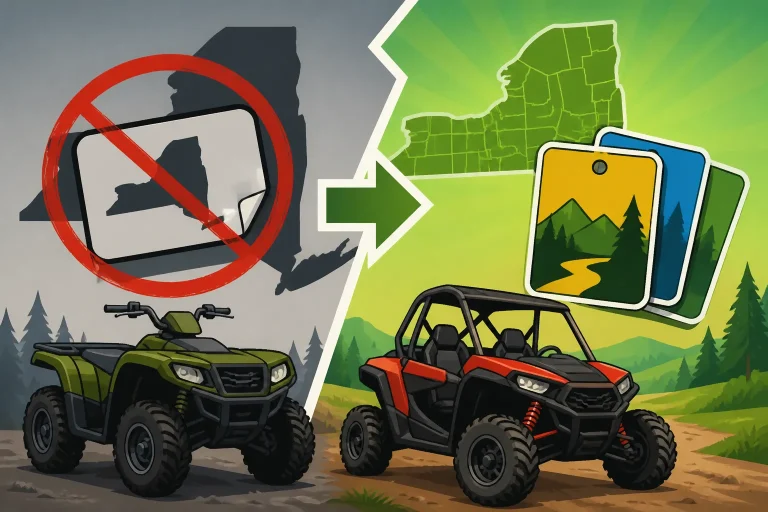
New York has no single statewide ATV trail pass that automatically covers its county systems. The permit rules and money flows can therefore vary from place to place. Why New York Has No Statewide Trail Pass explains why riders may need to check the local system rather than look for one universal sticker.
| Payment | What it generally does | Who handles it | What it does not automatically provide |
|---|---|---|---|
| ATV registration | Registers the machine under state requirements | New York State | Access to every trail |
| County trail permit | Supports or authorizes use of a participating local system, subject to that system’s rules | County or designated operator | State registration or permission to ride unrelated trails |
| Club membership or pass | Supports or authorizes access to the club’s trails, according to club rules | ATV club or trail operator | Access to trails outside the club’s agreement |
| Private park admission | Pays for access to that specific facility and its services | Park operator | Permission to ride on public or county trails |
The table is a starting point, not a promise that every organization uses the same accounting method. Before paying, look at the permit’s stated coverage, who sells it, and any rules or terms attached to it. A sticker can be a condition of access without being a statewide credential.
The main paths trail money can take
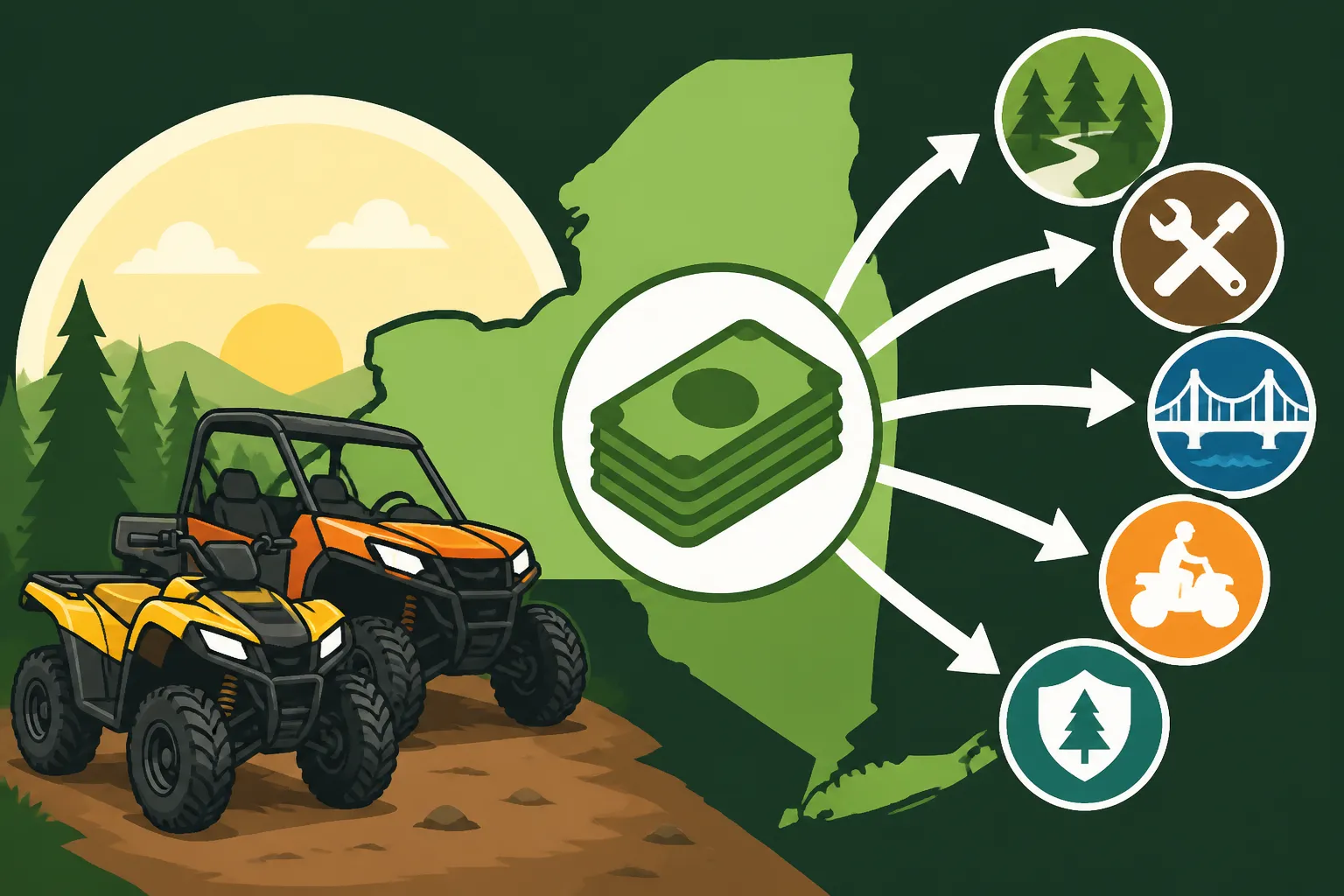
Trail revenue rarely goes straight from a permit purchase to one visible repair. It may be combined with other funding, assigned to a program, or spent through agreements with towns, clubs, and landowners. The details depend on the system.
Local permit revenue
A county or other local operator may use permit receipts to help run and maintain its trail network. That work can include routine upkeep, signs, gates, trailhead services, insurance, and coordination with the people who allow trails across their land.
The operator may do the work directly, contract for it, or support a club that performs part of the maintenance. A volunteer club’s role does not necessarily mean the permit revenue is paid directly to that club. The money might instead pay for materials, equipment, services, or administrative costs that help the club or county keep a route open.
For a specific system, check the permit seller’s explanation rather than assuming that all proceeds go to one named trail crew. County Permits Instead of a State Sticker is a useful starting point for understanding why local systems can have separate permit rules.
State-supported trail grants
New York also has state-level ATV trail grant programs. These are separate from the permit you may buy for a particular county system. Grants can help eligible municipalities and other approved entities develop, improve, or maintain trails, subject to the program’s rules and the approved project.
Registration-related revenue supports state trail development and maintenance through grant processes. That does not mean every registration payment is sent to the trail you ride, or that every county receives the same amount. Grant funding is governed by eligibility, applications, approvals, and available funds. The details of the program and its current requirements should be checked with the relevant state agency. Trail Grants Funded by Registration and Which New York Counties Get ATV Trail Grant Money cover those broader funding questions.
A county grant award is not the same as a county trail-permit sale. The money may come through a different channel, be restricted to an approved purpose, and require reporting. A county could use more than one source to support its trail system, but the sources should not be treated as interchangeable.
Club dues and voluntary contributions
Some systems depend on ATV clubs to maintain trails, communicate with landowners, mark routes, organize work days, or help riders understand local rules. Club dues may support those activities, but the club’s finances are separate from a county’s permit revenue unless an agreement says otherwise.
A membership may also provide access to trails that are not part of a county-wide network. In that case, paying club dues may be an access condition and a way to support the club, but it does not necessarily buy access to every nearby route. Check the club’s current rules and the coverage of any pass before planning a ride.
Other local funding
Trail systems may also rely on local budgets, grants, donations, volunteer labor, landowner contributions, or in-kind support. “In-kind” support means help provided as goods or services rather than cash—for example, equipment use, materials, or staff time.
That support matters because trail work can be costly even when no one is paid to ride a machine along the route. A bridge, culvert, drainage fix, sign, or trailhead improvement can involve planning and approvals as well as labor and materials. Permit receipts may cover only one part of the total cost.
What trail permit money may pay for
The purpose of a permit fee is usually easier to understand when you follow the work it helps make possible. The actual budget categories differ among operators, but common trail-system expenses include the following.
Trail maintenance and drainage
Routine maintenance can include clearing fallen branches, trimming vegetation, filling or grading damaged sections, maintaining drainage, and addressing erosion. Water management is especially important: a route that is not draining properly can become rutted, muddy, and more expensive to repair.
A reasonable maintenance plan may involve temporary closures. Closing a trail after heavy rain or during a thaw can protect the surface and reduce the chance of a small repair becoming a major one. A closed trail is not necessarily a sign that permit revenue has been wasted; it may mean the operator is trying to prevent avoidable damage.
Signs, gates, and route information
Signs help riders stay on authorized routes, understand closures, and find their way through a system. Gates and barriers may help prevent unauthorized use or protect a trail during a seasonal closure. Markers also need to be replaced when they are damaged, removed, or hard to see.
Map production and route information can be part of a system’s operating costs. So can maintaining notices about closures, detours, and seasonal conditions. These costs are less noticeable than a new bridge but can be essential to keeping riders on routes where access has been approved.
Landowner coordination
Many trails cross or use private property through agreements with landowners. Keeping those agreements in place takes communication and care. The operator may need to address concerns, repair damage, keep riders on the marked route, or change a route when a landowner’s needs change.
The money that supports this work may not show up as a visible trail improvement. It can help maintain the relationship that allows a route to remain open at all. Riders also have a role: staying on the marked trail and respecting closures helps protect access that could otherwise be lost.
Trailheads and rider services
Depending on the system, costs may include trailhead signs, parking-area upkeep, maps, public information, or other services. A permit may contribute to these expenses even if the rider never uses every facility.
Not every trail system offers the same services. Some have formal staging areas and extensive route information; others rely more heavily on club communication and basic signage. When comparing permits, consider what the system actually offers and what area the permit covers, rather than judging only by the sticker or card.
Planning, administration, and compliance
A trail network has administrative work behind it. Operators may need to handle permits, financial records, insurance, agreements, grant applications, environmental or land-use review, and required reports. Those activities can be part of the cost of operating a lawful, sustainable system.
Administrative spending is not automatically waste. Accurate records and clear agreements can help protect a trail network and demonstrate that funding was used for allowed purposes. Still, a rider is entitled to ask how the system accounts for its revenue and what information is available.
Why one permit does not fund every New York trail
The phrase “New York trail permit” can sound like a single statewide product, but it may refer to several different things. A permit sold for one county system may cover only that system. A club membership may apply to specific club trails. A private park ticket may cover only the operator’s property.
That is why riders should not assume a permit from one county pays for, or grants access to, trails in another county. The state does not issue one universal trail pass for the whole network. New York ATV Trail Permit Cost and Where to Buy a New York ATV Trail Permit can help with the practical questions of what a permit costs and where to obtain it, but confirm coverage directly with the system before traveling.
A few common situations cause confusion:
- A state registration is mistaken for a trail pass. Registration is important, but it does not make a closed or unauthorized route open.
- A permit from one local system is assumed to work elsewhere. Read the coverage terms; nearby trails may have different operators.
- A club membership is assumed to equal county-wide access. Membership benefits depend on the club’s agreements and rules.
- A grant is mistaken for permit income. A grant may support a project without being funded by the permit a rider bought at a local office.
- A permit sticker is treated as proof of every requirement. Riders may still need valid registration, insurance, landowner permission, or other required documents.
If you plan to ride across system boundaries, identify the operator for each section of your route. A county map, club notice, or trailhead sign can help, but check for current closures and rules before loading the machine. New York Trail Conditions Before You Ride and New York Trail Closures to Check First offer useful planning reminders.
How to find out where a specific permit’s money goes
If you want a reliable answer for a particular permit, start with the organization that sells it. Ask both what the permit covers and how the proceeds are used. Those are separate questions: an operator may explain access clearly but provide less detail about its finances.
Ask for the right information
A focused question is more likely to get a useful response than a general complaint that a trail needs work. You might ask:
- Which trails or trail system does this permit cover?
- Which organization receives the payment?
- Is the fee restricted to trail use, or does it support broader operating costs?
- Does the operator publish a budget, annual report, grant list, or project summary?
- Are clubs or municipalities paid or reimbursed for work?
- Does the permit revenue support maintenance, landowner agreements, signage, insurance, or administration?
- How are closures and repair priorities decided?
The goal is not to demand that every dollar be spent directly on a visible trail repair. It is to understand who controls the money, what purposes are allowed, and how the system reports its work.
Look for public records and project updates
If the permit is issued by a county or municipality, look for budget documents, meeting materials, grant announcements, purchasing records, or project updates from the responsible office. A county may not publish a rider-friendly accounting page, but its public information can still show how a program is funded and what work is planned.
For state grant money, look for the program’s current eligibility and award information from the administering agency. Grant records may identify the recipient and the approved project, but they will not necessarily tell you how local permit revenue is used.
For a club-run system, ask the club for its membership or permit terms and any available financial or trail-work summary. Volunteer groups may have limited staff and may not publish a detailed public budget. Even so, they can often explain the work they perform and how they coordinate with landowners or local partners.
Match the answer to the right money stream
When you receive an explanation, check that it is about the payment you made. A statement about state registration revenue does not answer where county permit proceeds go. A grant award does not prove that local permit sales funded that project. A club’s maintenance work does not by itself show whether the county reimbursed the club.
This is a useful way to organize the answer:
- Identify the payment: registration, county permit, club dues, park admission, or donation.
- Identify the recipient: state agency, county, municipality, club, or private operator.
- Identify the rules: whether the money is restricted or can support general operations.
- Identify the work: maintenance, access agreements, facilities, signs, administration, or other approved costs.
- Identify the reporting: where the operator explains spending or project results.
That simple separation can resolve many arguments about whether “the permit money” is being spent properly. Often, people are talking about different payments without realizing it.
What riders can do to help the money go further
A permit fee supports a system, but rider behavior can affect how much work the system needs. A route damaged by avoidable misuse takes resources away from planned maintenance and can strain landowner relationships.
- Check closures before leaving home. Riding around a gate or ignoring a posted closure can damage a vulnerable section and create problems for the operator.
- Stay on marked routes. Cutting a new line can damage land, create erosion, and put a landowner’s agreement at risk.
- Avoid soft or saturated trails. If a route is muddy because of rain or thaw, a short delay may prevent deep ruts and costly repairs.
- Report hazards clearly. Give the operator a location, trail marker, and concise description. A photo can help, but do not stop in a dangerous place to take one.
- Follow trailhead parking rules. Blocking a gate, driveway, or work area can create access problems unrelated to the trail itself.
- Support local stewardship. If a club organizes a work day, volunteer help can complement permit funding. It does not replace the operator’s responsibility to explain the permit or follow grant conditions, but it can make maintenance more effective.
It can also help to keep your permit and route information organized. A printed copy of a receipt or permit confirmation can be useful if your phone battery dies or there is poor service. A clear waterproof document sleeve from a local outdoor shop—or Amazon—can protect paper copies from rain and mud. Amazon is not an official permit source, so buy the permit from the county, club, park, or other authorized seller and keep the confirmation from that seller. If you use a phone for maps, a weather-resistant pouch or mount—available through retailers such as Amazon—can make the map easier to consult, but download or print the route information before entering a cell dead zone.
Keep the basic items together: permit proof, registration documents, insurance information, and the map or route details for the system you plan to ride. An Amazon document pouch may be a convenient way to store copies, but it does not make an expired permit valid or expand where that permit applies.
A practical way to judge a permit’s value
The value of a trail permit is not always visible on the next ride. A fee may help pay for drainage work, signs, landowner coordination, insurance, or the staff time needed to keep agreements and records in order. Those costs can matter as much as a freshly graded section.
When deciding whether a permit is worthwhile, consider:
- whether the trails it covers are places you actually intend to ride;
- whether the operator keeps route information and closure notices current;
- whether there is evidence of maintenance or active landowner coordination;
- whether the system explains its access rules and permit coverage;
- whether the permit supports a network you want to keep open.
If the information is vague, ask the permit seller or operator for clarification before buying. If you still cannot tell where the money goes, ask who receives the payment and where the program’s budget or reporting can be reviewed. A precise question often reveals whether the fee is a local access charge, a membership contribution, a state-related registration payment, or something else.
Most of all, do not judge one system’s finances by another system’s permit. Different counties and operators have different arrangements, responsibilities, and trail conditions. A comparison is useful only when you are comparing the same kind of payment and the same kind of service.
Disclaimer
This article is for general informational purposes only and does not constitute professional advice. Laws, prices and regulations vary by location and change over time. Consult a qualified professional for guidance on your specific situation.