Riding a Farm Field in New York
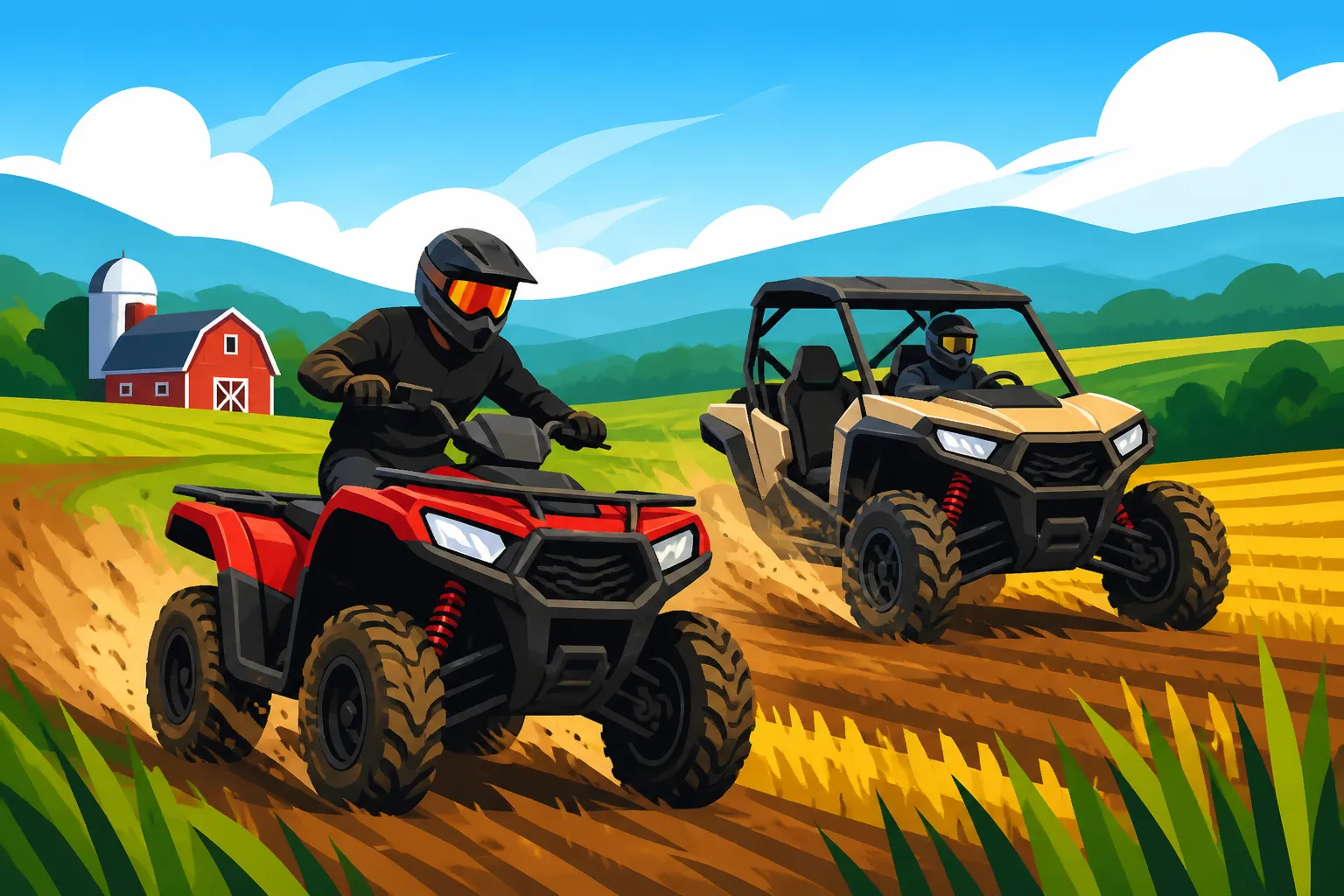
Riding an ATV across a New York farm field may seem like a private matter, but permission to enter the land does not settle every question. Registration, the narrow agricultural exemption, insurance, and rider-safety rules can still matter. The key is to distinguish genuine farm work from recreation and confirm that both the machine and the route are allowed.
Permission to ride is the first requirement
A farm field is private property, not an open riding area. Get permission from the person who has authority over the land before unloading or riding. That may be the owner, but a tenant or farm operator may also control access under a lease or other agreement. If it is unclear who can authorize riding, ask before you go.
Permission should be specific. Agree on which field or track you can use, when you can ride, and whether you may bring other riders. A general invitation to visit the farm may not mean you can ride across planted fields, pasture, or farm lanes. Written permission is a sensible way to avoid misunderstandings, especially if you are visiting regularly or bringing a group.
New York’s rules on permission apply even when the land looks unused. Do not assume that an open gate, tire tracks, or a familiar route means riding is allowed. A landowner can set conditions or withdraw permission. The practical rules in New York Landowner Permission Rules and New York Rules for Riding Private Land are useful starting points.
Farm operations also create hazards that may not be obvious from the trail. A route can cross drainage ditches, electric fencing, irrigation equipment, freshly planted ground, or an area where livestock are kept. Ask about hazards, gates, and restricted areas. Keep clear of crops and equipment, and leave gates as you found them. Avoid riding close to animals, buildings, workers, or machinery.
If you are using a farm lane to reach a field, clarify that route separately. A farm lane may connect to a public road, pass through another person’s property, or be used by farm vehicles. Permission to ride in one field does not automatically extend to the lane or neighboring land. For the distinction between a field and a travel route, see New York Rules for Riding a Farm Lane.
Most importantly, permission to ride on private property does not turn the property into a public ATV trail. It does not give you the right to continue onto a road, trail, utility corridor, or adjoining parcel. Each part of the route needs its own legal basis and permission.
A farm location does not automatically exempt the ATV from registration
New York has a limited agricultural exception for certain ATVs used exclusively for agricultural purposes. It is not a blanket exemption for every quad used on farmland, and a machine does not qualify simply because its owner is a farmer or it is stored in a barn.
The important distinction is the machine’s use. An ATV used for farm work may fall within the agricultural exception if it meets the applicable requirements. An ATV taken out for recreation on the same farm is a different case. A recreational ride does not become agricultural use just because it takes place in a field or the rider helps with a chore before or after.
The exception is narrow enough that mixed use deserves careful attention. If a farm machine is also used for ordinary recreational riding, do not assume it remains exempt. Confirm the current requirements with the New York DMV before relying on an exception. Does a Farm-Only Quad Need New York Registration? explains why the word “exclusively” matters, while Registering a Farm Quad in New York covers the registration question more directly.
| Situation | What to consider |
|---|---|
| ATV used only for qualifying farm work | Check whether the machine and its use meet New York’s agricultural exemption requirements |
| Farm ATV also used for recreation | Do not assume the farm exemption applies; confirm whether registration is required |
| Recreational ATV ridden in a farm field | Treat it as recreational use, even though the location is farmland |
| Visitor rides an out-of-state ATV on a farm | Check New York’s rules for the machine’s registration and any applicable reciprocity |
| ATV crosses a road to reach the field | Farm permission alone does not authorize road use; check the rules for that road and crossing |
Registration status and permission are separate questions. A registered ATV still needs permission to ride someone else’s field. Conversely, the landowner’s permission does not automatically excuse a machine from registration requirements.
If you are visiting from another state, do not assume that an out-of-state plate or registration settles the question. New York’s treatment of visiting machines can depend on the registration and reciprocity rules that apply. Check New York ATV Reciprocity With Other States before riding, particularly if you plan to use any route beyond the private field.
Also check the machine itself before buying or bringing it to the farm. A side-by-side or other vehicle that cannot meet New York’s ATV definition may not qualify for ATV registration, even if its owner intends to use it only on private land. Registration eligibility is a separate issue from the landowner’s willingness to allow access.
Safety, insurance, and rider rules still need attention
A farm field may have less traffic than a public trail, but it is not automatically a low-risk place to ride. Hidden holes, wet ground, slopes, loose fencing, farm equipment, and other people can all lead to a crash. Choose a route that fits the machine and rider, keep a safe speed, and stop if farm work or changing conditions make the route unsafe.
Wear a helmet and appropriate protective gear. New York’s helmet rules have details and exceptions, but permission to use a neighbor’s farm is not the same thing as owning the land. The safest course is to wear a properly fitted helmet on every ride and check New York Helmet Law for ATV Riders if you need to understand how the rule applies to your situation.
Age rules matter too. A child’s ability to ride on private property does not mean every age, machine, or level of supervision is permitted. New York has additional requirements for riders under 16, including rules that depend on age and circumstances. Review New York Rules for Riders Under 16 before allowing a young rider to use a farm ATV. Match the machine to the rider’s size and experience; an adult-sized machine can be difficult for a young rider to control.
Do not overlook insurance. New York’s ATV insurance requirements can depend on where the machine is operated and who owns the property. An exception that applies on the operator’s own property should not be assumed to cover a neighbor’s field. A landowner’s permission is not an insurance policy, and a standard auto or homeowners policy may not cover an ATV accident. Check New York ATV Insurance Requirement and ask your insurer to confirm in writing what the policy covers on someone else’s farm.
Before riding, check the machine’s condition and the farm’s rules. A quick inspection can catch loose controls, damaged tires, leaking fuel, or a malfunctioning brake. New York also has ATV equipment requirements; New York Equipment Requirements for ATVs can help identify what to check. Carry registration and insurance proof when applicable, and make sure the documents match the machine.
A practical check before you unload
A short conversation with the farm operator can prevent most avoidable problems. Before bringing the ATV onto the property, work through these points:
- Confirm who can grant permission. Ask the landowner or the person authorized to manage the property. Do not rely on an assumption based on past access.
- Agree on the exact route. Identify the field, lane, entry point, and any areas that are off limits. Ask whether conditions have changed since your last visit.
- Clarify the purpose of the ride. If the ATV is being used for farm work, keep that distinct from recreation. If it will be used recreationally, check whether registration is required.
- Check the machine’s status. Confirm that its New York registration or applicable out-of-state registration is valid, or verify that a specific exemption applies.
- Confirm insurance coverage. Ask your insurer about riding on property you do not own. Do not rely on the landowner’s policy to protect you.
- Review riders and equipment. Make sure the rider is allowed to operate the machine, wears a helmet and suitable protective gear, and can control the ATV safely.
- Plan for farm activity. Avoid livestock, workers, crop areas, and operating equipment. Stop and move off the route if farm work begins.
- Keep to the authorized land. Do not extend the ride onto public roads, neighboring parcels, or trails without checking the separate rules and obtaining any needed permission.
If a neighbor offers access for the weekend, treat that as permission for the agreed area and time—not as a waiver of registration, insurance, or safety obligations. If the ATV will be used repeatedly for farm work, get clear advice on whether the agricultural exemption applies to that machine and use. If the ride is recreational, plan on following the ordinary rules unless an official source confirms a specific exception.
The short version: you need the right person’s permission, but permission alone is not enough. Check the ATV’s registration status, distinguish farm work from recreational riding, confirm insurance, and keep the ride within the agreed field or route.
Disclaimer
This article is for general informational purposes only and does not constitute professional advice. Laws, prices and regulations vary by location and change over time. Consult a qualified professional for guidance on your specific situation.