Which Adult Signs a New York Waiver
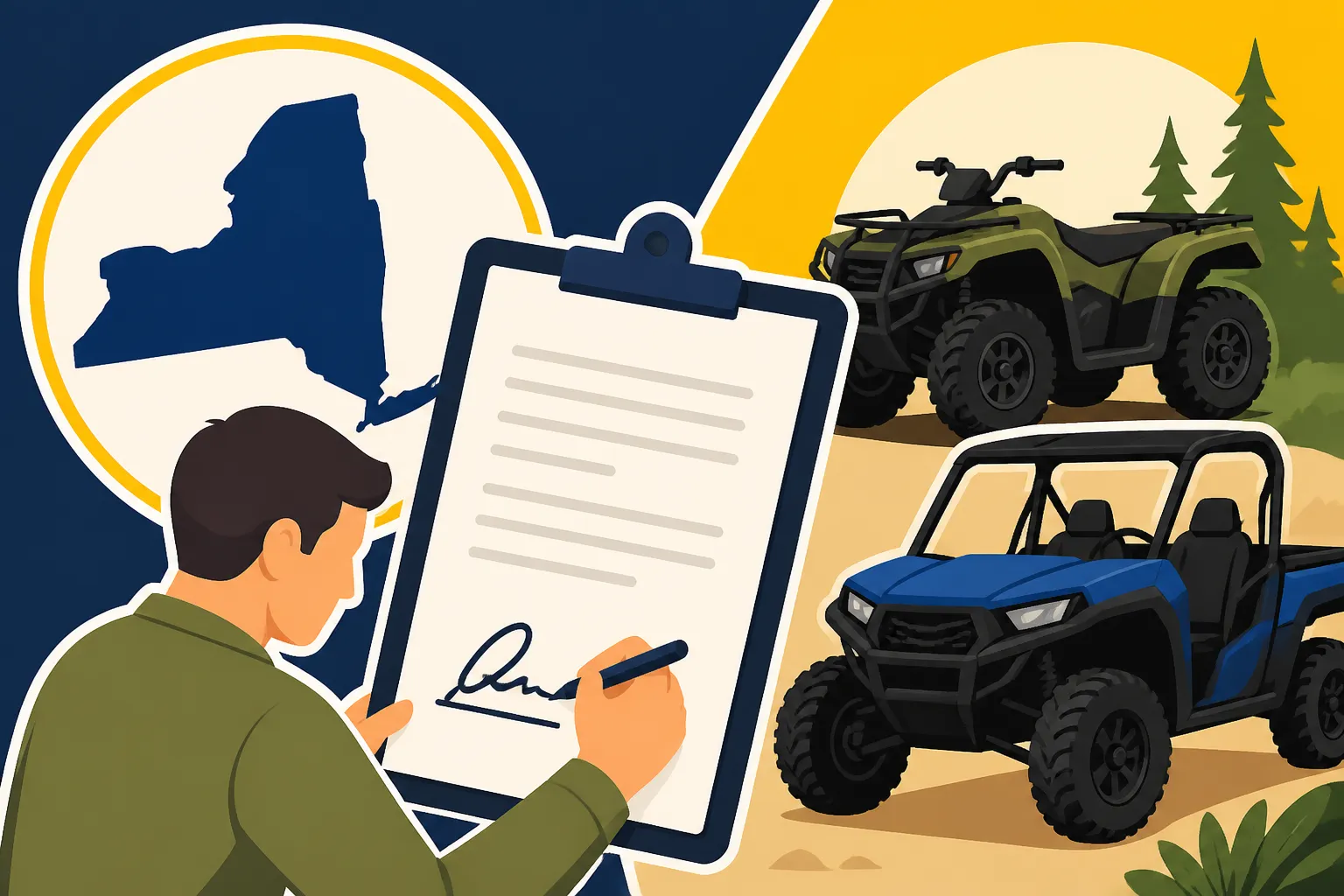
A teenager may be allowed to ride only if several separate requirements are met, and a signed waiver does not settle all of them. For a New York ATV rental, the parent or legal guardian is generally the adult to ask about signing for a minor. The rental operator’s form and rules matter, too, so confirm who must sign before you arrive.
Who should sign a waiver for a minor?
If the rider is under 18, contact the rental operator and ask whether a parent or legal guardian must sign the waiver, whether the minor must sign as well, and whether the adult must be present. Many operators require the parent or guardian to complete the paperwork themselves rather than relying on a teen to bring a form signed at home.
A parent is usually the clearest choice. A court-appointed legal guardian may also be able to sign, but should check what proof the operator accepts. A grandparent, stepparent, older sibling, family friend or other accompanying adult is not automatically a child’s legal guardian. The operator may accept a different adult under its own policy, but do not assume that an adult’s presence or verbal permission is enough.
The answer can depend on the actual form and circumstances. A company might ask an adult to sign as the minor’s parent or guardian, while asking the minor to acknowledge safety rules or confirm that instructions were understood. If both signature lines appear, follow the form and ask the operator rather than leaving one blank.
| Situation | Practical next step |
|---|---|
| Rider is under 18 and a parent is attending | Ask whether the parent and minor both need to sign, and bring required identification. |
| Rider is under 18 and a legal guardian is attending | Ask what documentation the operator accepts to confirm guardianship. |
| Rider is under 18 and another adult is attending | Confirm directly whether that adult can sign; do not assume they can sign as a parent or guardian. |
| Rider is 18 or older | The adult rider generally completes their own paperwork, subject to the operator’s requirements. |
| The form is unclear or unavailable before the visit | Contact the operator before traveling and request its current instructions. |
If parents share custody or guardianship, check whether the operator requires one signature or more. Do not infer that a parent’s signature automatically covers another child, another adult rider, or every person in a group. Each participant may have separate paperwork.
These practical steps are especially important when Renting a Machine to a Fifteen-Year-Old. An operator may have a minimum age, supervision policy, machine restrictions or other conditions that affect whether a particular teen can ride at all. A waiver signature does not make an otherwise ineligible rider eligible.
What the waiver does and does not establish
A waiver or rental agreement can document that a rider received instructions, acknowledged risks, agreed to follow stated conditions or accepted responsibility for certain matters. The precise language matters. A signature does not, by itself, prove that every clause is enforceable or that the operator is free from every responsibility. The legal effect of a form can depend on its wording and the circumstances.
For a minor, treat the adult signature as part of the rental and permission process, not as a substitute for checking the rules. Do not sign a statement that is inaccurate, such as one claiming authority you do not have or confirming training the rider did not receive. If a clause is confusing, ask the operator to explain it before signing. For a serious legal dispute or a form that raises concerns you cannot resolve with the operator, seek advice from a qualified attorney.
A signed waiver also does not automatically authorize a minor to operate an ATV. New York age and supervision rules can depend on the rider’s age, where the machine is being used and the circumstances. Review New York Rules for Riders Under 16 and New York Supervision Rules for Minors, then ask the rental company how those requirements apply to its route and equipment.
The distinction is useful:
- Permission and rental paperwork: Who is allowed to sign, what the rider acknowledges and what the operator requires.
- Rider eligibility: Whether the rider’s age and circumstances allow them to operate that machine in that location.
- Trail or land access: Whether the route is open to the rider and machine, and whether a permit or other authorization is needed.
- Safety and insurance: What equipment, coverage and proof are required for the planned ride.
For more on rental-specific requirements, see New York Rules for a Rented Machine. A rental company’s waiver policy can be stricter than the minimum rules a rider might otherwise face. Conversely, an operator’s willingness to rent to a teen does not mean every public trail, landowner or event will allow that teen or machine.
What to confirm with the rental operator
Call or message the operator before booking, especially if the rider is under 18. Ask concise, specific questions and write down the answers, including the name of the person who gave them.
- Who must sign? Ask whether a parent or legal guardian must sign, whether the minor also signs, and whether every rider completes a separate form.
- Must the adult attend? Confirm whether the signing adult must be present at check-in or can complete paperwork in advance.
- What proof is required? Ask what identification is needed and what documentation is accepted for a legal guardian or other authorized signer.
- Can this rider use this machine? Give the rider’s age and ask about the machine, route, supervision and any training or certificate requirements.
- What does the rental include? Confirm what equipment, instruction, insurance information and trail access arrangements are included, if any.
- What should you bring? Ask about required clothing, protective equipment, identification, registration or other paperwork.
- What happens if the paperwork is incomplete? Check whether the operator will refuse the rental, allow forms to be completed on site or require rescheduling.
Use the operator’s current form rather than an old copy found online. Policies can differ between rental companies and may change. If the operator says an accompanying adult can sign for a minor, ask what authority or documentation it requires, and make sure the form identifies the signer’s role accurately.
If the adult signing is also riding, that adult should expect to complete their own paperwork as a participant. A signature for a minor should not be treated as permission for the adult to ride, nor should a participant’s signature be assumed to cover a second rider.
The waiver is separate from trail permits and riding rules
A rental waiver is not a New York trail permit, registration, insurance policy or safety certificate. Those requirements address different parts of a ride. Before setting out, confirm which obligations apply to the machine, the rider and the specific route.
For example, a permit may apply to a particular trail system rather than to every place in New York. Check Do You Need a Trail Permit in New York? and New York ATV Trail Permit Cost for the permit question, then verify that the route you plan to ride accepts the rental machine and rider. Do not assume that a rental booking includes permission to use a county or club trail.
A safety certificate is another separate matter. Check New York ATV Safety Certificate Requirements and ask the operator whether the rider needs a certificate for the planned activity. If a certificate is required, a parent’s signature on rental paperwork does not replace it.
Registration and insurance also remain separate from the waiver. Ask who is responsible for confirming the machine’s registration and what proof of insurance the ride requires. For background, see New York ATV Insurance Requirement. If the machine or route has special conditions, get clear answers before departure rather than relying on the waiver alone.
The most reliable approach is to confirm four things independently: the correct adult signer, the minor’s eligibility to ride, the machine’s paperwork and coverage, and permission to use the planned trail or property. If any answer is uncertain, pause the booking and contact the operator or relevant trail authority. A completed waiver is useful paperwork, but it is only one part of a lawful, properly arranged ride.
Disclaimer
This article is for general informational purposes only and does not constitute professional advice. Laws, prices and regulations vary by location and change over time. Consult a qualified professional for guidance on your specific situation.