When ATV Insurance Becomes Mandatory Off Your Own Land
It’s a common misconception, especially for folks new to the ATV world or those who primarily ride on their own sprawling property, that ATV insurance is kind of optional. You might think, "I'm careful, I only ride a few times a year, what's the big deal?" But the truth in New York State is, once those wheels leave your deeded land, you're almost certainly going to need proof of insurance. This guide is here to help you understand exactly when that requirement kicks in, ensuring you're always riding legally and responsibly.
The Fundamental Rule: Why Insurance is Not Optional in New York
Let's cut right to it: New York State takes ATV safety and responsibility seriously, and that includes mandatory insurance. This isn't just about protecting yourself; it's about protecting others, and the beautiful landscapes we all love to ride. The state's law, specifically Vehicle and Traffic Law Article 48-C, mandates liability coverage for almost all ATV operation that isn't confined to your very own land. It’s not just a suggestion; it's a legal requirement.
Think of it like this: your car needs insurance to drive on public roads, right? Well, New York views ATV operation in a similar light when you're off your private property. Whether you're cruising a designated trail, crossing a public road, or even just exploring a friend's back forty, the potential for an accident, injury, or property damage exists. Without insurance, you could be facing devastating financial consequences that could literally change your life forever. This isn't just about a minor fender bender; it's about covering medical bills for serious injuries or significant property damage, which can quickly add up to hundreds of thousands of dollars.
The state doesn't want riders getting into situations where they cause harm and then can't cover the costs, leaving victims in a lurch. That's why the [New York ATV Insurance Requirement] is so strict. It ensures a basic level of financial protection for everyone involved in a potential incident, whether you're at fault or not.
Understanding New York's Mandatory ATV Insurance
New York's mandatory ATV insurance isn't some arbitrary rule; it's a critical safety net. The law requires minimum liability coverage, which typically includes bodily injury liability and property damage liability. These minimums are set to offer a baseline of protection, although many seasoned riders choose to carry higher limits for greater peace of mind.
For example, if you're riding on a public trail in the Tug Hill region and accidentally collide with another rider, causing them to break an arm and damage their machine, your bodily injury liability would cover their medical expenses, and property damage liability would help pay for repairs to their ATV. Without this coverage, all those costs would fall squarely on your shoulders, and let me tell you, ambulance rides, emergency room visits, and physical therapy are not cheap.
It’s crucial to understand that even if you consider yourself an expert rider, accidents can happen. A branch could snap back, an animal could dart out, or another rider could make an unexpected move. Having insurance means you’re prepared for the unexpected, and it frees you up to enjoy your ride without constantly worrying about "what if." You can find more details on the specific coverage amounts in [New York ATV Insurance Minimum Coverage].
Where "Your Own Land" Ends: Public vs. Private Property Riding
This is often where the confusion truly sets in. What exactly constitutes "your own land," and what falls into the category of "off your own land" where insurance becomes mandatory? It's a critical distinction to grasp before you ever put the key in the ignition.
"Your own land" is pretty straightforward: it's property you legally own or property where you have explicit, written permission from the landowner to ride without external oversight or regulation that would trigger state mandates. This usually means your deeded acreage, a private farm, or a large hunting parcel that is exclusively yours and not part of any public trail system or crossing public thoroughfares. If you're staying entirely within the boundaries of such land, and never venture onto public roads, trails, or even easements, then the state's mandatory insurance requirement technically doesn't apply for that specific riding. However, it's still highly recommended, as even on private land, accidents can happen, and you could still be held liable for injuries to guests or damage to property.
Riding Your Own Property Under New York Law
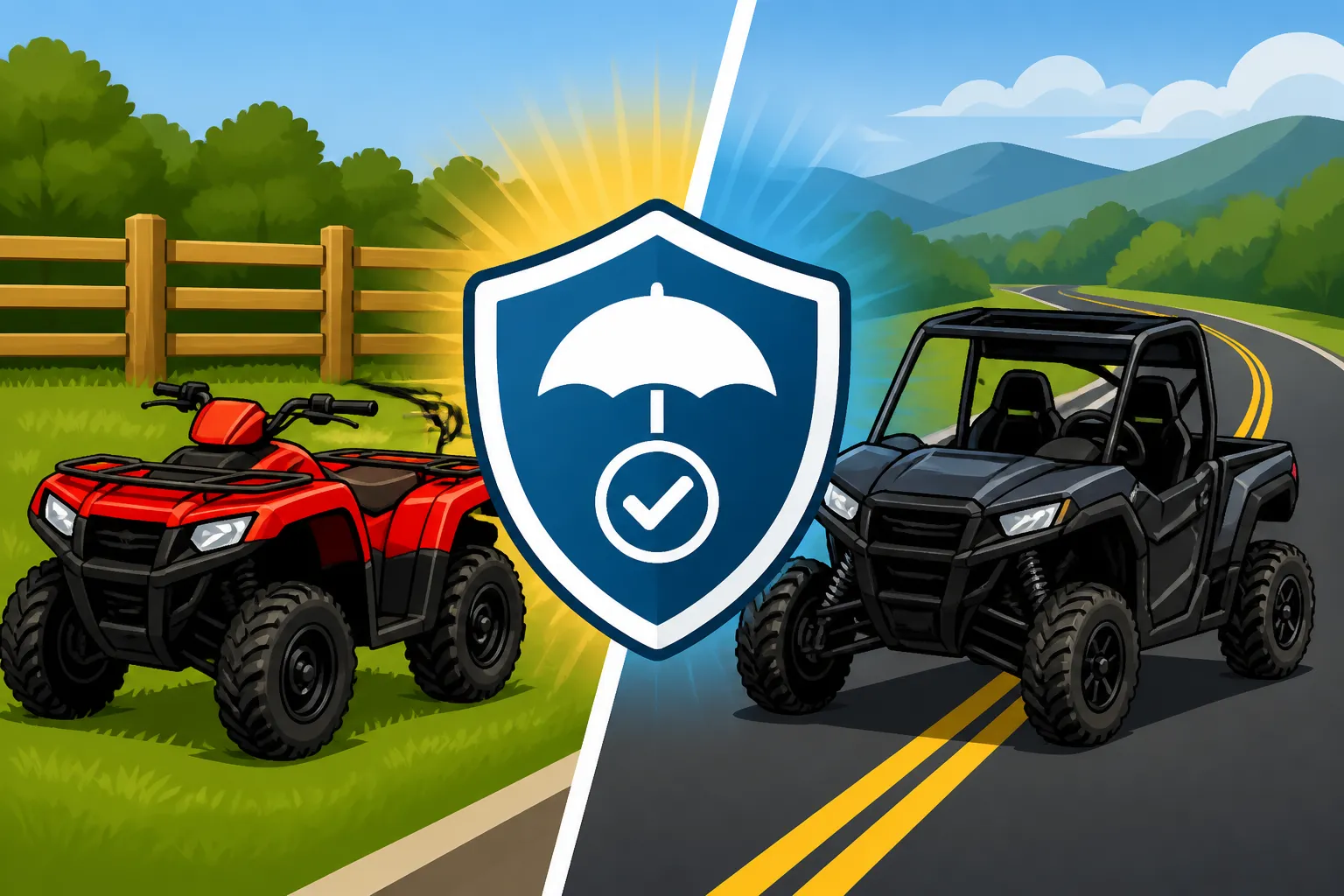
When you're sticking strictly to your own land, the state's mandatory insurance requirement for ATVs generally doesn't apply. This means if you have a sprawling farm in upstate New York and you only use your quad to check fences, move livestock, or simply ride around your private fields, you aren't legally mandated to carry ATV liability insurance for that specific activity.
However, this doesn't mean you're immune from risk. If a friend or family member is riding on your private land and gets injured, or if you accidentally damage someone else's property that happens to be on your land, you could still face significant personal liability. Many homeowners' insurance policies do not cover ATV-related incidents, so it's always a good idea to check your current policy or consider a separate umbrella policy for added protection, even if it's not legally required for your private land use. While New York state doesn't require insurance for strictly private land use, responsible ownership often means having some form of coverage.
Beyond Your Property Line: Public Roads, Trails, and Easements
The moment your ATV crosses that property line, the rules change significantly. This includes a surprising number of scenarios that many riders might not immediately consider "public." For instance, if you live on a quiet country road and you need to cross it to get from one section of your property to another, or even just drive a few feet down the shoulder to access a trail, you're on public land, and therefore, insurance is mandatory. This also applies to riding on designated ATV trails, public access easements, town roads that have been approved for ATV use, and even crossing utility corridors that aren't exclusively your property.
Even if you have permission to ride on a neighbor's land, but you have to use a short stretch of town road to get there, that brief moment on public thoroughfare triggers the insurance requirement. It's not about the duration; it's about the location. The same goes for registered trail systems like those found in Lewis County; they are publicly accessible, even if maintained by clubs, and thus, your machine needs to be insured. [New York Roads Designated for ATVs] explains which roads you might encounter and the rules associated with them.
The Specifics: When You Must Have Coverage
So, let's break down the actual scenarios where that insurance policy becomes non-negotiable in New York. If you find yourself in any of these situations, you better have that proof of insurance handy!
Registering Your Machine
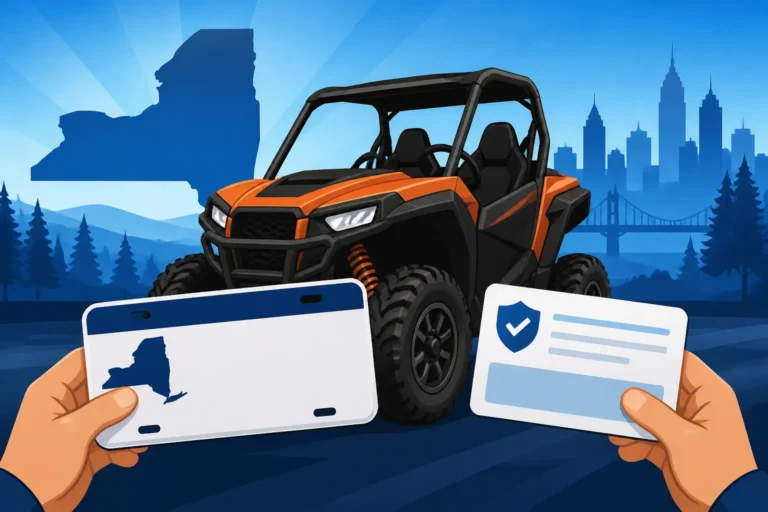
First and foremost, to even get your ATV registered with the New York Department of Motor Vehicles (DMV), you need to show proof of insurance. This is a crucial step for almost any riding off your private land, as registration is also mandatory for trail riding, crossing public roads, and more. Without valid insurance, you simply won't get a registration.
The DMV isn't just asking for kicks; they want to ensure that every machine that's going to be used in publicly accessible areas has that baseline financial protection. It's part of a broader system to ensure accountability on New York's trails and roads. So, before you even think about hitting the trail, make sure you've got your policy in hand for the registration process. You can learn more about this in [New York ATV Registration and Insurance Proof].
Riding on Designated ATV Trails
This is perhaps the most common scenario where insurance is absolutely mandatory. New York has some fantastic designated ATV trail systems, from the expansive Lewis County network to various club trails across the state. These trails, while often maintained by local clubs or county parks departments, are considered public recreational areas.
When you're riding on these trails, you're sharing the space with other enthusiasts, and the potential for accidents is always present. Every rider on a designated trail system is expected to carry the required liability insurance. Trail permit systems, like the [Lewis County ATV Trail Permit Cost and Rules], often require you to show proof of insurance before issuing a permit. This is their way of ensuring that all riders are covered. Imagine the chaos and financial burden if an accident occurred on a busy trail and no one involved had insurance – it would quickly become a legal and financial nightmare for all parties. Many riders install extra protection, like heavy-duty skid plates from SuperATV, to protect their investment on rocky trails, but insurance is what protects against liability.
Crossing or Riding Along a Public Road
Even if you're not planning a long journey down a highway, any interaction with public roads triggers the insurance mandate. This includes:
- Crossing a road: If your trail system or private land requires you to cross a public road (even a quiet town road) from one section to another, you must have insurance.
- Riding on the shoulder: Sometimes, you might need to ride a short distance along the shoulder of a public road to connect to another trail or private property. This, too, requires insurance.
- Riding on designated town/county roads: Some New York towns and counties have specifically designated certain roads for ATV use. When riding on these posted roads, your ATV is treated much like any other vehicle, and insurance is mandatory.
The key here is "public." The moment you're interacting with the public road system, even briefly, the state's rules apply. This is a situation where many riders get caught off guard, thinking a quick dash across a deserted road is harmless. It might be, but without insurance, it's also illegal. [New York Rules for Crossing a Public Road] outlines the specific requirements.
Riding on Land Open to the Public (Even Private Land)
This one can be a bit nuanced. If you're riding on private land that has been explicitly opened to the public for recreational use – even if it's not a formal state or county trail system – you'll likely need insurance. This might include private landowners who allow general access, or clubs who operate trails on leased private land but permit non-members to ride (often for a fee).
The distinction often comes down to whether the land is generally accessible to the public, even if it's privately owned. If it's a place where any member of the public could potentially ride with permission, then the state treats it more like a public space for insurance purposes. Always clarify the specific rules and requirements with the landowner or club before you ride, and assume insurance is needed unless explicitly told otherwise and you are absolutely certain it's not.
What Happens When You Don't: Risks and Penalties
Ignoring New York's ATV insurance mandate isn't just a minor oversight; it carries significant legal and financial risks that can quickly turn a fun day of riding into a very expensive nightmare. The state doesn't take kindly to uninsured riders, and the penalties reflect that.
New York Fines for Riding Without Insurance
If you're caught riding an unregistered or uninsured ATV off your private property in New York, you're facing more than just a slap on the wrist. The fines can be substantial. A law enforcement officer, whether it's a State Trooper, a Sheriff's Deputy, or a local Conservation Officer, has the authority to issue tickets and impose penalties.
You could be looking at a significant fine for operating an uninsured ATV. These fines are designed to be a strong deterrent, making it far more expensive to skip insurance than to just pay for it in the first place. Beyond the initial fine, there can be additional costs related to court appearances, administrative fees, and potentially impoundment of your machine. This can quickly add up to hundreds, if not thousands, of dollars. It's a risk that simply isn't worth taking, especially when basic ATV insurance policies are relatively affordable compared to the potential consequences. [New York Fines for Riding Without Insurance] goes into more detail about these penalties.
Personal Liability in an Accident
This is arguably the most terrifying consequence of riding without insurance. If you're involved in an accident while uninsured and riding off your private land, you become personally responsible for all damages and injuries. And I mean all of it.
Imagine you're on a trail in Oswego County, and you swerve to avoid a deer, accidentally hitting another rider. If that rider sustains a broken leg, needs surgery, weeks of physical therapy, and misses work, their medical bills and lost wages could easily climb into the tens of thousands, or even hundreds of thousands of dollars. If their ATV is totaled, that's another hefty sum. Without insurance, you are on the hook for every penny. Your personal assets – your savings, your home, your future earnings – could be at risk. This isn't just about paying a fine; it's about potentially bankrupting yourself and your family. That peace of mind that an insurance policy brings is truly priceless when you consider this worst-case scenario.
Impoundment and Legal Troubles
Beyond fines and personal liability, an uninsured ATV can be impounded by law enforcement. This means your machine will be towed away, and you'll incur towing and storage fees to get it back, in addition to any fines. In some cases, repeat offenses or serious incidents could even lead to your ATV being permanently confiscated.
Furthermore, operating an uninsured vehicle (and an ATV on public land falls under this umbrella) can lead to more serious legal troubles beyond just traffic tickets. Depending on the severity of any accident or the circumstances of being caught, you could face misdemeanor charges or other legal actions. This can impact your driving record, your ability to register other vehicles, and even your overall legal standing. It’s simply not worth the gamble.
Getting the Right Coverage: What to Look For
Okay, so we’ve established that insurance is crucial. Now, how do you go about getting the right coverage for your New York ATV adventures? It's not as complicated as it might seem, but there are a few key things to keep in mind.
Finding an Insurer Authorized in New York
The first step is to find an insurance provider that is authorized to offer ATV insurance in New York State. Most major insurance carriers that offer auto or recreational vehicle policies will also have options for ATVs. It's a good idea to shop around, get quotes from several different companies, and compare their offerings.
Look for companies with a good reputation for customer service and claims handling. You want an insurer who understands the nuances of ATV riding and can provide clear explanations of your policy. Don't be afraid to ask questions about what's covered, what's excluded, and what the claims process looks like. Some popular insurers that serve New York riders include those you might already use for your car or home, as well as specialty recreational vehicle insurers.
Understanding Coverage Minimums and Options
New York State sets minimum liability requirements, but these are often just a starting point. While they legally satisfy the mandate, they might not provide adequate protection in the event of a serious accident. Most riders opt for higher liability limits than the state minimums to better protect their assets.
Beyond liability, you might also consider additional coverage options:
- Collision coverage: This pays for damage to your ATV if you hit another vehicle, an object, or roll over.
- Comprehensive coverage: This protects your ATV from non-collision events like theft, vandalism, fire, or damage from natural disasters (like a tree falling on it). If you've invested in SuperATV accessories, comprehensive coverage can help protect those additions too.
- Uninsured/Underinsured Motorist (UM/UIM) coverage: This protects you if you're hit by another rider who doesn't have insurance or doesn't have enough insurance to cover your damages.
- Medical Payments (MedPay): This covers medical expenses for you and your passengers, regardless of who is at fault.
Think about your riding style, where you ride, and the value of your machine and accessories when deciding on your coverage. It's often worth paying a little more for robust protection. [New York ATV Insurance Cost] can give you an idea of what to expect for premiums.
Table: New York ATV Insurance Scenarios
| Riding Scenario | Is Insurance Mandatory? | Reasoning |
|---|---|---|
| Only on your own deeded private land | No (legally), but highly recommended | No public access, but personal liability risks remain. Homeowners policies often exclude ATVs. |
| Crossing a public road to access another part of your property | Yes | Any interaction with a public thoroughfare triggers the state's mandate. |
| On a designated county or club ATV trail | Yes | These are publicly accessible recreational areas, even if on leased private land. Often required for trail permits. |
| On a town road specifically designated for ATV use | Yes | These roads are part of the public road network; ATVs are treated like other vehicles. |
| On private land with landowner permission, but generally open to other riders | Yes (usually) | If the land is accessible to the general public (even with permission), it typically falls under the state's public-use insurance mandate. |
| Transporting your ATV on a trailer | No (for the ATV itself), but tow vehicle needs insurance | While being trailered, the ATV is cargo. The tow vehicle (truck, SUV) must have its own valid auto insurance. |
| At an organized ATV event or race | Yes (and often requires higher limits or special event coverage) | Organized events often have specific insurance requirements beyond state minimums due to increased risk. Always check event rules carefully. |
Disclaimer
This article is for general informational purposes only and does not constitute professional advice. Laws, prices and regulations vary by location and change over time. Consult a qualified professional for guidance on your specific situation.