New York ATV Weight Limit for Registration
One of the trickiest parts of owning an off-road machine in New York State is simply figuring out if it even qualifies for ATV registration. Many folks assume that if it has four wheels and handlebars, it's an ATV, but New York's definition is much more specific, and a key sticking point often comes down to one seemingly simple factor: weight. This guide will walk you through New York's specific weight limit for ATV registration, what it means for your machine, and what your options are if your pride and joy just doesn't make the cut.
Understanding New York's Official ATV Definition
New York State, bless its heart, has its own unique way of defining what an "all-terrain vehicle" actually is. Unlike many other states that might simply classify anything with four wheels and off-road tires as an ATV, New York adds some very specific physical dimensions into the mix. This isn't just bureaucratic red tape; it's a fundamental distinction that determines whether you can even register your machine to ride on designated trails and public lands. Many people get frustrated when they buy a machine advertised as an ATV, only to find out it's too big for New York's rules.
The Two Crucial Dimensions: Width and Weight
When the New York DMV looks at your machine for registration purposes, it's primarily concerned with two measurements: its overall width and its dry weight. These two factors work hand-in-hand to determine if your vehicle fits the state's legal definition of an ATV. If your machine exceeds either of these limits, it simply won't be considered an ATV in New York, regardless of what the manufacturer calls it or what it's registered as in another state. This often comes as a shock to folks moving here or buying a used machine from out of state.
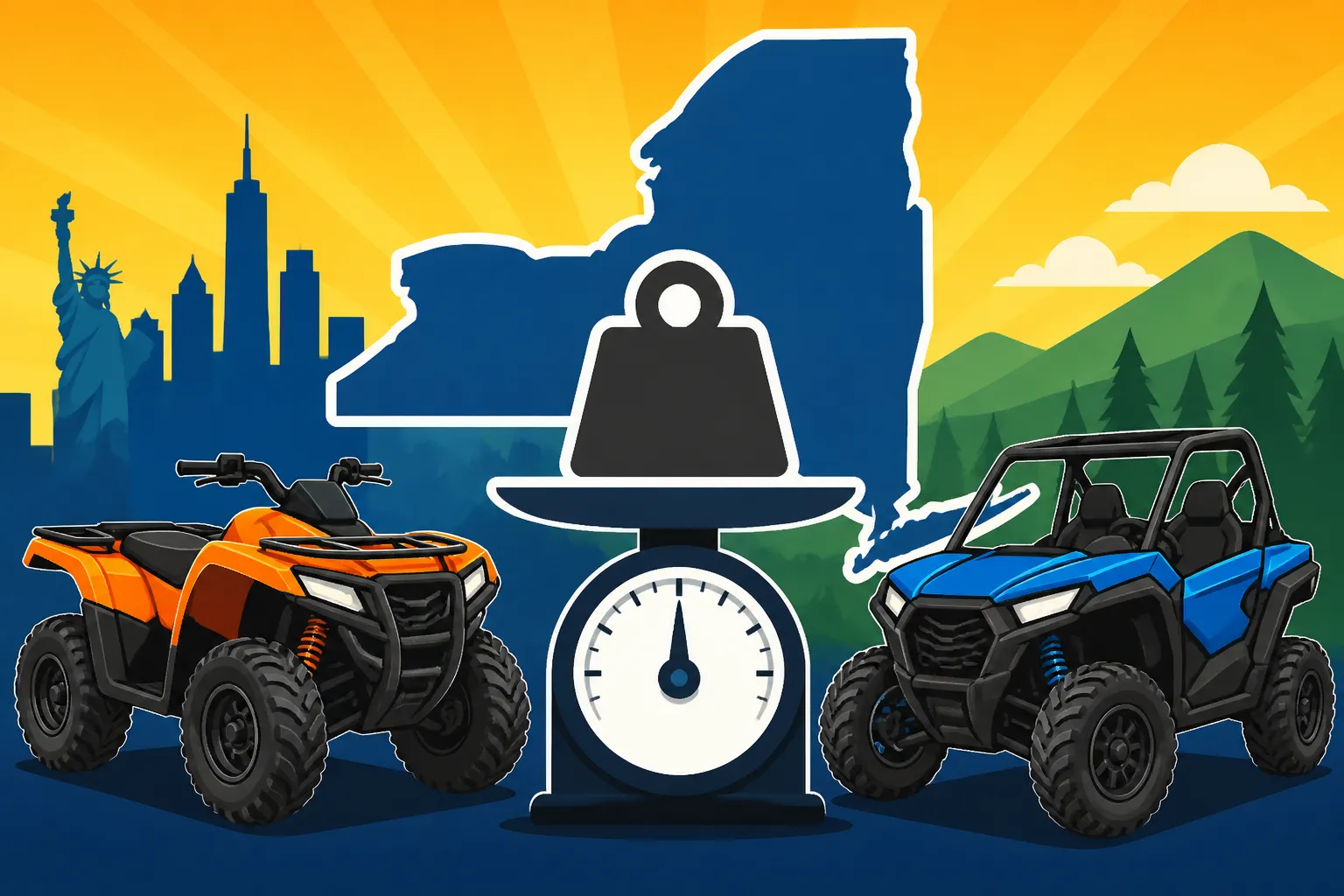
For many years, the standard definition of an ATV in New York has centered on two key numbers: the machine must be 70 inches or less in width and 1,000 pounds or less in dry weight. These aren't suggestions; they are hard limits set by the Vehicle and Traffic Law. It's a tough pill to swallow for many modern side-by-side owners, as we'll discuss. You can learn more about this other critical dimension by checking out [New York ATV Width Limit for Registration].
Why These Limits Exist
You might wonder why New York is so particular about these dimensions. The primary reason is to differentiate traditional, single-rider ATVs from larger utility task vehicles (UTVs) or side-by-sides (SxS). When these laws were originally drafted, the common ATV was indeed a smaller, lighter machine. The state's trails and designated riding areas, as well as the rules for crossing public roads, were designed with these smaller vehicles in mind.
The intention was to ensure that only vehicles deemed appropriate for these specific conditions and safety standards could be registered and operated. This means that if your machine is over the weight limit, New York views it more akin to a small car or truck in terms of its impact and potential hazards, rather than a nimble off-road quad. This distinction greatly impacts where and how you can ride legally, leading to a lot of confusion and disappointment for owners of larger machines.
The 1,000-Pound Weight Limit Explained
Let's really dig into that 1,000-pound weight limit, because it's where many modern machines, especially side-by-sides, trip up. It's not always obvious how this weight is measured, and a slight misunderstanding can lead to a world of registration headaches.
What "Dry Weight" Actually Means
New York specifies "dry weight" as the standard for its 1,000-pound limit. This means the weight of the vehicle without fluids like fuel, oil, coolant, or a battery. It's essentially the bare machine as it leaves the factory floor. However, manufacturers sometimes list various weight figures, such as "curb weight" (which includes all fluids) or "shipping weight." This can be a source of real confusion.
For example, a manufacturer might advertise a machine with a dry weight of 950 pounds, making you think it just barely qualifies. But then you add a full tank of gas, engine oil, coolant, and a battery, and suddenly you're pushing 1,050 pounds. While the dry weight might seem to be the official measure, getting an exact figure without these fluids can be difficult in the real world once the machine has been filled and run. The DMV typically relies on the manufacturer's official specifications, but it's always wise to double-check.
The Side-by-Side Conundrum
This 1,000-pound dry weight limit, along with the 70-inch width limit, is precisely why the vast majority of side-by-sides cannot be registered as ATVs in New York. Modern side-by-sides, even the smaller two-seater models, routinely exceed both of these thresholds. A quick glance at the specs for popular models from Polaris, Can-Am, or Yamaha will show you that many of their recreational side-by-sides weigh significantly more than 1,000 pounds dry.
This is incredibly frustrating for owners who see side-by-sides as a natural evolution of the ATV and want to enjoy them on trails. They are built for off-road use, often have four-wheel drive, and are designed to handle rough terrain. Yet, New York State's definition, rooted in older legislation, simply doesn't accommodate them under the ATV umbrella. If you're wondering why your specific machine might not qualify, you should read [Why Most Side-by-Sides Cannot Be Registered in New York].
Challenges in Verifying Weight
Unless you have access to a commercial scale, accurately verifying your machine's exact dry weight can be a challenge. You'll typically rely on the manufacturer's specifications provided in the owner's manual or on their website. It's crucial to find the dry weight specifically, not curb weight or operating weight. If you're buying a used machine, especially one that's been modified, its actual weight might be different from the factory specs, and it can be tough to prove to the DMV.
When you go to register, the DMV clerk isn't going to roll your quad onto a scale. They'll ask for paperwork, usually the Manufacturer's Statement of Origin (MSO) for new machines, or a bill of sale for used ones, and they will look up the specifications based on the Vehicle Identification Number (VIN) or model information. If those specs exceed the 1,000-pound dry weight, your registration application for an ATV will likely be denied. This is a common pitfall when [Buying a Used ATV in New York] if the previous owner wasn't from New York or didn't understand the state's rules.
What Happens When Your Machine Exceeds the Limit
So, you've checked the specs, maybe even put your machine on a scale, and it's over that 1,000-pound dry weight limit. Now what? This is where a lot of riders feel utterly stuck and disenfranchised. New York's strict definition means your options for legal riding are severely curtailed.
Your Machine is Not an ATV in New York
The most important thing to understand is that if your machine exceeds the 1,000-pound dry weight limit (or the 70-inch width limit), New York State does not classify it as an ATV for registration purposes. It doesn't matter if it looks like an ATV, feels like an ATV, or is called an ATV by its maker. Legally, for New York, it's something else entirely – and currently, there is no separate registration category for these larger off-road vehicles that would allow them onto designated ATV trails.
This means you cannot register it with the New York DMV using the standard ATV registration process. You won't get an ATV plate, and you won't get a validation decal. If you were hoping to hit the amazing trails on Tug Hill or in Lewis County, you'll be out of luck with an oversized machine. Trying to register it anyway is a waste of time and will only lead to frustration at the DMV counter.
Limited Riding Options
If your machine doesn't qualify as an ATV in New York, your riding options are extremely limited, primarily to private land with explicit permission from the landowner. You absolutely cannot ride it on public ATV trails, designated ATV roads, or any other public land that requires an ATV registration. Operating an unregistered machine on public trails can lead to significant fines and penalties.
It also means you cannot legally cross public roads in the manner permitted for registered ATVs. The rules for crossing a highway on an ATV in New York specifically apply to registered ATVs that meet the state's definition. Without that registration, your machine is essentially just very heavy yard equipment in the eyes of the law, and bringing it onto a public road is asking for trouble.
Potential for Legislative Change
Now, don't lose all hope just yet. There have been ongoing efforts to update New York's ATV definition to better accommodate modern machines, particularly side-by-sides. Several bills have been introduced in the state legislature over the years aiming to widen the definition of an ATV or create a separate registration category for UTVs. These proposals often suggest raising the weight limit to something like 2,000 pounds and increasing the width limit to 80 inches, which would open up registration for many currently excluded machines.
However, getting these bills passed is a slow and often frustrating process. They face various hurdles, from environmental concerns to disagreements over funding for trail maintenance and potential impacts on other recreational users. While there's strong advocacy from rider groups, these legislative changes take time. You can learn more about these efforts by looking into [A New York Bill to Widen the ATV Definition] or [New York's Proposed 2,000-Pound ATV Weight Limit]. Until new laws are actually enacted, the old limits of 70 inches and 1,000 pounds remain the law of the land.
Navigating the Registration Process With Weight in Mind
When you're ready to [Register an ATV in New York], especially if you're concerned about its weight, being prepared is key. Knowing what the DMV expects can save you a lot of time and a massive headache.
Required Documentation and Weight Information
The New York DMV needs concrete proof of your machine's specifications. For a new machine, this will be the Manufacturer's Statement of Origin (MSO). This document is essentially the "birth certificate" of your ATV and will list its dry weight, width, and other key details. For a used machine, you'll need a bill of sale and the previous registration certificate (if one exists). The DMV will cross-reference the VIN with its database or manufacturer specs to confirm the machine's dimensions.
It's vital that the paperwork you present clearly shows your machine's dry weight is 1,000 pounds or less. If the MSO or other official documents show a higher weight, your application for ATV registration will be denied. This is where researching your machine before you buy it, especially if it's a side-by-side or a larger quad, becomes absolutely crucial. Don't assume it qualifies just because someone else in another state rides one like it on trails. When creating a bill of sale for a private transaction, make sure it's clear and thorough; resources like LawDepot can help you generate comprehensive documents for such transactions.
What if My Machine is Close to the Limit?
If your machine's dry weight is, say, 980 pounds, you're technically within the limit. However, remember that any modifications you make could potentially push it over. Heavy bumpers, winches, oversized tires, or even a full cargo box can significantly add to the overall weight, even if the "dry weight" is still officially under the limit. While the DMV focuses on the factory dry weight for registration, keep in mind that enforcement officers on trails might have their own methods for assessing if a machine is disproportionately heavy or wide for the designated ATV trail.
It’s always a good idea to ensure you have all your [New York ATV Registration Paperwork] in order, including proof of ownership. If there's ever a question about your machine's specifications, having access to the original manufacturer's data will be your best defense.
The Impact of Not Meeting the Weight Limit
The consequences of owning a machine that doesn't meet New York's ATV definition are significant. You won't be able to obtain a [New York ATV Plate Fee You Pay Only Once] or the yearly validation decal. Without proper registration, you are effectively barred from almost all public riding areas in the state. This can be a huge disappointment, especially if you've invested heavily in a machine, a trailer, and gear, only to find out you can't ride it where you intended.
Therefore, for anyone looking to enjoy New York's extensive trail systems, selecting a machine that falls within both the 70-inch width and 1,000-pound dry weight limits is non-negotiable. Always verify these specifications before making a purchase, whether new or used. If you're dealing with a private sale, consider using a template from a service like LawDepot for your bill of sale to ensure all necessary details, including machine specifications and VIN, are clearly documented. This helps protect both buyer and seller and ensures you have the documentation needed for registration.
Frequently Asked Questions About ATV Weight Limits
Understanding these rules can be complex, and many common questions pop up. Let's tackle a few to clear the air.
Can I Get a Variance or Special Permit for My Heavier Machine?
Unfortunately, no. New York State law is quite clear: if a machine exceeds the statutory limits for an ATV, it simply isn't an ATV in New York. There are no provisions for variances, special permits, or exceptions based on individual circumstances. While some states might have specific classifications or permits for UTVs, New York currently does not offer a public registration program for off-road use of machines that exceed the ATV definition.
This means you can't go to the DMV and argue your case, no matter how close you are to the limit. The law is the law, and clerks are bound by it. Your only recourse for public riding would be if new legislation is passed that changes these definitions or creates a separate UTV category.
How Does the 1,000-Pound Limit Affect Older ATVs?
The 1,000-pound dry weight limit largely affects newer, larger machines, particularly side-by-sides. Most traditional, single-rider ATVs, even some of the larger utility quads, were designed to fall within this weight class. For instance, many of the machines manufactured before the mid-2000s, like older Honda Foreman or Yamaha Grizzly models, typically meet the weight (and width) requirements without issue.
However, it's still good practice to confirm the exact dry weight for any machine you're considering, new or old, especially if it's a model you're unfamiliar with. Always err on the side of caution and check the manufacturer's specs. If you're buying a used machine and the seller doesn't have the MSO or original manual, a service like LawDepot can assist in creating a detailed bill of sale that includes a clear description of the machine to help with registration, but the DMV will still verify the specs based on the VIN.
Are There Any Machines That Are Exempt from the Weight Limit?
New York does have certain exemptions from ATV registration, but these are generally based on the use of the machine, not its physical characteristics like weight or width. For instance, machines used exclusively for agricultural purposes on farmland, or for snow removal on private property, may not require registration. However, these exemptions don't change the state's definition of an ATV. They simply mean that for that specific use, registration isn't required, regardless of the machine's size.
If you plan to ride on any public lands or designated trails, your machine must meet the ATV definition, including the 1,000-pound dry weight limit, and be properly registered. You can read more about these specific exemptions in [Machines New York Exempts From Registration].
Summary of New York ATV Dimensions for Registration
To help keep things clear, here's a quick overview of the key dimensions New York State uses to define an ATV for registration purposes:
| Characteristic | New York ATV Requirement | What It Means for Riders |
|---|---|---|
| Dry Weight | 1,000 pounds or less | Most traditional ATVs qualify; many side-by-sides exceed this. Crucial for public trail access. |
| Overall Width | 70 inches or less | Measured from the widest point of the machine. Another major hurdle for most side-by-sides. Refer to [New York's 70-Inch Width Limit] for more details. |
| Wheels | Three or more wheels | Four-wheelers (quads) are common, but three-wheelers (trikes) would also technically qualify if they meet other specs. |
| Intended Use | Designed for off-highway travel | This distinguishes ATVs from golf carts, lawn tractors, or other low-speed vehicles not built for rough terrain. |
Understanding these limits before you buy is perhaps the single most important piece of advice for any prospective ATV owner in New York. It's a tough reality, but knowing the rules upfront will save you from major disappointment down the trail.
Disclaimer
This article is for general informational purposes only and does not constitute professional advice. Laws, prices and regulations vary by location and change over time. Consult a qualified professional for guidance on your specific situation.