Two Names on One Registration
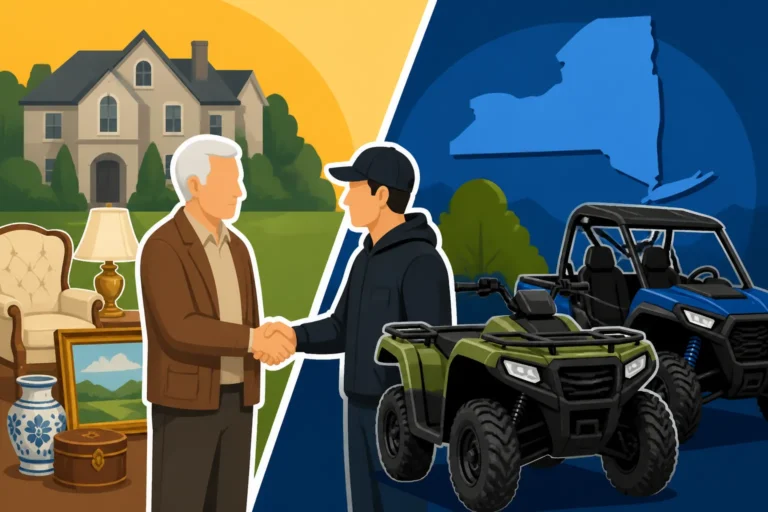
Riding the trails of New York on an ATV is an incredible experience, and often, it's even better when shared with a loved one, a close friend, or a family member. But when it comes to registering that machine with the New York Department of Motor Vehicles (DMV), putting two names on one registration can sometimes feel like trying to find your way through an unmarked section of the Tug Hill plateau after dark. It's a common situation, yet many people are unsure about how New York's system handles co-ownership, especially since it deviates from how typical vehicles are titled. This guide is here to light the way, explaining exactly how to manage an ATV registration with multiple owners in New York, ensuring your shared adventures start on solid, legally compliant ground.
Understanding New York's Unique ATV Ownership Landscape
Before we dive into the specifics of joint registration, it’s crucial to understand how New York State views ATV ownership. This isn't like registering a car or a truck, and that's often where the confusion begins for new co-owners.
Why New York Has No ATV Titles And What It Means for You
One of the biggest head-scratchers for new ATV owners, especially those coming from states that title everything, is discovering that New York State simply doesn't issue a certificate of title for ATVs. You heard that right – there's no official paper title document that declares ownership in the way there is for cars, trucks, or even snowmobiles. This can be a huge source of frustration, making buyers and sellers wonder how they're supposed to prove or transfer ownership without that familiar document.
Instead of a title, New York uses the registration process itself as the primary record of ownership. When you register your ATV, the registration document, along with your bill of sale, becomes your definitive proof. This means that if you're buying a machine, whether new or used, the focus shifts heavily to ensuring your bill of sale is rock-solid and complete. For multiple owners, this absence of a title means that all parties' names need to be accurately reflected on the registration document itself, as this will be the state's official record of who owns the machine. It puts a lot of weight on the accuracy of the form you submit. For more detail on this, check out [Why New York Issues No ATV Title] and [MV-51B and New York's Non-Titled Vehicles].
The Role of the Bill of Sale and Other Ownership Proof
Given the lack of a traditional title, the bill of sale for your ATV becomes arguably the most critical document in proving ownership in New York. This isn't just a casual receipt; it's a legal document that establishes the transfer of ownership from the seller to the buyer(s). When you're dealing with multiple owners, this bill of sale needs to explicitly list all individuals who are purchasing the ATV. For example, if you and your spouse are buying a quad together, both your names should appear as purchasers on the bill of sale, right alongside the seller's information and the ATV's details.
Beyond the bill of sale, the DMV will look for other supporting documentation when you apply for registration. This includes your identification, proof of insurance, and often a pencil tracing or photo of the Vehicle Identification Number (VIN) from the ATV's frame. For co-owned machines, each owner's identification will likely be required, and the proof of insurance should also reflect all listed owners, or at least clearly cover all operators. The more consistent your documentation is across the board – from the bill of sale to the insurance card – the smoother your registration process will be. If you're wondering what makes a bill of sale robust, you can find helpful information in [New York ATV Bill of Sale Requirements].
Navigating the Registration Process with Multiple Owners
Registering an ATV in New York involves specific forms and steps. When multiple owners are involved, attention to detail becomes even more critical to ensure all parties are properly recognized.
Filling Out the MV-51B for Joint Ownership
The primary form you'll use to register a non-titled ATV in New York is the MV-51B, officially known as the "Application for Registration/Title." Yes, even though ATVs aren't titled, this is the form that gets the job done. When filling out the MV-51B for joint ownership, you'll need to clearly list all owners in the designated "Owner Information" section. There are spaces provided for multiple names, and it's essential that these names match exactly what's on your bill of sale and your identification documents.
Typically, you'll list the primary owner first, and then the co-owner(s). If the form asks for an address, this would usually be the primary residence of the main owner, or a mutually agreed-upon address for all correspondence. All listed owners will need to sign the application. This is where clarity is key – make sure every owner reviews the form before signing to confirm all information is correct. Any discrepancies can lead to delays or rejection of your application, which is the last thing you want when you're itching to hit the trails. Understanding [New York's Form MV-51B Explained] can further assist you in this step.
Gathering Essential Documents for Your Joint Registration
When you head to the DMV, you'll need more than just the filled-out MV-51B. For joint ownership, the documentation requirements expand slightly to include all parties. Here’s a checklist of what you should gather:
- Completed MV-51B: Signed by all listed owners.
- Original Bill of Sale: Listing all purchasers. This is your foundation for proving shared ownership.
- Proof of Identity for Each Owner: This usually means a valid New York State driver's license or non-driver ID for each person listed on the registration. Make sure your IDs are current and match the names on your other documents.
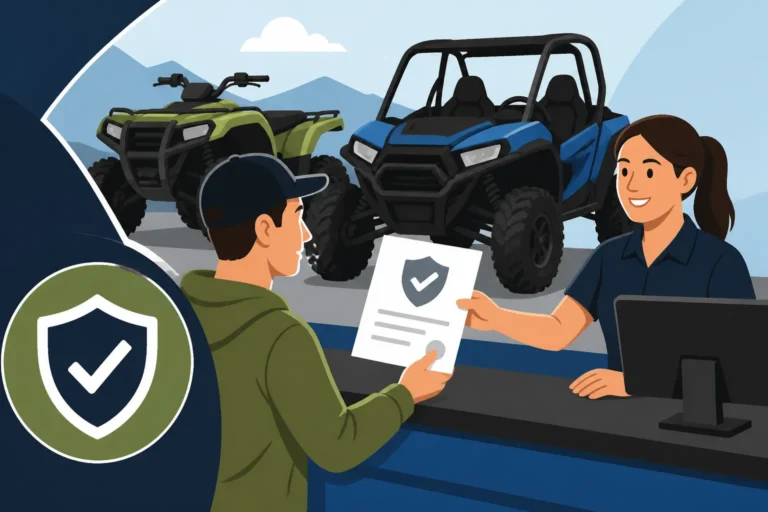
- Proof of Insurance: New York requires all ATVs to be insured. You'll need proof of insurance that meets the state's minimums. It's often best if the policy clearly lists all registered owners or explicitly states it covers all operators. Ensure your insurance card or policy declaration page is readily available. You can learn more about this in [New York ATV Registration and Insurance Proof].
- Proof of VIN: The DMV will require a legible pencil tracing of the ATV's VIN or a clear photo of it. This helps them verify the machine's identity. Don't skip this step, as it's a common reason for applications to be held up. The details are in [Why New York Wants a Pencil Tracing of the VIN].
- Payment for Fees: Be prepared to pay the registration fee and any applicable plate fees. While fees can change, it's smart to check the current rates on the DMV website before your visit.
Making sure all these documents are in order for each owner will prevent multiple trips to the DMV.
Where to Submit Your Application And Who Needs to Go
Once you have all your forms and documents in hand, you’ll submit your application at a New York State Department of Motor Vehicles office. While it might seem convenient to send just one owner, having all listed owners present at the DMV is often the smoothest approach. This allows the DMV clerk to verify identities, obtain any necessary additional signatures, and answer questions directly to all parties involved.
If one owner absolutely cannot be present, you might be able to proceed with a properly executed power of attorney, granting one owner the authority to act on behalf of the absent party. However, this adds a layer of complexity and requires specific legal documentation, which the DMV will scrutinize carefully. To avoid potential hiccups and ensure all signatures and identifications are verified without issue, planning a trip to the DMV when all owners can attend is highly recommended. It’s a minor inconvenience compared to the hassle of a rejected application and subsequent delays in getting your machine registered and ready for the trails. For more information on the fees involved, check out [New York ATV Registration Cost] and [New York ATV Plate Fee].
Key Considerations for Joint ATV Ownership in New York
Shared ownership of an ATV is a fantastic way to spread the fun and the financial burden, but it also introduces specific responsibilities and considerations that go beyond simply getting the names on the registration.
Shared Liability and Mandatory Insurance
When two names are on an ATV registration, it's not just the ownership that's shared—so is the liability. If an accident occurs while either owner (or anyone operating the ATV with permission) is riding, both registered owners could potentially be held responsible for damages or injuries. This is a critical point that many co-owners overlook in their enthusiasm for hitting the trails.
New York has a mandatory ATV insurance requirement, meaning you absolutely cannot legally operate your machine off your own private property without it. This insurance is designed to cover bodily injury and property damage that you might cause to others. When you have joint ownership, it’s imperative to have a robust insurance policy that provides adequate coverage for all registered owners and potential operators. Discussing coverage limits, deductibles, and ensuring the policy reflects all owners is a non-negotiable step. Don't just settle for the state minimums if your collective assets could be at risk. It's an uncomfortable conversation, but a necessary one to protect everyone involved. For a deeper dive into what's required, review [New York's Mandatory ATV Insurance] and [New York ATV Insurance Requirement].
What Happens When Ownership Changes Selling or Transferring
Life happens, and sometimes shared ownership needs to change. This could be due to a decision to sell the ATV, or perhaps one owner wants to buy out the other. Understanding the process for transferring or selling a jointly registered ATV is vital.
If you decide to sell the ATV, both registered owners will need to sign the bill of sale. Since there’s no title to sign over, the bill of sale acts as the definitive proof of transfer. The new owner will then take this bill of sale to the DMV to register the ATV in their name. This ensures a clear chain of ownership is maintained.
What if one owner wants to transfer their share to the other, or one person decides to leave the partnership? This typically involves creating a new bill of sale where the departing owner sells their interest to the remaining owner. The remaining owner would then need to re-register the ATV in their sole name, using the new bill of sale as proof of single ownership. This process essentially cleans the slate, updating the state’s records to reflect the new ownership structure. Situations like [Dividing a Registration in a Divorce] or handling an ATV as part of an estate ([Registering an Inherited Machine in New York]) require similar careful documentation to ensure legal transfer of ownership. It’s not simply a matter of crossing a name off the old registration; a new application and supporting paperwork are usually required.
Safeguarding Your Shared ATV Investment
Sharing an ATV is a fantastic idea, but like any shared asset, it comes with the potential for disagreements or misunderstandings if expectations aren't clearly laid out from the start. Taking proactive steps can save a lot of headaches down the line.
The Importance of a Co-Ownership Agreement
It's easy to assume everything will be fine. You're friends, you're family, you trust each other. But life happens, circumstances change, and what seemed obvious to one person might be completely different for another. This is precisely why a written co-ownership agreement is such a powerful tool for anyone sharing an ATV. Without one, you're relying solely on verbal agreements and good faith, which can quickly unravel into awkward conversations or even costly disputes if something goes wrong.
A comprehensive co-ownership agreement should cover critical aspects like:
- Usage Rights: Who gets to use the ATV when? Are there any restrictions on guests?
- Financial Contributions: How are purchase costs, [New York ATV Registration Cost], [New York ATV Insurance Cost], maintenance, repairs, and upgrades split?
- Maintenance Responsibilities: Who is responsible for routine checks, oil changes, and cleaning? What's the process for approving major repairs?
- Decision Making: How will significant decisions, like selling the ATV or making major modifications, be made?
- Dispute Resolution: What steps will be taken if owners can't agree on something?
- Buyout Clauses: What happens if one owner wants to leave the partnership? How is the ATV valued, and what's the process for one owner to buy out the other's share?
Creating such an agreement doesn't have to be intimidating or expensive. Resources like LawDepot offer customizable templates for co-ownership agreements that you can adapt to your specific situation. This helps you think through all the "what-ifs" before they become problems, providing a clear roadmap for your shared ownership. It transforms potential friction points into agreed-upon procedures, protecting both your investment and your relationship.
Managing Joint Finances and Maintenance
Beyond the initial purchase, ATVs come with ongoing costs. Nobody wants to feel like they're footing the bill for someone else's fun, or that they're doing all the dirty work when it comes to maintenance. A clear understanding and system for managing joint finances and maintenance responsibilities are vital for a harmonious co-ownership.
Consider setting up a shared budget or even a separate bank account specifically for ATV expenses. All owners can contribute regularly to cover the [New York ATV Registration Cost], annual insurance premiums, fuel, oil, filters, tires, and unexpected repairs. Keeping a detailed log of all expenditures helps ensure transparency and fairness.
Similarly, define maintenance responsibilities. Who is responsible for cleaning after a muddy ride? Who schedules and pays for routine servicing? Perhaps you alternate these tasks, or one person handles mechanical work while the other manages administrative tasks like registration renewals ([Renewing a New York ATV Registration]). Having these roles and expectations clearly defined, perhaps even within your LawDepot co-ownership agreement, prevents resentment and ensures the ATV is well-cared for. A neglected machine not only costs more in repairs but also detracts from the enjoyment of riding.
Planning for the Unexpected Disputes or Departure
Even with the best intentions and a solid written agreement, life can throw curveballs. It's wise to have a plan for how you'll handle disputes or if one owner needs to depart the partnership. These are the kinds of discussions that are far easier to have when everyone is getting along and excited about riding, rather than when emotions are high due to a disagreement or a change in circumstances.
Your co-ownership agreement should explicitly outline a process for resolving disputes. This could start with a good-faith discussion, move to mediation if an agreement can't be reached, and potentially even outline arbitration as a final step. The goal is to avoid costly and relationship-damaging legal battles.
What if one owner simply doesn't want to ride anymore, or their financial situation changes, and they need to sell their share? Having a pre-defined buyout clause in your agreement is invaluable. This clause can specify how the ATV's value will be determined (e.g., agreed-upon independent appraisal), payment terms for the buyout, and the process for updating the registration to reflect sole ownership. Without such a clause, you could end up in a stalemate, with one owner trapped in a partnership they no longer desire, or unable to recoup their investment. Planning for these contingencies upfront makes it much easier to navigate them smoothly, ensuring that if the partnership does end, it does so amicably and fairly for all parties involved.
| Feature | Informal Joint Ownership (Verbal Agreement) | Formal Joint Ownership (Written Agreement like from LawDepot) |
|---|---|---|
| Proof of Intent | Relies on trust and memory; difficult to prove in disputes. | Clearly documented intentions for all aspects of ownership. |
| Liability | Shared, but unresolved disputes can lead to one party bearing more burden. | Shared, but terms of financial responsibility can be explicitly outlined. |
| Usage Rules | Often vague; can lead to misunderstandings about who rides when. | Specific rules for scheduling, guest riders, and trail use. |
| Maintenance & Costs | Usually ad-hoc; can cause resentment if contributions feel unequal. | Clear breakdown of financial responsibilities for upkeep, fees, and upgrades. |
| Selling/Transfer | Requires mutual agreement, which can be difficult to enforce if disputes arise. | Pre-defined process for buyouts, sales, or transfers, minimizing conflict. |
| Dispute Resolution | Relies on personal negotiation; can strain relationships. | Outlined steps for resolving disagreements, potentially avoiding legal action. |
Disclaimer
This article is for general informational purposes only and does not constitute professional advice. Laws, prices and regulations vary by location and change over time. Consult a qualified professional for guidance on your specific situation.