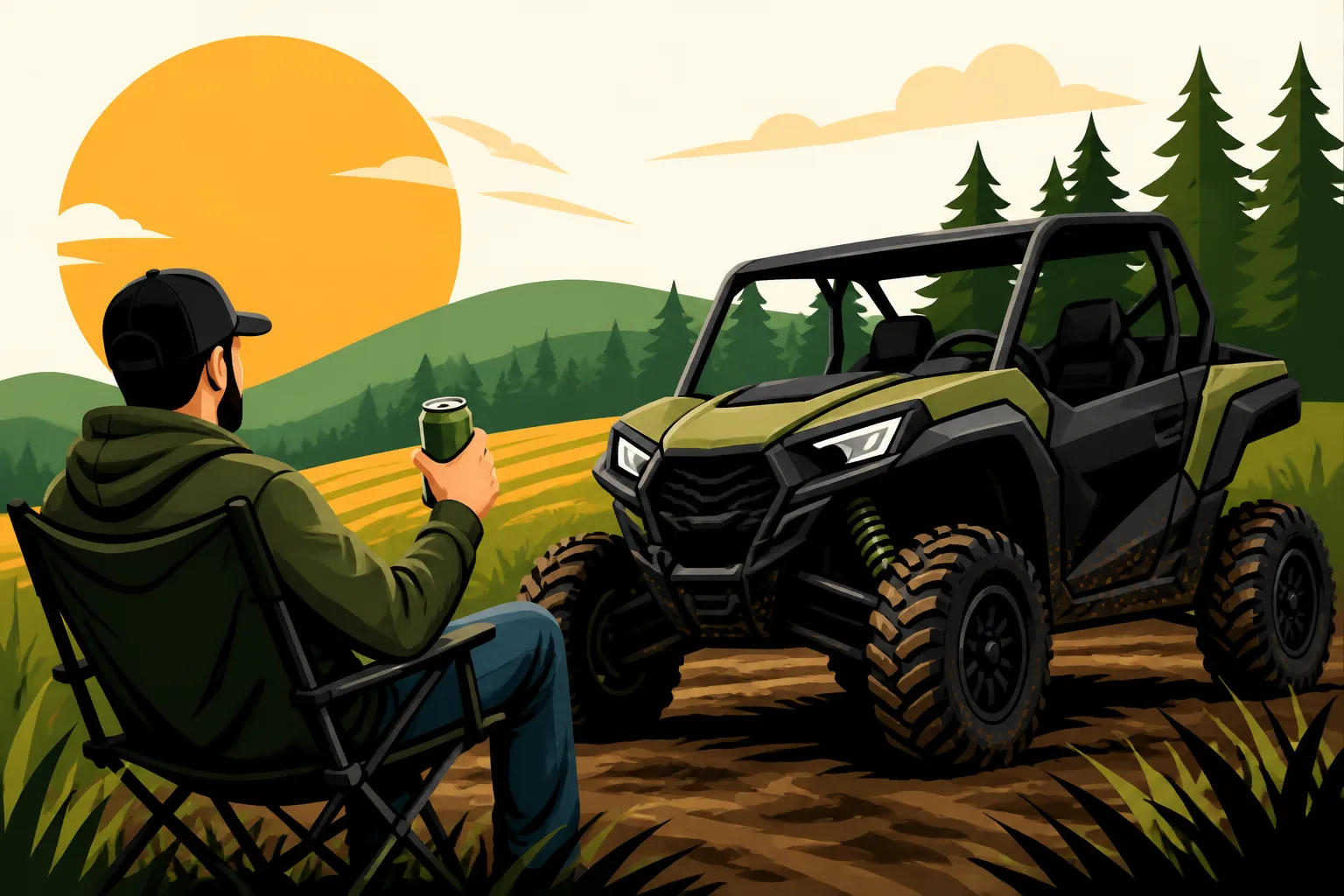
Drinking on Your Own Back Field
It’s a classic scenario, isn't it? You’re out on your own property, maybe a sprawling back field, a wooded parcel, or a long private driveway. You’ve got your ATV or UTV, some friends or family, and the good times are rolling. Perhaps a few adult beverages enter the picture, and a common thought arises: "I'm on my own land, so what's the harm in having a drink and then hopping on the quad for a quick spin?" This guide is here to shed light on exactly why that seemingly harmless decision can lead to serious legal and personal consequences in New York, even when you're far from a public road.
The Core Question: Can You Drink and Ride on Your Own Property?
When you own a piece of land, there's a natural feeling of sovereignty, a sense that "my property, my rules." And for many things, that's absolutely true. You can drive your tractor how you like, build a campfire, or blast music. But when it comes to operating a motorized vehicle, especially something like an ATV or UTV, New York State laws are surprisingly broad and can reach onto your private domain in ways you might not expect. The simple answer to "Can you drink and ride on your own property?" is often a resounding "No," or at the very least, "You do so at significant legal risk."
New York's DWI Laws and Private Land
The common misconception is that driving while intoxicated (DWI) or impaired by drugs (DWAI) only applies to public roads, highways, and designated trails. Many folks believe that as long as they stay within their property lines, they're immune from these laws. Unfortunately, that's not always the case in New York. The state's Vehicle and Traffic Law (VTL) is designed to protect public safety, but its reach often extends into areas that aren't traditionally considered "public." This means that even if you're just tooling around your back forty, completely out of sight of the public, you could still be subject to DWI laws.
Consider a few scenarios: you're riding a dirt bike through your private woodlot, a UTV along a long private access road to your camp, or an ATV zipping across your open field. If a law enforcement officer has reason to believe you were operating the machine while impaired, and if your property is deemed to be in an area where these laws can be enforced (which, surprisingly, is quite broad), you could face the same charges as someone pulled over on a highway. It’s not about the type of land; it's about the act of operating the vehicle while impaired. This is a critical distinction that many private landowners overlook until it’s too late.
The "Operation" Clause: What It Means for ATVs
The crux of the issue often lies in how New York law defines "operation" of a vehicle and where those operations are covered. For DWI purposes, "operation" isn't limited to just driving down the road. It can include starting the engine, putting the vehicle in motion, or even just having physical control over the vehicle while intoxicated, with the intent to move it. An ATV, despite being an off-road vehicle, is still considered a "motor vehicle" under various sections of the Vehicle and Traffic Law and Parks, Recreation and Historic Preservation Law, especially those pertaining to operating while intoxicated.
The intent of these laws isn't just to catch people on public streets. It’s fundamentally about preventing harm. An impaired driver, whether on a highway or a private field, poses a risk to themselves, potential passengers, and anyone else who might be on or near that property. Even on your own land, an accident can lead to severe injuries or fatalities. Imagine a tree limb you didn't see, a ditch you misjudged, or a sudden turn that sends you rolling. The state's interest in preventing such incidents extends beyond just public thoroughfares, making your "back field" less of a legal sanctuary than you might assume. Understanding [New York DWI Rules for ATV Riders] is crucial, regardless of where you plan to ride.
Why New York's Laws Are Broader Than You Think
It's easy to assume that if the public can't access your land, the state can't enforce its DWI laws there. However, New York's statutes are written with a broader brushstroke than many people realize. The legal landscape here is designed to cover various scenarios, acknowledging that impairment is dangerous wherever a motor vehicle is operated. This isn't just about revenue or overreach; it's about the severe consequences that can arise from impaired operation, even in seemingly secluded areas.
Beyond Just Public Roads: Where DWI Applies
While much of the focus on DWI is rightly placed on public roads, New York's laws for operating an ATV while intoxicated can apply in a surprisingly wide range of locations. This includes not only public trails and roads but also many private properties. For instance, if your private property has any element of "public access" – even a shared driveway, an easement, or if it's routinely used by visitors like hunters, contractors, or delivery services – it could fall under the purview of public enforcement. However, even on truly isolated private land, an ATV operator can still be charged under specific sections of the law.
The key is that the state often considers the potential for danger. While you might feel entirely isolated, a neighbor could hear an accident, or you might unintentionally drift near a property line. Furthermore, an ATV, while not "street legal" in the traditional sense, is a powerful machine. The legislature determined that its operation, especially when impaired, carries inherent risks that necessitate regulation beyond just public thoroughfares. It's a nuanced area of law, and relying on a simple "it's my land" defense can quickly fall apart in a New York courtroom. To fully grasp this, it's worth reviewing [New York Rules for Riding Private Land] to understand the nuances of operating on your own acreage.
Penalties Aren't Just for the Pavement
One of the most sobering realities is that the penalties for an ATV DWI on private land can be just as severe as those for a car DWI on a public highway. We’re talking about fines, potential jail time, and most significantly, the suspension or revocation of your regular driver's license. Yes, you read that right: an ATV DWI conviction can absolutely impact your ability to drive your car, even if you never put a tire on a public road during the incident. This is a massive consequence that many people fail to anticipate.
The state views operating any motor vehicle while impaired as a serious offense, and it doesn't always differentiate between an ATV and an automobile when it comes to the impact on your driving privileges. Imagine losing your license because you thought you were safe to have "just one more" on your back acreage. It's a harsh reality, but it's one New York law is set up to enforce. The financial burden can also be substantial, with legal fees, court costs, and increased insurance premiums piling up. It’s far more than just a slap on the wrist; it's a life-altering event.
Safety and Responsibility: It's Not Just About the Law
Beyond the legal ramifications, there's a more fundamental reason to separate drinking from riding: safety and personal responsibility. While the law exists to establish minimum standards of conduct, your own well-being and that of those around you should always be the priority. An ATV or UTV is a powerful piece of machinery, capable of incredible fun, but also capable of inflicting serious injury or worse, especially when judgment is impaired.
The Very Real Dangers of Impaired Riding
Alcohol significantly degrades your ability to operate any vehicle safely. On an ATV or UTV, these effects are magnified by the dynamic, unpredictable nature of off-road riding. Your reaction time slows down, making it harder to respond to unexpected obstacles like rocks, ruts, or sudden changes in terrain. Your judgment becomes clouded, leading you to take risks you wouldn't otherwise consider, like attempting a steep climb or a fast turn on loose gravel. Your coordination suffers, making it difficult to maintain balance and control, especially on uneven ground.
Imagine you're navigating a familiar trail on your property. Under the influence, that small dip becomes a major obstacle, that tree branch appears too late, or your hands slip on the bars. The chances of rolling the machine, crashing into a fixed object, or being thrown from the ATV dramatically increase. These aren't just minor bumps and bruises; they can be broken bones, head injuries, or even fatalities. No matter how experienced a rider you are, alcohol negates that experience, turning a fun outing into a potentially tragic one. Even if you've kitted out your machine with top-tier safety accessories from brands like SuperATV, which makes fantastic protective gear and upgrades, impaired judgment can easily override any mechanical advantage.
The Ripple Effect: Your Actions and Others
Even if you’re riding alone on your own property, an accident has a profound ripple effect. Your friends and family will bear the emotional burden of any injury, and if the accident is severe, they might be the ones who discover you. Furthermore, if you happen to have a passenger, or if someone else is on your property (perhaps a guest, a child, or even a trespasser you didn't know was there), your impaired operation could lead to their injury. In such cases, your liability skyrockets, potentially leading to devastating financial consequences and civil lawsuits.
New York's strict liability laws can mean that as the landowner and operator, you could be held responsible for injuries sustained on your property, especially if you were operating a machine while impaired. This is where [New York's Mandatory ATV Insurance] becomes crucial. However, many insurance policies have clauses that specifically deny coverage if the operator was under the influence of alcohol or drugs. This means you could be personally responsible for all medical bills, property damage, and legal fees. It’s a gamble with stakes far too high, making the temporary enjoyment of a drink while riding a truly dangerous proposition for everyone involved.
Practical Advice: Enjoying Your Property Safely
So, how can you enjoy your property, your friends, and your ATVs without putting yourself or others at risk, or falling afoul of New York's broad DWI laws? It comes down to simple, clear boundaries and responsible planning. It's entirely possible to have a fantastic time on your land, even with adult beverages present, as long as you separate the two activities distinctly.
Designating a Sober Driver
Just like you would for a night out on the town, if you plan to have alcohol on your property and also want to ride your ATVs, designate a sober driver. This isn't just for public roads; it applies equally to your private trails and fields. If multiple people want to ride, establish a rotation where one person remains completely sober to operate the machines, while others enjoy their drinks.
This approach ensures that someone always has a clear head, can respond to emergencies, and can safely transport everyone and the machines. It takes the guesswork and temptation out of the equation. If everyone in your party plans to drink, then the machines should be parked and secured for the duration of the drinking. There's no shame in admitting that alcohol and machinery don't mix, and it's far better to err on the side of caution than to face the devastating consequences of impaired riding.
Separating Riding from Drinking
The easiest and most effective way to avoid issues is to create a clear separation between riding and drinking. This means:
- Ride First, Drink Later: Plan your riding activities for the day, get all the riding in, and then park the machines. Once the keys are out, the engines are off, and the ATVs are secured, then you can enjoy your adult beverages.
- No "Just One" Before a Ride: Even a single drink can begin to impair judgment and reaction time. It's best to maintain zero alcohol in your system if you intend to operate an ATV.
- Establish a "No Ride Zone" After Drinking: Once the drinking starts, mentally (or even physically) close off the riding area. Make it clear to yourself and anyone else that riding is over for the day.
Think of it like this: you wouldn't work with a chainsaw after a few beers, nor would you operate heavy farm equipment. An ATV is no different. It demands your full attention, sharp reflexes, and clear judgment. Brands like SuperATV offer excellent performance and safety components, but even the best equipment can't compensate for impaired human judgment.
Considering Insurance Implications
Finally, always remember the insurance implications. We've touched on this, but it bears repeating: your ATV insurance policy, which is mandatory in New York for most riding scenarios, will almost certainly have a clause that voids coverage if you're found to be operating the machine under the influence. This is standard across the industry.
| Scenario | Location | New York DWI Laws Apply? | Potential Impact on Driver's License | Insurance Coverage Likely Valid? |
|---|---|---|---|---|
| A | Public ATV Trail | Yes | High | Unlikely |
| B | Public Road | Yes | High | Unlikely |
| C | Private Driveway | Potentially | High | Unlikely |
| D | Private Field/Woods | Potentially | High | Unlikely |
| E | Private Access Road | Potentially | High | Unlikely |
If you have an accident while impaired, your insurer will likely deny any claims for injuries, property damage, or liability. This means you could be personally on the hook for hundreds of thousands of dollars in medical bills, legal defense costs, and compensation to injured parties. It's a risk that no amount of fun is worth. Always review your policy and understand its exclusions. Ensuring you have proper [New York ATV Insurance Requirements] is important, but understanding what voids that coverage is even more vital.
Disclaimer
This article is for general informational purposes only and does not constitute professional advice. Laws, prices and regulations vary by location and change over time. Consult a qualified professional for guidance on your specific situation.