A Ranger 1000 That Will Not Qualify
It's incredibly frustrating when you've done your research, picked out what seems like the perfect machine for hitting the trails, perhaps a popular side-by-side like a Polaris Ranger 1000, only to discover that it won't qualify for ATV registration in New York State. Many riders get caught in this trap, assuming that because it's an off-road vehicle, it'll be treated like any other quad. This comprehensive guide is here to shed light on New York's very specific definition of an ATV and explain precisely why many modern UTVs, despite their popularity, just don't make the cut for state registration.
The Core Definition: What New York Considers an ATV
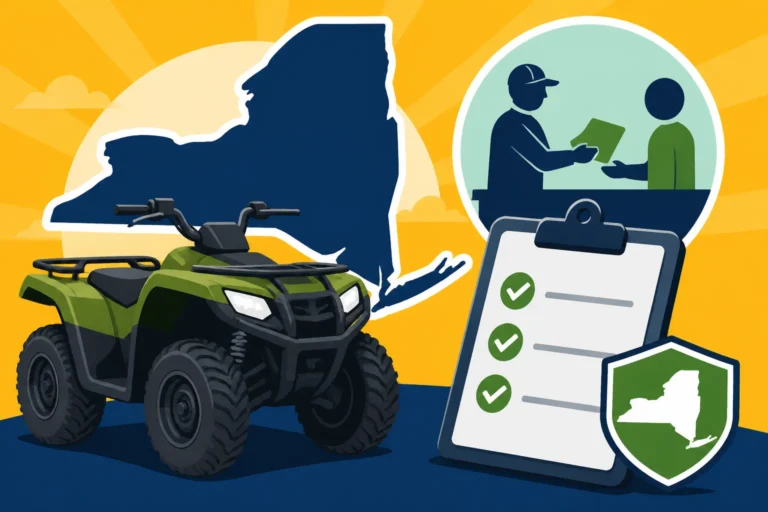
New York State has a very particular and, frankly, quite outdated definition for what constitutes an "all-terrain vehicle" for registration purposes. This isn't just a suggestion; it's enshrined in law, and the Department of Motor Vehicles (DMV) has to follow it to the letter. What this means for many enthusiasts is that the machine they love, and which might be registered as an ATV in other states, is simply not recognized as such here. This often comes as a shock, leading to confusion and disappointment, especially for those who've already made a purchase. It's not about how many wheels it has, or if it's designed for off-road use; it's about two very specific physical characteristics: its width and its weight.
New York's 70-Inch Width Limit
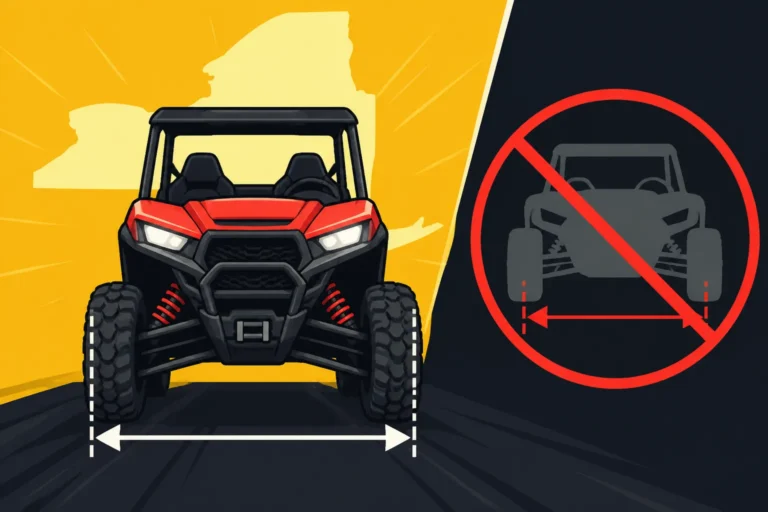
One of the first hurdles many modern off-road vehicles face in New York is the strict width requirement. For a machine to be registered as an ATV in this state, it absolutely cannot exceed 70 inches in width. This measurement is taken from the widest point of the vehicle, typically including the tires, but definitely not counting accessories like mirrors that might stick out further.
Imagine you're at the dealership, excited about a new side-by-side, maybe a sporty model designed for tight trails. You might not even think to grab a tape measure. You assume if it's an "off-road" vehicle, it's good to go. Then you get to the DMV, paperwork in hand, and they ask for the specifications. You find out your brand new machine is 72 inches wide, or even 65 inches with aftermarket beadlock wheels that add a couple of inches to each side. Suddenly, your dreams of legal trail riding evaporate because of a mere two-inch difference, or less. It's a common and genuinely frustrating scenario. You can dive deeper into this specific rule with our guide on [New York's 70-Inch Width Limit]. When you're dealing with transactions, especially buying or selling a machine, having a clear bill of sale, perhaps one you've prepared using a service like LawDepot, can be helpful for documenting the vehicle's stated dimensions and ownership, though it won't change the DMV's measuring tape.
The Crucial 1,000-Pound Weight Limit
Beyond width, the other significant barrier is the weight limit. New York law stipulates that an ATV cannot weigh more than 1,000 pounds. This is another area where modern UTVs, and even some larger, more robust traditional ATVs, immediately run into trouble. This limit often refers to the dry weight or curb weight of the machine as it comes from the factory, without a rider, fuel, or cargo.
Consider a situation where you’ve purchased a two-seater ATV. You might think, "Well, it's an ATV, and it only has two seats, so it must be fine." While some older or smaller two-up ATVs might still meet this weight limit, many modern versions, built with more powerful engines, heavier frames, and additional features, easily push past that 1,000-pound mark. It's a tricky line to walk, and manufacturers aren't designing vehicles specifically for New York's outdated registration laws. The impact of this weight limit means that machines designed for utility, hauling, or carrying multiple passengers are almost universally excluded. We have more detailed information on this topic in our article [New York's 1,000-Pound Weight Limit], and you might also find insights in [Two-Seaters That Still Meet New York's 1,000-Pound Limit].
Why Modern Side-by-Sides Struggle to Qualify
The simple truth is that the vast majority of side-by-sides, often referred to as UTVs, are designed for a different purpose and with different specifications than the "ATV" that New York's law envisions. The law was written decades ago when ATVs were generally smaller, single-rider machines with handlebars and straddle seats. The market has evolved dramatically since then, but the law has not kept pace. This creates a significant disconnect for riders in the state who want to enjoy the diverse range of off-road vehicles available today.
Popular Models and Their Dimensions
Let's talk specifics. You mentioned a Polaris Ranger 1000, and it's a perfect example. These machines are incredibly popular for their versatility, hauling capacity, and comfortable side-by-side seating. However, if you look at the manufacturer's specifications for a Ranger 1000, or indeed many other similar models from brands like Can-Am, John Deere, or Kawasaki, you'll immediately see the problem. A typical Ranger 1000, even in its base configuration, will often be well over 60 inches wide, with many utility models approaching or exceeding 65 inches, and some sporty models easily hitting 72 inches or more. More critically, their dry weight alone frequently starts at around 1,300 to 1,500 pounds, sometimes even heavier.
This means that a machine like a Ranger 1000, or a Can-Am Defender, or a Kawasaki Mule, simply cannot be registered as an ATV in New York because it violates both the width and weight limits simultaneously. It's not a matter of a few pounds or an inch here or there; these vehicles fundamentally fall outside the legal definition. This is the core reason why many passionate riders end up with a machine they can't legally ride on designated ATV trails or public access areas. It's a bitter pill to swallow, knowing your new pride and joy is essentially confined to private property. This specific struggle is highlighted further in [Why a Modern Side-by-Side Fails the Test]. Before making a significant purchase, it's wise to review all manufacturer specifications carefully. Any sales agreements, perhaps created using templates found on LawDepot, should clearly reflect the actual vehicle being acquired, including its dimensions, to avoid later surprises.
The Impact of Accessories on Weight
It's not just the base weight of a side-by-side that causes issues; it's also everything riders add to make their machine more functional or comfortable. Think about it: a winch for recovery, a full cab enclosure for winter riding, a roof for shade, a plow for snow removal, cargo boxes full of tools or gear, and even a full tank of gasoline – all of these additions incrementally increase the machine's operational weight.
Let's say, theoretically, you somehow found a UTV that was barely under the 1,000-pound weight limit and just under the 70-inch width. The moment you bolt on a heavy-duty brush guard, a sound system, or even fill the fuel tank and add a passenger, you've likely pushed it over the limit. The DMV is concerned with the vehicle as it's presented for registration, and while they might not weigh it on the spot, the manufacturer's specifications are usually what they go by. Any added weight just solidifies the fact that these machines don't fit the current legal framework. This issue has led to discussions about raising these limits, as explored in articles like [New York's Proposed 2,000-Pound ATV Weight Limit].
Navigating Registration When Your Machine Doesn't Fit
So, you've realized your beloved UTV, perhaps that Ranger 1000, doesn't meet New York's ATV registration criteria. What are your options? The answer, unfortunately, is quite limited within the existing legal framework. This is a common point of frustration for many owners, as it can feel like the state is lagging behind the industry and the desires of its residents. It's crucial to understand these limitations to avoid potential fines or legal trouble.
Private Land Use and Its Limitations
The primary recourse for owners of non-qualifying UTVs is to use them exclusively on private property. If you own acreage, or have explicit permission from a landowner, you are generally free to ride your machine there without a New York ATV registration. This can be a great option for farmers, hunters, or anyone who primarily uses their UTV for work or recreation on their own land.
However, this comes with significant limitations. It means you cannot legally operate your unregistered side-by-side on any public ATV trails, designated roads, or state lands that are otherwise open to registered ATVs. You can't even legally cross a public road to get from one section of private property to another. This can feel incredibly restrictive, especially if you had visions of exploring New York's extensive trail systems. Always ensure you have clear [Landowner Consent on New York Private Land] and understand [New York Rules for Riding Private Land] before venturing out. For more formal arrangements with landowners, a lease agreement or a specific permission waiver, possibly drafted using a legal template from LawDepot, can be beneficial in preventing misunderstandings and providing clarity for both parties.
What About Bills to Change the Law?
The good news is that there's a growing awareness of this issue among legislators and the riding community. There have been ongoing efforts and proposed bills in the New York State Legislature to update the definition of an ATV to include side-by-sides or create a separate registration category for them. These bills typically aim to increase the width and weight limits, or even introduce new criteria that better reflect modern off-road vehicles.
However, the legislative process can be incredibly slow and complex. Such bills often face numerous hurdles, including concerns about environmental impact, trail maintenance, safety, and the potential for increased traffic in rural areas. Many proposed bills never make it out of committee, or they get bogged down in amendments and debates, ultimately failing to become law. While the efforts are encouraging, the reality is that, as of now, the law remains unchanged, and your Ranger 1000 still won't qualify. You can learn more about these legislative attempts in [A New York Bill to Widen the ATV Definition] and understand the challenges in [Why New York's UTV Bills Are Not Law Yet]. These articles, along with [Bringing Side-by-Sides Under the ATV Registration Rules], offer a glimpse into the uphill battle being fought to modernize these regulations. Keeping an eye on proposed legislation, perhaps by tracking public documents or using a basic legal template from LawDepot for informational requests, is a smart way to stay informed, even though changes aren't guaranteed.
New York ATV vs. Typical UTV Characteristics
To help clarify the distinctions that New York's DMV considers for ATV registration, here's a quick overview of how a typical modern UTV, like the Ranger 1000, stacks up against the state's ATV definition.
| Feature | New York ATV Registration Limit | Typical Modern UTV (e.g., Ranger 1000) |
|---|---|---|
| Width | 70 inches (maximum) | 60-72+ inches (frequently exceeds 70) |
| Weight | 1,000 pounds (maximum) | 1,200-2,000+ pounds (routinely exceeds 1,000) |
| Seating | Primarily single rider, some 2-up ATVs with straddle seating | Multiple passengers (2, 3, 4, 6-seaters) with bucket or bench seating |
| Steering | Handlebars | Steering wheel |
| Control | Straddle seating position | Side-by-side bucket or bench seating |
This table clearly illustrates the fundamental differences that cause most popular UTVs to fall outside New York's ATV registration definition.
Disclaimer
This article is for general informational purposes only and does not constitute professional advice. Laws, prices and regulations vary by location and change over time. Consult a qualified professional for guidance on your specific situation.