Two-Seaters That Still Meet New York’s 1,000-Pound Limit
It's incredibly frustrating when you're dreaming of hitting the New York trails with a riding buddy, only to bump up against the state's very specific and often limiting rules for what counts as an ATV. Many riders assume that any machine designed to carry two people will qualify, but New York's definition, especially concerning weight, makes finding a two-seater that meets the 1,000-pound limit a real challenge. This guide will help you understand the nuances of New York's ATV weight restrictions and explore if a two-up machine can truly fit within them for registration.
The Strict Reality of New York's 1,000-Pound ATV Weight Limit
Navigating the regulations for ATVs in New York can sometimes feel like trying to squeeze a square peg into a round hole, especially when it comes to the legal definition of an all-terrain vehicle. The state's Department of Motor Vehicles has very clear criteria, and weight plays a surprisingly restrictive role in what you can actually register and legally ride on designated trails. This isn't just a suggestion; it's a hard and fast rule that impacts nearly every aspect of ATV ownership and trail access in the Empire State.
Why 1,000 Pounds Is the Magic Number for ATV Registration in New York
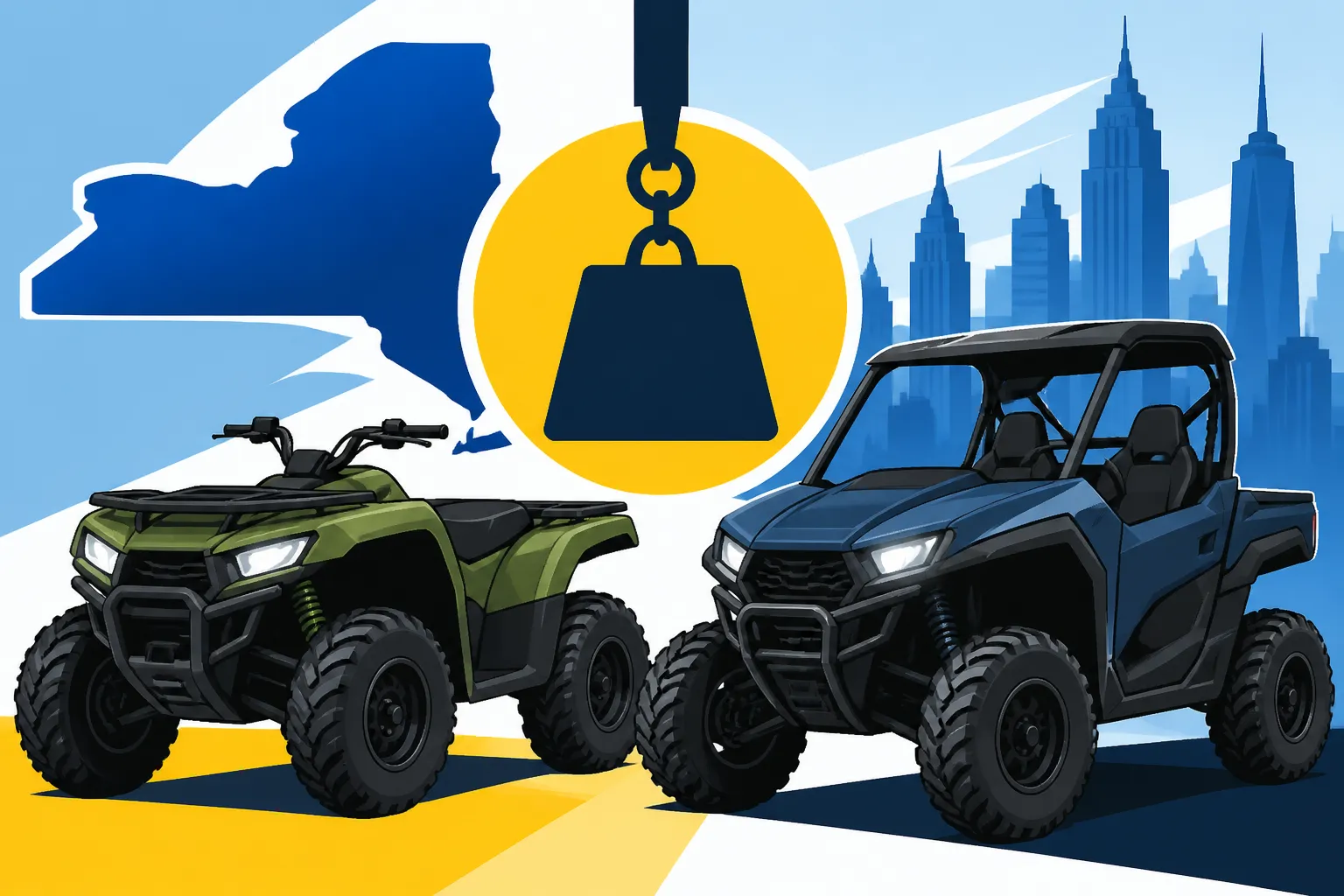
For an off-road machine to be classified and registered as an "all-terrain vehicle" in New York, it must meet several specific conditions, and one of the most critical is its weight. The law states that an ATV cannot exceed 1,000 pounds dry weight. That's right, 1,000 pounds. This isn't the weight with you, your gear, and a full tank of gas on it; it's the machine's curb weight without fluids or accessories. This specific figure is rooted in the legislative history of ATVs in the state, designed to differentiate these smaller, often single-rider machines from larger utility vehicles or what we commonly call side-by-sides.
This seemingly modest weight limit has a profound impact on the ATV market within New York. Many popular, feature-rich machines that you see advertised or riding elsewhere might simply not qualify for registration here. It shapes what dealers can reasonably sell as registrable ATVs and forces potential buyers to be incredibly diligent when researching models. It’s a point of contention and confusion for many riders, especially those new to the state's regulations or looking to upgrade from an older, lighter machine.
The frustration is completely understandable. You might find a great deal on a powerful, comfortable two-up ATV, only to discover that it tips the scales just over that 1,000-pound mark. Suddenly, that "great deal" becomes a machine you can only ride on private land, severely limiting its utility. This limit also means that many of the high-performance sport quads and utility machines popular today are pushing or exceeding this threshold, making your choices for a registrable machine narrower than you might expect.
What This Means for Most Modern Two-Seaters
When we talk about "two-seaters" in the ATV world, we're usually referring to machines specifically designed with an extended frame and a dedicated passenger seat, often called "2-up" models. These machines are built for comfort and stability when carrying two riders. However, the very features that make them comfortable for two people also add significant weight. A longer, stronger frame, a more robust suspension system to handle the extra payload, and often a larger engine to power it all, quickly push these machines beyond New York's 1,000-pound limit.
For example, many popular 500cc, 700cc, or even 1000cc two-up ATVs from major manufacturers will easily weigh in excess of 1,000 pounds dry. Some can even approach 1,200 to 1,500 pounds, making them utterly ineligible for New York ATV registration. This can be a huge disappointment for couples or parents who want to share the riding experience legally on public trails.
And if you're thinking about a side-by-side, such as a UTV or an even larger utility vehicle, the news is even more definitive. These machines, while designed for multiple passengers and often preferred for utility tasks or family outings, almost universally fail to meet New York's ATV definition. Not only do they far exceed [New York's 1,000-Pound Weight Limit], but they also blow past [New York's 70-Inch Width Limit], which is another critical component of the state's ATV classification. Simply put, for the vast majority of side-by-sides and modern two-up ATVs, New York's current registration laws draw a clear line in the sand, leaving them on the unregistered side. This means that [Why a Modern Side-by-Side Fails the Test] is a common story for many New York riders.
The Elusive Search for a Registrable Two-Up ATV in New York
Given New York's stringent 1,000-pound weight limit for ATV registration, many riders find themselves in a challenging situation when they're looking for a machine that can legally carry two people on state trails. It's a common misconception that all two-seater ATVs are created equal under the law, but the reality is far more nuanced. The search for a two-up machine that actually qualifies can feel like hunting for a unicorn.
The "Sweet Spot" for Finding a 1,000-Pound Two-Seater
If you're absolutely set on finding a factory-built two-seater that meets New York's strict weight requirements, you'll likely need to cast a wide net and potentially look at older models or very specific, smaller displacement machines. In the past, some manufacturers produced 2-up ATVs that were considerably lighter than their modern counterparts. These might have smaller engines, fewer amenities, or a less robust frame, which inadvertently kept their dry weight under that critical 1,000-pound threshold.
However, these machines are rare on the used market, and verifying their exact weight can be tricky if the manufacturer's specifications are hard to find. It requires diligent research into specific model years and careful comparison of listed dry weights. Sometimes, a very entry-level utility-focused two-seater from a less common brand might just barely scrape by, but you'll still need to confirm the numbers with absolute certainty. The "sweet spot," if it exists, is incredibly narrow and demands thorough investigation before committing to a purchase.
Remember, the emphasis is on factory-built two-seaters. Many machines might look like they could accommodate two, but if they weren't designed from the ground up as a two-person vehicle by the manufacturer, they likely won't have the appropriate seating or structural integrity, even if they're under the weight limit. It's truly a niche within a niche to find a registrable two-up ATV in New York.
The Difference Between Factory Two-Up and Aftermarket Additions
It's crucial to understand the distinction between an ATV that was manufactured as a two-seater and a single-rider ATV that has had an aftermarket passenger seat or rack added. While adding a passenger seat might seem like a simple solution to carry a second person, it generally does not make the machine a legal two-up ATV for New York registration purposes. Furthermore, it can inadvertently push an otherwise compliant single-rider ATV over the 1,000-pound limit.
New York's regulations are quite clear: [Why a Passenger Needs a Factory-Fitted Seat in New York] to legally carry a second person. An aftermarket seat, no matter how comfortable or securely attached, typically does not qualify as a "factory-fitted" seat. Beyond the legal aspect, there are significant safety concerns. Single-rider ATVs are designed for one person's weight distribution, suspension load, and handling characteristics. Adding a second person, even with an aftermarket seat, can severely compromise the machine's stability, braking, and steering, creating a dangerous situation for both riders.
Even if your base single-rider quad is well under the 1,000-pound limit, bolting on a heavy-duty passenger seat, backrest, and footpegs can add significant weight. A typical aftermarket passenger system might add 30-50 pounds or more, which could be enough to push a borderline machine over the legal limit. This means that even if you find a lightweight single-rider ATV, attempting to convert it into a two-up machine for New York trails is generally ill-advised both legally and for safety reasons.
Practical Steps for Verifying Weight and Registration
So, you've found a potential two-seater ATV that you believe might squeak under New York's 1,000-pound weight limit. That's a huge hurdle to overcome! But before you get too excited and start planning your first dual-rider trail adventure, there are some essential practical steps you need to take to verify the machine's weight and ensure it can actually be registered in the Empire State. Skipping these steps could lead to a very expensive, unregistered paperweight.
How to Accurately Check a Machine's Weight
The most reliable way to confirm an ATV's dry weight is by consulting the official manufacturer's specifications. Look for the "curb weight" or "dry weight" listed in the owner's manual, on the manufacturer's website, or in official product brochures for the specific make, model, and year of the machine. Be wary of unofficial sources or generalized figures, as even slight variations in trim levels or optional features can affect the weight. Remember, accessories like winches, bumpers, and even different tire/wheel packages can add weight, so try to find the weight for a base model if possible.
If you're buying a used machine and the official specs are hard to pin down, or if you simply want absolute certainty, you can take the ATV to a certified scale. Many truck stops, recycling centers, or material handling facilities have scales that can provide an accurate reading. Make sure the fuel tank is empty (or account for the fuel weight, approximately 6-7 pounds per gallon for gasoline), and remove any loose items or accessories not considered part of the "dry weight." This step is particularly important for older or less common machines where published data might be scarce or vague.
It's also important to understand that New York doesn't typically require a specific weight certification at the DMV counter, but they rely on the manufacturer's designation and the general knowledge of their agents. If your machine is clearly too large or heavy, an agent might question its classification as an ATV. This is also why [Why New York Has No Form MV-82ATV] for ATVs; the registration process relies on different forms and proofs.
The Registration Process for a Qualifying Two-Seater
If, by some stroke of luck, you've found a genuine two-seater ATV that meets New York's stringent weight and width requirements, the actual registration process at the DMV is largely the same as for any other qualifying ATV. You'll need to gather all the standard [New York ATV Registration Paperwork]. This typically includes proof of ownership (like a manufacturer's certificate of origin for a new machine, or a bill of sale and previous registration for a used one), proof of New York State residency, and a valid New York driver's license or non-driver ID.
For used machines, especially those bought privately, a detailed and legally sound bill of sale is paramount. This document proves the transfer of ownership from the seller to you, which is essential since ATVs in New York do not receive a title. A comprehensive bill of sale can be crucial in establishing your ownership history, particularly if the machine has changed hands multiple times without formal records. Services like LawDepot can provide customizable bill of sale templates that ensure all necessary information is included, protecting both buyer and seller. Making sure you have a solid [New York ATV Bill of Sale Requirements] in place will save you a headache down the road.
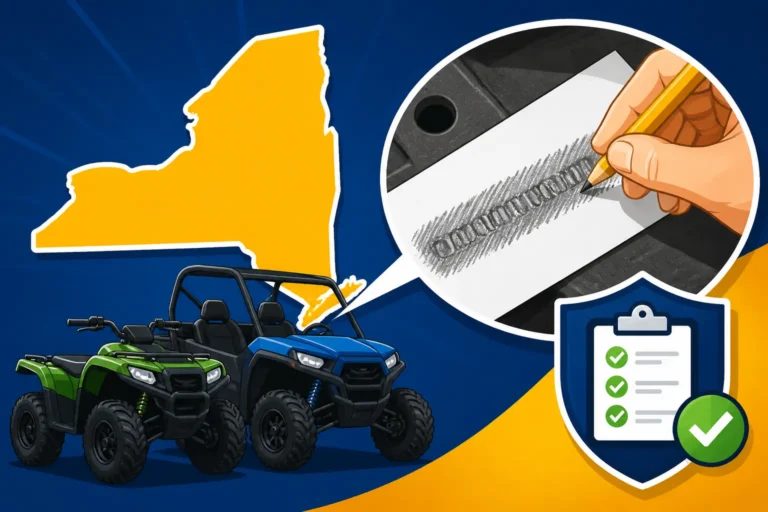
You'll also need to complete Form MV-51B, which is New York's Vehicle Bill of Sale form, even for machines that don't receive a title. Additionally, be prepared for the [New York ATV VIN Tracing Requirement]. The DMV will often ask for a pencil tracing of the machine's Vehicle Identification Number (VIN) to ensure accuracy and deter fraud. This simple step confirms that the VIN on your paperwork matches the physical machine. Having all these documents in order will make your visit to the DMV much smoother, as registering an ATV without a title can sometimes feel like a puzzle.
Alternatives and What to Consider if a Two-Seater Doesn't Fit
Let's be realistic: finding a two-seater ATV that meets New York's strict 1,000-pound weight limit is exceptionally difficult, if not impossible, for most modern machines. It's a reality that often forces riders to rethink their initial plans for sharing a single ATV. But don't despair! There are still ways to enjoy the trails with a companion in New York; they just might involve a different approach than you first imagined. Understanding the legal landscape and available alternatives is key to a safe and compliant riding experience.
Riding Rules with Passengers on Single-Rider ATVs in New York
This is a critical point that often causes confusion and leads to violations. Even if you theoretically manage to find a lightweight, single-rider ATV that could physically hold two people, New York State law is very specific about passenger carriage. As discussed earlier, [Why a Passenger Needs a Factory-Fitted Seat in New York] is not just a suggestion; it's a legal mandate. This means that if your ATV was not specifically designed by the manufacturer with a dedicated, integrated passenger seat for two-up riding, you cannot legally carry a passenger on it, regardless of its weight or your perceived ability to do so.
Attempting to carry a passenger on a single-rider ATV that lacks a factory-fitted seat is not only illegal but extremely dangerous. These machines are engineered for the balance and weight distribution of one rider. Adding a second person drastically alters the center of gravity, making the ATV much harder to control, especially during turns, over bumps, or when braking. This significantly increases the risk of rollovers, accidents, and serious injury to both riders. Law enforcement officers are aware of this rule and will issue citations for non-compliance, which can result in fines and potential liability issues if an accident occurs.
Beyond the legal and safety aspects, consider the comfort of your passenger. A single-rider seat offers very little space or support for a second person, making for an uncomfortable and potentially painful ride, particularly on longer excursions or rough trails. For a truly enjoyable shared experience, a purpose-built two-up machine (if registrable) or separate machines are always the safer and more comfortable options.
Considering a Smaller, Registrable Single-Rider ATV and Separate Machines
Given the challenges of finding a registrable two-seater, the most realistic and often recommended solution for couples or friends who want to ride together in New York is to each operate their own separate, registrable single-rider ATV. This might mean purchasing two machines, but it guarantees compliance with state laws and provides both riders with optimal control and safety. There are plenty of fantastic single-rider ATVs on the market that easily meet New York's 1,000-pound weight limit and 70-inch width limit, offering a wide range of options for different skill levels and riding preferences.
For example, a number of 300cc to 500cc utility quads, or even smaller sport quads, are well within the legal weight for New York registration. Many popular models are designed to be nimble and capable, perfect for navigating the state's diverse trail systems. While this option requires a larger initial investment in two machines, it provides unparalleled freedom and safety for each rider. Plus, it means you don't have to compromise on power or features just to fit under a restrictive weight limit. [Registering an ATV in New York] for two separate machines is a straightforward process, as long as each individual machine meets the state's criteria.
It's also worth briefly touching upon UTVs (Utility Task Vehicles) or side-by-sides. While incredibly popular for their multi-passenger capacity and utility, these machines almost universally fall outside New York's ATV definition due to their width, weight, and general design. So, unfortunately, they are not a viable alternative for registering as an ATV for public trail use. Although there have been legislative efforts, such as [A New York Bill to Widen the ATV Definition] or [New York UTV Registration Rules] to potentially bring UTVs under a different registration scheme, these are not current law, and riders must adhere to the rules as they stand today.
| Feature / Criteria | New York ATV Definition (for Registration) | Typical Modern Two-Up ATV | Typical Side-by-Side (UTV) |
|---|---|---|---|
| Max Dry Weight | 1,000 lbs | Often 1,000 – 1,500+ lbs | Often 1,200 – 2,500+ lbs |
| Max Width | 70 inches | Usually under 70 inches | Often 60 – 80+ inches |
| Seating Capacity | Designed for 1 or 2 (factory-fitted) | Designed for 2 (factory) | Designed for 2+ (factory) |
| Steering Mechanism | Handlebars | Handlebars | Steering wheel |
| Operation | Straddle-seating | Straddle-seating | Side-by-side seating |
| Registration Eligibility | Yes (if criteria met) | Rarely (due to weight) | No (does not fit definition) |
Disclaimer
This article is for general informational purposes only and does not constitute professional advice. Laws, prices and regulations vary by location and change over time. Consult a qualified professional for guidance on your specific situation.