Raising the ATV Width Limit to 80 Inches
It's incredibly frustrating when you invest in a beautiful new side-by-side or ATV, only to discover that its modern dimensions mean it doesn't fit New York's strict definition of an all-terrain vehicle for registration purposes. Many riders find themselves with machines too wide to legally register for the trails, limiting their adventures to private property. This guide will dive deep into the ongoing discussions and efforts to raise New York's ATV width limit to 80 inches, exploring what this change could mean for the riding community and why it's such a hot topic.
The Current New York ATV Width Limit and Its Impact on Riders
New York State law currently defines an ATV, for registration purposes, with a very specific set of dimensions and characteristics. One of the most significant and challenging for many riders is the [New York ATV Width Limit for Registration], which currently stands at 70 inches. This isn't just a suggestion; it's a hard limit that dictates whether your machine can even get a license plate and validation decal for use on designated public trails or for crossing public roads.
Why 70 Inches Is a Problem for Modern Machines
Back when the 70-inch limit was set, most ATVs and even the early side-by-sides fit comfortably within that dimension. However, the powersports industry has evolved tremendously. Today's machines are often built for enhanced stability, greater passenger comfort, and improved performance, which often translates to a wider stance. Many popular side-by-sides, designed with wider A-arms, longer suspension travel, and robust chassis, easily exceed this 70-inch threshold. We're talking about machines that are 64 inches wide before you even consider wider tires or aftermarket accessories, making the 70-inch rule a real non-starter for owners of these fantastic modern vehicles. This creates a situation where a rider might buy a state-of-the-art UTV, only to find out they cannot [Registering an ATV in New York] because of its width.
The impact of this narrow definition is profound. Riders who purchase these wider machines are essentially limited to riding exclusively on private land or at specific, unregulated off-road parks. They can't access county trail systems, connect between trails by crossing designated roads, or even legally transport their machines on public roads in a limited capacity as registered ATVs might. It's a significant barrier to enjoying the full spectrum of New York's potential riding opportunities, leading to a lot of disappointment and frustration among enthusiasts. Imagine seeing all those incredible [New York ATV Trails] and knowing your machine is technically excluded.
The Frustration of Unregistered Wide Machines
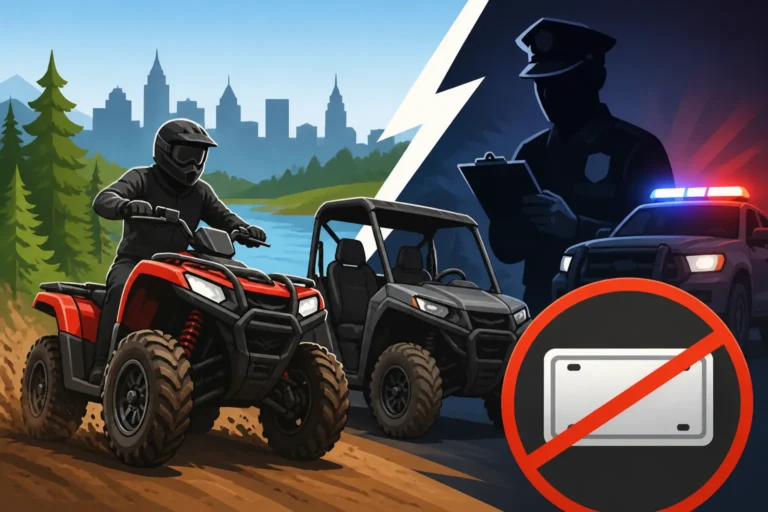
The consequence of owning a machine that exceeds the [New York's 70-Inch Width Limit] is that it simply cannot be registered as an ATV in New York. This means no plate, no decal, and no legal access to public ATV trails or road crossings. Many riders learn this hard lesson after the purchase, leading to a feeling of being stuck with a machine they can't fully enjoy. It's a common scenario, and it leaves many wondering about their options, which often boil down to expensive transportation to private lands or considering selling a machine they just bought.
This often leads to questions like [Why a Modern Side-by-Side Fails the Test]. The issue isn't that these machines are unsafe or poorly designed; it's purely a matter of an outdated legal definition. For many, it feels like New York isn't keeping up with the industry. This regulatory lag not only stifles recreational opportunities but also means lost revenue for trail systems and local businesses that cater to riders. The frustration is palpable in online forums and at local riding clubs, where members frequently discuss the limitations and the desire for legislative change.
Why Advocates Are Pushing for an 80-Inch Limit
The push to increase New York's ATV width limit to 80 inches isn't just about making it easier to register new machines; it's a multifaceted effort driven by safety, economic benefits, and the evolution of the powersports industry itself. Riders and industry stakeholders alike are united in the belief that an updated definition is long overdue.
The Evolution of Powersports Vehicles
Today's ATVs and UTVs are significantly different from their predecessors. Manufacturers have responded to consumer demand for greater comfort, enhanced safety features, and more robust performance. This often means a wider wheelbase for improved stability, especially on uneven terrain or when carrying passengers and cargo. These wider machines often come equipped with advanced suspension systems, roll-over protection structures (ROPS), and sophisticated braking, all contributing to a safer and more enjoyable ride. When you look at popular models today, many naturally exceed the 70-inch mark, making the current law feel out of step with modern design and engineering. [Why Most Side-by-Sides Cannot Be Registered in New York] perfectly encapsulates this disconnect.
The argument is that these wider machines, far from being inherently dangerous, are often safer and more stable than narrower, older models. They offer a better center of gravity, reducing the risk of tipping, and provide more interior room for occupants in side-by-sides, which can be crucial for comfort and safety on longer rides. Recognizing this evolution means updating the legal definition to reflect the reality of the market and the advancements in vehicle design.
Economic Benefits for New York State
Beyond individual rider satisfaction, there's a strong economic argument for raising the width limit. More registered ATVs and UTVs mean more registration fees, which directly contribute to trail maintenance and development through programs like the New York State Snowmobile and ATV Trails Fund. This fund supports the very trails that riders want to use, creating a positive feedback loop. When more people can register and ride their machines, they're also more likely to spend money at local businesses along or near the trails.
Consider the potential boost to local economies in areas like the Tug Hill Plateau or the Southern Tier. Riders buy gas, food, lodging, and supplies from small towns, generating sales tax revenue and supporting local jobs. If more riders can legally access these areas, the economic impact could be substantial. This is why local businesses and chambers of commerce often lend their support to legislative efforts to expand ATV access. It's not just about recreation; it's about rural economic development. Local clubs often rely on these economic benefits to maintain the trails, and allowing wider machines would mean more riders contributing to that upkeep.
Enhanced Safety and Rider Experience
Paradoxically, some argue that allowing wider machines could actually enhance safety. As mentioned, wider vehicles tend to be more stable, reducing the risk of rollovers, especially for side-by-sides carrying multiple passengers or gear. Many modern UTVs are designed with advanced safety features that far surpass those of older, narrower ATVs. By not allowing them on trails, New York might inadvertently be pushing riders towards less stable or older equipment to meet the current narrow criteria.
Furthermore, a more inclusive width limit would mean a better rider experience. People could purchase the machines best suited to their needs, whether for family outings, utility work, or aggressive trail riding, without the added headache of registration limitations. It would reduce confusion and frustration, allowing riders to focus on enjoying the outdoors. For those who frequently ride with others, wider side-by-sides offer a social element that narrower ATVs simply cannot, further enriching the overall recreational experience.
The Legislative Process and Challenges for Change
Changing a law in New York State, especially one that impacts recreational vehicles, is rarely a quick or straightforward process. Even with strong advocacy, a bill to raise the ATV width limit to 80 inches would face several hurdles as it navigates the legislative landscape. Understanding this process is key to appreciating the efforts involved in bringing about such a change.
How a Bill Becomes Law in New York
The journey for a bill like [A New York Bill to Widen the ATV Definition] typically begins with an elected official – a Senator or Assembly Member – sponsoring the legislation. Once introduced, the bill is assigned to a relevant committee, such as the Transportation Committee or Environmental Conservation Committee. Here, it undergoes scrutiny, debate, and potentially amendments. If it passes committee, it moves to the full chamber (either the Senate or Assembly) for a vote. If it passes one chamber, it then needs to go through the same process in the other chamber.
Even if it passes both the Senate and Assembly, the bill isn't law yet. It then goes to the Governor for signature. The Governor can sign it into law, veto it, or allow it to become law without a signature. Each step presents an opportunity for the bill to stall or fail. Public hearings, lobbying efforts by advocacy groups, and constituent outreach all play a crucial role in moving a bill forward. Organizations such as ATV clubs and recreational groups often utilize tools, sometimes with the help of platforms like LawDepot for drafting official letters or petitions, to organize their efforts and present a unified front to lawmakers.
Common Objections and Concerns
While many see the benefits of raising the width limit, there are always objections. Common concerns often revolve around environmental impact and trail compatibility. Some conservation groups worry that wider, heavier machines could cause more trail erosion or damage sensitive ecosystems, even though modern trail design and maintenance can mitigate many of these concerns. Others might argue that existing trails were built for narrower machines and cannot safely accommodate 80-inch wide vehicles without significant, costly modifications.
Another concern might come from landowners whose property the trails traverse. Trail agreements are often delicate, and any perceived increase in vehicle size or potential impact could lead some landowners to withdraw their permission, threatening the very existence of certain trail segments. When drafting or reviewing these agreements, particularly for club-managed trails, it's essential to have clear language, and some might even use legal document services like LawDepot to ensure all parties are protected and clear on terms. Addressing these concerns often involves detailed impact studies, proposed mitigation strategies, and robust communication with all stakeholders.
The Role of Advocacy and Rider Engagement
For a bill to succeed, strong advocacy from the riding community is essential. This includes contacting local representatives, sharing personal stories about how the current law impacts them, and participating in public forums. ATV clubs and associations are particularly vital in this process, organizing letter-writing campaigns, attending legislative meetings, and providing lawmakers with data and compelling arguments. They often compile statistics on the economic benefits, safety features of modern machines, and the experiences of other states with wider ATV definitions.
The more unified and vocal the rider community is, the greater the chance of success. This often means not just making noise, but presenting well-researched arguments and being willing to compromise on certain aspects if it means advancing the overall goal. [Why New York's UTV Bills Are Not Law Yet] highlights the fact that these legislative battles are ongoing and require sustained effort.
What an 80-Inch Limit Would Mean for Riders and Trails
If New York State were to raise its ATV width limit to 80 inches, it would bring about a significant shift for the powersports community. The impact would be felt from the dealership floor to the trailheads across the state, opening up new opportunities and potentially posing new challenges.
Wider Access to the Latest Machines
The most immediate and obvious impact would be the ability for New Yorkers to legally register and ride a much broader range of modern ATVs and side-by-sides. Machines that are currently excluded due to their width, such as many popular sport and utility side-by-sides, would suddenly become viable options for trail riding. This would undoubtedly boost sales for New York dealers, offering consumers a wider selection and removing the current barrier of needing to confirm a machine's width before purchase.
This means riders would no longer be forced to choose between a machine they love and one they can actually register for public trails. Families could invest in comfortable multi-passenger UTVs, knowing they could take them to county trail systems. It would also likely reduce the number of unregistered machines being ridden illegally, as the primary barrier to registration for many would be removed. This change would finally align New York's regulations with the advancements in powersports vehicle design.
Potential Trail Adaptations and Maintenance
While an 80-inch limit would open up more trails, it would also necessitate careful consideration for existing trail infrastructure. Many older trails were originally designed with narrower machines in mind, and some might require widening or reinforcement in certain sections to safely accommodate broader vehicles. This could involve clearing brush, widening bridges, or reinforcing culverts.
This is where the increased registration fees and potential for greater economic activity become even more critical. The funds generated could be reinvested into trail maintenance and upgrades, ensuring that the trail system evolves to meet the needs of the new definition. Collaboration between trail clubs, county agencies, and state parks would be crucial to identify areas needing improvement and to plan for sustainable development. Organizations using resources like LawDepot for landowner agreements might need to revisit or update those documents to reflect the potential for wider machine usage, ensuring continued access.
Increased Rider Participation and Tourism
With a more accommodating width limit, it's reasonable to expect an increase in rider participation across New York State. More residents would likely purchase ATVs and UTVs, and out-of-state visitors with wider machines would find New York a more attractive destination. This influx of riders would further amplify the economic benefits, supporting tourism and local businesses in riding communities. Imagine more people enjoying [Lewis County ATV Trail System in New York] or [New York's Tug Hill Riding] areas.
An increase in participation would also underscore the need for continued education on safe riding practices and trail etiquette. As the community grows, ensuring that all riders understand and respect the rules of the trail, environmental considerations, and landowner rights becomes even more important. Trail organizations might expand their safety certificate offerings and outreach programs to accommodate the larger base of riders.
Here's a quick comparison of the current situation versus what an 80-inch width limit could mean:
| Feature | Current 70-Inch Width Limit | Proposed 80-Inch Width Limit |
|---|---|---|
| Machine Compatibility | Excludes many modern UTVs and wider ATVs from registration. | Allows registration of a much broader range of current models. |
| Trail Access | Limits use to narrow-compliant machines; restricts wider models to private land. | Opens up public and club trails to more modern, wider vehicles. |
| Economic Impact | Limits potential revenue from registrations and tourism. | Potentially boosts registration fees and local economies. |
| Rider Choice | Forces riders to choose older/narrower models or ride privately. | Grants riders more freedom to choose desired machines. |
| Trail Maintenance | Focus on existing infrastructure for narrower machines. | May require some trail widening/upgrades; increased funding potential. |
| Safety Considerations | Some wider modern machines (often safer) are excluded. | Includes wider, often more stable, modern machines. |
The path to raising New York's ATV width limit to 80 inches is an uphill one, filled with legislative challenges and stakeholder concerns. However, the potential benefits for riders, local economies, and the overall powersports community are significant. Continued advocacy, education, and thoughtful planning will be essential to turn this proposed change into a reality for New York's enthusiastic ATV and UTV riders.
Disclaimer
This article is for general informational purposes only and does not constitute professional advice. Laws, prices and regulations vary by location and change over time. Consult a qualified professional for guidance on your specific situation.