Can Your Dealer Register the Quad Before You Leave?
You’ve just picked out that shiny new (or new-to-you) quad from the dealership, the excitement is bubbling, and all you want to do is load it up, head straight to the trails, and start riding. But then that nagging question creeps in: can the dealer actually register this thing for me right here, right now, so I don't have to deal with the DMV? It’s a common hope, and frankly, a common point of confusion for many new ATV owners in New York, and we're here to break down the reality of what your dealer can and can't do when it comes to getting your machine street-ready (well, trail-ready, at least!) and legally recognized.
The Reality of Dealer Registration in New York
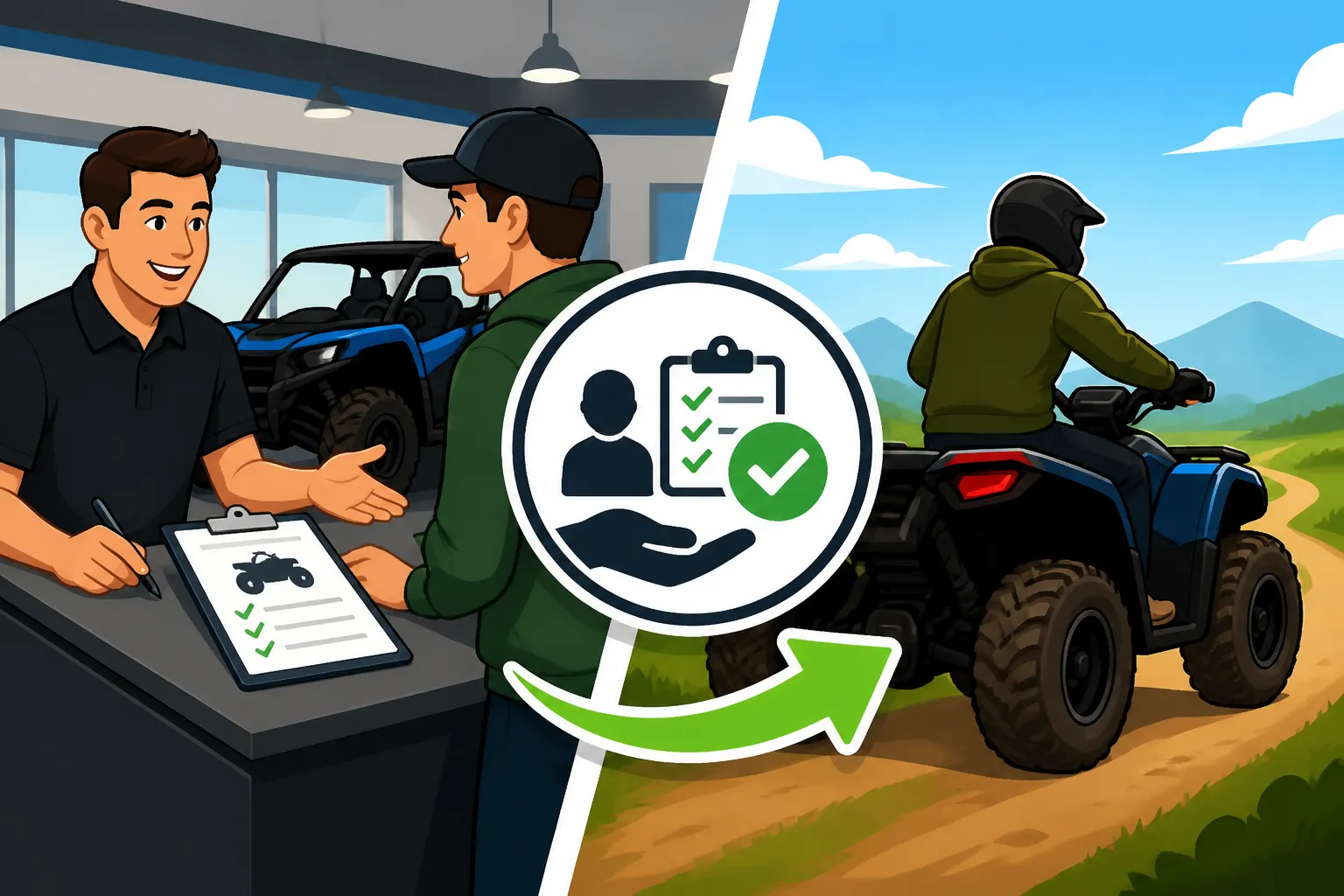
It's a dream scenario for many: walk into a dealership, pick out your perfect ATV, sign a few papers, and ride off into the sunset with a plate already attached. Unfortunately, New York's registration process for ATVs, which are considered non-titled vehicles in the state, isn't quite that streamlined. While your dealer plays a crucial role in getting the ball rolling, they generally can't complete the entire registration process for you on the spot.
Why Instant Registration Isn't the Norm
The main reason you can't typically leave the dealership with a fully registered ATV is due to the specific steps required by the New York State Department of Motor Vehicles (DMV) for ATVs. Unlike cars, which have titles and a more direct registration transfer process, ATVs fall into a different category. The DMV requires the actual owner—that's you—to present specific forms and proofs of ownership and insurance directly at a DMV office. This hands-on requirement means the dealer, while helpful, can't circumvent your personal visit.
Think of it this way: the dealer's job is to sell you the machine and provide you with the necessary documentation from their end. Your job, as the new owner, is to take that documentation, add your own personal proofs, and officially register the vehicle in your name with the state. This two-step process means a bit of patience and a trip to your local DMV are almost always in order. You might also find yourself wondering about the [New York ATV Registration Processing Time] – it's rarely instantaneous.
What Your Dealer Can Do for You
Don't get us wrong, your dealer is an invaluable part of the purchase and initial paperwork process! They don't just hand you the keys and wave goodbye. In New York, your ATV dealer is responsible for preparing and filing certain documents that are absolutely critical for your registration. The most important of these is usually Form RV-2, the "Dealer's Report of Sale." This form officially records the sale of the ATV from the dealership to you, noting important details like the Vehicle Identification Number (VIN), the sale price, and the date of purchase.
They'll also typically provide you with a detailed bill of sale, which serves as your initial proof of ownership. This document is paramount, especially since New York doesn't issue traditional titles for ATVs. The dealer will ensure the ATV is prepared for sale, which often includes assembly, safety checks, and sometimes even a brief explanation of the basic controls and maintenance. While they can't hand you a plate, they can make sure you walk out with all the dealer-side paperwork you need to take to the DMV yourself. For more on this, check out [What New York ATV Dealers File on Form RV-2].
Your Crucial Role in the Registration Process
So, if the dealer can't do it all, what exactly do you need to bring to the table? This is where many new owners realize that while buying the ATV is the fun part, the registration requires a bit of homework. Your personal involvement is key to navigating the New York DMV system successfully.
The MV-51B and Proving Ownership
The cornerstone of your ATV registration in New York will be Form MV-51B, the "Certificate of Sale." While your dealer might provide you with their own bill of sale, the MV-51B is the specific form the DMV wants to see, especially when dealing with non-titled vehicles like ATVs. This form officially transfers ownership from the seller (whether a dealer or a private party) to you, the buyer. It’s absolutely essential that this form is filled out correctly, completely, and signed by the seller. Without it, you’ll hit a brick wall at the DMV counter.
Since New York doesn't issue traditional vehicle titles for ATVs, the MV-51B, along with a robust bill of sale, becomes your primary evidence of legal ownership. This can sometimes be a point of stress for buyers who are used to the clear-cut proof of a car title. The DMV needs to be absolutely certain you are the rightful owner before they'll register the machine in your name. Sometimes, if you're buying privately, a simple, handwritten bill of sale might not have all the details the DMV needs. This is where resources like LawDepot can be incredibly helpful, offering templates for comprehensive bills of sale that cover all the necessary information, giving you extra peace of mind and preventing potential headaches at the DMV. You can learn more about [New York's Form MV-51B Explained] and [MV-51B and New York's Non-Titled Vehicles] for additional details.
Gathering Essential Documents Beyond the Dealer's Scope
Beyond the MV-51B and the dealer's bill of sale, you'll have a few other crucial items to bring to your DMV visit. These are things only you can provide, as they pertain to your personal information and legal compliance.
First, you'll need proof of identity and residency. This typically means a valid New York State driver's license or non-driver ID, along with potentially a utility bill or other document showing your current address. The DMV needs to confirm who you are and that you reside in New York.
Second, and this is a big one, you must have proof of liability insurance for your ATV. New York mandates that all registered ATVs carry minimum liability coverage. You absolutely cannot register your ATV without showing proof of an active insurance policy. It's smart to arrange this before your DMV appointment, as you don't want to get all the way there only to be turned away. Make sure your insurer is authorized to do business in New York. For more specific details on what you need, check out [New York ATV Proof of Ownership Requirements] and [New York ATV Registration and Insurance Proof].
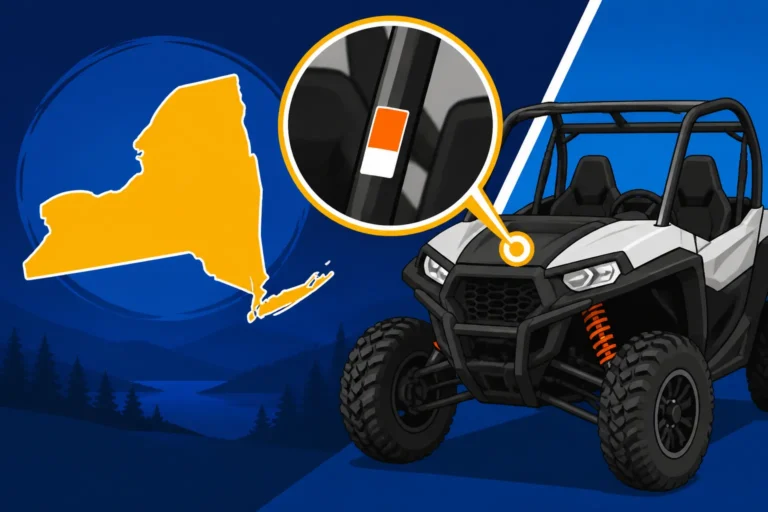
Finally, New York also has a unique requirement: a pencil tracing of your ATV's Vehicle Identification Number (VIN). Yes, you read that right – a pencil tracing! This isn't something your dealer usually does for you, and it’s a manual step you’ll need to take yourself before heading to the DMV. Simply place a piece of paper over the VIN (usually found on the frame near the front wheel, or on the engine case) and rub a pencil over it until the numbers and letters clearly transfer to the paper. It's an old-school method, but it's what the DMV asks for to ensure accuracy and prevent fraud. For a closer look at this requirement, see [Why New York Wants a Pencil Tracing of the VIN].
Navigating the DMV: What Happens After the Dealer
Once you've got all your paperwork in order from the dealer and you've gathered your own personal documents, it's time for the main event: your visit to the New York DMV. This is where all the pieces come together, and your ATV officially becomes registered.
The In-Person Visit and What to Expect
For an initial ATV registration in New York, an in-person visit to a DMV office is almost always required. This isn't like renewing a registration online; you're establishing the first official record of your ownership with the state. When you arrive, be prepared with all your documents: the MV-51B, your dealer's bill of sale (if applicable), proof of identity and residency, your ATV insurance card, and that VIN tracing.
At the counter, a DMV clerk will review all your paperwork meticulously. They'll verify the VIN, check the dates on your bill of sale, confirm your insurance coverage, and ensure the MV-51B is filled out correctly. It's a good idea to have everything organized and easily accessible to make the process as smooth as possible. You'll pay the registration fee, which covers the cost of registering your machine for the current registration period, and a one-time plate fee. For details on where to go, look at [Where to Register an ATV in New York], and for cost breakdown, see [New York ATV Registration Cost].
The Plate, Decal, and When You Can Finally Ride
If all your paperwork is in order and approved, congratulations! The DMV will issue you your New York ATV registration certificate, a small, square ATV license plate, and a validation decal. The decal usually needs to be affixed to the upper right corner of the plate. The plate itself must be securely mounted to the rear of your ATV, in a clearly visible location. This often means bolting it to a rear rack or a dedicated plate mount. Take a moment to understand [New York ATV Plates and Where They Mount] so you're ready.
Once you have that plate and the current decal affixed, and you have proof of insurance, you are finally legal to ride your ATV on designated trails and property where it's permitted! Keep in mind that New York ATV registrations expire annually on August 31st, regardless of when you initially registered. So, even if you register in July, it will still expire the following August 31st. This is an important detail to remember for future renewals. You can read more about [New York's August 31 Expiration] for a full explanation.
To give you a clearer picture, here's a comparison of what you can typically expect from your dealer versus what you'll need to handle yourself:
| Task / Item | Dealer's Role | Your Role |
|---|---|---|
| Sale Documentation | Provides dealer bill of sale, Form RV-2. | Ensures MV-51B is signed correctly by seller. |
| Proof of Ownership | Provides initial sales records. | Submits MV-51B and bill of sale to DMV. |
| Insurance | Not directly involved; may recommend providers. | Must obtain liability insurance before DMV visit. |
| Personal ID/Residency | Not applicable. | Must provide valid ID and proof of New York residency. |
| VIN Tracing | Not typically provided. | Must perform and submit a pencil tracing of the VIN. |
| DMV Visit | Not involved in your personal registration visit. | Must visit a DMV office in person for initial registration. |
| Fees Paid | Collects sales tax (if applicable). | Pays registration and plate fees at DMV. |
| Plate & Decal Issuance | Does not issue these. | Issued by DMV upon successful registration. |
Common Pitfalls and How to Avoid Them
Even with the process laid out, there are a few common misunderstandings or overlooked details that can trip up new ATV owners. Being aware of these can save you a lot of frustration and wasted time.
Misunderstandings About "Street Legal"
One of the biggest misconceptions, especially for new riders, is the idea that once your ATV is registered, it becomes "street legal" and you can ride it anywhere a car can go. This is absolutely not the case in New York. Registering your ATV allows you to operate it on designated trails, private property with permission, and certain public lands or roads that are specifically posted as open for ATV use. It does not make it legal for general road use. Riding an ATV on public highways, roads, or streets not explicitly designated for ATV use is illegal and can result in significant fines and penalties.
It’s easy to get excited and assume registration means unrestricted freedom, but it's vital to understand the limitations. Your registration is for off-highway use, not for cruising down Main Street. This is an important distinction, and something we cover in depth in [Are ATVs Street Legal in New York?].
The Importance of a Solid Bill of Sale
While the MV-51B is a required DMV form, a detailed and comprehensive bill of sale, especially for a private purchase, can make all the difference. When buying from a dealer, their generated bill of sale is usually quite thorough, but it's always good to double-check. For private sales, people often rely on simple, generic templates or even handwritten notes, which might miss crucial details the DMV prefers.
A good bill of sale should clearly identify the buyer and seller, the date of sale, the full description of the ATV (make, model, year, VIN), the purchase price, and a statement that the vehicle is sold "as-is" (or any other agreed-upon conditions). Having a detailed document helps establish a clear chain of ownership, which is crucial in New York given the lack of ATV titles. As mentioned earlier, if you're ever in a bind for a solid template, resources like LawDepot can be incredibly useful for creating professional and legally sound documents like a bill of sale, which can prevent issues down the road, especially at the DMV. Ensure you understand [New York ATV Bill of Sale Requirements] to avoid any hiccups.
Checking ATV Specifications Before Purchase
Before you even get to the registration step, it's absolutely critical to understand New York's specific physical requirements for ATVs that can be registered. This is where many eager side-by-side (UTV) owners, in particular, run into trouble. New York law has a very narrow definition of an ATV for registration purposes, which includes strict limits on width and weight.
Generally, an ATV must be no more than 70 inches wide and weigh no more than 1,000 pounds dry weight. Many modern side-by-sides, and even some larger utility-focused ATVs, exceed these limits. If your machine is wider than 70 inches or heavier than 1,000 pounds, it simply cannot be registered as an ATV in New York, regardless of what the dealer tells you or what paperwork you have. This means you would be restricted to riding it only on private property with permission, or on trails outside of New York that accommodate such machines. This is a common and heartbreaking discovery for many buyers after the fact. Always check these dimensions before you make your purchase. Learn more about [New York ATV Width Limit for Registration] and [New York ATV Weight Limit for Registration] to be fully informed.
Disclaimer
This article is for general informational purposes only and does not constitute professional advice. Laws, prices and regulations vary by location and change over time. Consult a qualified professional for guidance on your specific situation.