How a Town Posts a Road Open for ATV Season
Few things are as frustrating for an ATV enthusiast in New York as spotting a perfectly inviting dirt road or a quiet country lane and knowing, deep down, that riding your machine on it is likely illegal. We all yearn for more places to ride, and while state land has its strict rules, many wonder if their local town roads could offer some relief. This guide will walk you through the often-complex process of how a town actually goes about designating and posting a road open for ATV season, helping you understand the steps involved and what you need to look for to ride legally.
The Frustration of Limited Riding Areas and the Role of Local Control
It’s a common lament among New York ATV riders: where can we actually go? So many of us are passionate about the sport, the exploration, the camaraderie, but finding legal places to kick up some dust can feel like a constant battle. We trailer our machines for hours, hoping to find that perfect trail, only to be met with signs explicitly forbidding ATVs, or worse, the silent understanding that unless it's marked, it's off-limits. This frustration stems from the very structure of New York law regarding ATVs on public roadways, which largely places control and designation power at the local level.
Why Most Roads Are Off-Limits (and the Exceptions)
The baseline rule in New York is pretty straightforward, and frankly, a bit of a bummer for those of us who just want to ride: ATVs are generally prohibited from operating on public streets and highways. This isn't just a suggestion; it's the law. Imagine driving down a scenic rural road, seeing a perfect gravel lane peeling off into the woods, and having to drive past it because it's not designated. It's truly disheartening. This blanket prohibition is in place for safety, traffic flow, and to prevent damage to paved surfaces not designed for off-road tires. It’s why you won't find [Street Legal ATVs in New York: The Short Answer] to be a simple "yes." There are, of course, a few exceptions that offer tiny slivers of hope. You might legally cross a highway at a ninety-degree angle after stopping, or you might find yourself on a private road where you have explicit permission. But these are very specific scenarios that don't open up a vast network of riding opportunities. The desire to legally ride from one trail system to another, or even just to connect a loop, often runs into this fundamental roadblock, quite literally.
The Importance of Local Ordinances
So, if the state generally says no, how do we ever get to ride on a road? This is where the local town boards come into play, and their authority is absolutely critical. Unlike some states where a statewide policy might open certain road classes, in New York, the power to open a specific public highway or street to ATV operation largely rests with the legislative body of the city, town, or village. This means your town board has the ability to pass a local law, an ordinance, that explicitly permits ATVs on certain roads within its jurisdiction. It’s a huge responsibility and a significant power that can either open doors for riders or keep them firmly shut. For many of us, this local control means that expanding our riding options isn't about state advocacy as much as it is about engaging with our neighbors and local representatives. Think of it as a microcosm of [Riding Your Own Property Under New York Law] – you have control over your own land, but the town has control over its roads, and they need to be convinced it's a good idea. This isn't just a casual decision; it's a formal, legal process that requires careful consideration and often, significant public input.
The Step-by-Step Process for a Town to Designate an ATV Road
Getting a town to open its roads to ATVs isn't as simple as asking nicely at a town meeting. It’s a methodical, often lengthy process that involves community interest, formal proposals, public discourse, and ultimately, a legislative act by the town board. Understanding these steps can empower riders to participate effectively and increase the chances of success. It's a journey, not a quick jaunt.
Initial Interest and Community Engagement
Every journey starts with a first step, and for designating an ATV road, that step is local interest. This often begins with individual riders, local ATV clubs, or even tourism advocates who see the potential benefits of expanded riding opportunities. Perhaps a group of riders has been consistently driving by a perfectly suitable unpaved road and wonders why it can't be used. Or maybe a local business owner sees the economic potential of bringing more riders to the area, recognizing that ATV enthusiasts often stop for gas, food, or even overnight stays. This initial spark of interest needs to be nurtured into broader community support. It’s not enough for a few people to want it; there needs to be a groundswell that shows the town board that this isn't just a niche request. This is the stage where riders might start informally polling their friends and neighbors, discussing the idea at local gatherings, and beginning to build a case for why this specific road or network of roads would be a good fit. This is also the point where people might start to think about formally [Asking a Town Board to Post a Road], gathering signatures, or putting together a presentation.
Town Board Review and Public Hearings
Once there's enough local interest and a formal request is made, the process moves into the official channels of the town government. The town board will typically put the proposal on its agenda for discussion. This isn't a rubber stamp; it's a careful deliberation. They'll consider factors like the character of the road, potential impacts on local residents, safety concerns, environmental considerations, and enforcement challenges. This is also where public hearings often come into play. These hearings are crucial opportunities for both proponents and opponents to voice their opinions. Riders can present their arguments, emphasizing responsible riding, the economic benefits, and how they plan to respect the land and local residents. Opponents might raise concerns about noise pollution, increased traffic, potential property damage, or safety risks. It's often a delicate balancing act, with the town board trying to weigh the recreational desires of ATV enthusiasts against the concerns of other community members. Strong, organized clubs that demonstrate a commitment to safety and land stewardship, perhaps by showing how they've already used durable components from a brand like SuperATV on their machines for effective trail maintenance, can be incredibly influential during this phase, proving they are serious about responsible recreation.
Passing the Ordinance and Official Designation
If the town board, after all the discussions and public input, decides that opening a road or roads to ATVs is in the best interest of the community, they will then proceed to pass a local law or ordinance. This is the legislative act that legally designates the road. The ordinance isn't just a vague agreement; it's a formal document that will specifically outline which roads are open, during what dates or seasons, and sometimes even specific hours of operation. It might also include particular rules, such as speed limits, noise restrictions, or types of machines allowed. It effectively creates a legal framework for ATV use where none existed before, moving beyond the general [New York Rules for Riding a Town Road] to specific, local allowances. This is why simply assuming a dirt road is open because it looks traversable is a recipe for trouble. The specific wording of the ordinance is what matters, and it's what local law enforcement will rely on. Once passed, the town has a responsibility to then post the road, making sure riders and residents alike are aware of the new rules.
What "Posting" a Road Really Means for Riders
So, the town board has done its work, the ordinance is passed – now what? This is where the "posting" comes in, and it's absolutely critical for riders. "Posting" isn't just a formality; it's the physical manifestation of the legal designation, providing clear guidance on where you can and cannot ride. Without proper posting, even a legally designated road can cause confusion, and you might find yourself in hot water.
The Specifics of Signage and Visibility
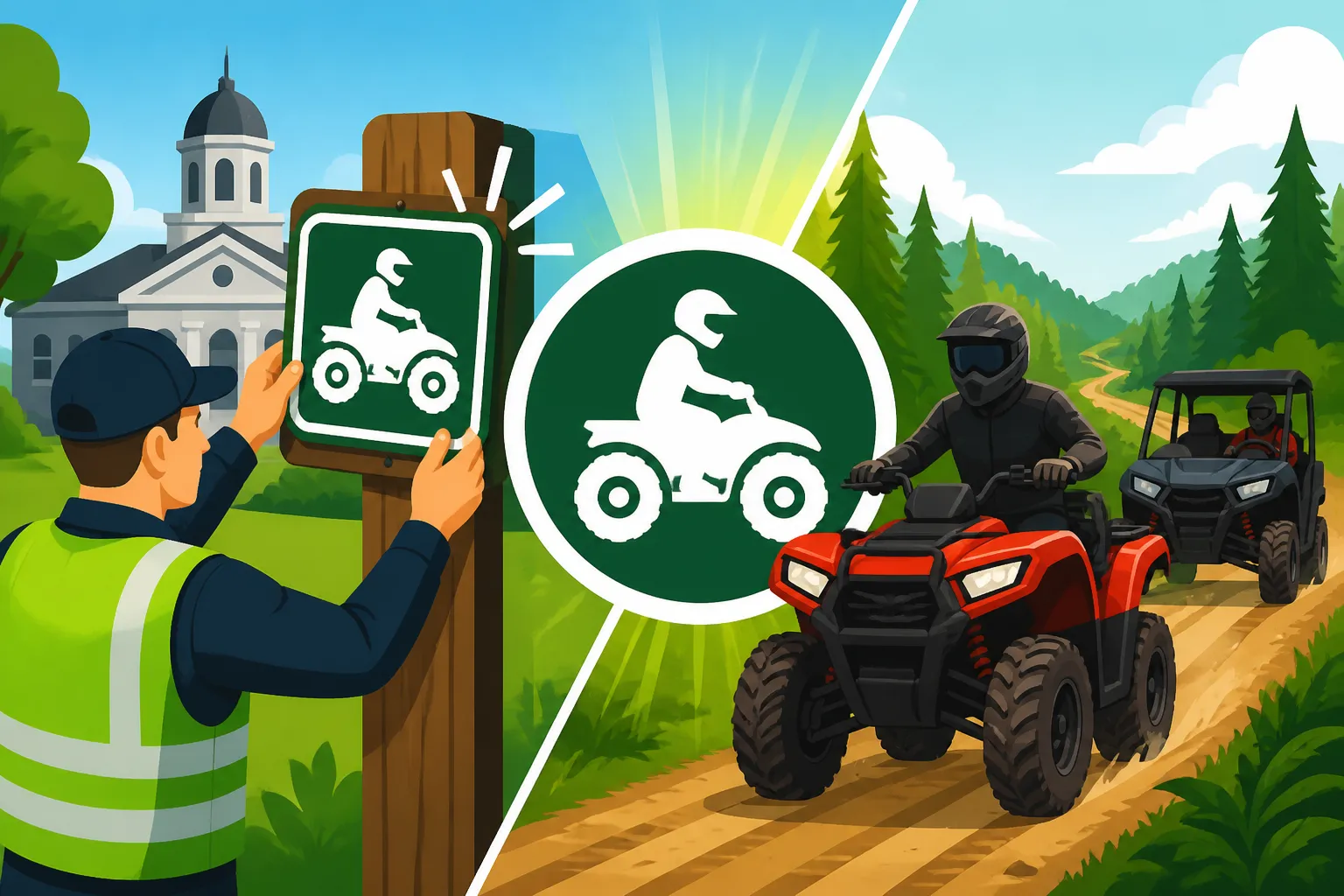
When a town designates a road for ATV use, they are legally required to post appropriate signs to inform the public. This isn't just a small, easily missed placard. These signs need to be clear, visible, and unambiguous. You'll typically see official signs indicating "ATV Route," "Designated ATV Trail," or similar wording, often with the specific dates or hours of operation. They're usually placed at the entry points of the designated road segment and at regular intervals along its length to ensure riders are continuously aware they are on a legal route. Think about it: if you're riding a new trail for the first time, you want absolute clarity. These signs are your green light. If a road isn't clearly marked, despite what you might have heard through the grapevine, it's best to assume it's still off-limits. This is the practical side of [A Road Designated and Posted in New York], turning a legal document into real-world guidance. Always look for these signs; they are your proof of permission.
Rider Responsibilities on Designated Roads
Just because a road is posted for ATV use doesn't mean it's a free-for-all. Far from it. When a town designates a road, it's typically done with the understanding that riders will adhere to specific responsibilities and safety protocols. This might include maintaining lower speeds than you would on a private trail, respecting adjacent private property, and certainly, adhering to all general ATV laws. This includes having proper [New York's Mandatory ATV Insurance] and ensuring all riders, regardless of age, wear a helmet as per [New York Helmet Rules for ATV Riders]. Additionally, many towns will have explicit rules within their ordinances about noise levels or specific times of day when riding is allowed. Remember, the privilege of riding on these designated roads can be revoked if riders are irresponsible. Using quality gear, like proper lighting or mirrors, even if your machine isn't fully street legal, can help you ride more safely and responsibly on shared roads, demonstrating respect for other road users. SuperATV, for example, offers various accessories that can enhance safety and visibility, even if they don't change the underlying legal status of your vehicle on public paved roads. These details matter because the continued goodwill of the community is essential for these roads to remain open.
Consequences of Riding Undesignated Roads
Here’s the cold, hard truth: if a road isn't explicitly and clearly posted as open for ATV use, you should assume it's closed. Riding on undesignated public roads in New York can lead to significant consequences, including fines, impoundment of your machine, and even more serious legal trouble if an accident occurs. Imagine getting stopped by a local sheriff who asks where the sign is, and you can't point to one. That's a bad situation. The [New York Fines for an ATV Violation] can be steep, and nobody wants their fun day ruined by a costly ticket. It’s your responsibility as a rider to know the local ordinances and to seek out official information, usually on the town's website or by contacting their clerk's office, before you load up your rig. Don't rely on hearsay or assumptions. Always verify the status of a road before you ride, because an ounce of prevention is worth a pound of cure when it comes to avoiding legal headaches.
The Impact of Posted Roads and Future Considerations
The decision to open and post roads for ATV use has far-reaching effects, touching upon local economies, community relations, and the future of ATV recreation in New York. While it offers exciting opportunities, it also comes with its own set of challenges that towns and riders must navigate together. It's a testament to how local decisions can truly shape our riding landscape.
Benefits and Challenges of Designated Roads
When a town successfully designates and posts roads for ATV use, the benefits can be substantial. For riders, it means more legal access, often connecting existing trail systems or opening up new scenic routes. This can transform local riding, allowing for longer, more diverse trips without the constant worry of trespassing. Economically, these designations can be a boon for local communities, bringing in tourism dollars as riders patronize gas stations, restaurants, convenience stores, and accommodation providers. Think of small towns on the edge of popular riding areas – they thrive when riders visit.
However, it's not without challenges. Community resistance, often driven by concerns about noise, environmental impact, or safety, can be a major hurdle during the designation process and even after roads are opened. Maintaining these roads, especially unpaved ones, can also be costly, requiring grading, signage upkeep, and erosion control. Local ATV clubs often play a vital role here, stepping up to help with trail maintenance and stewardship. Their dedicated efforts, often employing robust equipment and even aftermarket parts from companies like SuperATV to ensure their machines are up to the task of clearing brush or moving obstacles, can significantly mitigate these challenges and demonstrate a commitment to responsible use. The balance between welcoming riders and preserving community peace is delicate, and ongoing collaboration is key.
Advocating for More ATV-Friendly Roads
If you’re passionate about expanding ATV riding opportunities in your area, you don’t have to sit idly by. Riders and clubs have a powerful voice, and organized advocacy can make a real difference. This means joining local ATV clubs, attending town board meetings, and presenting well-researched, polite proposals to your local officials. Highlight the economic benefits, emphasize responsible riding practices, and offer solutions to potential concerns. Perhaps you can suggest specific roads that are less disruptive, or propose volunteer efforts for maintenance. The key is to be proactive, informed, and collaborative. By working with your local government and demonstrating a commitment to safety and stewardship, you can help pave the way for more [Where to Ride an ATV in New York] and ensure that future generations of riders have even more opportunities to enjoy our beautiful state. Your local efforts truly matter in shaping the future of ATV access.
Here's a quick comparison of the hurdles and pathways:
| Feature | Undesignated Public Road | Designated Public Road |
|---|---|---|
| Legal Status | Generally prohibited for ATV use | Legally opened via local ordinance |
| Rider Risk | High risk of fines, impoundment, legal trouble | Low risk, provided all rules are followed |
| Community Impact | Potential for conflict, complaints from residents | Managed use, potential for positive economic impact |
| Signage | None indicating ATV use | Clearly posted with official "ATV Route" or similar signs |
| Maintenance | Town responsible for general road maintenance | Town may share responsibility with ATV clubs for specific upkeep |
| Advocacy | Requires active community engagement and town board petition | Maintained through responsible riding and ongoing club support |
Disclaimer
This article is for general informational purposes only and does not constitute professional advice. Laws, prices and regulations vary by location and change over time. Consult a qualified professional for guidance on your specific situation.