Who May Ride as a Passenger in New York
It's a common scene: you're heading out for a ride on your ATV, and a friend or family member asks to tag along. The thought might seem harmless, but in New York, carrying a passenger on an ATV is far from a simple matter and comes with very specific legal and safety guidelines that many riders overlook or misunderstand. This guide will walk you through exactly who can ride as a passenger on an ATV in New York, the crucial equipment requirements, and the critical safety considerations you absolutely need to know to stay legal and safe.
The Core Rule: Who Can Be a Passenger on an ATV in New York?
When it comes to sharing your ATV adventure, New York isn't ambiguous. The law is quite clear, and it largely hinges on one major factor: how your machine was designed by its manufacturer. This isn't about what feels safe or what you've seen others do; it's about what the vehicle was built for, right off the assembly line.
New York's "Factory-Fitted Seat" Requirement
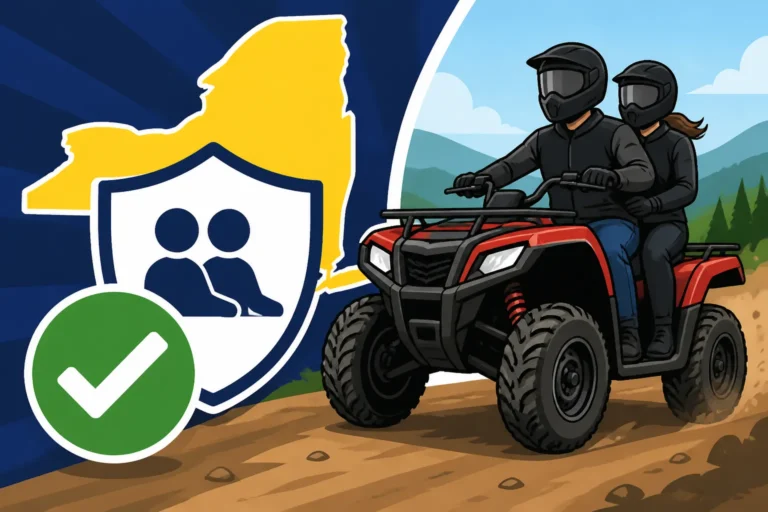
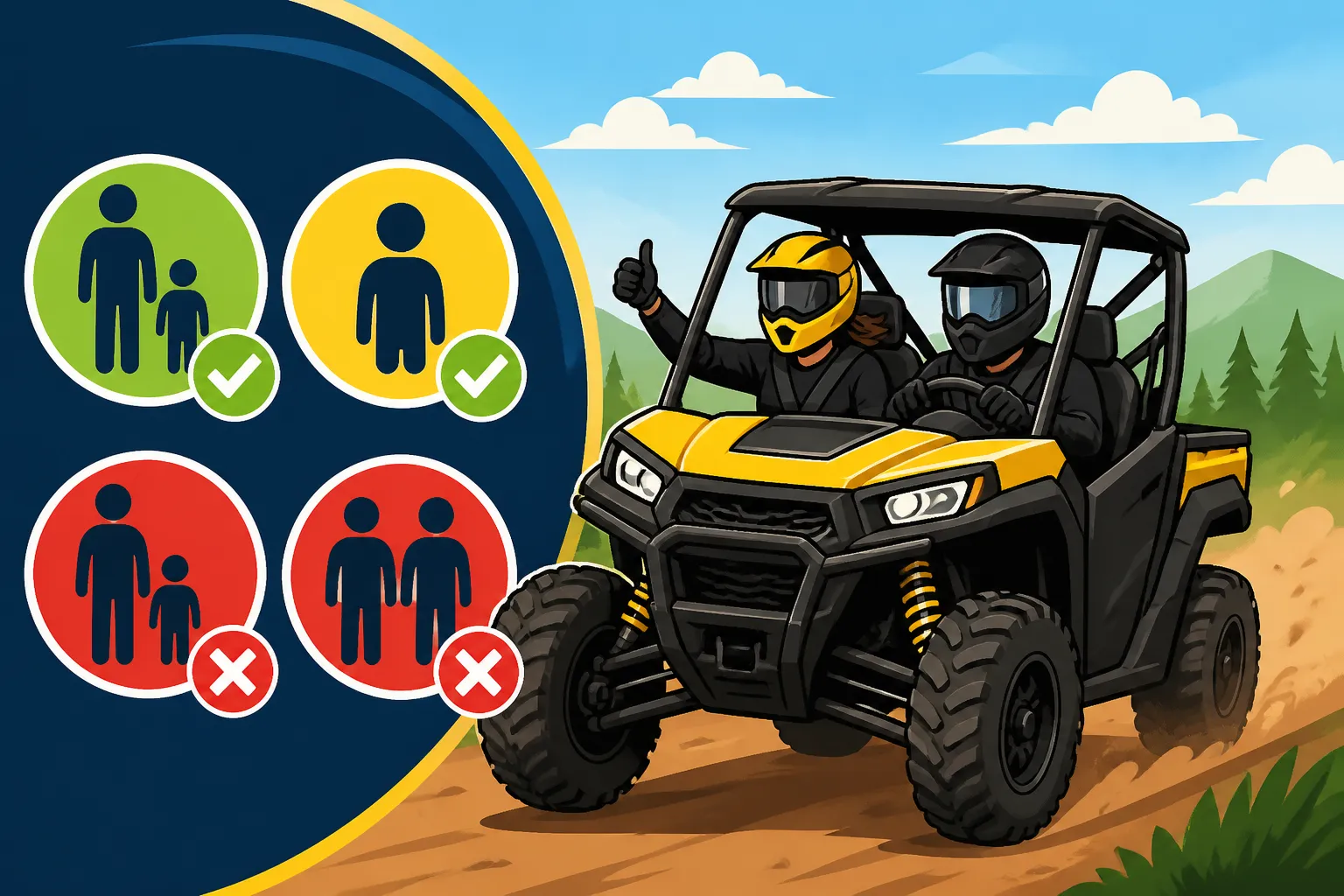
The cornerstone of New York's ATV passenger rules is the "factory-fitted seat" mandate. What exactly does this mean? It means that for an ATV to legally carry a passenger, it must have been designed and manufactured with a designated seat specifically for that passenger, installed by the original equipment manufacturer (OEM). This isn't a modification you can make yourself, nor is it about adding a "buddy seat" as an aftermarket accessory. The machine has to roll off the production line ready for two people.
Think about it this way: when engineers design an ATV, they calculate weight distribution, suspension stiffness, frame integrity, and braking power based on the intended number of riders. A single-rider ATV is engineered for one person's weight and center of gravity. Adding a second person without the manufacturer's original design for it can throw all those carefully calculated factors out the window. This is why [Why a Passenger Needs a Factory-Fitted Seat in New York] is so important. The state is essentially saying, "Trust the manufacturer's design, not a DIY solution, when it comes to passenger safety." It's not just about comfort; it's about the vehicle's structural integrity and handling characteristics under additional load. Without this factory-fitted seat, you are absolutely not permitted to carry a passenger on public lands or designated trails in New York.
Why Your Single-Rider Quad Isn't Built for Two
Many of the most popular ATVs on the market are designed exclusively for a single operator. They have one seat, one set of footrests, and their chassis and suspension are tuned for a single rider's weight. Trying to squeeze a second person onto the rear rack, or even just sharing the single seat, creates a host of dangerous problems. The primary issue is balance. An ATV requires the rider to shift their weight constantly to steer, lean into turns, and navigate rough terrain. With a passenger, this dynamic is severely compromised. The passenger's weight is often positioned too high or too far back, making the machine unstable and much more prone to tipping, especially in corners or over obstacles.
Beyond balance, consider the braking and acceleration. A single-rider ATV's brakes are designed to stop the machine and one rider effectively. Adding a second person significantly increases the total weight, extending stopping distances and putting undue strain on the braking system. Similarly, acceleration can become sluggish, or the machine might wheelie unexpectedly due to improper weight distribution. Suspension components, tires, and even the engine itself are not rated for the additional stress of an unplanned passenger. This is why attempting [Two Riders on a One-Seat Machine] is not only illegal in New York but also incredibly dangerous, leading to a much higher risk of an accident for both the operator and the unsuspecting passenger. It simply wasn't built for it, and the difference in handling is immediately noticeable and often catastrophic.
Age and Supervision: Special Considerations for Young Passengers
When a machine is designed for two, there are still crucial rules, especially when the passenger is young. Bringing children along for an ATV ride is a joy for many families, but New York State law has specific provisions to ensure their safety. These rules are not just suggestions; they are enforceable laws designed to protect vulnerable young riders.
Minimum Age Requirements for ATV Passengers
Surprisingly, New York State law doesn't specify a hard minimum age for an ATV passenger directly, in the way it does for operators. However, this doesn't mean you can put an infant on the back of a two-up machine. Instead, the law relies heavily on the "factory-fitted seat" rule. If a machine is designed for two, and the child can properly sit in the passenger seat, reach the footrests, and hold on securely, they could technically be a passenger. But this is where common sense and safety responsibility must absolutely override a bare minimum legal interpretation. [New York Rules for a Child Passenger] emphasizes the critical importance of a proper fit. A child too small for the designated passenger seat won't be secure, regardless of the machine's design.
Furthermore, consider the operator's age and experience. While there's no explicit passenger age, New York does have [New York Minimum Age to Ride an ATV]. An adult operator carrying a child passenger bears a tremendous responsibility. It's not just about whether the child "can" sit there, but whether they can maintain their position and understand basic instructions during the ride, especially on unpredictable terrain. Many manufacturers, in their own manuals, will specify a minimum height or age for passengers on their two-up models, and those recommendations should be followed rigorously. Don't risk a child's safety just because a specific state law doesn't set an explicit passenger age.
The Role of Supervision for Minor Passengers
If you are an adult operating a two-up ATV with a minor as your passenger, the responsibility for that child's safety falls squarely on your shoulders. While New York outlines [New York Supervision Rules for Young Riders] primarily for operators, the spirit of these rules extends to passengers. An adult operator must ensure the child passenger is wearing appropriate safety gear, understands basic riding commands (like leaning with the rider or holding on tight), and is physically able to safely ride as a passenger. This means continuous monitoring and making decisions that prioritize their well-being above all else.
Consider a scenario where an adult allows a small child, perhaps on the younger end of what might barely fit the passenger seat, to ride along. If an accident occurs due to the child's inability to hold on or maintain balance, even if the ATV is legally a two-up model, the adult operator could face significant liability. Beyond the legal ramifications, the moral weight of such an incident is immense. It's paramount to ensure that any child passenger is mature enough, physically capable, and properly equipped to handle the stresses and movements of an ATV ride. Sometimes, even if a machine technically can carry a child, deciding not to is the safest and most responsible choice.
Essential Equipment and Machine Design for Passenger Safety
Beyond the "factory-fitted seat" rule, New York law mandates specific equipment for all ATV riders, including passengers. These requirements are in place to mitigate the severity of injuries in case of an accident. Ignoring them not only puts lives at risk but also opens the door to legal penalties and insurance complications.
Mandatory Helmet Use for All ATV Passengers
This is one area where New York State law leaves absolutely no room for interpretation: all riders, including passengers, must wear an approved helmet when operating or riding as a passenger on an ATV. There are no age exemptions, no experience exemptions, no exceptions for riding on private land—if you're on an ATV in New York, your head needs to be protected. This is clearly stated in [New York Helmet Law for Passengers]. The helmet must be properly fitted, securely fastened, and meet federal Department of Transportation (DOT) standards, or other recognized safety certifications.
A helmet is the single most important piece of safety equipment for preventing serious head injuries. A properly fitting helmet should be snug but comfortable, not moving around on the head, and the chin strap should be securely fastened. Many accidents involve impacts to the head, and a helmet can literally be the difference between a minor concussion and a life-altering brain injury. It’s not about looking cool or feeling unencumbered; it’s about survival. Even if you're just riding slowly around your property, that unexpected bump or tip-over can happen in an instant, and a helmet provides crucial protection. Don't ever compromise on this, for yourself or your passenger.
Machine Capacity and Aftermarket Modifications
As we've discussed, the core of New York's passenger rule relies on the ATV having a factory-fitted passenger seat. This means the manufacturer designed and built the machine from the ground up to accommodate two people safely. This includes a longer chassis, a separate and often elevated passenger seat, dedicated handholds, and distinct footrests for the passenger. It's a fundamental design element, not an afterthought.
The critical point here is that aftermarket modifications, while often useful for enhancing other aspects of your ATV, generally do not transform a single-rider machine into a legal two-up vehicle in New York. While companies like SuperATV offer a huge range of high-quality accessories, from cargo racks to upgraded suspension components, adding a "rumble seat" or a rear bench designed to attach to a cargo rack on a single-rider ATV does not satisfy the factory-fitted requirement. These accessories might provide a place to sit, but they don't alter the fundamental engineering of the ATV for two-person operation. The weight distribution, suspension, and braking capabilities remain those of a single-rider machine, creating the same instability and safety hazards we discussed earlier. Before even thinking about an aftermarket passenger seat, you need to understand that [New York Equipment Requirements for ATVs] focus on the original manufacturer's intent regarding passenger capacity, not what modifications you can bolt on.
Beyond the Law: Practical Safety Measures When Carrying a Passenger
While adhering to New York's laws is non-negotiable, true safety goes beyond just legal compliance. When you have a passenger on board, especially a child, your responsibility as the operator skyrockets. You're not just managing your own ride; you're also managing the experience and safety of another person whose life is literally in your hands.
Maintaining Control and Balance with Added Weight
Adding a passenger, even on a purpose-built two-up ATV, fundamentally changes how the machine handles. The added weight, especially if it's positioned higher or further back, raises the center of gravity, making the ATV feel less stable and more prone to tipping. You'll notice a significant difference in braking distance, requiring you to anticipate stops much earlier and apply the brakes more gently to avoid pitching forward. Acceleration will also be slower, and the machine might feel less responsive. It's absolutely crucial for the operator to adapt their riding style immediately.
This isn't just about the operator; the passenger plays a vital role too. They need to understand the importance of holding on securely, keeping their feet on the footrests, and actively leaning with the operator in turns. A passive, stiff passenger can exacerbate stability issues, making the ATV much harder to control. Before setting out, have a clear conversation with your passenger about these expectations. Explain how they should move with you, anticipating turns and bumps, rather than resisting the machine's movements. Even on a legally permissible two-up machine, the dynamic of carrying a second person means the operator must ride more cautiously, smoothly, and deliberately, often at reduced speeds, to maintain full control.
Choosing the Right Terrain and Speed
With a passenger on board, the type of terrain you tackle and the speed at which you ride become even more critical safety factors. Aggressive riding, attempting steep climbs or descents, or navigating deeply rutted or technical trails should be completely off-limits when you have a passenger. These maneuvers, which might be routine for a solo rider, introduce unacceptable risks when carrying someone else. The increased weight can make it harder to prevent rollovers on inclines, and sudden jolts on rough terrain can easily dislodge a passenger or cause them to lose their grip.
Stick to well-maintained, relatively flat trails, and avoid anything that requires sudden changes in speed, direction, or significant body english. Speed should always be moderate, allowing ample time to react to unexpected obstacles or changes in trail conditions. Consider the experience level of both the operator and the passenger. If either is new to ATV riding, err on the side of extreme caution. A smooth, controlled ride is the goal, ensuring comfort and safety for your companion. Remember that [New York Passenger Rules on an ATV] are there to ensure a safe experience, and exceeding safe limits on speed or terrain undermines those rules, even if you are on a legal two-up machine. Sometimes, the most fun and safest ride is the slowest and most scenic one.
The Repercussions: Penalties and Insurance for Passenger Violations
Ignoring New York's ATV passenger rules carries significant risks, not just for safety but also for your wallet and your legal standing. An officer performing [What a New York Officer Checks Roadside] will certainly be looking for compliance with passenger laws. The state takes these regulations seriously, and non-compliance can lead to fines, citations, and potentially severe financial liability in the event of an accident.
Fines and Legal Consequences for Unlawful Passengers
If you're caught operating an ATV with an illegal passenger in New York, you can expect to face fines and other legal penalties. Riding with a passenger on a single-rider ATV, or carrying a passenger who isn't properly equipped (like without a helmet), constitutes a violation of the state's ATV laws. These aren't minor infractions; they're serious offenses designed to deter dangerous behavior. While specific fine amounts can vary, they are often substantial enough to make you think twice about breaking the rules.
Beyond the immediate financial penalty, receiving a citation can also impact your driving record or future ATV registration status. More importantly, in the event of an accident, having an illegal passenger can escalate the legal consequences dramatically. You could be found negligent, leading to higher fines, potential legal battles, and a much more complicated situation than if you had simply followed the rules. New York is clear that [New York Fines for an ATV Violation] can be steep, so it's always better to ensure every rider, including any passenger, is legally and safely accommodated before you even start the engine.
Insurance Coverage and Liability Concerns
Perhaps one of the most significant, yet often overlooked, consequences of carrying an unlawful passenger relates to your ATV insurance. New York mandates [New York's Mandatory ATV Insurance] for good reason: to provide financial protection in case of an accident. However, insurance policies are contracts, and they often contain clauses that can invalidate your coverage if you are found to be operating the ATV illegally at the time of an incident.
If you have an accident while carrying a passenger on a single-rider ATV, or if your passenger isn't wearing a helmet, your insurance company might deny your claim. This means you could be personally responsible for all damages, including medical expenses for your injured passenger (and yourself), property damage, and any potential lawsuits. Imagine the devastating financial impact of an injury requiring extensive medical care, all because you bent the rules for a ride. The costs could easily run into tens or hundreds of thousands of dollars, far exceeding the typical [New York ATV Insurance Minimum Coverage]. The risk of such catastrophic financial liability alone should be a powerful deterrent against taking illegal passengers. Always verify your coverage and understand its limitations, especially concerning passenger rules, to avoid a heartbreaking and bank-breaking situation.
New York ATV Passenger Rules At a Glance
To summarize the key points regarding ATV passengers in New York, here's a quick reference table. Remember, these are the legal minimums and safety should always be your top priority.
| Feature / Rule | Requirement in New York | Important Considerations |
|---|---|---|
| Passenger Seat | Must be a "factory-fitted" seat, designed and installed by the OEM for a passenger. | Aftermarket "buddy seats" or sitting on a cargo rack do NOT count and are illegal. The machine must be purpose-built for two. |
| Operator Age | Operator must meet New York's age requirements (e.g., [New York Minimum Age to Ride an ATV] and safety certificate if under 16). | Even if the ATV is two-up, a young or inexperienced operator might not be capable of safely handling the added weight and responsibility of a passenger. |
| Passenger Age | No explicit minimum age, but the child must be able to sit securely, reach footrests, and hold on to factory handholds. | Common sense and manufacturer recommendations often suggest a higher de facto minimum age. The child's physical and mental maturity for an ATV ride is paramount. |
| Helmet Use | MANDATORY for ALL passengers, regardless of age. | Helmet must be properly fitted, securely fastened, and DOT-approved. This is non-negotiable for safety and legality. |
| Footrests & Handholds | Passenger must have dedicated, factory-fitted footrests and handholds. | This ensures stability and security for the passenger during movement and over bumps. Lack of these implies a single-rider design. |
| Riding Style | Operator must adjust to a more cautious, slower, and smoother riding style. | Avoid aggressive maneuvers, steep terrain, high speeds, and sudden braking/acceleration. Communication with the passenger about leaning is key. |
| Legal & Insurance Risk | High risk of fines, citations, and invalidated insurance if rules are violated. | Personal liability for injuries and damages can be immense if an accident occurs with an unlawful passenger. Always ensure compliance to protect yourself and others. |
Disclaimer
This article is for general informational purposes only and does not constitute professional advice. Laws, prices and regulations vary by location and change over time. Consult a qualified professional for guidance on your specific situation.