New York Rules for Riders Under 16
It's absolutely fantastic that you're looking into the specific rules for young ATV riders here in New York. As a parent or guardian, trying to navigate the sometimes-confusing world of ATV regulations, especially when it comes to kids, can feel like you're lost in a dense forest without a map. You want your children to enjoy the thrill and freedom of riding, but you also want them to be safe and stay on the right side of the law. This comprehensive guide is here to untangle all those rules, explaining New York's requirements for riders under 16 so you can feel confident and informed before hitting the trails.
Understanding New York's Core Philosophy for Young ATV Riders
When you first dive into New York's ATV regulations, particularly those concerning younger riders, it might feel a bit strict. But once you understand the underlying philosophy, it makes a lot more sense. The state isn't trying to squelch the fun or keep kids indoors; quite the opposite. These rules are designed with the profound goal of preventing serious injuries and fatalities, ensuring that every ride is as safe as it is exhilarating.
Why New York Prioritizes Youth Safety on ATVs
Let's be real: ATVs are powerful machines, and while they offer incredible adventure, they also carry inherent risks, especially for inexperienced operators. New York State, like many others, has seen its share of heartbreaking accidents involving young riders. These incidents often underscore a critical truth: children simply don't have the same judgment, reaction time, or physical strength as adults, even if they've been riding for years in the backyard. The rules aren't just arbitrary lines drawn in the sand; they're the state's proactive way of mitigating these documented dangers.
The intent is to provide a structured environment where young riders can learn, grow, and develop the necessary skills safely. It’s about building a foundation of responsibility, good habits, and hazard awareness from the ground up. Think of it as putting guardrails on a winding mountain road – they're there not to limit the journey, but to ensure everyone reaches their destination safely. We all want our kids to have amazing experiences, and ensuring their safety is the first step toward making those memories truly lasting and positive.
Distinguishing Between Age, Skill, and Physical Capability
As parents, we often think, "My child is incredibly skilled! They've been riding since they could walk!" And while your child might indeed be a natural on the machine, New York's regulations cast a wider net. They recognize that an individual's perceived skill, while important, isn't the only factor. The rules consider the broader developmental stages of children, looking at typical physical growth and cognitive ability at certain ages.
For example, a child might be strong enough to operate the throttle and brakes, but do they have the core strength to shift their weight effectively in a sudden turn or over an unexpected obstacle? Can they process multiple pieces of information quickly enough – like spotting a deer, adjusting speed, and remembering trail etiquette – all at once? The state’s age-based rules try to account for these nuances. It's about ensuring a rider has the physical stature to comfortably reach all controls and maneuver the machine without strain, and the mental maturity to make quick, safe decisions. This balance between physical capability, cognitive development, and learned skill is precisely why the state has specific age floors and training requirements, rather than relying solely on a parent's assessment of their child's riding prowess.
The Mandatory Safety Certificate: Your Child's First Step
For many young riders, getting a New York ATV Safety Certificate is the absolute gateway to legal riding. It's not just a piece of paper; it's a foundational requirement that signifies a basic level of knowledge and understanding about safe ATV operation. If you're a parent of a rider between the ages of 10 and 15, this is where your journey really begins.
Who Needs a New York ATV Safety Certificate and Why
Let's cut right to it: in New York, if your child is between 10 and 15 years old and wants to operate an ATV off their own private property – meaning on public lands, designated trails, or even on private land other than their own – they must possess a valid ATV Safety Certificate. There’s really no wiggle room on this one. This requirement applies even if you, as the parent, are riding right alongside them and are yourself an experienced operator. The certificate isn't just about showing proficiency; it's about demonstrating that they've been formally introduced to New York's specific laws, safety practices, and environmental considerations for ATV riding.
The "why" is pretty straightforward: formal training significantly reduces the risk of accidents. The course covers everything from pre-ride inspections and basic maintenance checks to understanding trail etiquette, recognizing hazards, and learning how to properly handle challenging terrain. It instills good habits and a safety-first mindset from the beginning. It also makes them aware of their responsibilities as riders within the larger community of trail users and landowners. Think of it like getting a learner's permit for a car; it's the official acknowledgment that you've started down the path of responsible operation. [New York ATV Safety Certificate Requirements]
Navigating the New York ATV Safety Course
So, your child needs a certificate. What does the course actually entail? New York's ATV Safety Course is typically a blend of classroom instruction and hands-on riding experience, designed to give young riders both the theoretical knowledge and practical skills they need. In the classroom portion, they'll learn about important topics like the components of an ATV, how to perform pre-ride checks, the physics of riding (like weight transfer and turning), state laws, environmental considerations, and emergency procedures. They'll also learn about [New York Equipment Requirements for ATVs], ensuring they know what gear is essential for every ride.
The practical component is where the rubber meets the trail, so to speak. Under the guidance of certified instructors, students will practice starting, stopping, turning, shifting, and navigating various obstacles on a controlled course. This hands-on experience is invaluable, as it allows them to apply what they've learned in a safe, supervised environment before hitting actual trails. You can often find courses offered through the New York State Parks, Recreation and Historic Preservation (OPRHP) office or through various local ATV clubs that have certified instructors. A quick search on the OPRHP website for ATV safety courses will usually turn up a schedule and locations. Be prepared for a day-long or multi-day commitment, depending on the specific course structure. And yes, there's usually a [New York ATV Safety Course Cost] associated with these programs, but it's a small price to pay for your child's safety and legal riding access.
Age Restrictions and Supervision Requirements in New York
New York takes a very clear stance on who can operate an ATV and under what conditions, especially when it comes to the youngest enthusiasts. These rules are designed to be unambiguous, leaving little room for interpretation about when and how a child can ride.
The "Under 10" Rule: No Riding, Period
Let's be absolutely clear: in New York State, children under the age of 10 are not permitted to operate an ATV. This rule is a hard line, with no exceptions for private property, parental supervision, or skill level. It's a blanket prohibition that stands firm regardless of how well you believe your little one can handle a machine, or how small their youth ATV might be.
The reasoning behind this strict rule is rooted in child development. Children under 10 are generally still developing the complex motor skills, coordination, and rapid decision-making abilities essential for safely operating a powerful machine like an ATV. Their judgment regarding risks, their ability to react quickly to unexpected situations, and their physical strength to control a machine in an emergency are simply not mature enough. It can be frustrating for parents who have eager, adventurous youngsters, but the state's priority here is the absolute prevention of injury. This rule aims to protect children from situations they are not developmentally prepared to handle, keeping them out of harm's way until they reach an age where they can truly begin to learn and understand the responsibilities of riding. [New York Minimum Age to Ride an ATV]
Riders Aged 10-15: The Certificate and Supervision Mandate
For riders who have reached their 10th birthday but are not yet 16, New York State offers a pathway to legal ATV riding, but it comes with two non-negotiable requirements: the ATV Safety Certificate and direct supervision. As we discussed, the certificate proves they've received formal training. Once that's in hand, the crucial next step is understanding the supervision mandate. For these young riders, operation off their own private property always requires the general supervision of someone 18 years of age or older.
What does "general supervision" really mean? It doesn't necessarily mean holding their hand or riding tandem. However, it does mean the supervising adult must be within a reasonable distance and able to provide immediate direction and control. This typically implies being able to see and hear the young rider, ready to intervene if a situation arises. On a tight, wooded trail, this might mean riding directly behind them. On an open field, you might be a bit further back. The key is that the adult is actively engaged in supervising, not just passively aware the child is riding somewhere. This ensures that if the young rider encounters a sudden obstacle, makes a poor decision, or has a mechanical issue, an experienced adult is right there to guide them or offer assistance. This rule is a cornerstone of [New York Supervision Rules for Young Riders], blending independence with crucial oversight. Both [New York Rules for a Rider Aged 14] and [New York Rules for a Rider Aged 15] fall under this critical supervision guideline.
Sixteen and Up: Adult Privileges, but Not Always Adult Judgment
Once a rider turns 16, the legal landscape changes significantly. At this age, the mandatory ATV Safety Certificate is no longer required, nor is general supervision, at least from a legal standpoint. A 16-year-old is considered an adult operator in the eyes of New York ATV law and can ride independently on designated trails or permitted private land, just like any adult. This means they gain the full freedom to explore trails, join groups, and develop their riding skills without an adult constantly looking over their shoulder.
However, while the law grants them adult privileges, it's crucial to remember that "legal" doesn't always equate to "fully mature judgment." A 16-year-old might be legally able to ride solo, but they are still developing critical decision-making skills and may not have the extensive experience of a seasoned adult rider. As parents, this is where continued guidance, encouragement for further safety training (even if not mandated), and open conversations about responsible riding practices remain vital. All other ATV laws, such as those regarding registration, insurance, speed limits, and permissible riding areas, still fully apply to a 16-year-old, just as they would to an older adult. It’s a significant step toward independence, but with it comes the full weight of personal responsibility.
Equipment and Machine Size for Young Riders in New York
Beyond the rules about age and training, New York also has very specific requirements and strong recommendations when it comes to the equipment and the actual machine a young rider uses. This isn't just about looking cool on the trails; it's about making sure your child is properly protected and operating a machine that is a safe and manageable fit for their size and experience level.
The Right Helmet and Protective Gear: Non-Negotiable Safety
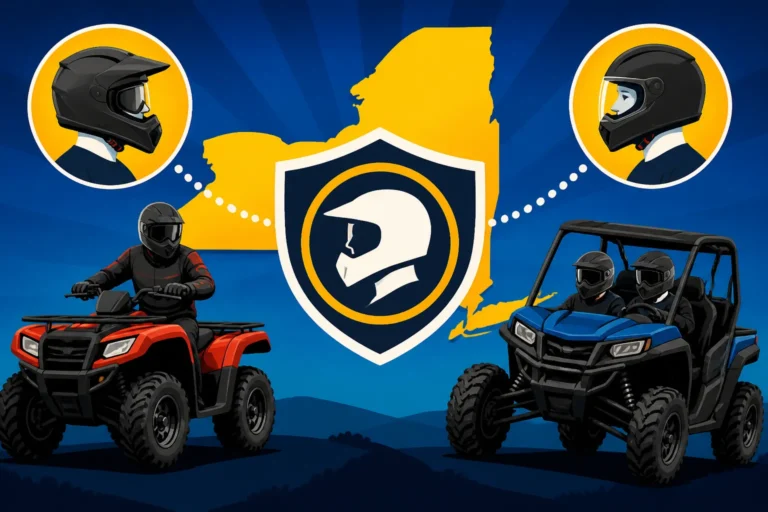
Let's start with the absolute essential: the helmet. In New York, it is unequivocally mandatory for all ATV riders, regardless of age, to wear an approved helmet whenever they are operating an ATV. For young riders, this rule is not just about compliance; it's about protecting their most vital asset – their brain. A proper helmet is not just any helmet; it must be one that is approved by the Department of Transportation (DOT) and, crucially, it must fit correctly. An ill-fitting helmet, one that's too loose or too tight, offers compromised protection and can actually be more dangerous in a crash. It should sit snugly on the head, not rock side-to-side, and the chin strap should be securely fastened. [New York Helmet Law for ATV Riders]
But safety doesn't stop at the helmet. Eye protection is also absolutely critical to shield against dust, flying debris, branches, and insects. Sturdy over-the-ankle boots are a must for foot protection and grip, while gloves protect hands from blisters, abrasions, and impact. Long pants and long-sleeved shirts, even in warm weather, are essential to protect skin from scrapes and branches. You might even consider additional protective gear like chest protectors or knee pads, especially for more aggressive riding. Investing in good, quality protective gear is not an expense; it's an investment in your child's well-being. While brands like SuperATV offer fantastic accessories and parts for machines, remember that the most important "accessory" for your child is always their protective gear.
Matching the Machine to the Rider: Size and Weight Limits
One of the most common and dangerous mistakes parents make is putting a young, inexperienced rider on an ATV that's simply too large or too powerful for them. This isn't just frowned upon; it can be incredibly hazardous and often illegal. New York, and safety organizations across the board, emphasize the critical importance of matching the ATV's size and engine displacement to the rider's age, size, and experience. You often hear horror stories about a small child trying to control a full-sized 700cc quad, and those stories almost always end badly.
A general rule of thumb is that a child should be able to sit on the ATV with their feet flat on the footrests, be able to comfortably reach and operate the handlebars and all controls, and have the physical strength to manage the machine's weight and steering, especially when making turns or navigating uneven terrain. If they're stretching for the brakes or can't easily shift their body weight, the machine is too big. Youth ATVs are specifically designed with smaller engines, lighter frames, and often speed limiters to be appropriate for younger, lighter riders. Ignore these guidelines at your peril. Understanding [New York Youth ATV Size Rules] is not just a recommendation; it's a safety imperative that prevents loss of control and potential injury.
Passenger Rules for Minors: When is it Okay, and When is it Not?
This is another area where New York State law is very clear, and where safety dictates strict adherence: generally speaking, ATVs are designed for one rider only. Transporting a passenger, especially a minor, on a single-rider ATV is incredibly dangerous and usually illegal. Many ATVs simply aren't built to safely accommodate a second person; there's no dedicated seat, no proper footrests, and the machine's balance and handling characteristics are severely compromised with an extra passenger.
New York law specifically states that an ATV may only carry the number of persons for which it was designed and equipped by the manufacturer. This means if your ATV only has one seat, it's for one person, period. If you have a "two-up" or tandem ATV that was specifically engineered by the manufacturer with a dedicated, factory-fitted second seat and appropriate passenger handholds and footrests, then and only then can it carry a passenger. Even on such a machine, any child passenger must still wear a DOT-approved helmet and all other appropriate safety gear. It's especially critical for [New York Rules for a Child Passenger]. Never, ever allow a child to ride perched on the fuel tank, on the rear rack, or standing behind the operator, no matter how short the distance or how slow you're going. The risk of them falling off, being hit by the machine, or causing the operator to lose control is simply too high. [New York Passenger Rules on an ATV] are designed to prevent such tragic incidents.
Where Young Riders Can (and Cannot) Go: Trail Access and Restrictions
Knowing how to ride safely and what to wear is only part of the equation. You also need to know where your young rider is legally permitted to operate their ATV in New York. The state has clear guidelines that differentiate between private land, designated trails, and prohibited areas.
Designated Trails and Private Land: The Primary Riding Areas
For most ATV enthusiasts in New York, and especially for young riders, the bulk of their riding will occur on two types of terrain: designated public trail systems or private property with explicit permission. New York doesn't have a vast, statewide ATV trail network like some other states, but it does have excellent county and club-managed systems, such as those found in Lewis County or Oswego County. These are fantastic places to ride, offering varied terrain and often well-maintained paths. However, for riders aged 10-15, remember that your ATV Safety Certificate is almost always a prerequisite for accessing these public or club-managed trails. If you're planning a trip to a place like the Lewis County trails, ensure that permit is in hand! [New York Trail Access for Riders Under 16]
Riding on private land is another popular option. If you own the land, or have clear, written permission from the landowner, you generally have more flexibility regarding certain state rules, particularly registration if the machine is only ridden on that private property. However, the core safety principles – like wearing a helmet, operating an appropriate machine, and ensuring proper supervision for minors – are still paramount, not just for legal compliance but for the child's actual safety. Always respect [New York Rules for Riding Private Land], and if you're riding on someone else's property, make sure you understand their specific rules and boundaries. Remember, landowners are granting you a privilege, and maintaining good relationships is key to keeping these areas open for riding. [Where to Ride an ATV in New York] covers more specific locations.
Roads, Highways, and Restricted State Lands: Absolute No-Go Zones
This section is crucial because it often contradicts what people think they can do. Let's be unequivocally clear: in New York State, ATVs are generally not street legal. This means you cannot simply ride your ATV down public roads, streets, or highways, even if they're quiet rural routes. There are extremely limited exceptions, such as crossing a highway at a 90-degree angle after coming to a full stop, but this is a momentary transition, not sustained road travel. For young riders, the dangers of mixing with vehicle traffic are exponentially higher due to their size, lack of experience, and the inherent differences in ATV handling compared to cars. [Are ATVs Street Legal in New York?] covers this in more detail, and the answer, especially for minors, is almost always "no."
Furthermore, many state lands, including New York State Parks and the vast tracts of the Adirondack and Catskill Forest Preserves, are generally off-limits to ATVs. The "Forever Wild" clause in the state constitution protects these areas, largely prohibiting motorized vehicle use. Even if your child has their safety certificate and is supervised, these are simply not places where ATVs are welcome. Trying to ride in these prohibited areas can lead to significant fines, confiscation of the machine, and other serious legal repercussions. It's vital to research specific trails and land uses before you load up the trailer to avoid disappointment and legal trouble. Always respect posted signs and understand that not all public lands are open to ATV use, especially for minors. [Why New York State Parks Ban ATVs] explains more about these restrictions.
Parental Responsibility and Liability: What Every Adult Needs to Know
As a parent or guardian, your role in your child's ATV riding experience extends far beyond just buying them a machine and dropping them off at the trailhead. New York State law places significant legal and moral responsibility squarely on your shoulders when a minor is operating an ATV. Understanding this accountability is vital, not just for avoiding legal trouble but for protecting your family's future.
The Legal Framework of Parental Accountability
New York's Vehicle and Traffic Law (VTL) is quite explicit when it comes to parents' responsibility for minors operating ATVs. If your child, particularly one under 16, operates an ATV in violation of state law – for instance, without a safety certificate when required, without proper supervision, or in a prohibited area – you, as the parent or legal guardian, can be held legally responsible. This isn't just about a slap on the wrist. This concept, often referred to as vicarious liability, means that if your child causes an accident, damage, or injury while breaking the law, you could be on the hook for significant financial costs, including medical bills, property repairs, and legal fees. [When a Parent Pays for a Minor's ATV Crash] is a sobering reality that every parent needs to consider.
This legal framework exists to ensure that adults take an active role in enforcing safety. It mandates that you don't just passively allow your child to ride, but that you actively ensure they are trained, properly equipped, supervised when necessary, and only riding in legal, appropriate locations. Ignoring these regulations isn't just risking a ticket for your child; it's risking your own financial stability and potentially facing civil lawsuits that could have long-lasting impacts. This isn't meant to scare you, but to underscore the gravity of your responsibility in fostering safe and legal riding habits from the start.
Insurance Implications for Young Riders
Given the potential for high liability, adequate ATV insurance is not just a good idea; it's a mandatory requirement in New York for anyone operating an ATV off their own private property. When a young rider is involved, the importance of comprehensive insurance coverage becomes even more pronounced. Any ATV accident can result in serious injuries and property damage, and when a minor is operating the machine, the costs can escalate quickly. [New York ATV Insurance Mandate Explained] outlines the state's requirement for liability coverage, but for parents of young riders, simply meeting the minimums might not be enough.
You absolutely need to disclose to your insurance provider that a minor will be operating the ATV. This transparency is crucial, as some policies may have specific clauses or higher premiums for young operators. The minimum coverage requirements in New York – typically covering bodily injury and property damage – are a starting point. However, an accident involving a severe injury to another party could easily exceed these minimums, leaving you personally responsible for the remainder. Consider higher liability limits than the state minimums to provide a robust safety net for your family. This is an area where frugality can backfire severely. Investing in strong [New York ATV Insurance Minimum Coverage] when your child is riding is truly protecting your family's future, giving you peace of mind that if the unthinkable happens, you're not financially ruined.
Setting a Good Example: Leading by ATV Safety
Beyond all the legal frameworks and insurance policies, perhaps the most powerful tool you have as a parent is the example you set. Children are incredibly observant, and they will emulate your behavior, whether good or bad. If they see you cutting corners, skipping safety checks, riding without proper gear, or ignoring trail etiquette, they are far more likely to do the same. This isn't just about telling them; it's about showing them.
Make pre-ride inspections a routine that you do together. Always wear your own DOT-approved helmet and protective gear, even for a quick spin around the yard. Stick to the designated trails, respect landowner permissions, and abide by speed limits and noise restrictions. Teach them to ride responsibly, respect the environment, and always prioritize safety over speed or thrills. These are life lessons that extend beyond ATV riding. By consistently demonstrating safe and responsible practices, you're not only reinforcing the rules you want them to follow but also building a foundation of good judgment and respect that will serve them well in all aspects of their lives. Being a visible role model for ATV safety is perhaps the greatest "supervision" you can provide.
Consequences of Non-Compliance: What Happens If Rules Are Broken
Nobody wants to imagine their child, or themselves, getting into trouble with the law while enjoying an ATV ride. However, it's vital to be aware of the potential consequences of not adhering to New York's ATV regulations, especially when it comes to young riders. These aren't just minor inconveniences; they can range from significant fines to more severe legal repercussions.
Fines and Penalties for Underage Riding Violations
If a young rider is caught operating an ATV in New York without the required safety certificate (if they're between 10 and 15), without proper adult supervision, or simply when they are under the age of 10, there will be penalties. Typically, these violations are treated seriously, and the fines can be substantial. Often, the supervising adult or the owner of the ATV (which is likely you, the parent) will bear the brunt of these financial penalties, in addition to or instead of the minor rider. For instance, if a 12-year-old is found riding on a designated trail without their safety certificate, the ticket won't just be a gentle reminder; it will carry a specific fine.
These fines are designed to be a deterrent, making it clear that the state is serious about youth ATV safety. Furthermore, repeated offenses can lead to escalating penalties, potentially doubling or tripling the initial fine. Beyond the direct financial cost, there's the inconvenience of dealing with court appearances, the time lost, and the potential for a negative mark on a legal record (even if a minor's record is often sealed or treated differently than an adult's). It’s a costly lesson that's far better avoided by simply following the rules from the start. While the precise figures aren't fixed and can vary, remember that these fines add up quickly and become a significant burden. [New York Fines for an Unregistered ATV] can give you a sense of the state's seriousness, even if the specific offense differs.
Seizure of the Machine and Other Serious Repercussions
While less common for a first-time, minor infraction, more egregious violations or repeated offenses can lead to more severe actions, including the impoundment or seizure of the ATV itself. Imagine the heartbreak and financial loss if your child's machine is taken away because rules were continuously ignored. This usually happens in cases involving extremely dangerous riding, flagrant disregard for regulations, or if the ATV is being operated in a way that poses a clear and immediate danger to public safety or property.
Beyond impoundment, illegal ATV operation, especially by a minor, can lead to other legal headaches. If a child trespasses on private property, causes property damage, or is involved in an accident leading to injury while violating ATV laws, the consequences can quickly escalate to civil lawsuits, mandatory restitution, or even more serious charges depending on the severity of the incident. For the child, the repercussions aren't just legal; they involve the loss of a privilege, the disappointment, and the potential for a negative self-perception. It reinforces that these rules are in place not to restrict enjoyment, but to prevent severe accidents and protect everyone involved.
Here's a quick summary of the key age-related rules for New York ATV riders:
| Age Group | ATV Safety Certificate Required? | Adult Supervision Required? | Where Can They Ride? | Key Restriction |
|---|---|---|---|---|
| Under 10 | No (Not Permitted to Ride) | No (Not Permitted to Ride) | Nowhere legally in NY | Absolutely prohibited from operating an ATV |
| 10-15 Years Old | Yes | Yes (18+ and General Supervision) | Designated trails, permitted private property | Must have certificate and be supervised |
| 16 Years Old & Up | No (Recommended for Safety) | No | Designated trails, permitted private property, etc. | Considered adult operator, full legal responsibility |
Disclaimer
This article is for general informational purposes only and does not constitute professional advice. Laws, prices and regulations vary by location and change over time. Consult a qualified professional for guidance on your specific situation.