What Club Dues Pay For
Club dues can look like one more charge on top of an ATV trail permit, especially when the trail network is spread across private land. The important distinction is that dues usually support a particular club and its work; they do not automatically buy statewide access. Here’s what membership may fund, what it may get you, and what to check before paying.
What New York ATV club dues may pay for
There is no single statewide budget that dictates how every New York ATV club uses membership dues. Each club sets its own priorities, and the details can depend on its size, trail agreements, volunteer capacity, and the services it offers. Dues may help cover operating costs, but volunteers and other funding sources can also play a major role.
A club’s expenses often relate to keeping trails available and organized. That work is not always visible during a ride. A marked route may cross land owned by several people, connect to a county trail system, or depend on seasonal arrangements. Keeping that access in place takes communication, planning, and sometimes practical work on the ground.
| Possible use of dues | What it can support | What to confirm |
|---|---|---|
| Trail maintenance | Volunteer work supplies, minor repairs, or upkeep of club-managed routes | Which trails the club maintains and whether work is mostly volunteer-led |
| Landowner relations | Communication, coordination, and efforts to maintain access agreements | Whether the club has current permission for the routes you want to ride |
| Signs and maps | Route markers, notices, and trail information | Whether maps and closures are maintained and shared with members |
| Club operations | Administration, meetings, insurance, or communication tools | What the club’s dues specifically cover |
| Events and activities | Organized rides, meetings, or member gatherings | Whether events require extra payment or separate registration |
These are examples, not a promise that every club funds every item. A small volunteer club may use dues differently from a club coordinating a larger trail network. Before joining, ask for a plain explanation of what membership supports and what benefits are included.
Trail upkeep and safety information
Some dues may help pay for the equipment and supplies needed to maintain routes, such as signs, markers, or materials for minor trail work. A club may also coordinate work parties to clear or repair sections of trail. In many cases, members contribute time as well as money, so the dues alone may not cover the full cost of keeping a route usable.
Good trail information can be as important as physical maintenance. Clubs may communicate about closures, reroutes, seasonal limits, or landowner requests. A route that was open on a previous visit may not be available now, so check current club notices before heading out. For broader preparation, see New York Trail Conditions Before You Ride and New York Trail Closures to Check First.
Landowner relationships and access
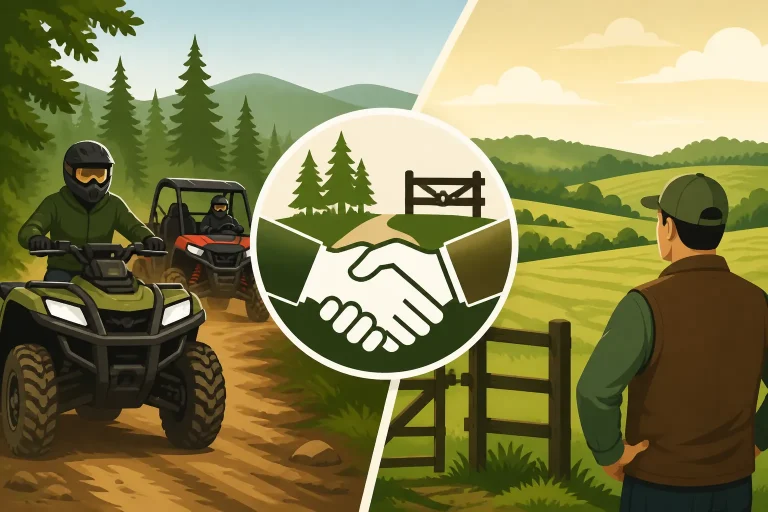
Where a trail crosses private land, access depends on permission. A club may help coordinate with landowners and encourage members to respect route boundaries and posted instructions. That relationship can matter as much as a sign or a map: a club cannot treat a landowner’s property as permanently open simply because riders used it before.
Dues can help support the club’s ongoing work to keep those relationships workable, but membership does not give an individual rider the right to leave a marked route, enter a closed parcel, or ignore a landowner’s restrictions. Learn more about the role clubs can play in How Clubs Keep Landowners Willing to Host Trails and review Permission Before You Ride Someone’s Land before riding beyond an approved route.
Administration, meetings, and events
A club may have routine administrative costs, such as communications, recordkeeping, or organizing meetings. It may also use some resources for member activities. Whether those costs are a meaningful part of the budget varies. Some clubs have regular organized rides; others focus more on access, trail coordination, or volunteer maintenance.
Ask whether events are included in dues or have separate requirements. An organized ride can involve its own rules, planning, or fees, and membership in a club does not necessarily make every event open to every member. [New York Rules for an Organized Ride] covers a separate set of considerations from ordinary trail access.
What membership may provide—and what it does not
Club membership can provide a connection to local trail information, other riders, and volunteer work. It may also provide access to trails that are restricted to members, if the club manages or coordinates those trails and its current rules allow it. But “club membership” does not mean the same thing everywhere. One club’s benefits may be quite different from another’s.
Before joining, separate three questions:
- What does the club use dues to support?
- What specific trails or activities can members access?
- What other registration, permit, insurance, or safety requirements apply?
These questions prevent a common misunderstanding: paying club dues is not automatically the same as buying every permit needed for a ride.
Membership and trail access are not always identical
Some club trails may be available only to members, or may have other access conditions. Other routes may belong to a county system or have separate permit requirements. The club should be able to explain which rules apply to the trails it operates or coordinates.
Ask whether membership provides access for one rider, one machine, or multiple machines, and whether a guest can ride with a member. Do not assume that a household membership covers every person or vehicle unless the club says so. If you are comparing organizations, Joining a New York ATV Club and What a New York Club Membership Buys can help you identify the questions to ask.
For routes on private property, the current agreement matters. A club may have to close or reroute a trail if permission changes, land is sold, or maintenance conditions make a section unsuitable. Membership does not override a closure. Check the club’s latest notices and follow posted signs.
Club dues are different from county trail permits
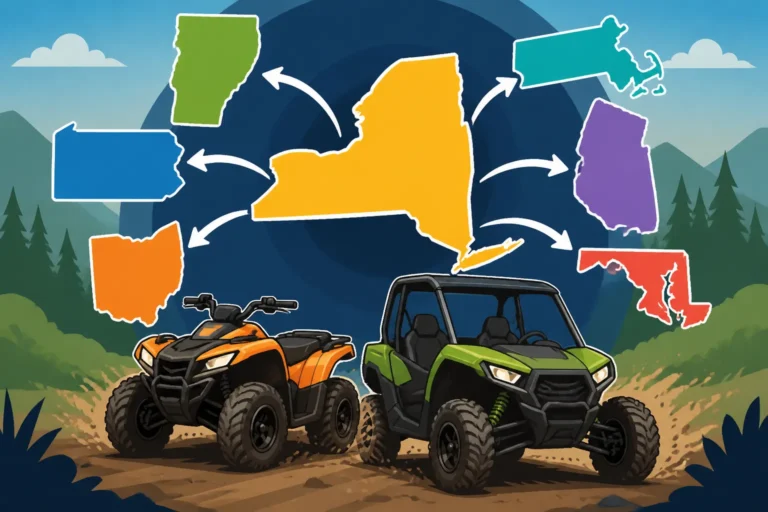
New York does not have one statewide ATV trail pass that covers every riding area. A county or trail system may have its own permit structure, while a club may have separate dues and membership rules. The two payments can serve different purposes: a permit may be required for access to a particular system, while dues support a club and any benefits it offers.
That distinction is especially important when planning to ride in more than one area. Do not assume that joining a club in one county satisfies a permit requirement elsewhere. Check the specific rules for the trail system you plan to use. County Permits Instead of a State Sticker explains why riders may encounter separate local systems, and Which Trails a Lewis County Permit Covers is useful when planning around that county’s network.
A club may offer information about permits or help members understand the local process. That assistance is useful, but it does not make the club the authority that sets every county’s access rules. Confirm permit requirements with the responsible county or trail system before traveling.
Registration, insurance, and rider rules still apply
Club dues also do not replace the legal requirements for operating an ATV. Registration, insurance, equipment, age, and riding rules remain separate matters. A membership card is not a substitute for the machine’s registration documents or proof of insurance when those are required.
Visitors should check whether New York recognizes their out-of-state registration for the planned ride, and should confirm that they meet New York’s insurance requirements. See New York Reciprocity for Out-of-State Registrations and New York ATV Insurance Requirement for related details. Riders under sixteen should also review the rules that apply to their age and supervision before choosing a trail.
How to judge whether dues are worth paying
The value of dues depends less on the amount alone than on whether the club’s work and benefits match your riding plans. A membership may be worthwhile if it gives you access to routes you will use, provides dependable trail updates, or gives you a way to contribute to the network. It may be less useful if the club’s trails are far from home or do not allow the kind of machine you ride.
Start by identifying the trails you actually expect to use. Then ask the club what membership includes, how long the access period lasts, and whether any separate permit or machine-specific fee applies. If your usual riding area is run by a county or another organization, verify that the club membership is relevant there before paying.
Questions to ask before joining
A short conversation with a club officer or membership contact can clarify what dues cover. Useful questions include:
- Which trails does the club currently maintain, manage, or help open?
- Are those trails open to all members, or are some limited to particular groups?
- Does membership include trail access, or is a separate permit required?
- Are there limits based on machine type, width, season, or rider age?
- Are guests allowed, and what rules apply to them?
- Do dues include organized rides, or are those handled separately?
- How does the club notify members about closures and reroutes?
- Can members volunteer, and are there planned work days?
- Where can members find current maps, rules, and notices?
A clear answer does not need to include a complicated financial report. It should, however, help you understand the relationship between dues, trail access, and the club’s work. If the route you care about depends on a landowner agreement, ask how the club communicates changes and how riders are expected to behave on that property.
Look for current information, not old assumptions
Trail conditions and permissions can change. A map saved from a previous season, a friend’s recollection, or an old social media post may not reflect current access. Check the club’s latest official notices and confirm whether the trail is open before loading your machine.
If access is described as “members only,” clarify whether that means membership in the club, a separate permit, or both. Also ask whether a membership bought during the season has the same access terms as one obtained earlier. These details are club-specific; avoid relying on another club’s policies as a guide.
For a broader review of what a membership may involve, New York Club Membership Cost is a useful companion. The most important thing is to evaluate the cost alongside the actual access and support you expect, not to treat the dues as a general pass for New York trails.
Making the most of membership
If you join, following club rules is part of protecting the access your dues help support. Stay on marked routes, observe closures, keep noise and speed under control, and avoid creating new paths around obstacles. A shortcut across private land can jeopardize permission for more than one rider.
Carry the documents and permits required for your ride, and check that the machine itself is eligible for the trail. A club’s access arrangements cannot make an otherwise ineligible machine legal to register or ride on a route with equipment limits. If you have a wide machine or side-by-side, confirm both registration eligibility and the trail system’s rules before assuming membership will help.
Members can also contribute beyond paying dues. Depending on the club, that may mean volunteering at a work day, sharing accurate closure information, attending a meeting, or helping new riders understand local rules. Volunteering is not necessarily required for membership, so ask rather than assume. But participation can help clubs keep trails organized and maintain the relationships that make access possible.
If you ride across county lines, plan for each area independently. Check whether a separate county permit is needed, whether a local club has special access rules, and whether the route is open on your planned date. New York Club Trail Rules can help with the club-trail side of that planning, while Where New York Trail Permit Money Goes addresses how permit funding differs from club dues.
The practical takeaway is simple: club dues support a specific organization and may help sustain trails, landowner relationships, information, and member activities. The exact uses and access benefits vary. Ask what your dues cover, confirm which trails they apply to, and check for separate permits and legal requirements before riding.
Disclaimer
This article is for general informational purposes only and does not constitute professional advice. Laws, prices and regulations vary by location and change over time. Consult a qualified professional for guidance on your specific situation.