What an Officer Checks at a Lewis County Trailhead
A stop at a Lewis County trailhead can feel stressful if you are unsure what paperwork an officer may ask for. The best approach is to arrive ready to show that your machine is registered, insured and permitted for the trail system you plan to ride. Here is what to have accessible, what each document proves, and what to do if something is missing.
Get your documents and machine ready before you arrive
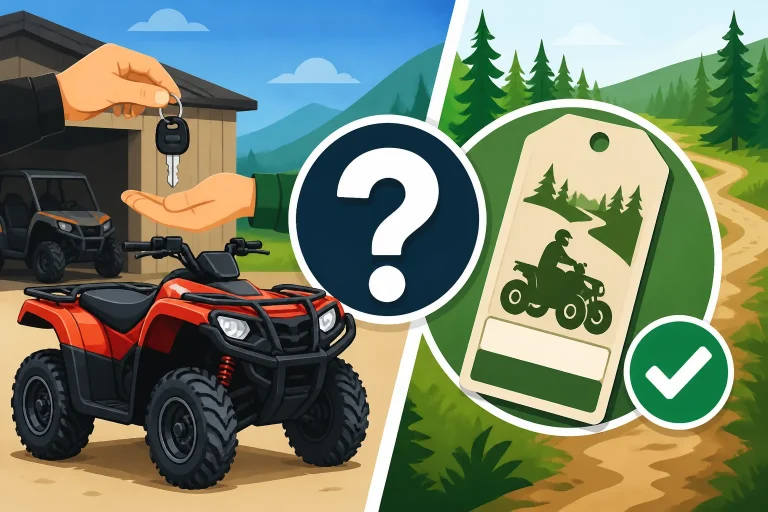
A Lewis County trail permit is not a substitute for New York ATV registration, and registration alone does not necessarily grant access to a county trail. They serve different purposes. Registration identifies the machine for legal operation under state rules; insurance provides required financial protection; and a trail permit helps establish access to the trails covered by that permit.
Before loading up, gather the documents and equipment you may need to show. Keep them somewhere you can reach without unloading your machine or rummaging through wet gear. A phone can be useful for stored copies, but do not rely on it as your only option: a dead battery, poor signal or unreadable image can make a simple check harder.
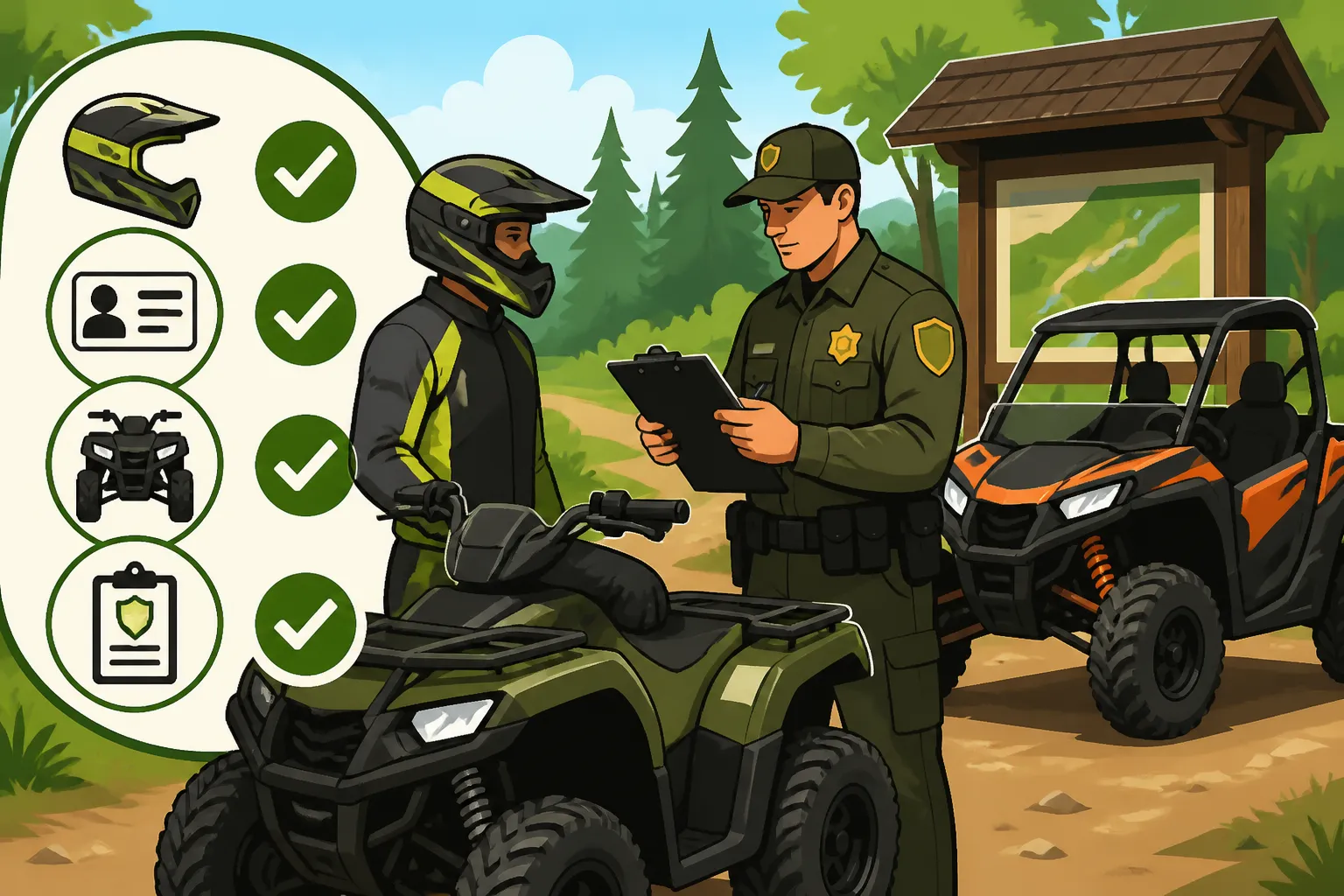
| What may be checked | What it helps establish | What to prepare |
|---|---|---|
| New York registration or qualifying out-of-state registration | The machine is registered for use under applicable rules | Registration document and a properly displayed plate |
| Insurance proof | The machine has the insurance required for its use | Current insurance card or other accepted proof |
| Lewis County trail permit | The machine has the required access permit for the trail system | Permit evidence and any required sticker or display |
| Rider documents | The rider meets requirements that apply to their age and circumstances | Safety certificate or other applicable document |
| Machine and plate condition | The machine and identifying information can be checked | A clean, readable plate and a visible permit display |
Check the permit’s coverage rather than assuming that one permit opens every trail in the county or every connected route. Trail access can depend on the land agreement, managing organization, season and current closures. Which Trails a Lewis County Permit Covers explains why permit coverage matters, while New York Trail Closures to Check First can help you avoid arriving at a closed route.
For the state registration side, make sure the document matches the machine you brought. If you need to gather or replace registration documents, New York ATV Registration Paperwork covers the general paperwork issue. Out-of-state riders should not assume that a home-state registration resolves every New York requirement; check New York ATV Reciprocity With Other States and carry the documents that apply to your situation.
Insurance proof deserves its own check before the trip. New York’s insurance requirement is separate from a county trail permit, and a permit does not provide insurance coverage. Review New York’s Mandatory ATV Insurance and confirm that the policy is active for the machine you are riding. If you have more than one machine, do not assume that proof for one automatically covers the other.
Make sure the plate can be read without moving bags, mud flaps or other gear. A plate that is present but obscured or badly damaged can create unnecessary questions. The permit display is a separate item, and its placement may have specific instructions. Check Where the County Permit Sticker Goes rather than guessing where to attach it.
What an officer may ask to see at the trailhead
A trailhead check is usually about confirming that you and your machine meet the requirements for the ride you are about to take. The exact process can vary. An officer may be a law-enforcement officer or another authorized person involved in trail enforcement, and not every rider will necessarily be stopped or asked for every item.
Registration and plate
Expect to be able to show the machine’s registration, whether it is registered in New York or is covered by an applicable out-of-state registration arrangement. The plate should be on the machine and readable. An officer may compare the plate or machine information with your paperwork, so check that the documents belong to the ATV you unloaded.
New York registration and county trail access are separate matters. A properly registered machine can still be missing a required trail permit. Likewise, having a county permit does not correct an expired or otherwise invalid registration. Keep both sets of requirements in mind when you prepare.
If you are riding with an out-of-state plate, carry proof of registration from your home jurisdiction and confirm that it is recognized for the riding situation in New York. Do not rely on a verbal explanation or a photo of an old document if you can bring the current paperwork.
Insurance proof
An officer may ask for proof that the machine has the required insurance. Have current proof available and make sure it identifies the relevant machine or policy clearly. If you recently renewed or changed coverage, verify that your proof reflects the active policy rather than a prior term.
Visitors are not automatically exempt from New York’s insurance rules just because their machine is registered elsewhere. Check that your policy meets New York’s requirements for the type of riding you plan to do. [New York Reciprocity With Pennsylvania] and New York Reciprocity With Vermont offer more focused reading for riders from those states, but the key practical point is to bring current registration and insurance evidence.
Trail permit
The permit is the item most closely tied to Lewis County trail access. An officer or authorized trail representative may check that the permit is valid for the machine and system, and that any required permit sticker or other evidence is displayed as instructed. A receipt showing that you bought a permit may not answer every question about whether the permit is properly assigned or displayed, so follow the county’s current instructions.
If you ride several machines, verify that each one has the required permit. Do not assume one permit covers a second ATV simply because both are on the same trailer or belong to the same household. Permit terms can specify how additional machines are handled; Lewis County Permit for a Second Machine is useful if you are planning to bring more than one.
Rider documents and age-related requirements
The check may also involve the rider, particularly when a young person is operating an ATV. New York requirements can depend on the rider’s age and circumstances, including whether supervision or a safety certificate is required. A parent or accompanying adult should confirm the applicable rules before the trip and carry the relevant documents. See New York ATV Safety Certificate Requirements for more detail.
A safety certificate does not replace machine registration, insurance or a trail permit. Treat these as separate checks, not as interchangeable proof. If a young rider is using a machine that has special age or size considerations, verify the rules before arriving at the trailhead.
Avoiding delays, misunderstandings and access problems
A short preparation routine can make a stop much simpler. Before leaving home, match each registration and insurance document to the machine, confirm that every required permit is in place, and check that plates and permit displays are visible. Then check the trail system’s current notices. A route may be closed even when your paperwork is in order.
- Confirm the route and its access rules. Check which permit covers the trail you intend to ride and whether the route is open. Seasonal schedules, weather and landowner decisions can affect access. The county or trail organization’s current notices are more useful than an old map or a post from a prior season.
- Check each machine separately. Verify registration, insurance and permit status for every ATV you bring. Keep documents grouped by machine so you can hand over the correct paperwork without sorting through a stack.
- Make documents easy to show. Place paper documents in a dry, accessible location. If you keep digital copies, make sure they are legible and available offline. Use the form of proof accepted for the requirement; a screenshot is not necessarily a replacement for an original document where one is required.
- Inspect the plate and permit display. Clean away mud that blocks identifying information. Make sure the plate is attached securely and the permit is displayed as instructed. Do not wait until an officer points out a problem.
- Brief everyone in the group. Riders should know where their documents are, which machine they are assigned to and what trails their permit covers. This is especially helpful when the group includes visitors or younger riders.
If a check raises a question, stay calm and provide the documents you have. Explain the situation briefly and ask what information is missing. Do not ride past a checkpoint or continue onto a trail if you have been told that an access or legal requirement is not met. If the problem is a missing or unclear document, resolve it before riding rather than hoping the issue will not come up again.
Some problems are easy to correct before the ride. A permit sticker may need to be placed correctly, a document may be in another vehicle, or a plate may be covered by gear. Other problems cannot be fixed at the trailhead, such as an expired registration, an insurance lapse or a route that is closed. In those cases, do not treat the permit or the fact that you have already traveled to the area as permission to ride.
A county trail permit also does not grant permission to leave the authorized route and ride private land, a closed corridor or another trail system. Stay on marked routes and respect signs and gates. A route’s appearance on a map does not always mean it is open today. For changing conditions, use New York Trail Conditions Before You Ride alongside current county or trail-system notices.
If you are stopped or discover something is missing
A trailhead stop is a chance to confirm compliance, not a reason to argue about what a different rider was allowed to do elsewhere. Answer questions plainly, show the requested documents and ask for clarification if you do not understand what is being checked. If you believe a document or rule has been misunderstood, keep the discussion respectful and ask how to verify the requirement through the responsible agency or trail authority.
If you discover that your permit is missing, do not assume that a purchase confirmation automatically authorizes you to ride. Contact the county or permit provider using its current instructions and ask whether the permit can be verified or corrected. If you cannot establish that the machine has the required access permit, postpone the ride until the issue is resolved.
If you are missing registration or insurance proof, check the applicable state requirements before proceeding. A permit is not a workaround for those requirements. For questions about enforcement consequences, see New York Fines for Riding Without a Permit, but do not rely on a possible penalty as a reason to ride without required authorization.
For visitors, preparation is especially important because multiple jurisdictions may be involved. Bring current registration from home, proof of insurance that satisfies New York’s requirements, and the Lewis County permit required for the trails you plan to use. Confirm that the trail system accepts your registration and that your permit is valid for your machine. Reciprocity does not automatically settle trail-access questions, and a trail permit does not make an otherwise ineligible machine lawful to operate.
The simplest way to avoid a frustrating stop is to think in three separate categories: state registration, insurance, and local trail access. Add any rider-specific requirements that apply, then check that the route is open. With the documents accessible and the machine’s plate and permit display visible, you can answer the ordinary questions quickly and focus on the ride.
Disclaimer
This article is for general informational purposes only and does not constitute professional advice. Laws, prices and regulations vary by location and change over time. Consult a qualified professional for guidance on your specific situation.