How Worn Is Too Worn for an ATV Tire?
There's nothing quite like hitting the trails in New York, the rumble of your ATV under you, the wind in your face. But as much as we love the ride, there's always that nagging question in the back of your mind: "Are my tires still good?" It's not just about performance; it's about safety and staying on the right side of the law. This guide is going to walk you through exactly what to look for, from legal requirements to practical considerations, so you can ride with confidence and keep your machine in top shape.
Understanding New York's ATV Tire Tread Requirement
When we talk about whether an ATV tire is "too worn" here in New York, the first place we have to start is with the legal minimum. It's not just a suggestion; it's a rule that officers on patrol, especially in popular riding areas like Tug Hill or Oswego County, will absolutely check. Nobody wants to be stopped mid-ride and face a citation because of something as preventable as tire wear.
The New York Vehicle and Traffic Law has a specific requirement for ATV tires, stating that they must have at least two thirty-seconds of an inch (2/32") of tread depth. This might sound like a tiny measurement, and it is, but it's there for a crucial reason. Adequate tread ensures that your ATV has sufficient grip on varied surfaces, whether you're climbing a muddy incline, navigating a rocky trail, or just cruising down a designated path. Without this minimum, your machine's ability to brake, steer, and maintain traction is severely compromised, putting both you and others at risk. Imagine trying to stop quickly on a slippery patch with bald tires; it's a recipe for disaster.
This minimum is measured at any two adjacent major grooves on the tire, meaning across the main pattern, not just in some isolated spot. It's a clear standard, designed to ensure a basic level of safety for all riders. Failing to meet this minimum can lead to a fine, and let's be honest, that money is far better spent on a fresh set of tires than on a ticket. You can learn more about [New York Equipment Requirements for ATVs] in another one of our articles.
Why 2/32" Matters for Safety and Compliance
Beyond simply avoiding a fine, that 2/32" minimum is truly a safety threshold. Think about the conditions we often encounter when riding in New York. One minute you're on a dry, hard-packed path, the next you're slogging through a creek crossing or a stretch of thick mud. Your tires are the only thing connecting you to the ground, and their ability to shed mud, grip loose dirt, and provide traction on slippery roots and rocks is entirely dependent on the depth and design of their tread.
When tread wears down past this point, the grooves designed to channel water, mud, and loose material away from the contact patch become too shallow to be effective. This dramatically increases your stopping distance, makes turning precise in soft conditions nearly impossible, and can lead to dangerous slides, especially on off-camber trails or during sudden braking. It's not just about aggressive riding either; even casual cruising demands good tire integrity for safe operation.
Moreover, if you're involved in an incident or accident, and your tires are found to be below the legal tread depth, it could have significant implications for liability, even if you weren't at fault. Insurance companies and law enforcement take these regulations seriously. So, this isn't just a suggestion; it's a fundamental part of responsible ATV ownership and riding here in New York. You also need to make sure your machine has proper [New York ATV Insurance Requirement] before you even hit the trails.
Beyond the Legal Limit: When Aesthetics and Performance Demand a Change
While 2/32" is the absolute legal minimum, I'd wager that most experienced riders will tell you that a tire at that depth is already "too worn" for truly effective and enjoyable riding. The law sets a baseline for safety, but your riding experience and the overall health of your machine often demand much more. If your tires are looking tired, even if they're technically legal, you might be sacrificing performance, comfort, and even risking damage to your machine or yourself.
Think about the gnarly trails we love, from the technical climbs in a private riding park to the long, winding paths of Lewis County. These places demand grip, stability, and confidence. Tires that are merely legal often won't deliver on those fronts.
Compromised Traction and Handling
The most immediate and noticeable effect of worn tires, even those still technically within the legal limits, is a significant loss of traction. The lugs, those big, blocky bits of rubber designed to dig into the terrain, are what give you forward momentum and lateral grip. As they wear down, their edges become rounded, and their height diminishes. This means less bite in mud, reduced climbing ability on loose hills, and a general feeling of your machine "skating" rather than gripping.
On a muddy section of trail, where a fresh tire might claw its way through, a worn one will just spin, leaving you stuck or struggling to maintain control. When navigating tricky turns on rocky terrain, you might feel the front end wash out or the rear end slide unpredictably. This isn't just frustrating; it's dangerous. You lose the precise control you need, making your rides less fun and far more exhausting as you constantly fight for traction. A good set of tires, with healthy tread, can truly transform your ride, giving you the confidence to tackle obstacles you might shy away from with worn rubber.
Increased Puncture Risk and Reduced Ride Quality
Worn tires don't just lose their grip; they also lose their protective qualities. As the tread blocks become shorter and the rubber thins, the tire's carcass becomes more vulnerable to punctures from sharp rocks, sticks, and other trail debris. What might have bounced harmlessly off a new, thick lug could now easily penetrate a worn tire, leaving you stranded far from the trailhead. Imagine being miles deep in the Lewis County trail system, only to get a flat tire because your tread was too thin. It's a headache nobody wants.
Beyond punctures, worn tires often lead to a harsher, less comfortable ride. The tire's sidewall and tread depth contribute to its ability to absorb impacts and smooth out the trail. When the tread is worn, there's less rubber to cushion the blow, and you'll feel every bump and rut more acutely. This can lead to rider fatigue, especially on longer rides. Furthermore, unevenly worn tires can introduce vibrations and affect steering precision, making your ATV feel "loose" or unstable, detracting significantly from the overall riding experience. Sometimes, investing in new tires, perhaps durable options from SuperATV, is not just about safety but also about reclaiming the joy and comfort of your ride.
Inspecting Your ATV Tires for Wear and Damage
Knowing the legal limit and understanding the functional drawbacks of worn tires is one thing, but actually putting that knowledge into practice is key. Regular inspection is your best friend when it comes to ATV tire maintenance. You don't need fancy tools, just a good eye and a little bit of time before or after each ride. This routine check can save you from a bad day on the trail or an unexpected expense.
Using a Tread Depth Gauge
The most accurate way to check your tread depth against New York's 2/32" requirement is with a simple tread depth gauge. These inexpensive tools are available at any auto parts store and are incredibly easy to use.
To use it, push the probe of the gauge into the deepest part of one of your tire's main grooves. Make sure the base of the gauge sits flat across two adjacent tread blocks. The gauge will then show you the remaining depth. Check multiple spots around the tire's circumference and across its width, as tires can wear unevenly. For instance, if you mostly ride hard-packed dirt or gravel, your center tread might wear faster. If you corner aggressively, your outer lugs might show more wear. Always take the lowest reading as your true measurement. If any spot registers below 2/32", it's time for new rubber, or at the very least, you're on borrowed time. This is also a good opportunity to check other critical components, such as your [New York ATV Muffler Requirements] and other regulations.
Checking for Other Signs of Wear and Damage
Beyond just tread depth, there are other crucial indicators that your tires might be failing you. These are often signs of deeper issues or impending failure that can't be measured with a gauge alone.
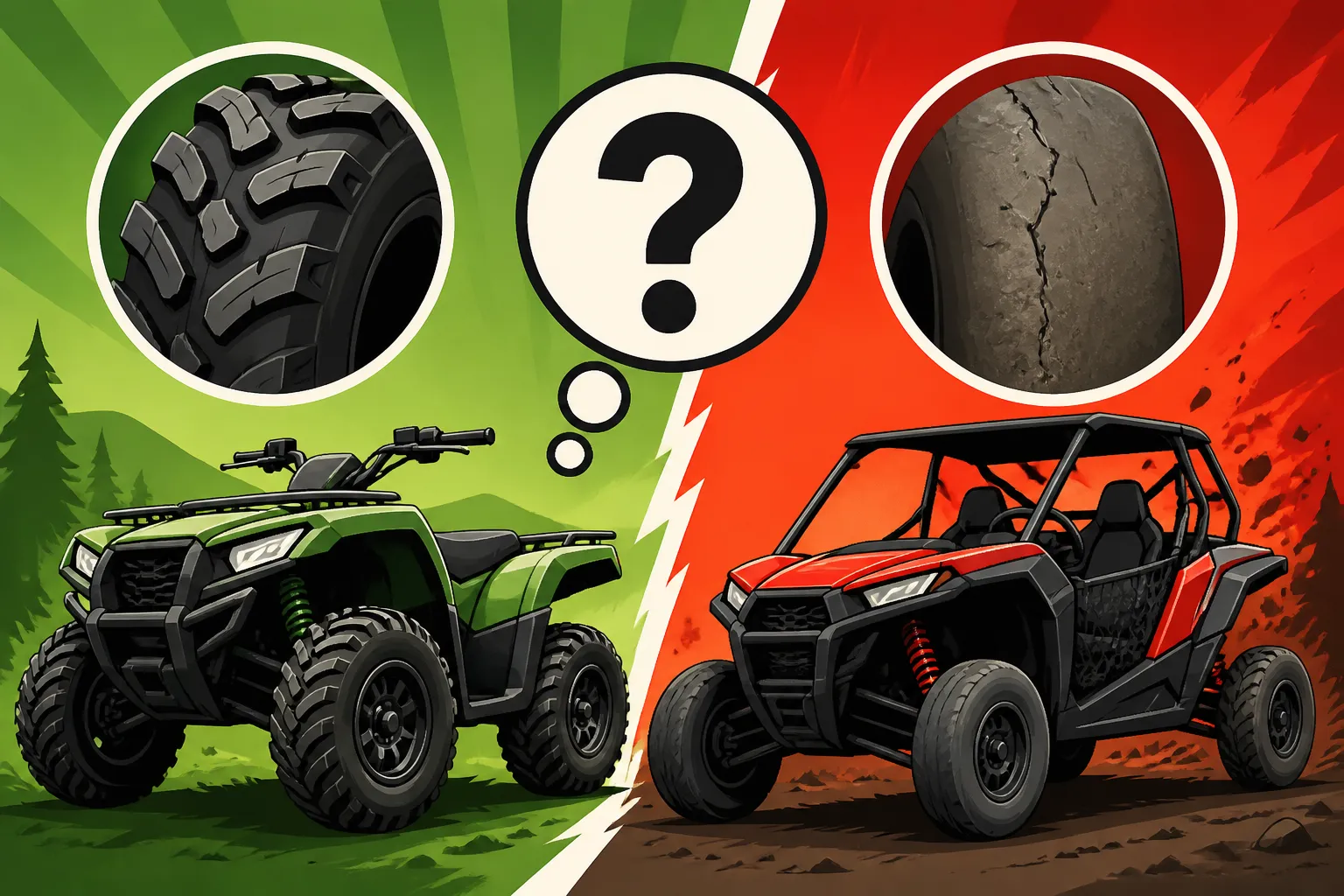
- Sidewall Cracks and Dry Rot: This is especially common on older tires or machines stored outdoors. Look for small cracks, particularly in the sidewall where the tire flexes. These cracks indicate that the rubber is degrading and becoming brittle, known as dry rot. A tire with significant dry rot is extremely susceptible to sudden blowouts, even if the tread itself still looks decent.
- Bulges or Lumps: Any bulges or lumps on the tread or sidewall are a serious red flag. These often mean there's internal damage to the tire's construction, such as a broken belt or separated plies. A bulging tire is a ticking time bomb and should be replaced immediately.
- Cuts, Punctures, and Gashes: Inspect the entire surface of the tire—tread and sidewalls—for any cuts, tears, or embedded objects. Small punctures can often be repaired with a plug kit, but larger gashes or cuts in the sidewall usually mean the tire is a goner. Remember, even a small leak can become a big problem far from home.
- Uneven Wear Patterns: If one side of your tire is significantly more worn than the other, or if you see "cupping" or feathering, it could indicate issues with your suspension, alignment, or even tire pressure. While not strictly a sign of being "too worn," it's a symptom that warrants investigation and could lead to premature wear and handling issues.
Table: Signs Your ATV Tires Need Attention
| Symptom | Indication | Action Required |
|---|---|---|
| Tread Depth Below 2/32" | Legal limit breached; severely compromised traction | Immediate replacement |
| Rounded or Short Lugs | Reduced traction in mud/loose terrain | Consider replacement for performance; check depth for legality |
| Sidewall Cracks / Dry Rot | Rubber degradation, high risk of blowout | Immediate replacement |
| Bulges or Lumps | Internal structural damage | Immediate replacement |
| Deep Cuts / Gashes (especially sidewall) | High risk of sudden failure, often irreparable | Immediate replacement |
| Embedded Objects (large) | Potential for slow leak or sudden puncture | Inspect, remove if safe, plug if repairable, or replace |
| Uneven Wear Pattern | Alignment/suspension issues, improper pressure | Investigate cause, correct issue, consider replacement if severe |
| Frequent Flats | Repeated punctures, thinning rubber | Consider replacement with more durable options like those from SuperATV |
The Impact of Different Terrains on Tire Wear in New York
New York offers an incredible variety of riding terrain, from the dense woods of the Tug Hill Plateau to the open fields of agricultural areas, and each type of surface impacts your ATV tires differently. Understanding these dynamics can help you choose the right tires and anticipate when they might need replacing. It's not just about how much you ride, but where you ride that dictates how quickly your tires wear down.
Aggressive Terrain vs. Milder Paths
Let's break down how different New York landscapes contribute to tire wear:
- Rocky Trails: Places with abundant rock, like some parts of the Adirondacks (where ATV riding is generally restricted, but specific private parks or club trails might exist) or certain sections of the Lewis County trails, are incredibly abrasive on tires. Sharp edges can chip away at lugs, slice sidewalls, and generally accelerate wear. Tires designed for rock crawling often have thicker sidewalls and tougher compounds to resist this damage. If you ride rocky terrain frequently, you'll see faster wear on your lugs and an increased risk of punctures.
- Mud and Soft Dirt: While mud itself isn't as abrasive as rock, the constant spinning and digging required to get through deep mud can put immense stress on your tire lugs. Aggressive mud tires are designed with tall, widely spaced lugs to clean out the mud, but even these will show wear, especially if you're frequently spinning them to clear thick goo. Regular mud riding also taxes the tire's structure, as the forces involved in getting unstuck are considerable.
- Gravel Roads and Hard-Packed Trails: Many designated ATV trails in New York are a mix of hard-packed dirt and gravel. While smoother than rock gardens, gravel acts like sandpaper, constantly abrading the tire's surface. Tires used primarily on these surfaces will often show faster wear on the center of the tread, and smaller, tighter-packed lugs can get chewed up more quickly.
- Pavement and Road Crossings: This is perhaps the most damaging surface for ATV tires. ATV tires are generally not designed for asphalt. The soft, aggressive compounds that grip well in dirt and mud wear down incredibly fast on pavement. Even frequent short road crossings, which are sometimes necessary on designated trail systems, can noticeably shorten the lifespan of your tires. This is a critical factor to remember, especially on routes where you might be [Crossing a Highway on an ATV in New York]. The friction and heat generated on pavement will rapidly round off sharp edges and accelerate general wear across the tread.
When considering new tires, especially if you know your primary riding conditions, look for options specifically designed for those environments. For instance, if you're hitting the deep mud of the Tug Hill region, an aggressive mud tire would be ideal. If you're tackling more mixed terrain, a good all-around utility tire might serve you better. Brands like SuperATV offer a wide range of tires, from dedicated mud slayers to versatile all-terrains, helping you match your rubber to your ride and get the most life out of your investment.
Making Your ATV Tires Last Longer
Nobody wants to constantly be buying new tires. They're an investment, and with a little care, you can significantly extend their lifespan, ensuring they remain safe and perform well for as long as possible. A little preventative maintenance goes a long way, and it's all about consistency.
Proper Tire Pressure and Rotation
Maintaining the correct tire pressure is probably the single most important thing you can do for tire longevity. Every ATV has a recommended tire pressure, usually found in your owner's manual or on a sticker on the machine itself. Running your tires too low can lead to excessive sidewall flex, increased rolling resistance, and uneven wear, especially on the outer edges of the tread. Too high, and you risk a harsher ride, reduced traction, and accelerated wear down the center of the tread. Check your tire pressure before every ride, adjusting as needed based on terrain and load.
While ATVs don't have the complex tire rotation schedules of cars, it can still be beneficial, especially if you notice uneven wear between the front and rear, or left and right tires. For instance, the rear tires on most ATVs tend to wear faster due to them being the drive wheels and handling more power. You might consider rotating front-to-rear if you see a significant difference. Swapping tires diagonally can also help equalize wear if you notice one side of the machine is working harder or experiencing more abrasion than the other. Just remember to always check pressure after any rotation.
Cleaning and Storage Best Practices
After a fun day of tearing up the trails, it's tempting to just park your machine and call it a day, but taking a few extra minutes for cleaning can seriously extend the life of your tires. Mud, dirt, and especially chemicals or salts (if you've been doing any [Snow Removal on Private Property] with your ATV) can degrade rubber over time.
Rinse your tires thoroughly with water, removing any caked-on mud or debris. Pay special attention to the areas between the lugs and the sidewalls. While you're at it, check for any new cuts or embedded objects that you might have picked up on your ride.
When it comes to storage, keep your ATV in a cool, dry place out of direct sunlight. UV rays are a tire's worst enemy, accelerating dry rot and cracking. If you have to store your machine outside, at least throw a tarp or an ATV cover over it to shield the tires from the sun. If your ATV will be sitting for an extended period, try to get the tires off the ground or move the machine periodically to prevent flat spots, which can permanently deform the tire and affect ride quality. Following these simple steps can add years to your tire's life, keeping you on the trails and saving you money in the long run.
Disclaimer
This article is for general informational purposes only and does not constitute professional advice. Laws, prices and regulations vary by location and change over time. Consult a qualified professional for guidance on your specific situation.