Bringing a Machine From Vermont
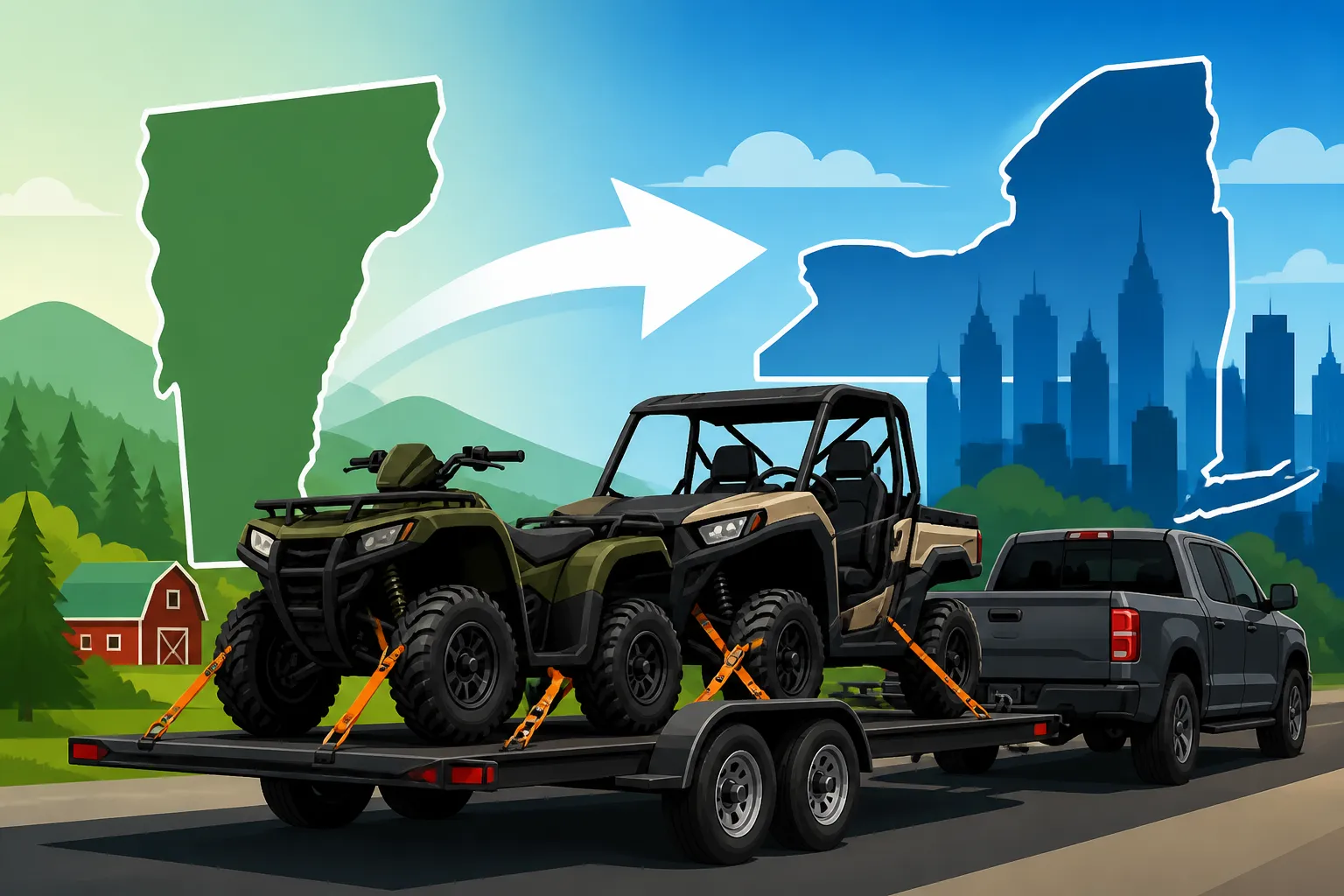
Bringing an ATV or UTV you love from Vermont to New York can feel like navigating a maze, especially when you're trying to figure out how to get it legally registered in your new home state. You might be wondering about titles, bills of sale, and all the specific hoops the New York DMV makes you jump through when the machine wasn't originally bought here. This guide will walk you through the process, helping you understand exactly what New York expects from you to get your quad or side-by-side ready for our trails.
Vermont's Approach to ATVs and Why It Matters in New York
Vermont and New York both have a love for outdoor recreation, but their administrative approaches to ATVs can differ quite a bit, especially when it comes to registration and ownership documentation. Understanding these differences is the first step in a smooth transition for your machine.
No Title? No Problem for Vermont, but New York Still Asks Questions
One of the biggest areas of confusion for folks moving their ATVs across state lines is the concept of a vehicle title. Just like New York, Vermont generally doesn't issue traditional vehicle titles for ATVs and UTVs. For many years, both states have operated on a registration-only system for these off-road machines. In Vermont, your registration certificate essentially serves as your primary proof that the machine is yours and legally allowed on their designated trails. You'd renew it, keep it with you, and that was that.
This "no title" reality in Vermont means you won't be showing up at the New York DMV with a shiny pink slip from your previous state. This isn't inherently a problem for New York, because our state also operates without ATV titles. What it does mean is that the New York DMV will lean heavily on other forms of documentation to prove ownership and ensure the machine isn't stolen or subject to a lien. It's a bit like two friends who both forgot their wallets – they understand each other's predicament, but still need to find a way to verify identity.
Registration Differences: Vermont Trails vs. New York's Requirements
Vermont's ATV registration system is primarily geared towards trail access. You register, you get a sticker, and you're good to go on the Vermont ATV Sportsman's Association (VASA) trails, provided you have the proper trail passes. They focus on maintaining a safe and accessible trail network for riders.
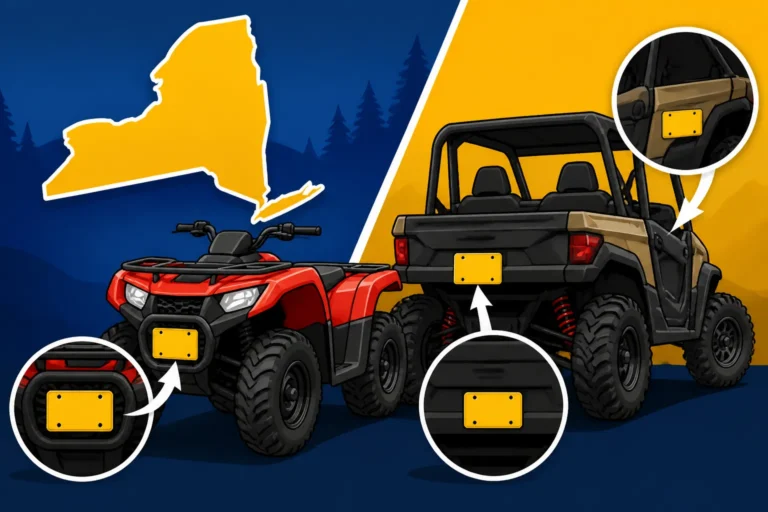
New York's registration, while also enabling trail access, comes with a few more layers. It's tied into state laws regarding insurance and specific equipment requirements, and it's enforced by the DMV, not just a trail association. When you bring your Vermont-registered machine here, you're essentially starting a fresh registration process under New York's rules, even if you just renewed in Vermont last month. You can't just transfer your Vermont registration; you need to meet all of New York's criteria for a new registration. This means providing proof of ownership, a New York insurance policy, and getting a new [New York ATV Plate and Where They Mount] that adheres to our state's size and placement guidelines.
The New York Registration Process for an Out-of-State Machine
So, you've got your machine, you've probably ridden it extensively in Vermont, and now you want to hit the trails in New York. The good news is that New York has a clear process for [Registering an Out-of-State Machine in New York], even if your previous state had different rules. The key is gathering the right paperwork.
Essential Documentation You'll Need
When you head to the New York DMV, they're going to want to see a few things to confirm the machine is yours and meets their standards. Since Vermont doesn't issue titles, the emphasis shifts to a robust bill of sale and proof of prior registration.
Here's a breakdown of what to prepare:
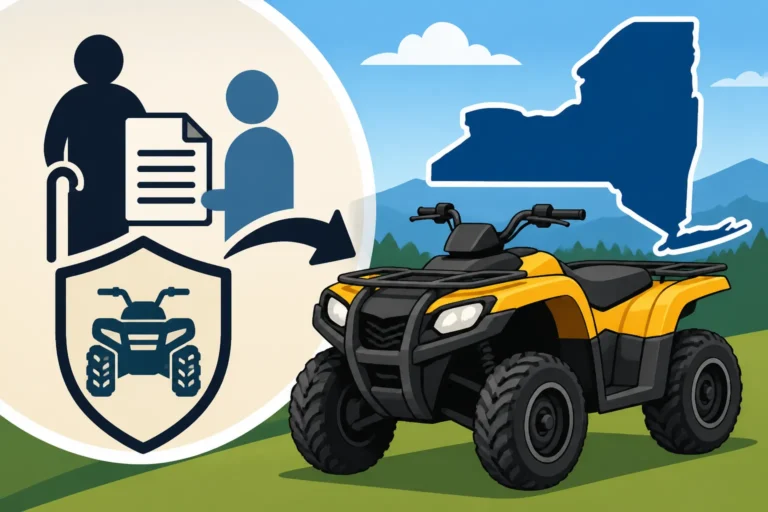
- Proof of Ownership: This is paramount. If you bought the machine from a dealer in Vermont, you'll need the original dealer's bill of sale. If you bought it from a private seller, a detailed bill of sale signed by both parties is crucial. This document should include the full names and addresses of buyer and seller, the date of sale, the purchase price, and a complete description of the ATV/UTV, including its make, model, year, and vehicle identification number (VIN). A generic, handwritten note won't always cut it; consider using a template from a service like LawDepot to ensure all necessary legal information is included.
- Previous Registration: Your most recent Vermont ATV registration certificate is vital. This shows continuous ownership and registration in another state, which helps the New York DMV verify the machine's history.
- Form MV-51B: This is the magic form for non-titled vehicles in New York. You'll need to fill out Section 1 and Section 2. It’s essentially the application for registration and a statement of sale, combining several pieces of information into one document. You might be used to other forms from Vermont, but this is the one New York uses for ATVs. [New York's Form MV-51B Explained] delves deeper into each section.
- New York ATV Insurance Proof: Before you can even register, you must have an active insurance policy that meets New York's minimum liability requirements. This means securing coverage from an insurer authorized to do business in New York. You'll need to show proof of this policy at the DMV counter. [New York's Mandatory ATV Insurance] is something you cannot overlook.
- VIN Tracing: This often surprises people, but New York requires a pencil tracing or photo of the VIN for ATVs and other non-titled vehicles. This is a critical step for verifying the machine's identity and preventing fraud. Make sure you get a clear, legible tracing. [New York ATV VIN Tracing Requirement] explains why this is so important to the DMV.
- Photo ID: Don't forget your valid New York driver's license or state ID.
Navigating the DMV: What to Expect at the Counter
Once you have all your documents in order, you can head to your local New York DMV office. It's always a good idea to make an appointment if possible, as it can save you a lot of waiting time.
When you present your paperwork, the clerk will carefully review everything. They're looking for consistency between your bill of sale, your Vermont registration, and the MV-51B form. If there are any discrepancies, it could cause delays. Be prepared to answer questions about where and when you acquired the machine.
They will process your application, collect the necessary [New York ATV Registration Cost] and plate fees, and once approved, you'll walk out with your new New York ATV registration certificate and a temporary plate. Your permanent plate will typically arrive in the mail within a few weeks. Don't forget to ask for information on where to affix your [Where to Stick a New York ATV Validation Decal]. The processing time can sometimes feel a bit long, but it's usually efficient if your paperwork is complete and accurate.
Proving Ownership Without a Title
Since Vermont, like New York, doesn't issue titles for ATVs, proving ownership relies on other documents. This is where a robust bill of sale and clear, consistent records become your best friends.
The Power of a Comprehensive Bill of Sale
A good bill of sale isn't just a receipt; it's a legal document that formally transfers ownership. For machines coming from a non-titling state like Vermont, its importance is amplified. Here's what makes a bill of sale truly powerful for New York registration:
- Detailed Description: Don't just write "ATV." Include the make, model, year, color, and most importantly, the full VIN.
- Buyer and Seller Information: Full legal names, current addresses, and contact information for both parties.
- Date and Price: The date of the transaction and the agreed-upon purchase price. Even if it was a gift, state "gift" or a nominal amount like $1.
- Signatures: Both the buyer's and seller's signatures. If you're buying a used machine, ensure the seller's signature matches the name on their previous Vermont registration.
- "As-Is" Clause: While not strictly for registration, it's good practice to include an "as-is" clause to protect both parties in a private sale.
If you bought your machine years ago and only have a flimsy handwritten receipt, it might be worth creating a more formal document using a template from a service like LawDepot. Even if it's retrospective, having a professionally structured document can make the DMV process smoother. The clearer the chain of ownership, the easier your registration will be. [New York ATV Bill of Sale Requirements] covers this in more detail.
How Previous Registration Certificates Bolster Your Claim
Your Vermont registration certificate serves as official documentation that the machine was legally operated and owned by you (or the seller, if you just purchased it) in another state. It acts as a history lesson for the DMV, showing that the ATV wasn't just pulled out of a barn after years of disuse with no verifiable owner.
The New York DMV clerk will compare the VIN on your Vermont registration with the VIN on your bill of sale and your VIN tracing. This cross-referencing is a crucial step to ensure everything lines up. If the names on the Vermont registration and the bill of sale don't match, you'll likely need an additional bill of sale tracing the ownership back to the person named on the registration. It's all about connecting the dots to establish legitimate ownership without a formal title document. If you're looking into buying a used machine that has no history of registration, you'll face an uphill battle.
| Document Type | Purpose for New York DMV | Vermont Relevance |
|---|---|---|
| Bill of Sale | Primary proof of purchase and ownership transfer. | Critical since no title is issued. |
| Vermont Reg. Cert. | Shows prior legal registration and ownership history. | Your official record of ownership in Vermont. |
| Form MV-51B | New York's specific application for non-titled vehicle registration. | N/A (NY form, but incorporates your ownership proof). |
| Proof of Insurance | Mandatory liability coverage for New York registration. | Must be a New York-approved policy. |
| VIN Tracing/Photo | Physical verification of the vehicle identification number. | Required regardless of prior state. |
| Photo ID | Verifies your identity as the applicant. | Standard ID requirement. |
Important Considerations Beyond Registration for New York Riding
Getting your ATV or UTV registered in New York is a huge step, but it's not the only thing you need to think about once you've brought your machine over from Vermont. New York has specific rules about where and how you can ride, and understanding these is essential for a safe and legal experience.
Insurance: A Non-Negotiable Requirement
We briefly touched on insurance, but it truly bears repeating: you absolutely must have valid New York ATV insurance before you can register your machine, and certainly before you ride it on any public land or designated trail. New York mandates minimum liability coverage for ATVs operated anywhere other than your own private property. This means if you're involved in an accident and are at fault, your insurance will help cover the costs of injuries or property damage to others.
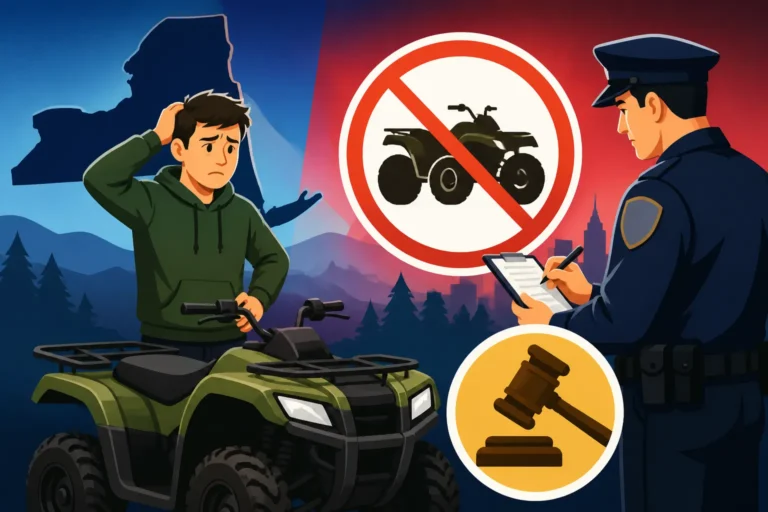
Trying to ride without insurance is a serious offense in New York, and the fines can be steep. Don't risk it. Contact an insurance provider that operates in New York and specializes in recreational vehicles to get a policy in place. They will be familiar with New York's specific requirements.
Size Matters: New York's Width and Weight Limits
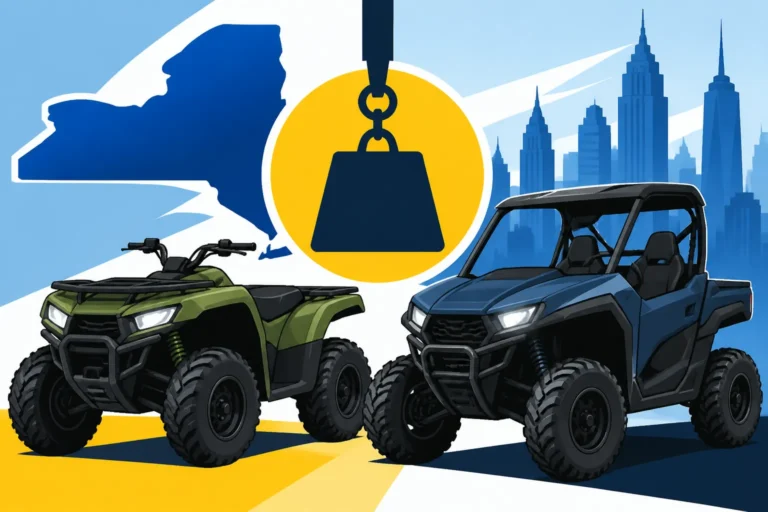
Here's where some Vermont riders might face a snag with their side-by-sides. New York has specific dimensional limits for what it considers an "All-Terrain Vehicle" eligible for registration. Generally, to be registered as an ATV in New York, a machine must:
- Be no more than 70 inches wide. Many popular UTVs, especially multi-passenger models, exceed this limit. [New York ATV Width Limit for Registration] is a common hurdle.
- Weigh no more than 1,000 pounds. Again, many modern side-by-sides easily surpass this weight. [New York ATV Weight Limit for Registration] can disqualify even some two-seat models.
If your machine, particularly a UTV, is wider than 70 inches or heavier than 1,000 pounds, it simply cannot be registered as an ATV under current New York law. This is a common frustration for owners of larger machines, as New York's definition of an ATV hasn't kept pace with modern vehicle designs. You won't be able to ride it on any public lands or designated ATV trails in New York if it doesn't meet these criteria, limiting its use strictly to private property where you have permission. Always measure your machine before you commit to the registration process, just to avoid disappointment.
Trail Rules and Safety Certificates
Once your ATV is registered and insured, you're ready to explore New York's trails! However, remember that specific rules apply to different trail systems, and a safety certificate might be required, especially for younger riders.
- Designated Trails Only: In New York, ATVs are generally restricted to designated and posted trails, and private property with permission. You cannot legally ride on public roads (except to cross at a right angle, or on town/county roads specifically designated and posted for ATV use) or most state land (like the Adirondack or Catskill Parks).
- Safety Certificates: For riders aged 10-15, a New York ATV Safety Certificate is typically required to ride on public lands or trails. While adults aren't mandated to have one, taking a course is always a good idea for safety and understanding the rules of the trail. [New York ATV Safety Certificate Requirements] are important for families.
- Helmets: New York has a strict helmet law. All ATV riders, regardless of age, must wear an approved helmet when operating an ATV. There are no exceptions for adults.
- Other Equipment: Your machine must also meet certain equipment requirements, such as having an approved spark arrester and adequate tread depth on your tires.
By being fully prepared with documentation, understanding the nuances of New York's laws, and adhering to safety regulations, you'll ensure your ATV or UTV from Vermont becomes a welcome addition to your New York outdoor adventures. Happy riding!
Disclaimer
This article is for general informational purposes only and does not constitute professional advice. Laws, prices and regulations vary by location and change over time. Consult a qualified professional for guidance on your specific situation.