New York ATV Plates and Where They Mount
Alright, let's talk about something that can be a real headache but is absolutely non-negotiable for enjoying New York's amazing trails: your ATV plate and how to mount it. It might seem like a small detail, but getting it wrong can lead to frustrating fines, trail access issues, or even having your machine fall out of compliance. This guide is here to walk you through everything you need to know about New York ATV plates, from their purpose to the best ways to keep them securely and visibly mounted on your quad.
Understanding New York's ATV Plate Requirement
It’s easy to overlook the small details when you're itching to hit the trails, but the ATV plate issued by the New York DMV is far more than just a piece of plastic or metal. It’s your machine's official identifier, a legal requirement, and your ticket to lawful riding throughout the state. Understanding its fundamental importance is the first step toward hassle-free adventures.
Why Your Quad Needs a Plate in the First Place
Think of your ATV plate as its passport. Without it, your machine is essentially invisible to the authorities and, crucially, ineligible for public trail systems. New York State law is pretty clear: if you’re riding an ATV anywhere off your own private property, it needs to be registered with the DMV, and that registration comes with a plate. This requirement helps distinguish between machines that are legally allowed on designated trails and public lands and those that aren't. It's about accountability, safety, and ensuring that those who benefit from the trail systems also contribute to their upkeep through registration fees. It's also a critical piece of information for law enforcement if a machine is stolen or involved in an incident. Without that visible plate, it's incredibly difficult to track down an unregistered quad, which can lead to larger problems for both riders and landowners.
Moreover, the plate is linked to your [New York ATV Registration and Insurance Proof]. In the unfortunate event of an accident, or even just a routine stop by a park ranger or state trooper, that plate is the first thing they’ll look for. It confirms that you've met the state's minimum insurance requirements, providing a layer of protection for you and others. Imagine trying to sort out an incident without any official identification for your machine—it would be a chaotic mess. The plate simplifies this by providing a quick, verifiable link to your machine's legal status. It truly is the cornerstone of responsible ATV ownership and riding in New York, and neglecting it is simply not an option if you want to enjoy the trails legally and safely. You can learn more about getting your machine registered by checking out our comprehensive guide on [Registering an ATV in New York].
What the New York ATV Plate Looks Like
When you successfully register your ATV, you'll be issued a plate that’s distinct from those you see on cars, trucks, or even snowmobiles. It's typically a smaller, rectangular metal plate, designed to be proportionate to the size of an ATV. While specific designs might evolve over time, the general characteristics remain consistent: it's durable, reflective, and features a combination of letters and numbers that are unique to your registered machine. These characters are usually embossed or clearly printed in a contrasting color to ensure maximum visibility, even in challenging conditions. The plate often includes "N.Y." or "New York" along with a year or some other identifier, though the most important elements are the individual alpha-numeric sequence.
Upon receiving your plate, you'll also get a small validation decal. This decal, which typically changes color each year, indicates the current registration period. It's a critical component because it proves your registration is up-to-date and not expired. The decal needs to be affixed to a specific corner of the plate, often the lower right-hand side, without obscuring any of the plate's numbers or letters. This makes it easy for officials to quickly confirm your registration's validity without having to get too close or run the plate number through a system. It's a simple, yet effective, visual cue that your machine is ready for the trails. For more details on this little but mighty sticker, read [Where the Validation Sticker Sits]. Keep in mind that while the plate itself is typically a one-time issuance (unless it's lost or damaged), that decal is your annual proof of compliance, making it just as important as the plate itself.
The Specifics of New York's Plate Mounting Rules
So, you've got your shiny new plate and that all-important validation decal. Now comes the crucial part: putting it on your quad. New York isn't just particular about having a plate; it's also quite specific about where and how that plate is mounted. This isn't just bureaucratic red tape; these rules are in place for clear visibility, safety, and to make it easy for trail officials and law enforcement to identify machines without delay or confusion. Skimping on these details can quickly turn a fun ride into a frustrating encounter with a fine.
The Mandate for Rear Mounting
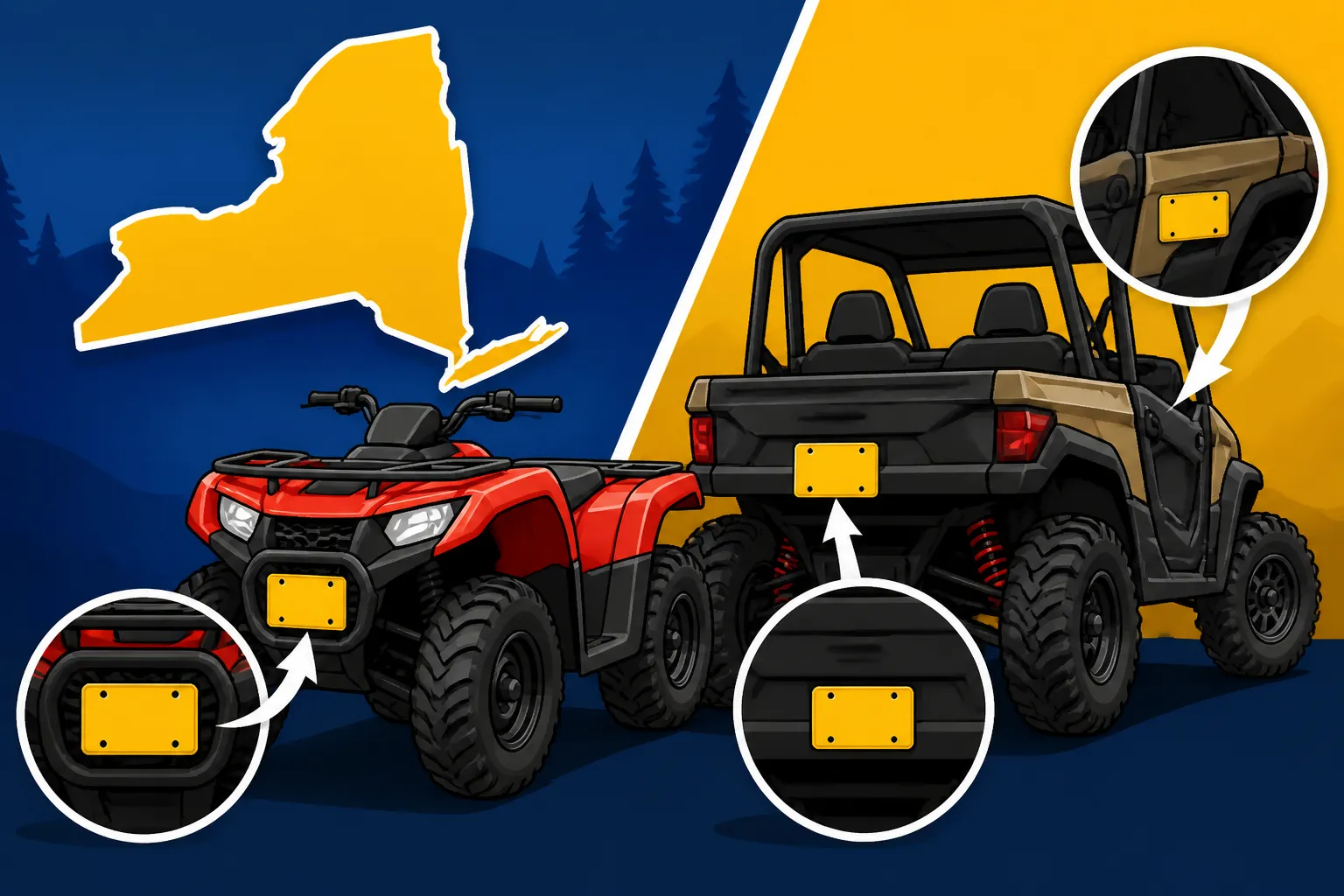
New York law explicitly states that your ATV plate must be mounted on the rear of the machine. This isn't a suggestion; it's a firm requirement. You won't see legitimate ATVs with plates on the front fender, the side, or tucked away under a seat. The reason for this rear-mounting mandate is pretty straightforward: visibility from behind. When you're out on the trails, especially multi-use trails, other riders, hikers, and rangers often approach from the rear. A clearly visible plate allows for quick identification, whether it's for safety, trail enforcement, or simply noting who's ahead of you. It prevents the need for someone to ride up alongside you or wait for you to turn around just to see your registration.
This rule also aligns with the standards for many other motorized recreational vehicles, like snowmobiles, ensuring a consistent approach to identification in the recreational vehicle world. Imagine if every rider chose their own preferred spot; it would be a nightmare for enforcement and create unnecessary confusion. The rear mounting ensures that regardless of the make or model of your ATV, there’s a predictable location where its identifying information can be found. It’s a small detail that contributes significantly to the overall order and safety of New York's trail systems, making it easier for everyone to play by the rules and for officials to keep an eye on things. If you're ever stopped on the trail, one of the first things a New York officer will check roadside is that plate.
Ideal Locations on the Rear of Your Machine
While the law specifies "rear," there's still a bit of discretion on the exact spot. For most ATVs, the most common and practical location is on the rear rack. Many factory-installed racks come with pre-drilled holes or flat spots that are perfect for plate attachment. This area is typically high enough to avoid excessive mud and debris, wide enough for the plate to lay flat, and generally unobstructed by the rider or cargo. Using the rear rack is often the easiest and most secure option, offering a robust mounting surface that can withstand the vibrations and bumps of trail riding. You want a spot that keeps the plate perpendicular to the ground as much as possible, not angled sharply upward or downward, to maintain optimal visibility.
Another good option, especially if your machine lacks a traditional rear rack or has a more compact design, is directly on the rear fender itself. However, if attaching to the plastic fender, you need to be mindful of its flexibility and vulnerability to damage. It might require reinforcing the area with a small backing plate on the inside of the fender to prevent cracking or tearing from the plate's hardware or from trail impacts. Some riders with very minimal rear structures might even fabricate a small, custom bracket that extends from the frame. The key is to find a flat, stable surface that allows the plate to be clearly seen, day or night, and to be mounted securely so it doesn’t flap, vibrate loose, or get ripped off by a low-hanging branch. Remember, the goal is always maximum visibility and security.
The Importance of Visibility and Legibility
Beyond simply being on the rear, your ATV plate needs to be clearly visible and legible at all times. This means it can’t be caked in mud, obscured by snow, covered by cargo, or tucked away so that only a partial view is available. Think about a game warden or a county sheriff needing to read your plate from a short distance – they shouldn't have to guess or get off their machine to verify your registration. If your plate is dirty from a muddy ride, you’re expected to clean it off. If you’re riding in deep snow, ensure it hasn’t become an unreadable block of white.
The angle of your plate is also important. Mounting it horizontally, as close to perpendicular to the ground as possible, ensures that the numbers and letters are readable from various perspectives. An excessively angled plate, whether pointing too far up or down, can distort the view and make it difficult to read, especially from a distance or in varying light conditions. Furthermore, if you often ride after sunset, ensure your plate isn't positioned where it's perpetually in shadow or where your taillights don't provide some ambient illumination. While dedicated plate lights aren't generally required for ATVs, an unreadable plate after dark can still draw unwanted attention. The rule of thumb is: if you can’t easily read your own plate from ten feet away, in various conditions, it’s probably not compliant. The fines for an unreadable plate can be just as frustrating as those for no plate at all.
Practical Tips for Securely Attaching Your ATV Plate
Mounting your ATV plate isn't just about finding a spot; it's about making sure it stays put, remains visible, and can withstand the rigors of New York's diverse terrain. A loose or damaged plate is not only a nuisance but can also lead to legal issues. Taking a few extra steps during installation can save you a lot of headache down the road.
Choosing the Right Hardware
The hardware you use to attach your plate is paramount. For metal racks or sturdy frame points, stainless steel bolts, nuts, and flat washers are your best friends. Stainless steel resists rust, which is crucial given New York’s weather and the wet conditions often encountered on trails. Use locking nuts (like nyloc nuts) or add lock washers to prevent the nuts from vibrating loose during rides. A couple of simple 1/4-inch bolts, about an inch or so long, with matching nuts and washers, are usually sufficient. Avoid standard zinc-plated hardware; it will rust and stain your plate and machine.
If you're attaching the plate to plastic fenders or thin plastic bodywork, self-tapping screws might seem convenient, but they often don't provide a secure, long-lasting hold. The plastic can strip, and the plate can eventually wiggle loose. Instead, consider drilling small pilot holes and using short machine screws with fender washers and locking nuts on the underside of the plastic. This distributes the pressure over a larger surface area, reducing the risk of cracking the plastic. While zip ties can be a temporary fix in a pinch (say, if your plate falls off mid-ride), they are absolutely not a permanent solution. They stretch, degrade from UV exposure, and rarely provide the rigid, secure mounting required by law. Always aim for a solid, bolted connection.
Protecting Your Plate from Trail Hazards
New York trails, from the rugged Tug Hill plateau to the rolling hills of Lewis County, can be tough on equipment. Your ATV plate is vulnerable to being bent, torn, or ripped off by branches, rocks, or even getting snagged on deep ruts. Investing in a sturdy license plate frame can provide a crucial layer of protection. These frames, often made of metal or robust plastic, encase the edges of your plate, making it less likely to bend or catch on obstacles. Some even come with a backing plate, which adds rigidity and prevents the plate from flexing excessively.
Another strategy is to be mindful of your riding style and where your plate is mounted. If your plate is particularly low or exposed, consider if you can raise it slightly or add a small brush guard to protect it. Avoid mounting it in locations where it will constantly be rubbing against your cargo or the rear tires during suspension travel. A bent or damaged plate not only looks bad but can also become illegible, leading to potential fines for having an unreadable ATV plate. Taking a proactive approach to plate protection will extend its life and ensure you stay compliant throughout your riding season.
Dealing with Difficult Mounting Situations
Not all ATVs are created equal, and some might present unique challenges when it comes to plate mounting. This is particularly true for older models, machines with custom modifications, or those designed more for utility than recreational riding. If your machine lacks a flat, obvious spot, you might need to get a little creative. Aftermarket rear racks are a fantastic solution, as many are designed with flat mounting surfaces or even pre-drilled holes for license plates. These can also increase your cargo capacity, so it's a win-win.
For machines with very little rear real estate, like some sport quads or older two-strokes, you might need to fabricate a simple bracket. This could involve bending a small piece of flat metal stock (like aluminum or steel from a hardware store) into an L-shape, bolting one side securely to a strong point on your frame, and then attaching the plate to the other, exposed side. Ensure any custom bracket is robust enough to handle vibrations and trail impacts, and that it doesn't create a new hazard. Always prioritize visibility and security, even if it means a little extra effort. A trip to a local fabrication shop might be necessary for more complex solutions, but most riders can manage a simple bracket with basic tools.
The Validation Decal: Your Registration's Annual Proof
You've done the hard work of registering your ATV and securely mounting the plate. But the story doesn't end there! Each year, that plate needs to be paired with a small, but incredibly important, validation decal. This sticker is your annual declaration that your registration is current, paid up, and ready to roll. Ignoring or improperly displaying this little sticker can render your otherwise perfectly mounted plate just as invalid as no plate at all.
What the Validation Decal Signifies
The validation decal is essentially a year-specific sticker that proves your ATV’s registration is active and current. When you renew your [New York's Annual ATV Registration], the DMV sends you a new decal. Each year, these decals are typically issued in a different color, making it easy for anyone – a park ranger, a fellow rider, or law enforcement – to instantly see if your registration is up-to-date from a distance. It signifies that you've paid the necessary fees, met any ongoing requirements, and your machine is legally allowed on New York's designated trails for that specific registration period. It's the immediate visual cue that your quad isn't operating on an expired permit.
Without a current validation decal, even with a physical plate bolted firmly to your machine, your registration is considered expired or invalid. This can lead to the same penalties and issues as riding an unregistered ATV. It’s not uncommon for riders to forget to apply the new decal after renewing, especially if they don't ride frequently in the colder months. Always make it a habit to check your plate for the current year's decal before your first ride of the season, especially after the August 31st expiration date that applies to most machines. It's a small detail, but one that carries significant weight in New York's ATV regulations.
Where the Decal Must Be Placed on Your Plate
New York is quite specific about the placement of the validation decal on your ATV plate. Typically, it must be affixed to the lower right-hand corner of the plate. This standardized placement ensures consistency and makes it easy for officials to locate and verify the decal without having to search across the entire plate. It’s crucial that the decal is applied neatly and smoothly, avoiding any bubbling or creasing that could make it difficult to read. Furthermore, under no circumstances should the decal obscure any of the plate's numbers or letters. The entire sequence of your plate number must remain fully visible and legible.
When applying the decal, make sure the plate is clean and dry. Any dirt or moisture can prevent the decal from adhering properly, increasing the risk of it peeling off. Take your time to align it correctly in the designated corner. Once it's on, try to avoid peeling it off, as this can damage the decal and make it look tampered with, potentially causing issues down the line. Treat that little sticker with care, as it's a direct reflection of your machine's current legal status. If you are ever unsure, referring to the instructions that come with your new decal or checking the DMV website can provide clarity.
Replacing a Lost or Damaged Decal
Life on the trails can be rough, and sometimes, despite your best efforts, things go wrong. A validation decal can get scraped off by a branch, wash away in a particularly aggressive mud puddle, or simply peel off due to poor adhesion or age. If you discover your decal is missing or so damaged it’s unreadable, don’t panic, but also don’t ignore it. Riding without a current, legible decal is just like riding with an expired registration. The good news is that replacing it is usually a straightforward process, though it does require a bit of attention.
You'll need to contact the New York DMV to request a replacement. This typically involves filling out a form, often a Vehicle Registration/Title Application (MV-82, although for non-titled ATVs you might be looking at a different process like what's explained in [MV-51B and New York's Non-Titled Vehicles]) and paying a small fee. While you're waiting for the replacement decal to arrive, it's generally best to avoid riding your ATV on public lands or designated trails. If you absolutely must, carry documentation of your request for a replacement decal, along with your current registration paperwork, to show to any official who might question your compliance. However, even with documentation, an officer still has discretion, so avoiding riding is the safest bet until that new decal is securely in place. Promptly addressing a lost or damaged decal is crucial to maintaining legal compliance and avoiding unnecessary fines. You can find more information about getting new plates or decals in [Replacing a Lost New York ATV Plate].
Common Pitfalls and How to Avoid Them
Even with the best intentions, it's surprisingly easy to fall prey to common mistakes when it comes to ATV plates in New York. These aren't always malicious acts of defiance, but often simple oversights or misjudgments that can nevertheless lead to unwanted interactions with law enforcement or trail officials. Being aware of these common pitfalls is the first step toward avoiding them entirely.
Illegible or Obscured Plates
This is probably one of the most frequent issues riders face, often inadvertently. You've just ripped through a glorious mud pit, rooster-tailing grime, and your plate is now completely caked in a thick layer of mud. Or perhaps you've loaded up your rear rack with a cooler and a dry bag, and your plate is now completely hidden beneath your cargo. While it might seem like a minor detail in the heat of the moment, an illegible or obscured plate is a direct violation of New York’s visibility requirements. [Can You Be Ticketed for an Unreadable ATV Plate?] Absolutely. An officer cannot verify your registration if they cannot read your plate.
To avoid this, make it a habit to quickly check your plate before and after every ride, especially after particularly dusty or muddy sections. Carry a small rag or a water bottle in your toolkit specifically for cleaning off your plate. When loading cargo, always position it in a way that leaves the entire plate and its validation decal fully exposed. If your machine's design or your typical cargo load makes this consistently difficult, consider a more permanent solution like a raised plate bracket that positions the plate above most obstructions. A clear plate is a compliant plate, and it’s a simple act of responsible riding.
Improperly Mounted Plates
Beyond just visibility, the physical security of your plate is critical. A plate that is flapping loosely, bent out of shape, or secured with flimsy materials is an improperly mounted plate. Imagine hitting a series of aggressive bumps or navigating a tight trail with low-hanging branches; a poorly secured plate can easily be ripped off, leaving you with an unregistered machine and a potential fine. This often stems from using inadequate hardware, like small self-tapping screws into weak plastic, or relying on temporary solutions like zip ties that degrade over time.
To prevent this, ensure your mounting hardware is appropriate for the material you're attaching it to, as discussed earlier. Use locking nuts and washers to prevent loosening from vibration. Periodically check the plate's mounting points to ensure everything is still tight and secure. If you notice any wobbling or bending, address it immediately. A few minutes spent tightening bolts or reinforcing a mounting point can save you the hassle and expense of replacing a lost plate and dealing with a citation. An officer performing a [What a New York Officer Checks Roadside] will certainly notice a plate that's about to fall off.
Riding Without a Plate or Current Decal
This is the most egregious pitfall and carries the most significant consequences. Deliberately riding an unregistered ATV, or one with an expired registration (evidenced by an expired decal), is an open invitation for fines, impoundment, and a host of other legal issues. Some riders might try to skirt the rules, believing they won't get caught, or simply forget to renew their [New York's Annual ATV Registration]. However, New York's trail systems are monitored, and enforcement is a reality.
The costs associated with getting caught riding an unregistered ATV far outweigh the modest [New York ATV Registration Cost] and annual renewal fees. Beyond the immediate fines, you could face delays, the hassle of retrieving an impounded machine, and potentially even more severe legal repercussions if an accident occurs. Even if you're just riding on private land that isn't your own, if you don't have explicit, written permission from the landowner, you still risk issues, and carrying an unregistered machine on a trailer across public roads can also raise questions. Always, always ensure your machine is properly registered, your plate is securely mounted, and your validation decal is current before you ever head out for a ride. There's simply no acceptable excuse for riding out of compliance in New York.
Special Considerations for Different Machine Types
While the core rules for New York ATV plates apply across the board, the diverse world of off-road machines means that "one size fits all" isn't always practical for mounting. Different designs present unique challenges and require a bit of thought to ensure compliance without compromising the machine's functionality or aesthetics.
Side-by-Sides and the Plate Challenge
Ah, side-by-sides (UTVs)! These incredibly popular machines offer fantastic utility and multi-passenger fun, but their design often presents a unique challenge for plate mounting under New York's ATV rules. Many UTVs have large, intricate rear bodywork, cargo beds, or even an enclosed cabin, which can make finding a flat, unobstructed, and legally compliant spot for that small ATV plate surprisingly difficult. Unlike a traditional quad's open rear rack, a UTV might have sculpted plastic fenders or a dump bed that moves, further complicating matters. The law doesn't differentiate between a quad and a UTV if it meets the ATV definition (under 1000 lbs and 70 inches wide, which excludes most modern UTVs anyway as discussed in [Why Most Side-by-Sides Cannot Be Registered in New York]), so the rear-mounting rule still applies.
Riders often find themselves looking at the tailgate of the cargo bed, a flat spot on the rear bumper, or even fabricating a bracket that extends off the frame behind the bed. When mounting to a cargo bed tailgate, consider whether the plate will be visible if the tailgate is dropped or if the bed is full. Some UTVs might require a specialized aftermarket plate bracket that clamps onto a roll bar or attaches to a more robust part of the frame, positioning the plate clearly behind the machine and above any potential obstructions. The goal remains the same: ensure the plate is fully visible from behind, not covered by the bed, the occupants, or any cargo, and secure enough to withstand rough terrain. This might require more ingenuity than with a traditional ATV, but it's a necessary step to stay legal.
Youth ATVs and Smaller Plates
Youth ATVs are fantastic for introducing younger riders to the sport, but their compact size can sometimes make plate mounting a bit tricky. While the plates themselves are the same size as adult ATV plates, the available real estate on a smaller machine can be limited. Often, the rear rack on a youth quad is much smaller, or the machine might not have a substantial rack at all. The rear fender might be much more flexible or prone to breaking.
Parents and guardians need to ensure that the plate, despite the machine's size, is still mounted in a compliant manner. This often means carefully selecting a strong point on the frame or a sturdy part of the rear fender, and perhaps using smaller hardware that won't overwhelm the machine's structure. If the youth ATV has a safety flag mount, sometimes a bracket can be integrated there, as long as it ensures visibility and security. The key is to find a spot where the plate won't interfere with the rider's safety, won't be easily damaged by the child's riding, and most importantly, remains clearly visible and legible. Always ensure that the young rider's machine is compliant, just like an adult's, to avoid any issues during a family ride. New York has specific rules for [New York Registration for a Youth Machine].
Custom Builds and Aftermarket Mods
The ATV community loves customization! Lift kits, custom exhaust, aftermarket bumpers, upgraded suspension, and new body plastics are all common modifications. However, these changes, while enhancing performance or appearance, can inadvertently complicate plate mounting. A new bumper might block the old plate location, or custom fenders might not have suitable mounting points. Even a new exhaust system could change the available space or expose the plate to excessive heat.
When planning custom modifications, always think about the plate. If you’re adding a new rear bumper, choose one that has a built-in plate mount, or ensure there’s still a clear, flat area for mounting. If you’re replacing fenders, make sure the new ones can accommodate the plate or plan for a custom bracket. Sometimes, a custom build might require a completely unique solution, such as a plate mount that extends from a modified grab bar or a specialized frame member. The important thing is that regardless of how much you customize your machine, the New York DMV's requirements for plate visibility and security still apply. Don't let your awesome custom build become a source of legal trouble because of an overlooked plate.
What Happens If Your Plate Gets Damaged or Lost?
It’s an unfortunate reality of off-road riding: stuff happens. You could hit a particularly nasty section of trail, get snagged by a rogue branch, or simply realize after a spirited ride that your plate is no longer where it should be. Discovering a damaged or lost ATV plate is more than just an inconvenience; it immediately renders your machine non-compliant for public riding in New York. Knowing what to do in this situation can save you a lot of stress and potential legal trouble.
Steps to Take Immediately After Discovery
The moment you realize your ATV plate is gone or significantly damaged, your first priority is to cease riding on any public land or designated trails. Continuing to ride without a visible, legible, and properly mounted plate is akin to riding an unregistered machine and can lead to immediate fines or impoundment. Don't try to "just finish the loop" or "make it back to the truck." Pull over, secure your machine, and if possible, find a safe way to trailer it home.
Once you’re in a safe location, take a moment to assess the situation. If the plate is damaged but still attached, consider if you can temporarily secure it or make it more legible (e.g., by cleaning off mud or gently bending it back into shape, if possible, without further damage). If it’s lost, retrace your steps carefully if it’s safe to do so, but don’t put yourself in harm’s way or trespass to do so. Document the loss or damage, perhaps by taking a photo of the remaining mounting area. Then, contact your local DMV as soon as possible to report the loss and begin the replacement process. The sooner you act, the sooner you can get back on the trails legally.
The Process for Ordering a Replacement Plate
Ordering a replacement plate for your ATV in New York is a fairly standardized process, but it does require attention to detail. You’ll typically need to complete a form, often the Vehicle Registration/Title Application (Form MV-82). Although this form covers a wide range of vehicles, it is used for replacement plates for ATVs as well. You'll specify that you are requesting a replacement plate and indicate why it’s needed (lost, stolen, damaged). Make sure to carefully fill out all sections, including your current registration information, to avoid any delays.
There will be a fee associated with obtaining a replacement plate. This fee covers the cost of manufacturing and issuing a new plate. While specific costs can change, expect a reasonable charge. The DMV will then process your request, issue a new plate number (often), and mail it to you along with a new validation decal. Be prepared for a waiting period; it's not an instant process. During this time, it’s imperative that you do not ride your ATV on public trails or land. Keep all your documentation, including the completed form and payment receipt, as proof that you've initiated the replacement process. For more details on the specific forms and fees, refer to [Replacing a Lost New York ATV Plate].
Riding While Awaiting Your New Plate
This is a critical point that often causes confusion and frustration for riders. While you might have reported your lost plate and applied for a replacement, you generally cannot legally ride your ATV on New York's public trails or lands until your new plate and current decal are physically affixed to your machine. Having a receipt or a pending application does not grant you temporary permission to ride. The law requires a visible, legible, and properly mounted plate at all times when operating off your own private property.
Attempting to ride with just a paper receipt, or without any plate at all, will almost certainly result in a citation if you're stopped. Officers and rangers are trained to look for current plates and decals, and explanations about "it's in the mail" are unlikely to be accepted. It's a tough pill to swallow, especially if you had plans to ride, but the risk of fines, legal penalties, and even impoundment far outweighs the desire to hit the trails prematurely. Use this waiting period for maintenance, cleaning, or exploring alternative private riding spots where registration isn't required. Patience is key to staying compliant and avoiding more serious issues.
Table: Comparison of ATV Plate Mounting Hardware Options
Choosing the right hardware is crucial for ensuring your New York ATV plate stays securely mounted and visible, no matter what the trail throws at you. Here's a quick comparison of common options:
| Hardware Type | Pros | Cons | Best For | Security / Durability |
|---|---|---|---|---|
| Stainless Steel Bolts & Nyloc Nuts | Excellent rust resistance, very strong, secure lock from nuts. | Requires drilling precise holes, can be difficult to remove quickly. | Metal racks, sturdy frame points. | High |
| Machine Screws & Fender Washers | Good for plastic; washers distribute force, preventing cracks. | Requires drilling holes, still uses nuts on backside which can be fiddly. | Plastic fenders, thinner composite materials. | Medium-High |
| Self-Tapping Screws | Quick and easy installation, no nuts needed on backside. | Can strip plastic threads, prone to vibrating loose, poor long-term durability. | Very temporary, light-duty, or emergency fix. | Low |
| Heavy-Duty Zip Ties | Super quick temporary fix, requires no tools (often). | Not compliant for permanent mounting, degrades in UV, stretches, plate can flap. | Emergency temporary repair only. | Very Low |
| Rivets | Very low profile, permanent, tamper-resistant. | Requires a rivet gun, permanent (difficult to remove without drilling out), can crack plastic. | Semi-permanent attachment to metal or tough plastic. | High |
Disclaimer
This article is for general informational purposes only and does not constitute professional advice. Laws, prices and regulations vary by location and change over time. Consult a qualified professional for guidance on your specific situation.